Your building looks impressive by day but vanishes into the dark at night. This missed opportunity means its architectural beauty and presence are completely lost after sunset.
Facade lighting is the art of using light to enhance a building's architecture after dark.1 It involves applying core design principles and specific techniques like wall washing2 or grazing. The right selection of fixtures, beam angles, and controls brings the structure's nighttime identity to life.
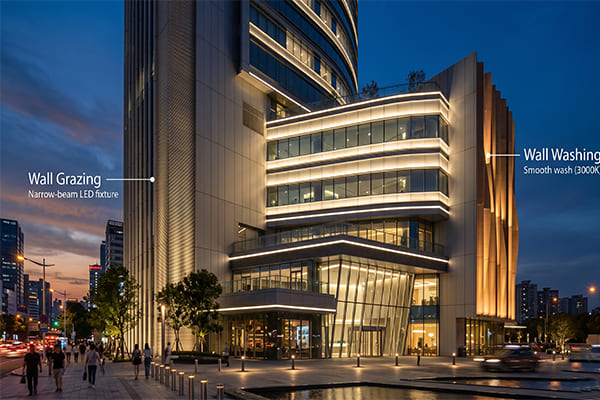
Getting this right is more than just pointing some lights at a wall. A great project creates emotion and enhances the building's story, while a poor one can be a distracting mess. The difference lies in understanding the fundamentals that make a design truly shine. So, how do you move from simply illuminating a building to artistically revealing its character? Let's dive into the core ideas that separate a stunning project from a forgettable one.
What are the core design principles for facade lighting?
Your lighting design looks flat or even distracting. It either washes out the building's best features or clashes with its style, failing to create a compelling nighttime image.
The most important principle is that light must serve the architecture, not overpower it3. This is done by identifying key features, creating depth with light and shadow, and choosing the correct color temperature for the building's materials and style.
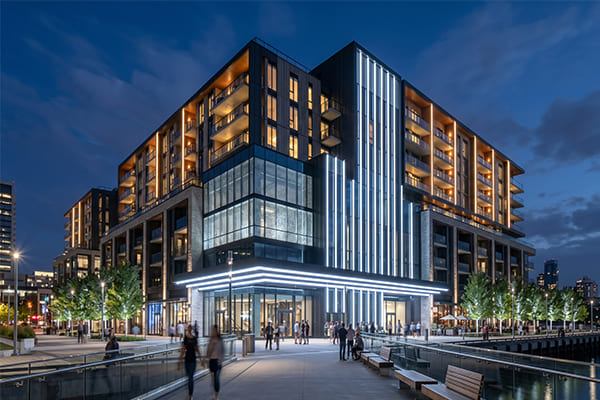
I've worked on hundreds of projects, and the most successful ones always start with one question: what story does this building tell? The lighting should support that story. Our job is to use light to make you appreciate the building more, not just notice the lights themselves. We start by walking the site and identifying the architectural highlights. Are there powerful columns, intricate textures, or a unique silhouette? These become our focal points. Then, we use contrast. A building that is evenly lit from top to bottom looks flat and boring. By creating intentional areas of light and shadow4, we give the facade depth and a dramatic, three-dimensional feel. Finally, color temperature sets the mood. It's a critical choice that has to match the building's character.
| Color Temperature5 | Best Application | Effect |
|---|---|---|
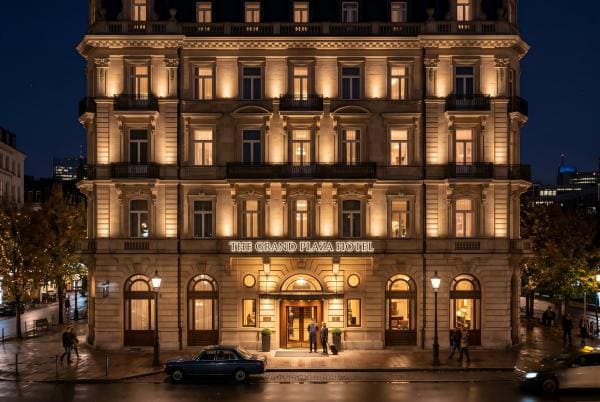
| Warm White (2700K-3000K)6 | Historic buildings, stone, brick | Creates a classic, inviting, and warm feeling. |
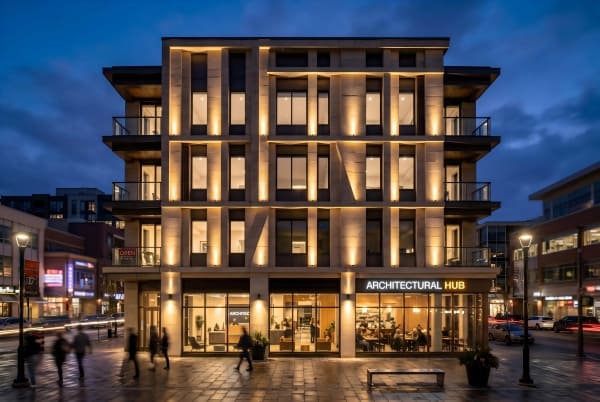
| Neutral White (4000K) | Modern buildings, glass, metal facades | Provides a clean, crisp, and contemporary look. |
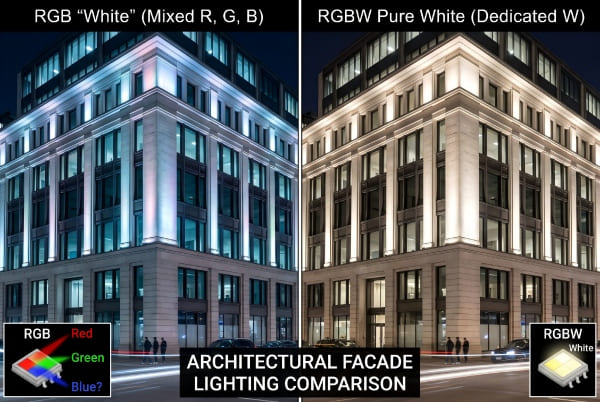
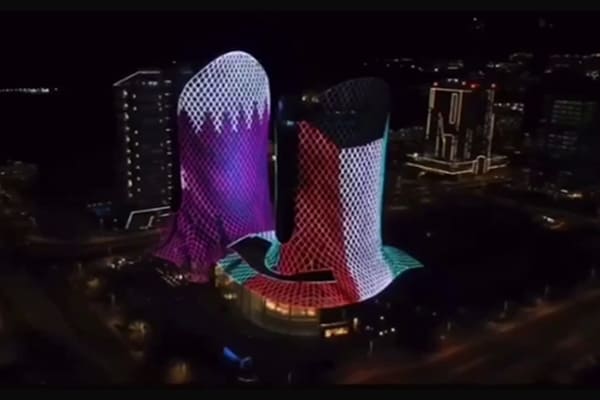
| RGB / RGBW | Landmark buildings, special events | Allows for dynamic color changes and spectacular shows. |
What are the main lighting techniques for building facades?
You have the right lights, but you are not sure how to apply them. Using the wrong lighting technique can hide beautiful details or create ugly, uneven hotspots on the wall.
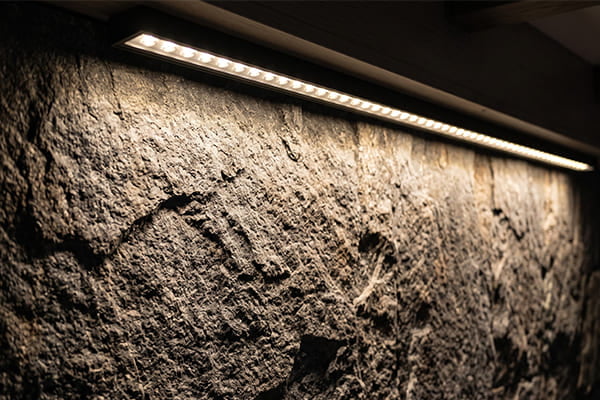
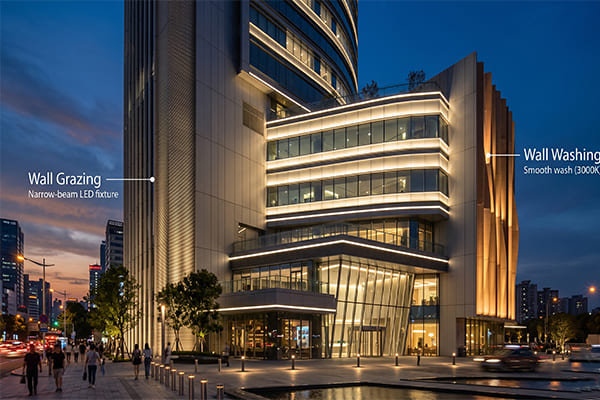
The four primary techniques are wall grazing, wall washing, accent lighting, and outline lighting7. Each creates a very different effect. Grazing highlights texture8, washing gives a smooth look, accenting spotlights features, and outlining defines the shape.
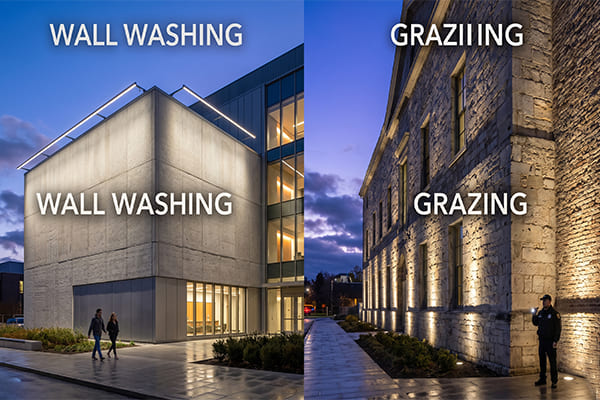
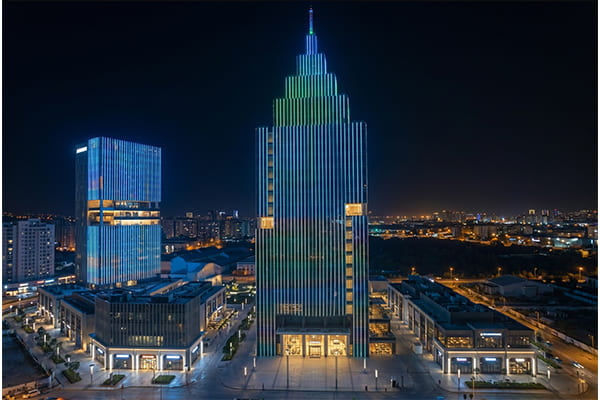
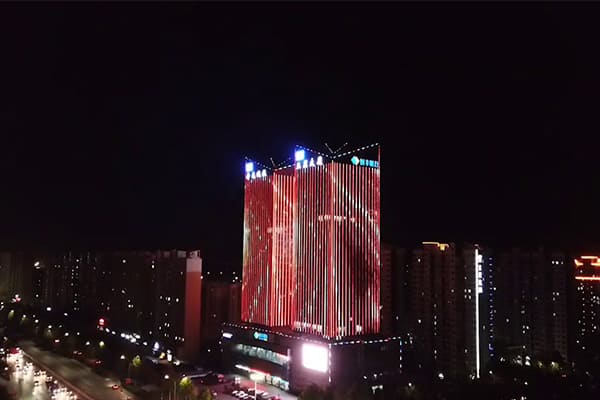
Mastering these four techniques is like having a complete toolbox for facade lighting. I always choose the technique based on the effect the client wants and the surface we are working with. For a historic building with beautiful old stonework, I'll use wall grazing. We place our linear fixtures very close to the wall, aiming them at a steep angle. This makes every little bump and groove in the stone pop with texture. For a modern office building with a sleek, smooth facade, the goal is the opposite. We use wall washing. By placing our wall washer floods further back from the building, the light spreads out to create a uniform, even sheet of light. Accent lighting is our tool for creating focus. We use narrow-beam spotlights to precisely hit a key element, like a grand entrance, a company logo, or the very top of a spire. It directs the viewer's eye exactly where we want it to go. Finally, for buildings with a strong, modern shape, we use outline lighting. Our linear LED lights or pixel dot lights are perfect for tracing the edges of the architecture, essentially drawing the building's form against the night sky.
What technical points and fixtures are key for facade lighting?
Choosing the wrong fixtures can lead to total project failure. Your lights could get damaged by rain and dust, or they might not even fit onto the building's structure properly.
Key technical points include a high IP rating, like IP65 or IP679, for weatherproofing and robust construction for in-ground lights. Fixture choice depends on the facade; modern glass may require internal lighting, while historic buildings need non-invasive ground projectors.
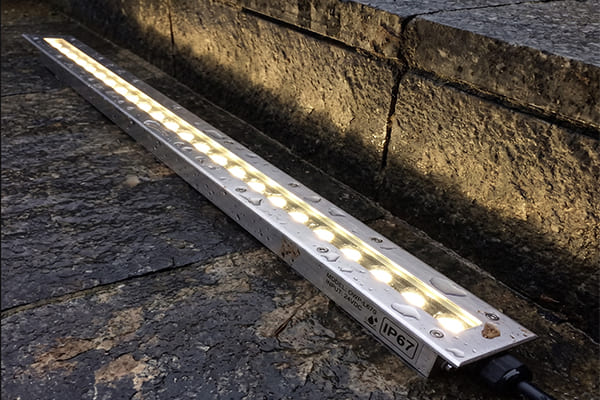
Outdoor fixtures face a tough life of rain, heat, and dust. That's why I always tell my clients that an IP rating is not negotiable. We recommend IP65 as a minimum, but for projects in areas with heavy rain or dust, we push for IP67-rated fixtures like ours for complete protection and long-term reliability. The building itself dictates the type of fixture we use. Modern glass facades are a unique challenge because you can't just throw light at reflective glass10. On these projects, we often work with the architect to light the building from the inside or find clever ways to hide our linear fixtures in structural gaps. Historic buildings are a completely different game. The number one rule is respect for the structure, which means no drilling11. The solution is almost always ground-mounted floodlights and projectors. We use warm, soft light to gently wash the facade and bring out its timeless beauty. In public squares or driveways, we use our heavy-duty in-ground lights, which are built to withstand the weight of cars driving over them daily.
How can you ensure the success of a facade lighting project?
Your design looked perfect on the computer, but it fails in the real world. This results in wasted time, a blown budget, and a very unhappy client.
To guarantee success, always perform on-site mock-ups12 to test light on the actual materials. You must also match the beam angle to the building's height, plan for future maintenance access, and carefully control glare to prevent light pollution.
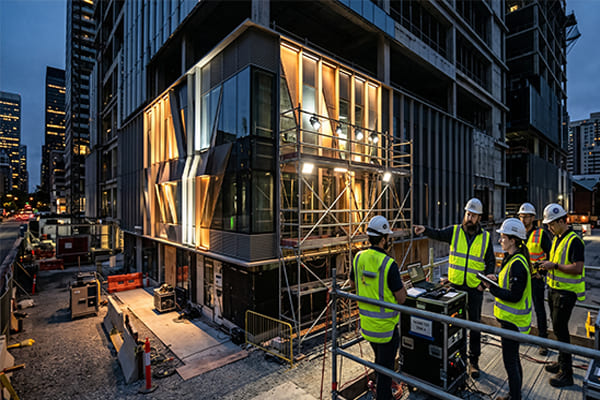
I can't say this enough: on-site testing is the single most important step for success. A render is just a guess. A light that looks one way on a sample panel can look completely different on the actual red brick or polished granite of the building. We always bring fixtures to the site at night to do a live test. This allows us and the client to see the real effect and make adjustments before the full installation. Another common mistake is using the wrong beam angle. For a tall building, a wide beam will spread out and lose its power halfway up. We use super-narrow 5° or 10° beams from our floodlights to punch light all the way to the top. We also have to think about the future. Outdoor fixtures need maintenance. We work with the installation team to ensure that every fixture can be easily accessed and replaced years down the line. Finally, we are obsessed with controlling glare. Good lighting illuminates the target, not the sky or the neighbor's windows. Using shields and precise aiming, we keep the light exactly where it belongs, creating a beautiful effect without disturbing the surrounding environment.
Conclusion
Successful facade lighting is a perfect balance of art and technology. By understanding the core principles, techniques, and technical details, you can transform any building into a stunning nighttime landmark.
"[PDF] ANSI/ASHRAE/IES Standard 90.1-2019: Power and Lighting", https://www.oregon.gov/bcd/codes-stand/Documents/90.1-2019-Lighting-training.pdf. A lighting-design reference defines façade or exterior architectural lighting as illumination used to reveal and support a building’s form, surfaces, and visual character at night. Evidence role: definition; source type: institution. Supports: Facade lighting is the art of using light to enhance a building's architecture after dark.. Scope note: The source will support the general definition, not the aesthetic quality of any specific project. ↩
"Wallwasher - Wikipedia", https://en.wikipedia.org/wiki/Wallwasher. Lighting-design guidance defines wall washing as a technique that places luminaires at sufficient distance and spacing to produce relatively uniform illumination over a wall plane. Evidence role: definition; source type: education. Supports: Wall washing creates a smooth, even sheet of light on a facade.. Scope note: Uniformity in practice depends on fixture photometry, spacing, mounting distance, and surface reflectance. ↩
"Lighting Design: Techniques to Transform Interior Spaces", https://marymount.edu/blog/lighting-design-techniques-to-transform-interior-spaces/. Architectural-lighting guidance commonly frames lighting as subordinate to, and supportive of, the architectural composition, emphasizing visibility, hierarchy, and integration with the built form. Evidence role: expert_consensus; source type: institution. Supports: The most important principle is that light must serve the architecture, not overpower it.. Scope note: This supports the design principle as professional consensus rather than an empirically measured rule. ↩
"DEPTH PERCEPTION AS A FUNCTION OF LIGHTING, ...", https://faculty.washington.edu/inanici/Publications/Tai-depth_perception_lighting_time_spatiality1.pdf. Visual-perception and lighting-design sources describe luminance contrast and shadow as cues that help viewers perceive depth, relief, and three-dimensional form. Evidence role: mechanism; source type: paper. Supports: Creating intentional areas of light and shadow gives a facade depth and a dramatic, three-dimensional feel.. Scope note: The evidence explains the visual mechanism generally, not the outcome on the specific facades discussed in the article. ↩
"Correlated color temperature - Wikipedia", https://en.wikipedia.org/wiki/Correlated_color_temperature. Lighting research and standards describe correlated color temperature as a measurable property of white light that affects perceived warmth or coolness and can influence visual ambience. Evidence role: definition; source type: research. Supports: Color temperature is a critical choice that sets the mood of facade lighting.. Scope note: The source can substantiate the concept and perceptual association of CCT, but material-specific design choices remain contextual. ↩
"[PDF] A correlated color temperature for illuminants", https://nvlpubs.nist.gov/nistpubs/jres/7/jresv7n4p659_A2b.pdf. Lighting references commonly classify approximately 2700–3000 K as warm white and associate lower correlated color temperatures with warmer visual appearance. Evidence role: definition; source type: government. Supports: Warm White (2700K-3000K) is a warm-looking light range often used to create a classic or inviting effect.. Scope note: This supports the classification of warm white; it does not prove that it is always best for historic buildings, stone, or brick. ↩
"Wall Grazing vs. Wall Washing: Accent Lighting Techniques Explained", https://solutions.borderstates.com/blog/wall-grazing-wall-washing-lighting-explained/. Architectural-lighting manuals describe wall grazing, wall washing, accent lighting, and linear outlining as distinct application techniques used to shape exterior and interior architectural surfaces. Evidence role: definition; source type: education. Supports: The four primary techniques are wall grazing, wall washing, accent lighting, and outline lighting.. Scope note: Terminology and grouping may vary by source, so the citation supports these as common techniques rather than an exhaustive taxonomy. ↩
"Wall Texture Highlighting with Grazing Light - Hollygrove Flooring", https://hollygroveflooring.co.uk/wall-texture-highlighting-with-grazing-light. Lighting-design references explain that grazing light is placed close to a surface at a steep angle, increasing shadows and making surface texture more visible. Evidence role: mechanism; source type: institution. Supports: Grazing highlights texture on a facade.. Scope note: The effect depends on surface relief, fixture placement, and aiming, so the citation supports the principle rather than every installation result. ↩
"IP code - Wikipedia", https://en.wikipedia.org/wiki/IP_code. IEC 60529 ingress-protection ratings define the first digit as protection against solids and the second digit as protection against water, with IP65 and IP67 indicating dust-tight enclosures and different levels of water protection. Evidence role: definition; source type: encyclopedia. Supports: IP65 or IP67 ratings indicate weatherproofing levels relevant to outdoor lighting fixtures.. Scope note: The rating defines tested enclosure protection; it does not by itself establish total fixture durability or long-term reliability in all climates. ↩
"Understanding Glass Reflectivity in Modern Buildings", https://www.glassmagazine.com/article/understanding-glass-reflectivity-modern-buildings. Architectural-glass and lighting literature notes that glass facades can produce strong reflection, transmission, and glare effects, making exterior illumination strategies different from those used on opaque surfaces. Evidence role: mechanism; source type: research. Supports: Reflective glass facades present challenges for conventional exterior facade lighting.. Scope note: This supports the technical challenge of lighting glass generally, not the necessity of one specific lighting solution for every glass facade. ↩
"The Secretary of the Interior's Standards for the Treatment of Historic ...", https://www.nps.gov/orgs/1739/secretary-standards-treatment-historic-properties.htm. Historic-preservation standards emphasize avoiding damage to historic materials and recommend that new interventions be reversible or minimally invasive where possible. Evidence role: expert_consensus; source type: government. Supports: Historic buildings often require non-invasive lighting approaches that avoid drilling into protected fabric.. Scope note: Preservation rules vary by jurisdiction and building status, so the citation supports the conservation principle rather than an absolute ban on drilling. ↩
"High Performance Building Mockup in FLEXLAB", https://eta.lbl.gov/publications/high-performance-building-mockup. Lighting-design and construction guidance treats mock-ups as a method for evaluating visual appearance, constructability, and material interaction under real conditions before full installation. Evidence role: general_support; source type: institution. Supports: On-site mock-ups help test facade lighting on actual materials before full installation.. Scope note: This supports mock-ups as a best-practice evaluation method, not as a guarantee of project success. ↩