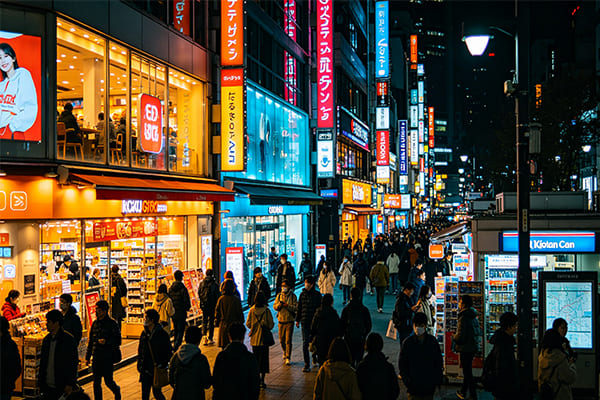
Many see city lighting as just an expense, a simple utility. This view misses its power to transform a city's identity, economy, and safety after the sun goes down1.
Facade lighting is a core tool for reshaping a city's nighttime value. It goes beyond simple illumination, blending aesthetics, economics, safety, and sustainability to define a modern city's character, boost its prosperity, and enhance the well-being of its citizens.
I've been in the outdoor lighting industry for over a decade. I've seen firsthand how a well-designed lighting scheme can breathe new life into a concrete structure. It's not just about installing lights; it's about telling a story and creating value where there was once only darkness. We're not just selling fixtures; we're partnering with cities to build their future. Let's break down exactly how facade lighting achieves this.
How Can Lighting Redefine a Building's Identity and Aesthetics?
At night, even the most impressive architecture can become a flat, featureless silhouette. This lack of identity makes a city feel generic. But with the right lighting, we can change that.
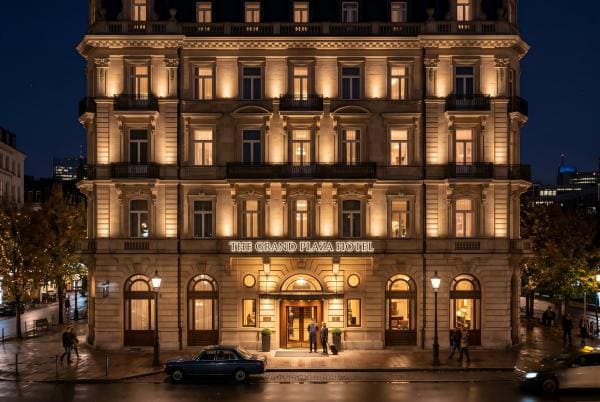
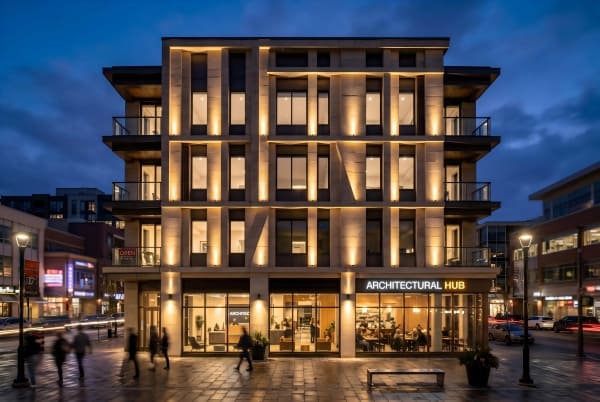
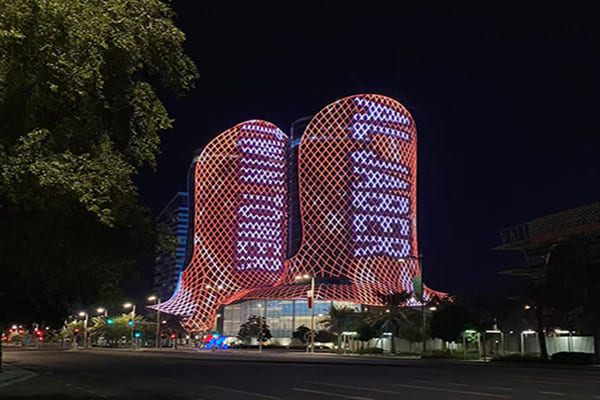
Facade lighting acts as a "second canvas" for architecture2. It uses light and shadow to trace a building's lines, create visual depth, and express a unique character3, turning cold concrete into a warm, inviting symbol of civic pride and culture.
When I talk to architects and city planners, I always say that light is the paint we use after dark. It allows us to completely reimagine a building's presence. We are no longer limited by the materials and colors visible during the day. At night, we can highlight the best features of a structure—the strong vertical lines of a skyscraper, the intricate details of a historic facade, or the sweeping curves of a modern museum. It’s about creating a visual hierarchy. I remember a project we did for a municipal government building. It was a very standard, blocky structure from the 1970s. By using a combination of narrow-beam uplights to emphasize its columns and soft wall washing on the main surfaces, we transformed it into a distinguished and elegant landmark. The citizens' feedback was amazing; they suddenly felt a new sense of pride in a building they had ignored for years. This is what we mean by creating an identity.
Key Techniques for Architectural Storytelling
| Technique | Description | Best For |
|---|---|---|
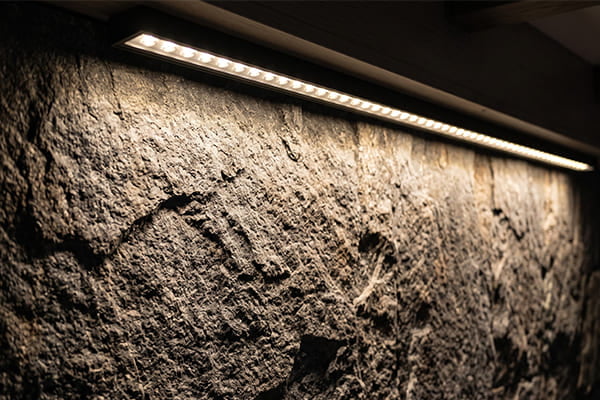
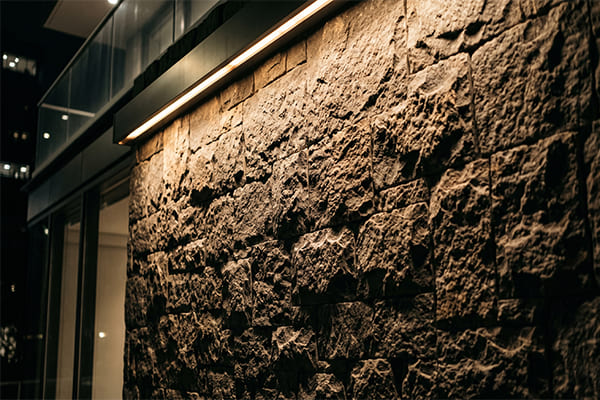
| Wall Grazing | Placing lights close to a surface to highlight its texture.4 | Stone, brick, textured concrete. |
| Wall Washing | Placing lights further from a surface to create a smooth, even wash of light. | Flat, smooth surfaces; creating a color backdrop. |
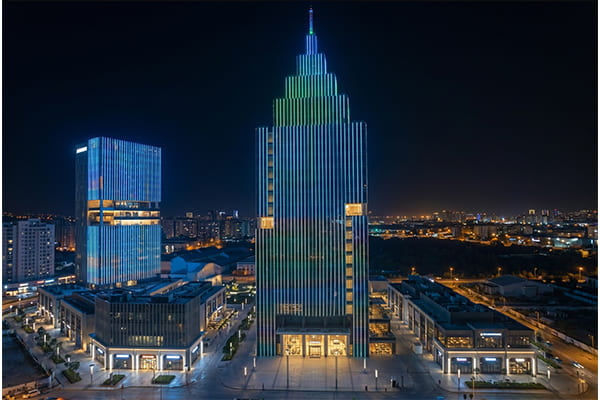
| Outlining | Using linear lights to trace the structural shape of a building. | Defining skylines, bridges, and unique building shapes. |
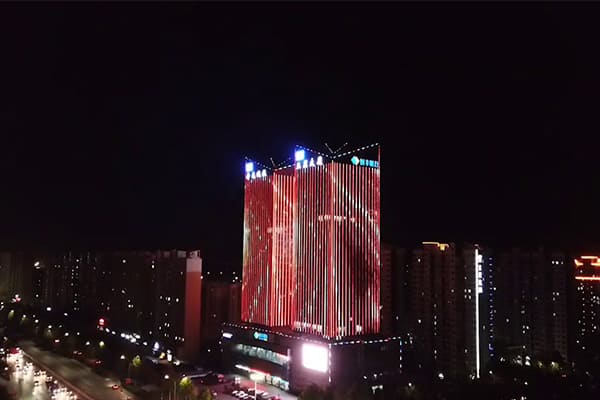
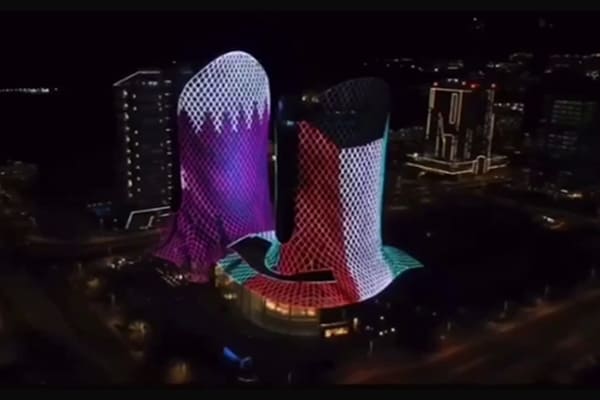
| Pixel Mapping | Using individually controlled pixel lights to create dynamic video effects.5 | Media facades, creating iconic, moving art displays. |
Can Facade Lighting Really Boost the Night Economy?
Many commercial districts become ghost towns after shops close. This represents a huge missed economic opportunity for businesses and the city. Smart lighting can be the catalyst that changes everything.
Yes, it's a direct driver of economic activity. Iconic light shows become powerful tourist magnets6, while high-quality commercial lighting enhances brand visibility, increases foot traffic, and creates a vibrant atmosphere that encourages people to stay out and spend money7.
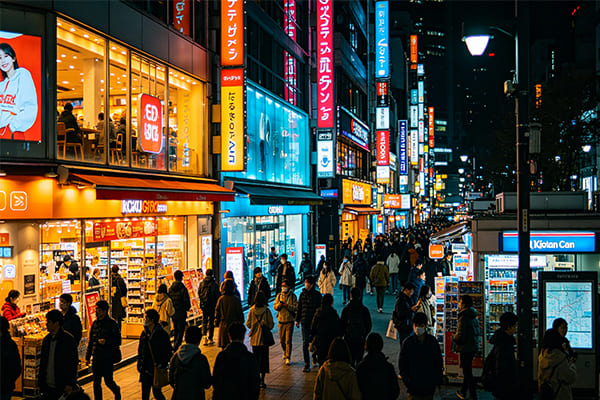
Light is a productive force. A few years ago, we worked with a large retail complex that was struggling to attract evening shoppers. The area felt dark and uninviting. We developed a comprehensive lighting plan that included dynamic lighting on the main facade, bright and welcoming entrance lighting, and accent lighting for the surrounding landscape. The result? Foot traffic after 7 PM increased by over 40% within six months. The vibrant atmosphere made people feel safer and more inclined to browse the shops or sit at the outdoor cafes. This is a direct example of light activating the "night economy." On a larger scale, think about city-wide light festivals. These events don't just create pretty pictures; they fill hotels, restaurants, and shops8. The media facades we install can also be used for advertising, generating direct revenue for building owners. It's a virtuous cycle: good lighting attracts people, people attract business, and business funds even better public spaces.
Economic Impacts of Quality Facade Lighting
| Impact Area | How Lighting Contributes | Example |
|---|---|---|
| Tourism & Events | Creates unique light shows and festivals that attract visitors. | City-wide light festivals drawing international tourists. |
| Retail & Hospitality | Increases foot traffic, enhances brand image, extends business hours. | A shopping mall with a dynamic facade sees more evening customers. |
| Real Estate Value | An iconic, well-lit building has higher perceived value and tenant demand. | Office buildings with signature lighting can command higher rents. |
| Direct Revenue | Media facades can be used for digital out-of-home (DOOH) advertising. | A skyscraper selling ad time on its pixel screen facade. |
Is Facade Lighting Just for Looks, or Does It Improve Safety?
Dark city streets and parks can feel dangerous and are hard to navigate. This fear prevents people from enjoying public spaces after dark. This is a problem that lighting can solve effectively.
Facade lighting serves a crucial practical purpose. It improves public safety by eliminating dark spots and visual blind spots. It also acts as a "light-house" for navigation and, when integrated with smart technology, becomes a key part of a city's security system.
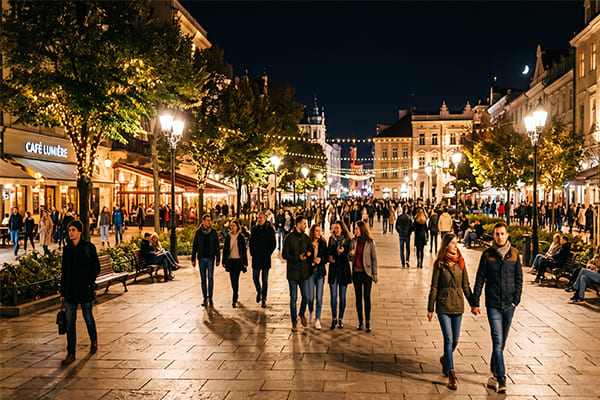
When we design a lighting project, safety is always a top priority alongside aesthetics. It's a simple principle: well-lit areas deter crime9. By strategically lighting building facades, we cast light onto adjacent sidewalks, plazas, and alleyways. This eliminates shadowy corners where people might feel unsafe. It's not about flooding an area with harsh, glaring light; it’s about creating a uniform and comfortable level of brightness that improves visibility for everyone10. I worked on a university campus project where their main concern was the safety of students walking between buildings at night. By lighting the facades of the main academic halls and libraries, we were able to illuminate the main pathways without adding a forest of new poles, which would have ruined the campus aesthetic. The light from the buildings provided a sense of security and also acted as a navigational guide. Today, this is being taken a step further. We're integrating our lighting systems with IoT platforms. Imagine a city where facade lights can flash in a specific color to guide emergency responders to an incident or brighten to full intensity when a security camera detects unusual activity. This is the future of smart, safe cities.
Traditional vs. Smart Lighting for Safety
| Feature | Traditional Lighting | Smart Facade Lighting |
|---|---|---|
| Function | Static illumination. | Dynamic, responsive illumination. |
| Control | On/off, sometimes basic timer. | Remote control, scheduling, sensor integration (motion, sound). |
| Emergency Response | No direct role. | Can be programmed to flash, change color, or create pathways for guidance. |
| Efficiency | Runs at 100% power all night. | Can dim during low-traffic hours and brighten when needed, saving energy. |
Isn't All This Lighting Bad for the Environment?
People often associate bright city lights with energy waste and light pollution, which harms wildlife and obscures the night sky11. This is a valid concern based on outdated technology.
Not with modern technology. Today's lighting follows principles of precision control, high efficiency, and smart operation. We use efficient LED fixtures and advanced optics to place light only where needed, drastically cutting energy use and preventing light pollution.
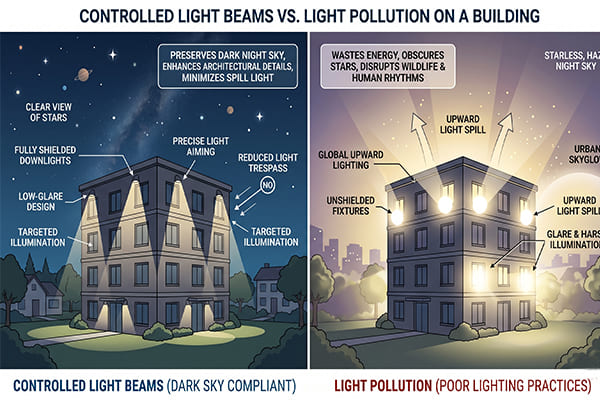
As a lighting professional, sustainability is at the core of my design philosophy. The goal is to achieve maximum visual impact with minimum environmental footprint. The days of blasting a building with inefficient, uncontrolled floodlights are long gone. Our approach is built on three pillars: control, efficiency, and intelligence. First, control. We use fixtures with precise, narrow-angle optics. This means we can shape the light beam to fit the architectural element perfectly, preventing light from spilling into the night sky or into nearby windows. This is the number one way we fight light pollution. Second, efficiency. The LED technology we use today is incredibly efficient. Compared to old metal halide or high-pressure sodium lamps, our LED fixtures use up to 80% less energy to produce the same amount of light12. This translates directly to a lower carbon footprint and lower operational costs for the client. Finally, intelligence. Our systems are all managed by smart controls. This allows us to schedule the lights to turn on, off, or dim to 50% power after midnight when there are fewer people around. This intelligent management ensures not a single watt is wasted. We are proving every day that stunning aesthetics and environmental responsibility can, and must, go hand in hand.
Conclusion
In short, modern facade lighting is a powerful blend of art, business, safety, and sustainability. It has become a key indicator of a city's vision and vitality.
"Evaluating urban nighttime lighting and perceived safety in ...", https://www.sciencedirect.com/science/article/abs/pii/S0360132325015100. Urban-lighting research and municipal lighting guidance describe nighttime illumination as affecting urban image, pedestrian activity, and perceived safety, supporting the claim that lighting can influence city identity, economic use, and safety after dark. Evidence role: general_support; source type: institution. Supports: City lighting can transform a city's nighttime identity, economy, and safety.. Scope note: Such sources usually address urban lighting broadly rather than facade lighting alone. ↩
"Light and Shadow in Architecture Research Papers - Academia.edu", https://www.academia.edu/Documents/in/Light_and_Shadow_in_Architecture/MostDownloaded. Architectural-lighting scholarship commonly treats light as a design medium that can reveal form, texture, hierarchy, and spatial character after dark, supporting the description of facade lighting as an additional architectural layer. Evidence role: expert_consensus; source type: education. Supports: Facade lighting can operate as an added design layer that reshapes how architecture is perceived at night.. Scope note: The phrase “second canvas” is interpretive; evidence supports the underlying design principle rather than the exact metaphor. ↩
"[PDF] DEPTH PERCEPTION AS A FUNCTION OF LIGHTING, TIME AND ...", https://faculty.washington.edu/inanici/Publications/Tai-depth_perception_lighting_time_spatiality1.pdf. Research on architectural and urban lighting explains that luminance contrast, shadows, and directional lighting affect depth perception and the visual legibility of built form, supporting the claim that facade lighting can create depth and character. Evidence role: mechanism; source type: paper. Supports: Light and shadow on facades can create perceived depth and distinctive architectural character.. Scope note: The source may explain perceptual mechanisms generally rather than evaluate a specific facade project. ↩
"Façade Lighting Design : Concepts & Parameters - Academia.edu", https://www.academia.edu/43113139/Fa%C3%A7ade_Lighting_Design_Concepts_and_Parameters. Architectural lighting references define wall grazing as positioning luminaires close to a surface so that shallow-angle light emphasizes texture and relief, supporting the table’s definition. Evidence role: definition; source type: education. Supports: Wall grazing means placing lights close to a surface to emphasize its texture.. ↩
"Study on the LED Media Facade in Urban Space Using Analysis", https://www.researchgate.net/publication/272606187_Study_on_the_LED_Media_Facade_in_Urban_Space_Using_Analysis. Media-facade literature describes pixel-based LED systems as arrays of individually addressable light points capable of displaying dynamic images, animations, or video-like content on building envelopes. Evidence role: definition; source type: paper. Supports: Pixel mapping uses individually controlled light points to create dynamic visual effects on facades.. Scope note: Some sources may discuss media facades generally rather than the specific term “pixel mapping.” ↩
"[PDF] 2023 Riverside Festival of Lights Economic Impact Final Report", https://riversideca.gov/fol/2024%20Riverside%20Festival%20of%20Lights%20EIR%20Report-1.22.pdf?ref=raincrossgazette.com. Government and tourism impact reports for major light festivals document large visitor numbers and associated visitor spending, providing contextual support that iconic light displays can attract tourists. Evidence role: statistic; source type: government. Supports: Iconic light shows can attract tourists and support nighttime visitation.. Scope note: Festival-level evidence does not prove that every facade-lighting project will generate comparable tourism demand. ↩
"Can nighttime lights serve as a proxy for economic inequality ... - PMC", https://pmc.ncbi.nlm.nih.gov/articles/PMC12694823/. Night-time economy research links the quality, attractiveness, and perceived safety of evening public spaces with longer dwell time and participation in leisure and hospitality activities, supporting the claim in a general urban-economy context. Evidence role: general_support; source type: research. Supports: Attractive and well-lit nighttime environments can encourage people to remain in urban areas and participate in spending activities.. Scope note: The evidence usually addresses public-realm quality and night-time economies broadly, not facade lighting as a single causal factor. ↩
"[PDF] 2023 Riverside Festival of Lights Economic Impact Final Report", https://riversideca.gov/fol/2024%20Riverside%20Festival%20of%20Lights%20EIR%20Report-1.22.pdf?ref=raincrossgazette.com. Economic-impact assessments of large light festivals often report visitor expenditure across accommodation, food service, and retail sectors, supporting the claim that such events can benefit hotels, restaurants, and shops. Evidence role: case_reference; source type: government. Supports: City light festivals can generate spending for hotels, restaurants, and shops.. Scope note: This supports the claim through festival case evidence and may not generalize to permanent facade lighting installations. ↩
"Improved Street Lighting and Crime Prevention: A Systematic Review", https://www.ojp.gov/ncjrs/virtual-library/abstracts/improved-street-lighting-and-crime-prevention-systematic-review. Systematic reviews of improved street lighting have found reductions in crime in some studied areas, supporting the general claim that better lighting can deter crime through increased visibility and informal surveillance. Evidence role: expert_consensus; source type: paper. Supports: Well-lit urban areas can deter crime under some conditions.. Scope note: Evidence is mixed by context and concerns street lighting more directly than facade lighting. ↩
"APPENDIX A. ROADWAY LIGHTING DETAILS | FHWA", https://highways.dot.gov/safety/other/visibility/roadway-visibility-research-needs-assessment/appendix-roadway-lighting. Lighting standards and roadway/public-space lighting guidance emphasize uniform illumination and glare control as factors that improve visual performance and pedestrian visibility at night. Evidence role: expert_consensus; source type: institution. Supports: Uniform, comfortable brightness improves nighttime visibility in public spaces.. Scope note: Standards may specify lighting design principles generally rather than facade-mounted illumination specifically. ↩
"Synthesis of Studies on the Effects of Artificial Light at Night (U.S. ...", https://www.nps.gov/articles/effectsoflight.htm. Scientific reviews and dark-sky guidance document that artificial light at night can disrupt wildlife behavior and ecology, while upward light contributes to skyglow that reduces visibility of the night sky. Evidence role: expert_consensus; source type: paper. Supports: Light pollution can harm wildlife and obscure the night sky.. Scope note: The degree of harm depends on spectrum, intensity, timing, direction, and local ecological context. ↩
"LED Lighting | Department of Energy", https://www.energy.gov/energysaver/led-lighting. Energy agencies report that LED lighting can use substantially less electricity than traditional incandescent, fluorescent, high-pressure sodium, or metal-halide technologies, supporting the claim of large energy savings in efficient LED replacements. Evidence role: statistic; source type: government. Supports: LED fixtures can use up to about 80% less energy than older lighting technologies for comparable lighting output.. Scope note: An “up to 80%” saving depends on the baseline lamp type, fixture efficacy, controls, and operating schedule. ↩