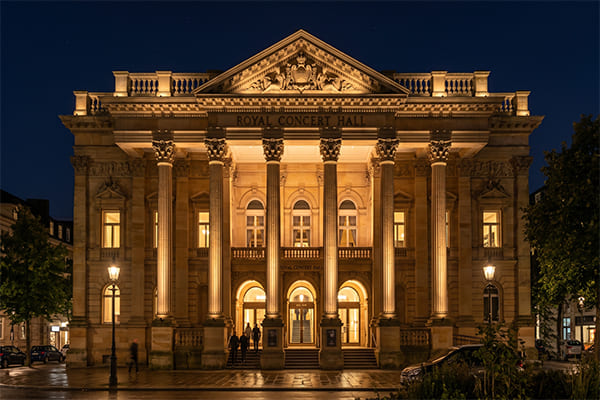
Are you concerned about the growing glow of our cities at night? This isn't just about losing the stars; it's wasted energy and environmental harm1. The real answer isn't just dimming the lights.
To truly reduce light pollution, you must shift from simply illuminating to precisely controlling the light environment. This involves using full cut-off fixtures, managing color temperature, implementing smart controls for brightness and duration, and adopting a sophisticated layered design approach instead of broad floodlighting.
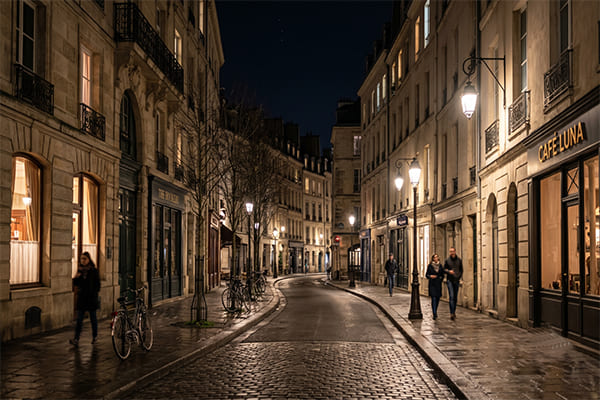
The core idea is simple. We need to upgrade our environmental goals into strict technical requirements for every project. It's not about making our cities darker; it's about making them smarter. For years, I've seen projects where the goal was just to "make it bright," but that's an outdated way of thinking. True success lies in using the right amount of light, in the right place, at the right time. Let's explore the technical principles that turn this vision into reality.
How Can We Control Light Direction and Shielding Accurately?
Does stray light from a project spill into nearby apartment windows? This common problem creates glare and annoys residents, but it's also a sign of poor design and wasted electricity. We can fix this.
The key is to use fixtures that direct light only where you need it. You achieve this with full cut-off luminaires, which ensure zero light is projected upwards (Uplight=0), directly combating skyglow2. Paired with asymmetric optics and shields, you can precisely shape the beam to avoid light trespass.
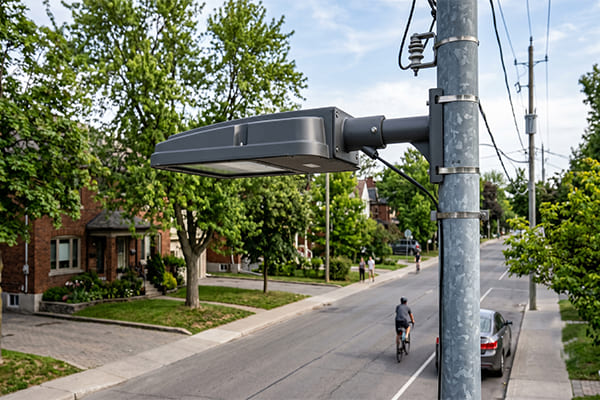
In my experience, controlling the direction of light is the absolute foundation of responsible lighting design. It's the first thing we look at on any project. The goal is to make sure every single photon serves a purpose. We use a system called the B.U.G. rating, which stands for Backlight, Uplight, and Glare3. It’s an essential tool that quantifies how much stray light a fixture produces. For a recent project next to a residential area, the client was worried about light bothering the neighbors. By exclusively using fixtures with a U0 rating (zero uplight) and carefully selected optics to minimize backlight, we illuminated the public path perfectly without a single complaint of light trespass. It's not magic; it's just good engineering. This precision prevents waste and creates a more comfortable, visually pleasing environment for everyone.
Understanding the B.U.G. Rating
| Rating | Description | Impact on Light Pollution |
|---|---|---|
| Backlight | Light directed behind the fixture. | Can cause light trespass onto adjacent properties. |
| Uplight | Light directed above the horizontal plane of the fixture. | The primary cause of skyglow4, which washes out the night sky. |
| Glare | High-intensity light emitted at angles that can cause visual discomfort. | Reduces safety and visual comfort for pedestrians and drivers5. |
Why Is Controlling Spectrum and Color Temperature So Important?
Have you ever walked through a city district at night and felt the light was unpleasantly harsh and blue? That intense light isn't just uncomfortable; it's actively harmful to local ecosystems and even our own health. We can make a better choice.
Controlling the light's spectrum is critical. High-color-temperature white light is rich in blue wavelengths, which disrupts the natural cycles of wildlife and humans6. We must limit public lighting to a warmer color temperature, below 3000K7, and use even warmer tones like 2700K or 2200K in sensitive areas.
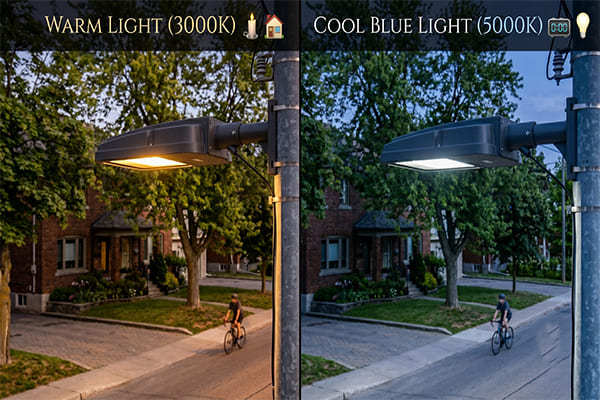
This isn't just a preference; it's based on science. Blue light scatters more easily in the atmosphere, which is a major contributor to skyglow8. More importantly, it can suppress melatonin production in humans, affecting our sleep9. For nocturnal animals, it's even worse—it can disrupt their hunting, mating, and migration patterns10. I once consulted on a project for a park bordering a protected wetland. The initial plan called for standard 4000K lights. I argued strongly for a switch to 2200K amber-colored LEDs. The change was small in cost but huge in impact. We were able to provide safe illumination for the park's pathways while preserving the dark environment the local wildlife depended on. It’s our responsibility as designers and suppliers to protect these delicate balances.
Color Temperature Application Guide
| Color Temp. (Kelvin) | Appearance | Recommended Use | Ecological Impact |
|---|---|---|---|
| 5000K - 6500K | Cool, Blue-White | Avoid for outdoor night use. Industrial or task areas only. | Very High |
| 4000K | Neutral White | Commercial spaces, but should be used with caution outdoors. | High |
| 3000K | Warm White | Recommended maximum for general urban and public spaces. | Moderate |
| 2700K | Very Warm | Ideal for residential areas and ecologically sensitive zones. | Low |
| 2200K | Amber/Yellow | Best choice for areas adjacent to nature reserves, coastlines. | Very Low |
How Do We Implement On-Demand Brightness and Duration?
Do you ever see streets or plazas lit at full power at 3 a.m. with nobody around? This is an incredible waste of energy and a huge, unnecessary source of light pollution. There's a much smarter way to operate.
The old idea that "brighter is better" is completely wrong. Instead, we should use on-demand lighting. This means first figuring out the lowest level of light needed for safety, then using smart control systems to adjust it dynamically. This allows us to dim lights late at night or even enforce "curfews."
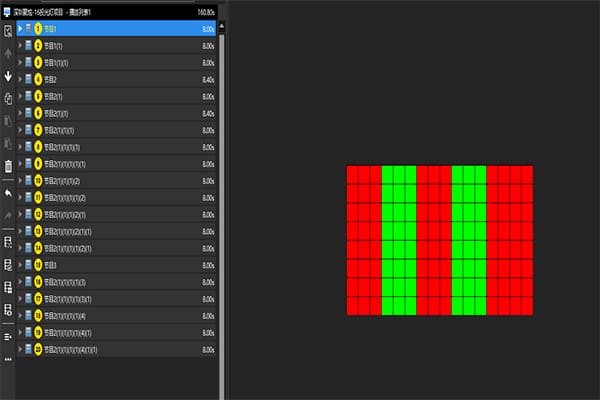
This is where technology really shines. Smart control systems, like the ones we provide at JUXUANLED, are game-changers. We can program an entire district's lighting to respond to real-world needs. For example, in a commercial plaza, we can have lights at 100% brightness from dusk until 11 p.m. when shops close. From 11 p.m. to 5 a.m., the system can automatically dim the lights to 30%, providing enough light for security cameras and safety but drastically cutting energy use and light spill11. Then, before dawn, it can ramp back up to 50% for early commuters. This isn't a fantasy; it's a practical strategy we implement for our clients. It delivers massive energy savings and proves that safety and sustainability can go hand-in-hand. It moves lighting from a static utility to a dynamic, intelligent system.
Sample Dynamic Lighting Schedule for a Public Park
| Time Period | Activity Level | Brightness Level | Rationale |
|---|---|---|---|
| Dusk - 10:00 PM | High | 100% | Peak hours for recreation and community activities. |
| 10:00 PM - 1:00 AM | Medium | 50% | Fewer people, maintaining safety on main pathways. |
| 1:00 AM - 5:00 AM | Very Low | 20% | Park is closed. Minimum light for security only. |
| 5:00 AM - Sunrise | Low | 50% | Accommodates early morning joggers and walkers. |
What's a Better Alternative to Broad Floodlighting?
Have you seen buildings or landscapes that are just blasted with powerful floodlights? This old-school method not only creates a flat, uninteresting visual but also throws massive amounts of light into the night sky. There's a more artistic and responsible way.
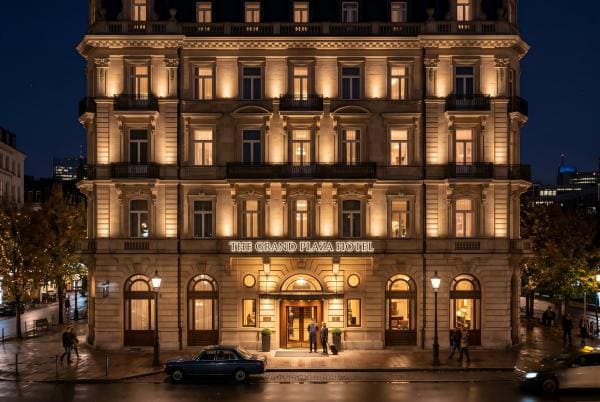
Instead of trying to "paint" the entire scene with light, adopt a layered design approach. This method uses different types of lighting with specific jobs. It creates a nightscape with depth, focus, and visual rhythm, while actively preserving natural dark areas like rivers and green spaces.
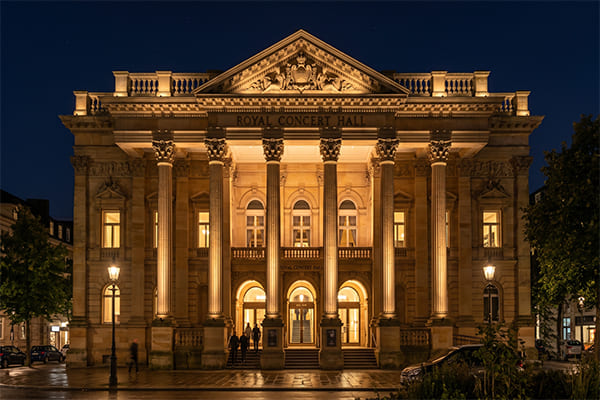
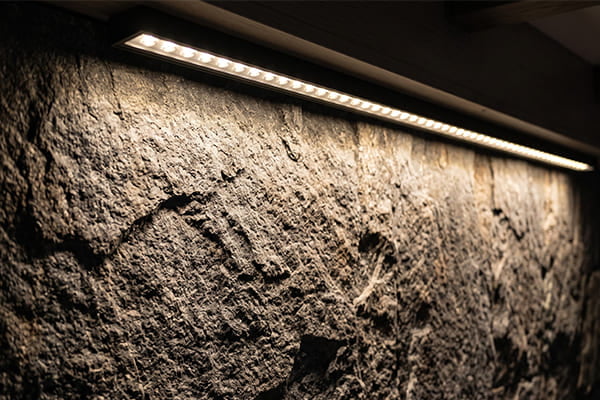
Think of it like painting a masterpiece, not whitewashing a fence. I love this part of the job because it combines technical skill with artistry. We break the design into three layers. First, Base Lighting provides a soft, low-level ambient glow. Then, Functional Lighting adds focused light where it's needed for safety, like on stairs and walkways, using fixtures like our in-ground lights. Finally, Accent Lighting is the "jewelry"—using narrow-beam spotlights or our linear wall washers to highlight beautiful architectural details or landscape features. This approach is far more efficient. Instead of one giant, wasteful floodlight, you use several smaller, precisely aimed fixtures. This not only looks infinitely better, creating a nightscape that "breathes," but it also allows us to intentionally leave areas like parks and riverbanks dark, creating crucial corridors for wildlife12.
The Three Layers of Lighting Design
| Lighting Layer | Purpose | Common Fixtures | Effect |
|---|---|---|---|
| Base | Provides general, low-level ambient illumination. | Low-output floodlights, wall-mounted uplights. | Creates context and a soft visual foundation. |
| Functional | Ensures safety and usability of the space. | Bollards, step lights, in-ground pathway lights. | Guides movement and prevents accidents. |
| Accent | Draws attention to key architectural or natural features. | Narrow-beam spotlights, linear grazers, pixel lights. | Creates drama, depth, and visual interest. |
Conclusion
Modern city lighting isn't about raw power. It’s about using the minimum amount of precise light to deliver both safety and beauty, all while drastically reducing our impact on the environment.
"Light Pollution - Artificial Sky Brightness - Science On a Sphere", https://sos.noaa.gov/catalog/datasets/light-pollution-artificial-sky-brightness/. The cited source should document that excessive or misdirected artificial outdoor lighting wastes energy and is associated with ecological and environmental impacts, providing context for the article’s framing of light pollution. Evidence role: general_support; source type: institution. Supports: Urban light pollution represents wasted energy and causes environmental harm.. Scope note: This supports the general relationship between light pollution, energy waste, and environmental harm rather than quantifying the impact of any specific city or project. ↩
"[PDF] Model Lighting Ordinance (MLO) - Washoe County", https://www.washoecounty.gov/CABS/GE_CAB/2025/files/Example-Dark-Skies-Lighting-Ordinance-PDF-1.pdf. The cited source should define full cut-off or fully shielded luminaires and explain that limiting upward light reduces skyglow from outdoor lighting. Evidence role: definition; source type: institution. Supports: Full cut-off luminaires with zero uplight reduce upward light and help mitigate skyglow.. Scope note: The source may describe the principle of uplight control generally and may not verify the exact performance of every fixture marketed as full cut-off. ↩
"[PDF] Addendum A for IES TM-15-11: Backlight, Uplight, and Glare (BUG ...", https://www.ies.org/wp-content/uploads/2017/03/TM-15-11BUGRatingsAddendum.pdf. The cited source should identify the BUG rating system as a luminaire classification method measuring backlight, uplight, and glare components of outdoor lighting distribution. Evidence role: definition; source type: institution. Supports: The BUG rating system stands for Backlight, Uplight, and Glare and quantifies stray light from fixtures.. Scope note: This supports the terminology and purpose of the rating system, not the suitability of any particular luminaire for a specific site. ↩
"Light Pollution - Night Skies (U.S. National Park Service)", https://www.nps.gov/subjects/nightskies/lightpollution.htm. The cited source should explain that upward-directed or upward-scattered artificial light is a principal contributor to skyglow in populated areas. Evidence role: mechanism; source type: research. Supports: Uplight is a primary cause of skyglow.. Scope note: Skyglow also depends on atmospheric conditions, spectrum, ground reflectance, and surrounding development, so uplight is not the only factor. ↩
"APPENDIX A. ROADWAY LIGHTING DETAILS | FHWA", https://highways.dot.gov/safety/other/visibility/roadway-visibility-research-needs-assessment/appendix-roadway-lighting. The cited source should describe how glare can impair visibility, visual comfort, or hazard detection for road users and pedestrians. Evidence role: mechanism; source type: government. Supports: Glare from outdoor lighting can reduce visual comfort and may impair safety for pedestrians and drivers.. Scope note: The degree to which glare affects safety depends on lighting geometry, adaptation level, age, weather, and roadway context. ↩
"Artificial light at night alters behavior in laboratory and wild animals", https://pmc.ncbi.nlm.nih.gov/articles/PMC6205897/. The cited source should support that high-CCT white LEDs typically contain greater short-wavelength blue content and that artificial light at night can disrupt circadian or biological rhythms in humans and wildlife. Evidence role: expert_consensus; source type: paper. Supports: High-color-temperature white light contains more blue wavelengths and can disrupt biological cycles in humans and wildlife.. Scope note: Effects vary by intensity, timing, exposure duration, species, and spectral power distribution; CCT is an imperfect proxy for biological impact. ↩
"[PDF] Model Outdoor Lighting Ordinance - Montgomery County", https://www.montgomerycountypa.gov/DocumentCenter/View/2057. The cited source should show that several dark-sky lighting guidelines recommend limiting outdoor lighting to warm color temperatures around 3000 K or lower to reduce blue-rich emissions. Evidence role: expert_consensus; source type: institution. Supports: Outdoor public lighting is often recommended to be 3000 K or warmer to reduce light-pollution impacts.. Scope note: A 3000 K threshold is a policy and guideline benchmark, not a universal biological safety boundary for all environments or species. ↩
"Rayleigh scattering - Wikipedia", https://en.wikipedia.org/wiki/Rayleigh_scattering. The cited source should explain that shorter-wavelength blue light undergoes stronger atmospheric scattering and can therefore contribute disproportionately to artificial skyglow. Evidence role: mechanism; source type: paper. Supports: Blue light scatters more readily in the atmosphere and contributes to skyglow.. Scope note: Actual skyglow contribution also depends on fixture shielding, lumen output, aerosols, clouds, and surface reflectance. ↩
"The influence of blue light on sleep, performance and wellbeing in ...", https://pmc.ncbi.nlm.nih.gov/articles/PMC9424753/. The cited source should report that nighttime exposure to short-wavelength or blue-enriched light can suppress melatonin and influence sleep or circadian timing in humans. Evidence role: mechanism; source type: paper. Supports: Blue-rich light at night can suppress human melatonin production and affect sleep.. Scope note: Magnitude of effect depends on illuminance, duration, timing, prior light exposure, and individual sensitivity. ↩
"Artificial light at night alters behavior in laboratory and wild animals", https://pmc.ncbi.nlm.nih.gov/articles/PMC6205897/. The cited source should review evidence that artificial light at night alters animal behavior, including foraging, reproduction, orientation, or migration in nocturnal and crepuscular species. Evidence role: expert_consensus; source type: paper. Supports: Artificial light at night can disrupt wildlife hunting, mating, and migration patterns.. Scope note: Specific responses differ substantially among taxa; the source may support these categories collectively rather than for every species near a lighting project. ↩
"Comprehensive Assessment of Context-Adaptive Street Lighting", https://pmc.ncbi.nlm.nih.gov/articles/PMC11435540/. The cited source should document that adaptive or dimmable outdoor lighting controls can reduce energy consumption and emitted light levels while maintaining designed illumination for operational needs. Evidence role: general_support; source type: government. Supports: Adaptive dimming can reduce energy use and light spill while maintaining functional lighting levels.. Scope note: The exact 30% level and adequacy for security cameras depend on site layout, camera specifications, lighting standards, and risk assessment. ↩
"Impacts of artificial light at night in marine ecosystems—A review", https://pmc.ncbi.nlm.nih.gov/articles/PMC9540822/. The cited source should explain that maintaining dark or less illuminated habitat corridors can support wildlife movement and reduce fragmentation effects from artificial light at night. Evidence role: general_support; source type: paper. Supports: Leaving parks and riverbanks dark can create important movement corridors for wildlife.. Scope note: The source may support the ecological value of dark corridors generally rather than proving that any specific layered lighting design creates an effective corridor. ↩