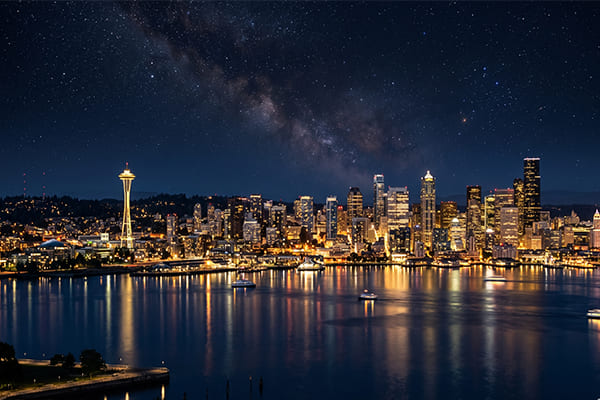
Are you concerned about high energy costs and light pollution from city lighting? It wastes money, harms ecosystems, and obscures our view of the night sky.1 True sustainability is the answer.
Sustainable urban lighting focuses on four key areas: protecting ecosystems with dark-sky standards, using smart controls for on-demand light, implementing high-efficiency optics to prevent waste, and adopting modular, long-life designs to reduce e-waste.2 It's about using the right light, in the right place, at the right time.
For years, I've seen projects focus only on switching to LED. But real sustainable design is so much more than that. It has evolved from a simple product swap into a sophisticated energy management system for the entire city. It requires a holistic approach that balances energy savings, ecological health, and long-term economic benefits. Let's break down how we achieve this by turning simple light fixtures into intelligent nodes of a smart city network.
How Can We Protect Ecosystems with Dark Sky Compliant Lighting?
Bright, poorly aimed city lights disrupt nocturnal animals and plants.3 This constant illumination can damage entire local ecosystems and severs our timeless connection with the night sky.
To protect nature, we must use full cut-off fixtures that direct all light downwards (U0 rated)4. We also select warm color temperatures under 3000K, or even 2200K-2700K in ecologically sensitive areas5. This significantly reduces harmful skyglow and its impact on wildlife.
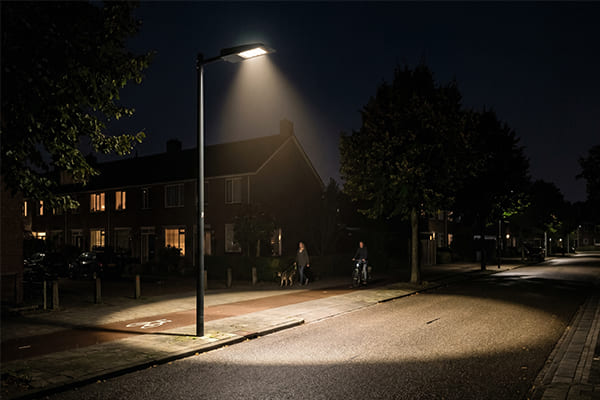
Protecting the "dark sky" isn't just for astronomers; it's fundamental to ecological health. The key is controlling where the light goes and what color it is. First, we use what are called "full cut-off" luminaires. These fixtures have a U0 rating, which is a technical way of saying they produce zero upward light. All illumination is directed strictly downward onto the intended surface, eliminating the skyglow that washes out stars. Second, we focus on color temperature. The blue-rich light from cooler LEDs can severely disrupt the circadian rhythms of animals and even humans.6 That's why we advocate for warm CCTs below 3000K. I remember a project near a protected wetland where we used 2200K amber lights to ensure local bird populations weren't disturbed. It’s about being a good neighbor to nature.
| Feature | Bad Practice (High Impact) | Good Practice (Low Impact) |
|---|---|---|
| Light Direction | Unshielded, upward light | Full Cut-off (U0 Rated) |
| Color Temp (CCT) | 4000K - 6500K (Cool White) | < 3000K (Warm White) |
| Sensitive Areas | Standard cool lighting | 2200K - 2700K (Amber/Warm) |
| Result | High skyglow, ecological harm | Dark sky preservation, safety |
What Role Do Smart Controls Play in Sustainable Lighting?
Many public lights run at 100% brightness all night, even on empty streets. This wastes a huge amount of energy, inflating electricity bills and increasing a city's carbon footprint.
Smart controls, using protocols like DMX512 or DALI, allow for dynamic, scheduled dimming.7 Combined with sensors for on-demand lighting, they cut energy use dramatically by providing full brightness only when necessary8, while maintaining safety with lower-level background light.
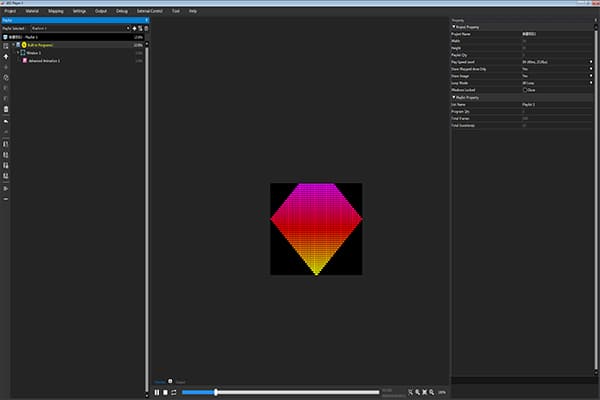
This is where lighting gets truly intelligent. Instead of a simple "on/off" switch, we integrate a nervous system into the city's lighting grid. Protocols like DMX512 and DALI are the languages these lights use to communicate. This allows us to program a dynamic lighting plan. For example, on a recent city project, we set the main road lights to 100% brightness during the busy evening rush hour. As traffic dwindled after 11 PM, the lights automatically dimmed to 50%. Then, in the early morning hours, they dropped to a 20% baseline level, which is still enough for safety but saves a massive amount of power. In quieter side streets, we added microwave sensors. The lights stay at 20% until a car or pedestrian approaches, at which point they ramp up to 100% and then dim back down. This is the essence of using light at the "right time."
| Time Period | Traffic Level | Recommended Brightness | Energy Savings |
|---|---|---|---|
| 7 PM - 11 PM | High (Peak) | 100% | Baseline |
| 11 PM - 1 AM | Medium (Decreasing) | 50% | Significant |
| 1 AM - 5 AM | Low (Minimal) | 20% (or sensor-based) | Maximum |
How Does Efficient and Precise Light Distribution Contribute to Sustainability?
Have you ever been blinded by glare from a streetlight or had unwanted light spill into your bedroom window? This is wasted light, a product of inefficient fixtures and poor optical design.
True efficiency comes from combining high-efficacy LEDs (≥100lm/W)9 with precision optics. Asymmetric lenses and narrow beam angles (5°-10°) direct light exactly where it's needed10, maximizing useful illumination while preventing energy waste from spill light and glare.
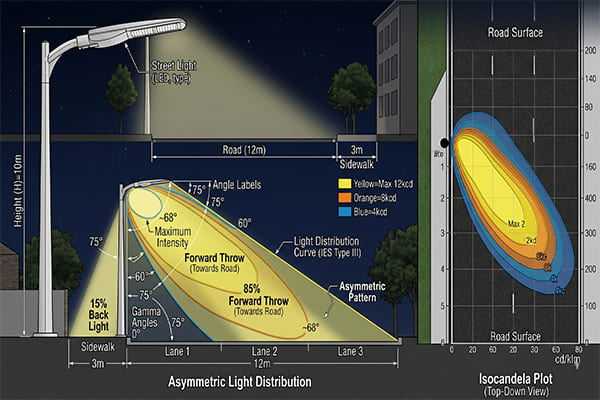
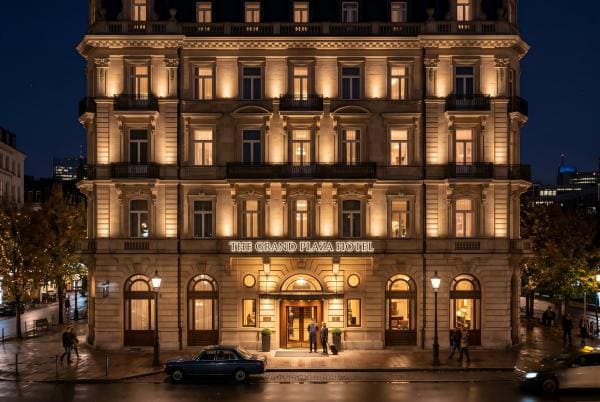
Getting the most out of every watt is critical. We start by using high-efficacy LEDs, which simply means they produce more light (lumens) for less power (watts). But the real magic is in the optics—the lenses that shape and direct the light. For street lighting, we use asymmetric optics. These lenses are engineered to cast a rectangular pattern of light that covers the road and sidewalks perfectly, without wasting light by illuminating the sides of buildings. For architectural lighting, like highlighting a building's columns, we use very narrow beams, sometimes as tight as 5 or 10 degrees. I recall a project for a historic facade where this was crucial. We could accentuate every detail without creating a halo of light pollution around the building. This is what it means to put light in the "right place." It improves safety and aesthetics while making every single watt count.
| Parameter | Old Technology (e.g., HPS) | Modern LED with Precision Optics |
|---|---|---|
| Efficacy | ~60-80 lm/W | ≥100 lm/W |
| Light Control | Broad, uncontrolled spill | Asymmetric, precise beam shaping |
| Glare & Spill | High | Minimal to None |
| Energy Use | High (for same light level) | Low (highly efficient) |
Why is a Modular, Long-Lasting Design Crucial for Sustainable Lighting?
When a cheap light fixture fails, the entire unit is often thrown out. This creates a mountain of electronic waste and leads to high long-term maintenance costs for project owners.
A sustainable fixture is built to last. High IP (IP65-IP68) and IK (IK08-IK10) ratings ensure durability against elements and impact. A modular design allows for easy replacement of key parts like the driver or LED board, extending its useful life beyond 10 years and minimizing waste.
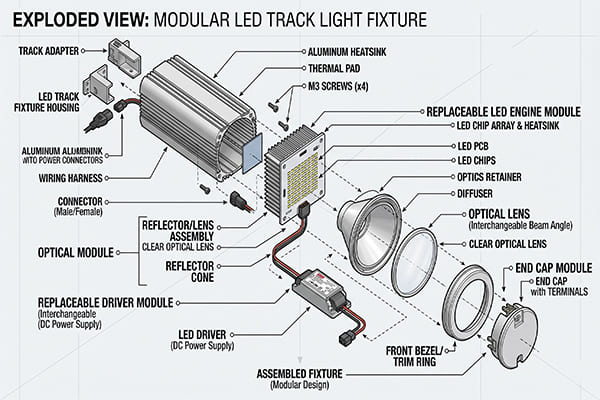
When we talk about sustainability, we must consider the entire lifecycle of a product. A truly sustainable lighting solution is not disposable. We build our fixtures to be tough. A high IP rating, like IP67, means it's completely protected from dust and can even be submerged in water.11 A high IK rating, like IK10, means it can withstand significant physical impact. This durability is the first step. The second, and perhaps more important, step is modularity. I've worked with many clients who were frustrated by having to replace an entire expensive fixture just because a small component like the power supply failed. With a modular design, you can simply swap out the broken part.12 This drastically reduces maintenance costs and, critically, prevents the whole fixture from ending up in a landfill. It shifts the focus from a low initial price to a low total cost of ownership, which is the smarter, more sustainable investment.
| Aspect | Standard Fixture | Modular, Durable Fixture |
|---|---|---|
| Lifespan | 3-5 Years | 10+ Years |
| Failure Response | Replace entire unit | Replace specific module (driver, board) |
| Protection | Basic (e.g., IP65, IK07) | High (e.g., IP67, IK10) |
| Total Cost | Low initial cost, high replacement cost | Higher initial cost, very low lifetime cost |
| Waste | High E-waste | Minimal E-waste |
Conclusion
Sustainable lighting goes beyond just saving energy. It's a holistic strategy that protects our environment, utilizes smart technology, and provides long-term economic value for smarter, greener, and more livable cities.
"Light pollution - Wikipedia", https://en.wikipedia.org/wiki/Light_pollution. The source documents that artificial light at night is associated with wasted energy, ecological disruption, and reduced visibility of the night sky. Evidence role: general_support; source type: institution. Supports: Urban light pollution wastes money, harms ecosystems, and obscures views of the night sky.. Scope note: The source may describe these impacts broadly rather than quantify the article’s specific local or project-level effects. ↩
"[PDF] Outdoor lighting: Sustainable practices for effectively restoring the ...", https://krex.k-state.edu/server/api/core/bitstreams/dbb80aaf-7600-42ee-b339-f9b0930b54f4/content. The source describes sustainable outdoor lighting as a combination of shielding, appropriate spectrum, controls, energy efficiency, and lifecycle considerations. Evidence role: expert_consensus; source type: institution. Supports: Sustainable urban lighting involves dark-sky practices, controls, efficient optical design, and longer-life or lower-waste equipment choices.. Scope note: The source may not use the article’s exact four-part framework, but it provides contextual support for the listed design principles. ↩
"Artificial light at night alters behavior in laboratory and wild animals", https://pmc.ncbi.nlm.nih.gov/articles/PMC6205897/. The source reviews evidence that artificial light at night can alter behavior, physiology, and ecological interactions in nocturnal organisms and plants. Evidence role: expert_consensus; source type: paper. Supports: Bright, poorly aimed city lights can disrupt nocturnal animals and plants.. Scope note: Effects vary by species, light intensity, spectrum, and habitat, so the source supports the general mechanism rather than every urban setting equally. ↩
"6 Lighting System Selection | FHWA - Department of Transportation", https://highways.dot.gov/safety/other/visibility/fhwa-lighting-handbook-august-2012/6-lighting-system-selection. The source defines full-cutoff or U0 outdoor luminaires as fixtures with no upward light output above the horizontal plane under the relevant luminaire classification system. Evidence role: definition; source type: institution. Supports: Full cut-off or U0-rated fixtures direct light downward and emit no upward light.. Scope note: The definition supports the optical classification, not by itself the total environmental performance of a specific installation. ↩
"Artificial light at night alters behavior in laboratory and wild animals", https://pmc.ncbi.nlm.nih.gov/articles/PMC6205897/. The source recommends limiting blue-rich outdoor light and using warmer color temperatures, commonly at or below 3000 K, to reduce skyglow and ecological disturbance. Evidence role: expert_consensus; source type: institution. Supports: Warm outdoor lighting below 3000 K, and lower CCTs in sensitive areas, can reduce ecological and skyglow impacts.. Scope note: Recommendations for 2200–2700 K in sensitive areas are often precautionary and context-dependent rather than a universal threshold. ↩
"The inner clock—Blue light sets the human rhythm - PMC", https://pmc.ncbi.nlm.nih.gov/articles/PMC7065627/. The source explains that short-wavelength, blue-rich light has a strong effect on circadian photoreception and can suppress melatonin or shift circadian timing in humans and other animals. Evidence role: mechanism; source type: paper. Supports: Blue-rich light from cooler LEDs can disrupt circadian rhythms in animals and humans.. Scope note: The severity of disruption depends on exposure duration, intensity, timing, and species, so the source supports the biological mechanism rather than a fixed outcome for all installations. ↩
"Digital Addressable Lighting Interface - Wikipedia", https://en.wikipedia.org/wiki/Digital_Addressable_Lighting_Interface. The source defines DALI or DMX512 as lighting-control protocols that enable addressable control, dimming, and programmed lighting behavior. Evidence role: definition; source type: institution. Supports: Lighting-control protocols such as DMX512 and DALI can enable dynamic or scheduled dimming.. Scope note: The protocol definition supports control capability; actual energy performance depends on the installed system and operating schedule. ↩
"Comprehensive Assessment of Context-Adaptive Street Lighting", https://pmc.ncbi.nlm.nih.gov/articles/PMC11435540/. The source reports that adaptive street-lighting controls, including dimming and sensor-based operation, can reduce electricity consumption compared with fixed-output lighting. Evidence role: statistic; source type: government. Supports: Smart dimming and sensor-based lighting controls can significantly reduce energy use by providing high output only when needed.. Scope note: Reported savings vary substantially by baseline technology, dimming profile, traffic conditions, and local lighting requirements. ↩
"LED Lighting - Department of Energy", https://www.energy.gov/energysaver/led-lighting. The source provides measured or benchmark efficacy data showing that modern LED luminaires can reach or exceed 100 lumens per watt, depending on product class and test conditions. Evidence role: statistic; source type: government. Supports: Modern high-efficacy LED lighting can achieve efficacy of at least 100 lm/W.. Scope note: Efficacy varies by luminaire design, color temperature, driver losses, and operating conditions; the threshold is a benchmark rather than a guarantee for all LEDs. ↩
"Asymmetric vs Symmetric Light: Which is Right for You?", https://sigostreetlight.com/blogs/asymmetric-vs-symmetric-light-which-is-right-for-you/. The source explains that optical elements such as lenses and reflectors shape luminaire distribution, allowing light to be directed to target areas and reducing spill outside the intended field. Evidence role: mechanism; source type: education. Supports: Asymmetric lenses and narrow beam angles can direct light toward intended target areas.. Scope note: The source supports the optical principle; whether 5°–10° beams are appropriate depends on mounting geometry, target size, and lighting objectives. ↩
"IP code - Wikipedia", https://en.wikipedia.org/wiki/IP_code. The source defines IP67 under the IEC ingress-protection code as dust-tight and protected against temporary immersion in water under specified test conditions. Evidence role: definition; source type: institution. Supports: An IP67 rating means dust-tight protection and temporary water-immersion protection.. Scope note: IP67 does not imply unlimited submersion or resistance to all environmental conditions; it applies only to standardized test parameters. ↩
"Electronics Basic Information, Research, and Initiatives | US EPA", https://www.epa.gov/electronics-batteries-management/electronics-basic-information-research-and-initiatives. The source describes modular product design as an approach in which components can be separated, replaced, or upgraded, supporting repair and longer service life. Evidence role: mechanism; source type: paper. Supports: Modular design enables failed components to be replaced rather than discarding the entire fixture.. Scope note: The source supports the design principle; actual repairability depends on fixture engineering, spare-parts availability, and maintenance practices. ↩