Struggling with lighting control systems? The wrong choice can limit your design and cause huge headaches. We have the solution to make your project shine brilliantly.
For dynamic outdoor architectural lighting, DMX512 is the top choice for its speed and color control. For precise indoor energy management, DALI excels. For total building automation that integrates everything, KNX is the standard. Each serves a specific, vital purpose in modern projects.
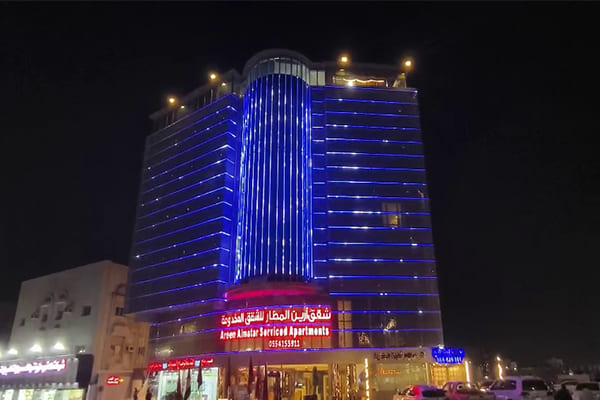
Choosing the right control system can feel complicated. You have DMX, DALI, and KNX all presented as options, and it's easy to get lost in the technical details. But what if I told you the decision is simpler than you think? Each of these protocols was designed with a very specific job in mind. Once you understand their core purpose, you can pick the right tool for your project with confidence. Let’s break it down together so you can make the best choice without any guesswork.
Why is DMX512 the king of outdoor architectural lighting?
Your building facade needs to be stunning and dynamic. But slow or clunky controls can ruin the entire effect. DMX delivers the speed and power your vision demands.
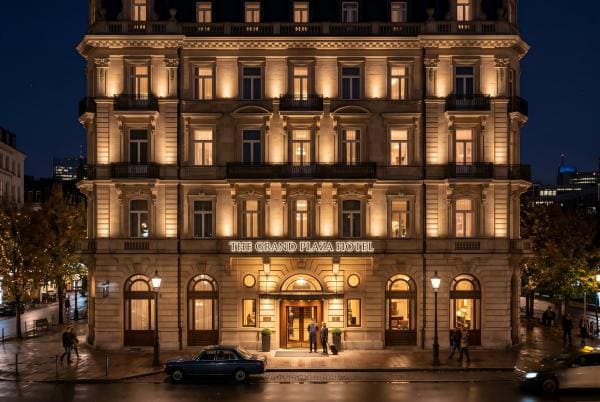
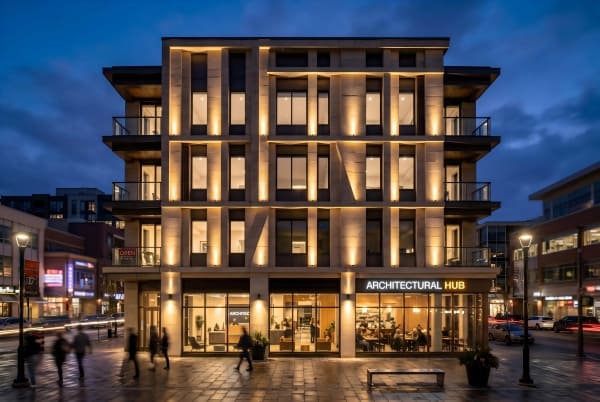
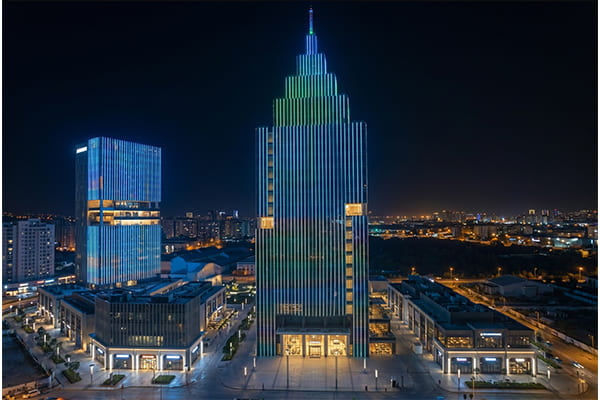
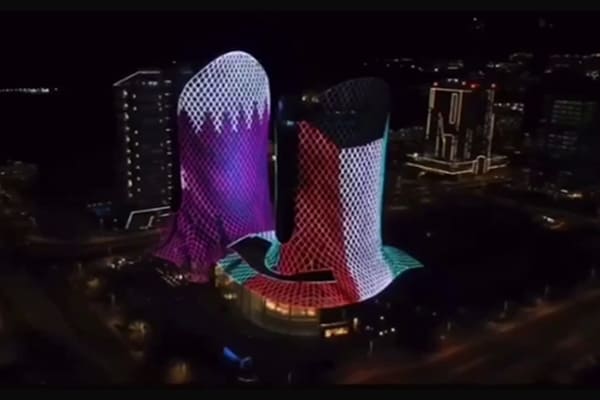
DMX512 is the industry standard for outdoor lighting because of its high-speed data transmission.1 This allows for millisecond-level synchronization2, creating flawless dynamic effects like color chases and pixel animations that other systems simply cannot match. It’s built for performance and visual impact.
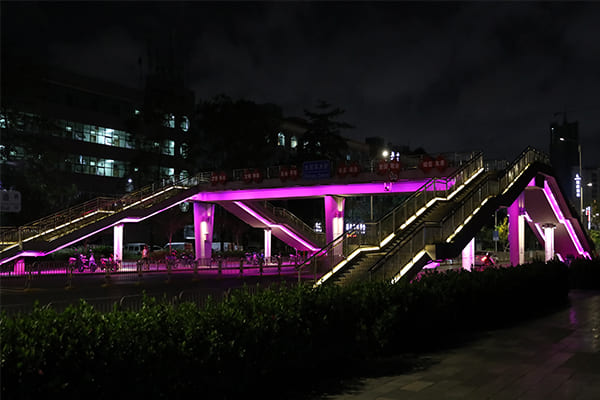
In all my years working on large-scale lighting projects, DMX512 has been our undisputed champion for anything outdoors. It's a robust and relatively simple protocol designed for one thing: fast and reliable control of dynamic lighting. Think of it as a one-way highway for lighting commands, sending data out at a very high speed. This is crucial for creating the smooth, synchronized effects that make modern buildings come alive at night. I remember a project where we used thousands of our pixel lights on a skyscraper. Only DMX had the speed to run the complex video animations across the facade without any lag or stutter. It’s the engine that powers truly breathtaking visual experiences.
What Makes DMX So Powerful?
The core strength of DMX lies in its speed and channel capacity. It's not trying to manage building temperature or report energy usage; its sole focus is on telling the lights what to do, right now. This specialization is what makes it perfect for media facades, bridge lighting, and any landscape project where color and movement are key. Its ability to handle vast numbers of channels allows us to design without limits.
Technical Breakdown for Project Managers
For project planning, understanding the basic structure of DMX is key. It helps in designing the wiring layout and ensuring system stability.
| Feature | DMX512 Specification | Why It Matters for Your Project |
|---|---|---|
| Speed | 250 kbps | Ensures millisecond-level response for perfectly synchronized, fluid lighting effects. |
| Channels | 512 channels per "Universe"3 | Controls up to 170 RGB fixtures per universe4, offering huge capacity for complex designs. |
| Scalability | Expandable with Art-Net/sACN5 | You can control tens of thousands of channels for massive projects by using network gateways. |
| Wiring | Daisy-chain topology | Simplifies installation, running one cable from fixture to fixture in a line. |
| Signal Integrity | Requires a 120Ω terminator at the end of each line6 | Prevents signal reflection and data errors, ensuring reliable performance across long distances. |
When should you choose DALI instead of DMX?
You need precise control over every single light inside a building, but also need to save energy. DALI is designed for this exact challenge, offering granular control and efficiency.
Choose DALI for indoor commercial lighting where individual fixture control, status feedback, and energy management7 are priorities. It lets you dim, switch, and monitor each light separately, making it perfect for offices, hotels, and retail spaces where dynamic color shows aren't the goal.
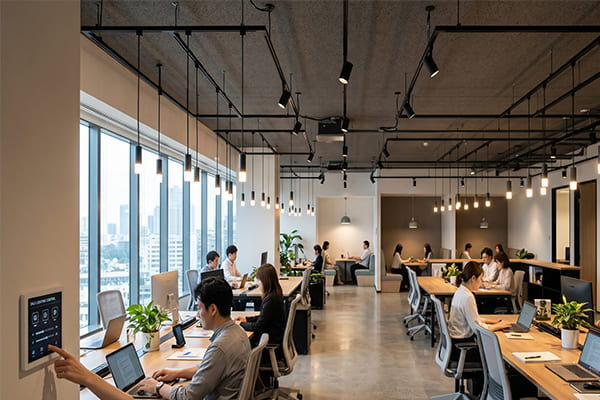
While DMX is the star of our outdoor shows, DALI is the silent, efficient manager for indoor spaces. Think of DALI as a two-way conversation. Not only can you tell a light to turn on or dim to 50%, but the light can also report back its status—if the lamp has failed, for example8. This is incredibly valuable for facility management in large commercial buildings. We often see it specified for projects like corporate offices or hotels where the main goal is creating comfortable, functional, and energy-efficient environments. It allows for easy grouping, scene-setting (like "Meeting Mode" or "Cleaning Mode"), and integration with daylight sensors to automatically dim lights and save power9. It's smart, but it's not a performer; its data speed is much slower than DMX10, making it unsuitable for fast, dynamic color effects.
DALI: The Master of Indoor Management
DALI's strength is its intelligence and flexibility within a building. It's a decentralized system, meaning some of the logic is stored in each fixture. This makes it easy to reconfigure lighting zones in software without needing to physically rewire anything11, a huge plus for spaces with changing layouts.
DMX vs. DALI: A Head-to-Head Comparison
To make the choice crystal clear, let's put them side by side. Seeing their different purposes helps you select the right tool without hesitation.
| Aspect | DMX512 | DALI (Digital Addressable Lighting Interface) |
|---|---|---|
| Primary Use | Dynamic, performance-driven architectural lighting | Indoor, functional, and energy-efficient lighting |
| Communication | One-way, high-speed broadcast | Two-way, slower communication (reports status back) |
| Best Application | Facades, bridges, stages, media screens | Offices, hotels, hospitals, retail, warehouses |
| Key Strength | Speed and synchronization for visual effects | Individual control, status feedback, energy savings |
| Dynamic Effects | Excellent | Poor to non-existent |
| Setup Complexity | Requires addressing and console programming | Simpler addressing, often auto-discovered |
How does KNX fit into the bigger picture with lighting?
Your project isn't just about lights. You need to control HVAC, blinds, and security seamlessly from one platform. KNX acts as the central brain, uniting all these separate systems.
KNX is a total building automation protocol, not just a lighting system.12 It integrates lighting with other functions like heating, ventilation, and security. Use KNX as the master controller for overall scene management, especially in high-end smart buildings and large-scale complexes.
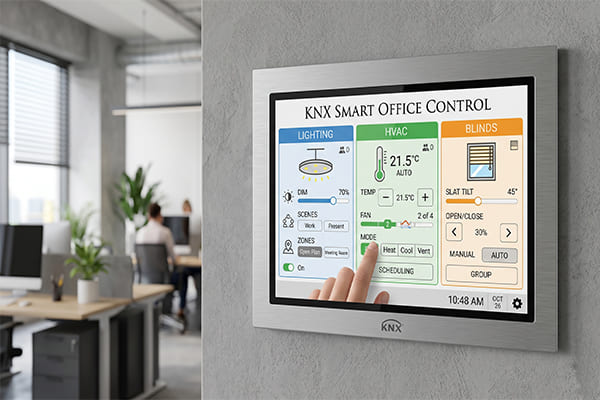
If DMX is the lighting performer and DALI is the indoor manager, then KNX is the general director of the entire building. It’s a global standard for home and building control that doesn't just focus on lighting. Its purpose is to get all the different systems in a building—lighting, HVAC, security, blinds, audio/video—to talk to each other. On a recent mixed-use development project, we used KNX to manage the building's core systems. A single "Welcome Home" button for a luxury apartment could trigger a KNX command to set the lights to a soft glow, adjust the thermostat, and open the curtains. KNX provides the overarching intelligence. It's the brain that makes a building truly smart, not just brightly lit.
KNX: The Brain of the Smart Building
KNX operates on a decentralized bus structure, making it incredibly reliable. There's no single point of failure. It's the ultimate choice for projects that demand a holistic and integrated approach to building management. It handles the high-level logic, such as time-based events or complex "if-this-then-that" scenarios involving multiple building systems.
Creating Synergy: The KNX + DMX Strategy
For the most ambitious projects, like large commercial complexes or iconic hotels, we don’t choose one or the other. We use them together. This "KNX + DMX" architecture gives us the best of both worlds.
- KNX handles the big picture: It controls the overall building state. For example, a command for "Evening Mode" is sent through the KNX system at sunset.
- A Gateway Translates the Command: This KNX command is sent to a DMX gateway or controller.
- DMX Executes the Performance: The DMX controller then activates a pre-programmed dynamic light show on the building’s facade, bringing it to life with vibrant colors and movement.
This way, the spectacular outdoor lighting is perfectly integrated with the building's internal operations, all managed through a single, intelligent platform. It proves that good lighting should not only be "bright," but must also "move" brilliantly as part of a cohesive building experience.
Conclusion
In short, use DMX for dynamic outdoor shows, DALI for smart indoor control, and KNX to integrate everything. Choose the right tool for the job to ensure project success.
"DMX512 - Wikipedia", https://en.wikipedia.org/wiki/DMX512. A technical standards or encyclopedia source should document DMX512 as a widely used digital lighting-control protocol and describe its 250 kbit/s serial data rate, supporting the claim that it is suited to fast lighting control. Evidence role: expert_consensus; source type: encyclopedia. Supports: DMX512 is widely used as a standard lighting-control protocol and provides high-speed digital transmission for lighting control.. Scope note: The source may establish DMX512 as a standard in entertainment and architectural lighting generally, rather than proving it is the single leading choice for all outdoor architectural projects. ↩
"DMX512 - Wikipedia", https://en.wikipedia.org/wiki/DMX512. A DMX512 technical reference should support that DMX512 transmits frames at a rate fast enough for sub-second lighting updates; this contextual evidence supports millisecond-scale responsiveness but may not verify every installation’s synchronization accuracy. Evidence role: mechanism; source type: institution. Supports: DMX512 can support very fast update rates that enable synchronized dynamic lighting effects.. Scope note: Actual synchronization depends on controller design, fixture response, network architecture, and programming, not only on the DMX512 protocol. ↩
"DMX512 - Wikipedia", https://en.wikipedia.org/wiki/DMX512. A DMX512 standards reference should state that one DMX universe contains up to 512 control slots or channels, directly supporting the table’s channel-capacity statement. Evidence role: definition; source type: institution. Supports: A single DMX512 universe provides 512 control channels.. ↩
"Calculating DMX Channels - MADRIX 3 Tutorials", https://help.madrix.com/tutorials/html/hidd_dmx_addresses.html. A technical lighting-control source should explain that RGB fixtures commonly use three DMX channels, so 512 DMX channels allow control of 170 complete RGB fixtures with two channels remaining. Evidence role: mechanism; source type: education. Supports: A 512-channel DMX universe can control up to 170 three-channel RGB fixtures.. Scope note: This calculation applies to simple three-channel RGB fixtures; RGBW, pixel-mapped, or multi-parameter fixtures require more channels and reduce the fixture count. ↩
"3.4 Art-Net and E1.31(sACN)", https://www.etcconnect.com/webdocs/Controls/HOG/HTML/en/sect-ww_art_net.htm. A protocol reference should describe Art-Net and sACN/E1.31 as methods for transporting multiple DMX512 universes over IP networks, supporting the claim that DMX systems can scale beyond a single universe. Evidence role: mechanism; source type: institution. Supports: Art-Net and sACN can carry multiple DMX universes over Ethernet to scale lighting-control systems.. Scope note: The source supports network-based expansion in principle; practical channel counts depend on network capacity, controllers, gateways, and fixture configuration. ↩
"DMX Termination 3 Pin XLR Metal Stage Lighting Accessories ...", https://www.amazon.com/Termination-Lighting-Accessories-Resistor-Controller/dp/B0DYJCM8RP. A DMX512 installation guide or standards-based reference should state that DMX512 data lines are normally terminated with a 120-ohm resistor at the end of the cable run to reduce signal reflections. Evidence role: mechanism; source type: institution. Supports: DMX512 lines require or conventionally use 120-ohm termination to maintain signal integrity.. Scope note: Exact termination practices may vary with equipment and cabling, but the 120-ohm end-of-line terminator is the conventional DMX512 guidance. ↩
"Digital Addressable Lighting Interface - Wikipedia", https://en.wikipedia.org/wiki/Digital_Addressable_Lighting_Interface. A DALI technical or standards source should describe DALI as an addressable, bidirectional lighting-control protocol that supports individual device addressing, feedback from control gear, and integration with sensors for energy-management functions. Evidence role: definition; source type: institution. Supports: DALI supports individual fixture control, status feedback, and energy-management functions in indoor lighting systems.. Scope note: The source can establish DALI’s capabilities, but measured energy savings depend on building design, occupancy patterns, sensors, commissioning, and operating policy. ↩
"Digital Addressable Lighting Interface - Wikipedia", https://en.wikipedia.org/wiki/Digital_Addressable_Lighting_Interface. A DALI standards or technical reference should confirm that DALI communication is bidirectional and allows control gear to report status information, including fault or lamp-failure conditions. Evidence role: mechanism; source type: institution. Supports: DALI devices can report status or failure information back to the controller.. Scope note: The exact diagnostics available depend on the DALI device type, driver implementation, and whether the system is commissioned to collect those reports. ↩
"Lighting Controls | Department of Energy", https://www.energy.gov/energysaver/lighting-controls. A government or research source on lighting controls should support that daylight-responsive dimming systems can reduce electric-lighting energy use by dimming lights when daylight is available. Evidence role: mechanism; source type: government. Supports: Daylight sensor integration can automatically dim lighting and reduce electricity use.. Scope note: The level of energy savings is site-specific and depends on daylight availability, control calibration, occupant behavior, and baseline lighting power. ↩
"Digital Addressable Lighting Interface - Wikipedia", https://en.wikipedia.org/wiki/Digital_Addressable_Lighting_Interface. A comparative technical source should document DALI’s low data rate and DMX512’s 250 kbit/s rate, supporting the statement that DALI communication is substantially slower than DMX512. Evidence role: mechanism; source type: education. Supports: DALI operates at a much lower data rate than DMX512.. Scope note: Data rate alone does not determine all real-world responsiveness; device processing, bus traffic, and system design also affect performance. ↩
"Digital Addressable Lighting Interface - Wikipedia", https://en.wikipedia.org/wiki/Digital_Addressable_Lighting_Interface. A DALI technical source should explain that addressable DALI luminaires can be grouped and reconfigured through commissioning software, supporting the claim that lighting zones can be changed without rewiring in many installations. Evidence role: mechanism; source type: institution. Supports: DALI allows software-based grouping and reconfiguration of lighting zones.. Scope note: This applies when fixtures and control gear are properly addressable and connected to a suitable DALI control system; physical circuit constraints may still matter in some designs. ↩
"KNX - Wikipedia", https://en.wikipedia.org/wiki/KNX. A KNX standards or encyclopedia source should describe KNX as an open standard for home and building automation covering functions such as lighting, HVAC, blinds, security, and energy management, supporting the claim that it is broader than lighting control. Evidence role: definition; source type: encyclopedia. Supports: KNX is a broad home and building automation protocol rather than only a lighting-control system.. Scope note: The source establishes KNX’s scope as a building-automation standard; it does not prove KNX is the best choice for every integrated building project. ↩