Getting facade lighting right feels complicated, and mistakes are costly. But a poor process leads to delays and disappointment. A clear, collaborative plan is the secret to a stunning final result.
The key to a perfect facade lighting service is a step-by-step partnership with your supplier. This process involves clear communication, precise design, smart fixture selection, detailed installation plans, and expert remote support. This ensures your vision becomes a reality, on time and on budget.
I've been in the lighting business for over a decade, and I've seen hundreds of projects come to life. The most successful ones always follow a clear path. It's not about magic; it's about a good process. A great supplier doesn't just sell you lights; they guide you through every stage to guarantee success. Let me walk you through the five essential steps we use at JUXUANLED to make our clients' projects shine. This is the same process that has saved our clients time, money, and headaches, turning their ambitious ideas into breathtaking realities.
How Do You Start the Conversation for Your Dream Lighting Design?
You have a vision for your building but struggle to explain it. Vague requests lead to endless back-and-forth and frustration. But starting with clear details makes the entire process smooth and fast.
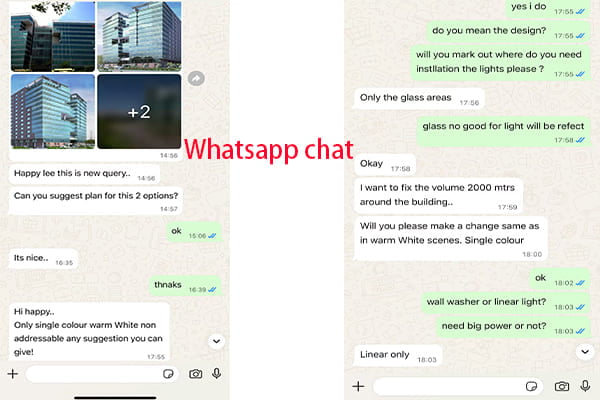
To begin, clearly define your desired effect. Think about where you want the lights, what colors you need, and any special elements you want to see. If you have reference videos or photos, share them. This precision helps us deliver the perfect design quickly.
Breaking Down Your Vision
The first conversation is the most important one. We, as lighting manufacturers, often provide free design services. My design engineers are talented, but they handle many projects every day. If a client's request is not precise, their project can get stuck in a long queue. Imagine the frustration when a design is delivered, only to be rejected again and again. It drains everyone's motivation.
I remember a project for a hotel in Dubai. The client sent us a simple message: "We want our hotel to look good." That was it. We spent a week creating a beautiful, elegant design with warm white lights. They replied, "No, we want more color, like a festival." We spent another week creating a dynamic, colorful RGB show. They replied again, "It's too much, we want something more subtle but still colorful." We finally got it right on the fourth try, but all that time could have been saved. If they had sent us a short video of a building they liked at the start, we would have nailed it on the first attempt.
To avoid this, it's best to be prepared.
| Vague Request | Precise Request |
|---|---|
| "Make my building look modern." | "We want cool white linear lights on each floor, with a blue wash effect on the main columns." |
| "I want something colorful." | "We need a dynamic RGB show for holidays, but a single warm white color for normal nights." |
| "Just send me a design." | "Here are photos of our building and a video of a lighting effect we like. Can you create something similar?" |
How Do You Choose the Right Lights Without Overspending?
You are worried about picking the wrong fixtures and blowing your budget. Lights that look the same can have huge differences in quality and price. But a good supplier guides you to the perfect solution for your needs.
Provide your supplier with project dimensions or CAD files. Based on the approved design, we will propose the right fixtures and create 2-3 tailored solutions for you. Being open about your site conditions and budget is key to getting the best options.
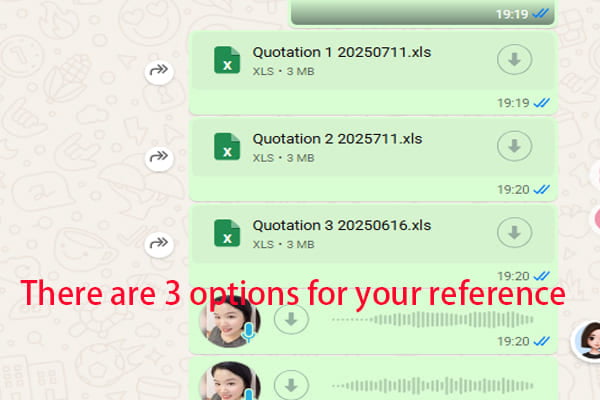
Finding the Perfect Fit for Your Project
Once the design is approved, we move to the technical side. You give us the measurements, and we figure out exactly what you need. We'll determine the right number of linear lights, wall washers, or pixel lights. We also calculate the necessary power supplies and controllers, and we always add about 5% of extra products as spares, just in case.
This is where your input is critical. Tell us about the project environment. Is it near the ocean with salty air? Is it in a region with extreme heat or cold? What are the installation conditions like? And what is your approximate budget? With this information, we can create several proposals for you. Fixtures can look identical on the outside but be very different inside. The chips, the waterproofing, the materials—they all affect performance and price. We'll explain the differences so you can make an informed choice. The more details we confirm now, the smoother the on-site installation will be.
Here’s an example of what your options might look like:
| Solution Tier | Fixture Type | Key Feature | Price Point | Best For |
|---|---|---|---|---|
| Budget | Standard Aluminum Body, Epistar Chip | Cost-effective | $ | Projects with tight budgets, standard environments. |
| Standard | Thicker Aluminum, CREE/Osram Chip | Higher brightness & longer life | $$ | Most commercial projects needing reliability. |
| Premium | 316 Stainless Steel, Top-tier Chip | Marine-grade corrosion resistance | $$$ | Coastal areas or harsh industrial environments. |
What Technical Support Should Your Supplier Provide Before Installation?
The lights have arrived, but your team is confused about how to connect them. Without clear instructions, installation can become a nightmare of errors and delays. But proper technical drawings from your supplier make it simple.
After you confirm an order, your supplier must provide detailed technical drawings. This includes a complete wiring diagram for all lights, power supplies, and controllers. It should also include a system map and specify the exact cables needed for the job.
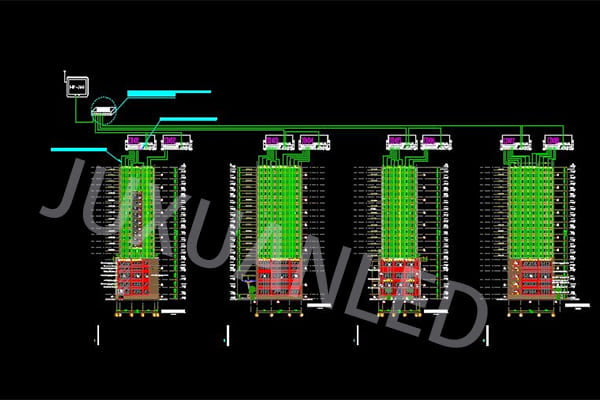
The Blueprint for Success
This step is non-negotiable. A professional supplier will never just send you boxes of lights. They will provide a full set of plans. Once you finalize your order, our engineers get to work drawing up the blueprints for your specific project. This isn't a generic manual; it's a custom-made guide for your installation team.
These documents show exactly how every component connects. The wiring diagram maps out the path for every single cable, from the power source to the fixtures. The system diagram shows how the DMX controller communicates with each light. We also specify the exact type of cables your team needs to use, such as 2.5mm² electrical wires for power and CAT6 unshielded network cables for data signals. For unique situations, like running wires over a long distance or in a wet environment, we provide specific instructions. I once had a client in Russia installing lights in -30°C weather. We had to specify special cold-resistant cables to prevent them from cracking. These details prevent costly mistakes and ensure the system works perfectly from day one.
Your technical packet should always include:
- Fixture Layout: Shows where each light is installed on the building.
- Wiring Diagram: A detailed map of all power and data connections.
- System Architecture: Shows how controllers, sub-controllers, and lights are connected.
- Cable Specification: Lists the exact type and gauge of all required wires and cables.
How Can You Prepare Your Team for a Flawless Installation?
Are you afraid your installation team will make mistakes on-site? On-site errors are costly and time-consuming to fix. But you can prevent almost all of them with proactive guidance from your supplier.
Before we even ship your order, we create custom support materials for your project. We make project-specific photos and short videos showing exactly how to connect your lights. We pack these instructions, along with a list of precautions, right in the box with your order.
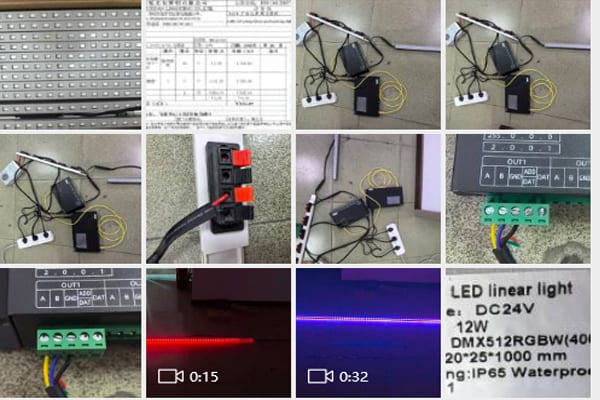
Visuals Make Everything Clearer
This is a step that I believe makes a huge difference for our clients. We go beyond just sending drawings. We take the exact lights, power supplies, and controllers for your project and set them up in our workshop. We then take clear photos and record short videos of every connection point. We show your team exactly which wire goes into which port. We demonstrate how to make a waterproof connection. We label everything.
Then, we send these custom-made visual guides to you before your shipment even leaves our factory. We also include a printed copy with the products. This way, your installation team can review the materials and understand the process completely before they start. This has been a game-changer, especially for our international clients where language can sometimes be a barrier. A picture is truly worth a thousand words, and a video is even better. It builds confidence and dramatically reduces the chance of someone on-site making a simple but costly wiring mistake. We started doing this after a client's team accidentally reversed the polarity on a whole string of lights, damaging them. Since we implemented this visual guide system, those kinds of problems have virtually disappeared.
Can You Really Commission a Complex Lighting Project Remotely?
Are you worried about the high cost of flying an engineer to your site for commissioning? Travel expenses and scheduling conflicts can add thousands to your project cost. But with modern support, it is often completely unnecessary.
Yes, you absolutely can commission a project remotely. We advise you to connect and test one complete set of lights in your warehouse first. Once installed on-site, good communication allows us to debug and program the entire system online, saving you significant money.
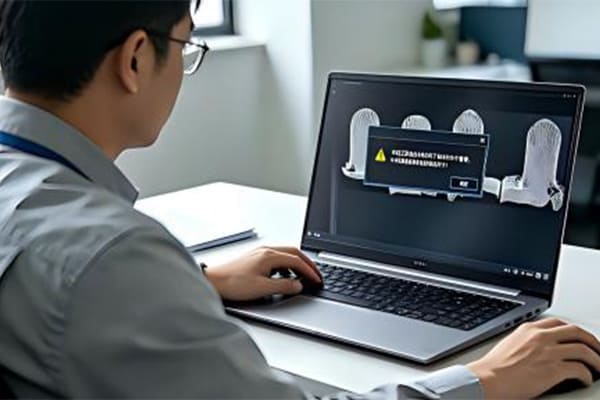
Your Partner in the Final Step
This is where a true partnership with your supplier pays off. In my fifteen years at JUXUANLED, I have been involved in hundreds of projects every year. I can count on one hand the number of times I've had to travel to a site for commissioning. Nearly every single project is commissioned online.
Here’s how it works: Your team installs the lights according to the diagrams and videos we provided. Once everything is connected, we guide them on how to connect the main controller to the internet. From my office, I can then access the system directly. I can see every light, test every connection, and upload the custom lighting effects we designed for you. It's fast, efficient, and incredibly cost-effective. You save thousands of dollars on flights, hotels, and travel time for an engineer.
The benefits don't stop there. What if you want to change the lighting program for a national holiday or a special event six months later? Just send us an email. We can create a new effect and upload it to your system remotely, usually for free. This ongoing support is part of our service.
| Aspect | On-Site Commissioning | Remote Commissioning |
|---|---|---|
| Cost | High (flights, hotel, fees) | Low (no travel costs) |
| Speed | Slow (depends on travel schedule) | Fast (can be done immediately) |
| Flexibility | Low (hard to schedule follow-ups) | High (easy to make future changes) |
| Requirement | Scheduling & logistics | Good communication & internet |
Conclusion
A successful facade lighting project is built on a clear partnership. From initial design to remote support, a structured five-step process ensures your vision is realized beautifully and efficiently.