Struggling to choose facade lighting? The wrong choice wastes money and ruins your design. This guide simplifies the process, ensuring you make the perfect decision for your project.
The best method depends on your goal and budget. Floodlighting is great for large areas, wall grazing enhances texture, linear lighting defines outlines, and pixel dots create media displays. For a premium look, use recessed lights. For spectacular shows, projection mapping is the answer.
Over my years at JUXUANLED, I have helped countless contractors and designers navigate these choices. The secret is not just about picking a light. It is about understanding the story you want the building to tell. Let's break down each method. This will help you find the perfect fit for your vision and budget. We will start with the most common method.
Is Floodlighting the Most Cost-Effective Choice for Large Buildings?
Your project has a massive facade but a tight budget. Other lighting methods seem too expensive. Floodlighting offers a powerful, affordable solution to illuminate large areas without breaking the bank.
Yes, floodlighting is often the most budget-friendly option for large-scale illumination1. Its simple installation and ability to cover wide surfaces evenly make it ideal for government buildings and commercial complexes where cost and straightforward application are key priorities. It's a workhorse solution.
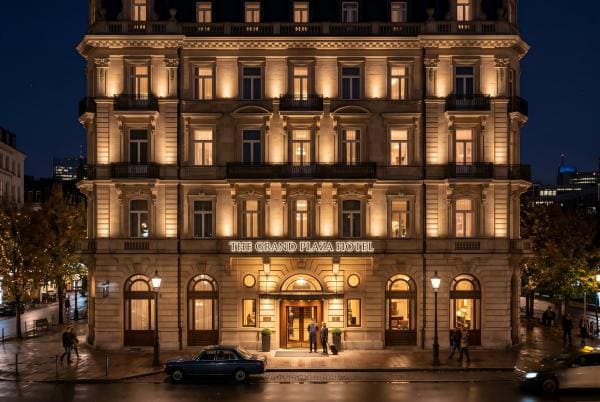
Floodlighting is the go-to method for bathing a large surface in a uniform layer of light. At JUXUANLED, we see it used frequently on government buildings, large commercial hubs, and industrial sites. Its main advantage is efficiency. You can achieve broad coverage with fewer fixtures compared to other methods, which saves on both equipment and installation costs.
However, it's not without its challenges. The biggest issue I see is light pollution or light spill2. If the optics are not controlled, light can bleed into the night sky or neighboring properties. This is why selecting the right beam angle is critical3.
Key Considerations for Floodlighting
- For High-Rise Buildings: You need a narrow beam angle to focus the light upward and prevent it from spilling out. This ensures the light hits the target, not the sky.
- For Low-Rise Buildings: The focus shifts to visual comfort. We recommend using fixtures with anti-glare shields to protect the eyes of pedestrians and drivers.
Here is a simple breakdown:
| Pros | Cons | Best For |
|---|---|---|
| Low initial cost | Potential for light pollution | Government buildings, commercial complexes |
| Simple installation | Can look flat, lacks detail | Large, uniform surfaces |
| Covers large areas | Risk of glare | Projects with tight budgets |
A well-planned floodlighting scheme can be very effective. But for projects that require more nuance, you might need a different approach.
How Can You Emphasize a Building's Unique Texture at Night?
Your building has beautiful brickwork or stone details that disappear in the dark. Standard lights just wash them out. Wall grazing creates dramatic shadows and highlights, bringing that texture to life.
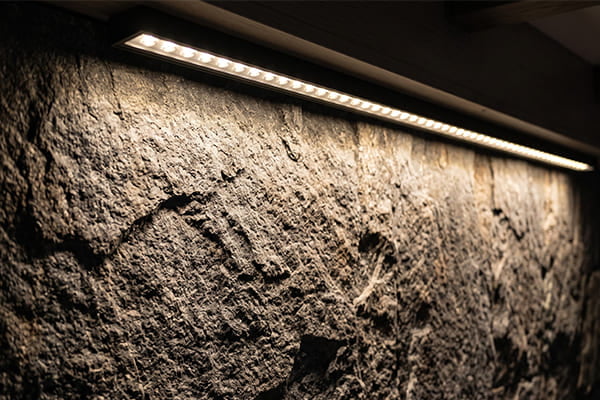
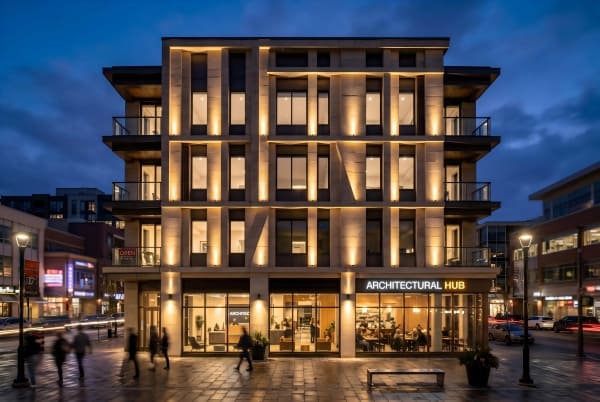
Use wall grazing or wall washing lighting. By placing fixtures close to the surface, you cast light vertically. This technique creates shadows that accentuate textures4, making it perfect for hotel exteriors, historical buildings, and museums to reveal their architectural character.
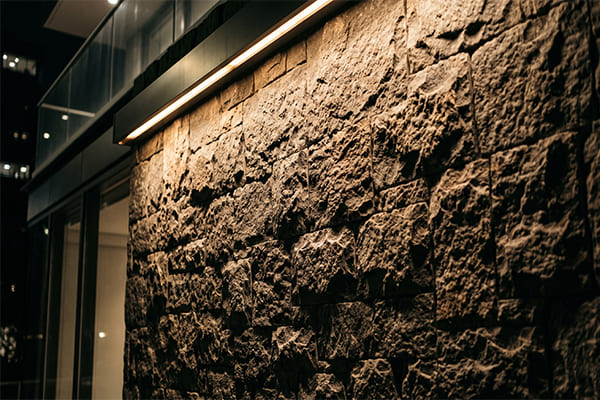
This is where the artistry of lighting really shines. Wall grazing is a technique I love because it uses light and shadow to tell a story about the building's materials. By placing a linear wall washer light very close to a facade, you create sharp shadows that reveal the depth and texture of stone, brick, or concrete. It turns a flat surface into a three-dimensional feature. Wall washing is similar but involves placing the fixtures further from the wall to create a more even, smooth wash of light5, which is great for hiding surface imperfections.
The success of this method depends entirely on precision. The installation angle and distance from the wall must be exact. Even a small miscalculation can ruin the effect. This is why we often provide detailed layout plans for contractors.
Technical Details for Wall Grazing
- Fixture Placement: For strong grazing, fixtures must be mounted either directly on the wall or very close to its base. The closer the fixture, the more dramatic the shadows.
- Optics: Asymmetrical lenses are often used to direct light up the wall efficiently without wasting it.
- Reliability: Since these fixtures are part of the building's aesthetic, they need to be durable. I always recommend products with at least an IP66 rating to withstand rain and dust6. Good heat dissipation is also crucial for a long lifespan.
This method is perfect for adding a touch of class and drama, turning a simple wall into a piece of art.
Do You Want to Create a Clean, Modern Look for Your Building's Outline?
You want to highlight your building's strong lines but find other methods too cluttered. You need a sleek, minimalist solution. Linear lighting perfectly traces the architecture, creating a sharp, contemporary silhouette.
Absolutely. Linear outline lighting is the best way to achieve this. Using LED strip lights or linear fixtures, you can trace the eaves, corners, and contours of a building. It provides a clean, modern aesthetic and is ideal for office buildings and bridges.
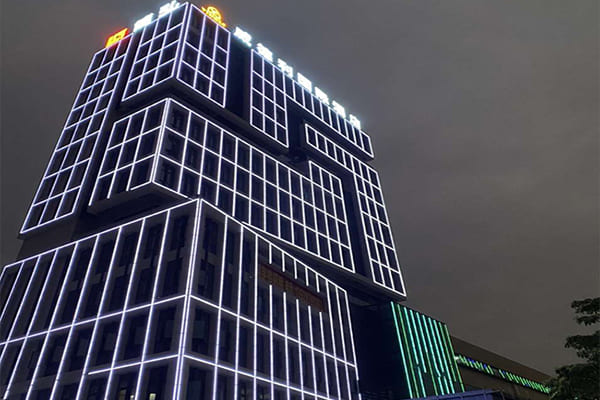
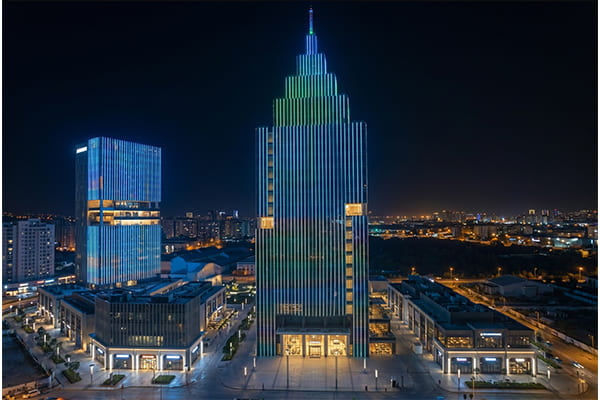
Linear lighting has become incredibly popular for modern architectural designs. It acts like a digital pen, drawing attention to the building's form. We use products like our JUXUANLED linear lights or flexible LED strips to follow rooflines, window frames, and structural columns. The result is a clean, graphic look that feels very sophisticated.
One of the best features of this method is its ability to be dynamic. By integrating the lights with a DMX512 control system7, you can create flowing colors, chasing effects, or subtle shifts in tone. This allows the building's appearance to change based on the time of day, a specific event, or the season.
The main drawback is that it only highlights the outline. It doesn't illuminate the surfaces of the facade. For this reason, I often suggest combining it with a gentle wall wash or other accent lighting to give the building more depth.
Application Tips
- Straight Lines: For office buildings or structures with sharp angles, rigid linear fixtures installed in aluminum channels provide a perfectly straight line of light.
- Curved Lines: For buildings with arches or curved contours, flexible LED strips or even our 4cm/5cm pixel dots mounted on custom aluminum profiles can perfectly follow the shape.
This method is perfect for making a strong, modern statement.
Can Your Building Facade Become a Giant Video Screen?
You are not just lighting a building; you want to make a statement. A static design is not enough. Pixel dot lighting transforms your facade into a dynamic canvas for art and information.
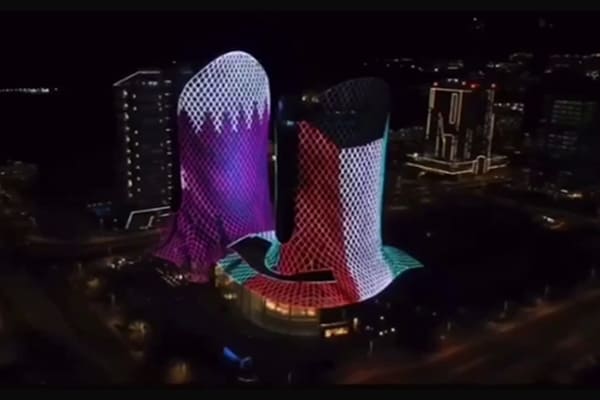
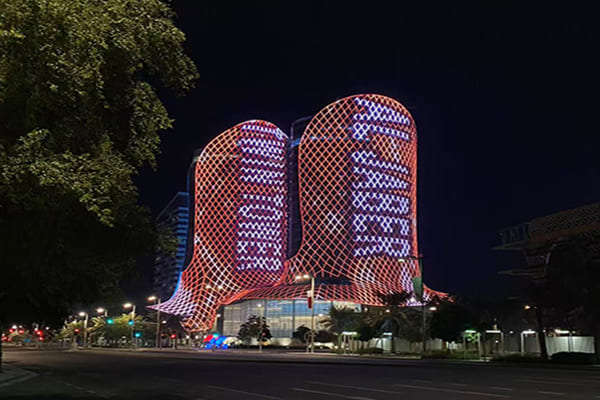
Yes, it absolutely can with pixel dot lighting. By arranging individual, programmable LED dots in a grid, you create a media facade8. This allows you to play videos, animations, and text, turning your building into a powerful communication tool.
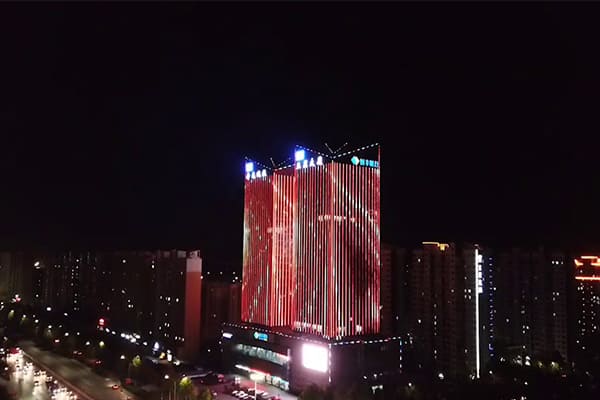
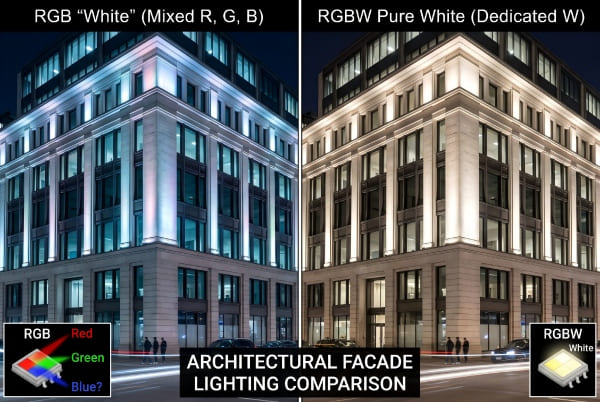
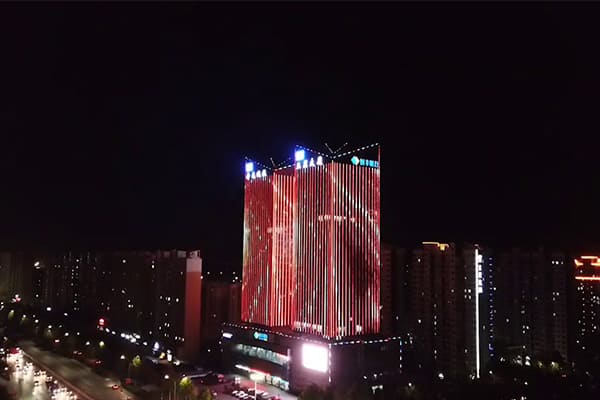
This is one of the most exciting areas in facade lighting. A media facade turns the building itself into a destination. We achieve this by installing hundreds or thousands of individually controlled "pixel dots." Each dot is an RGB or RGBW LED that acts as one pixel on a giant, low-resolution screen9. When connected to a control system, the possibilities are endless. We've helped clients create everything from simple color-changing patterns to full-blown video advertisements.
This method is incredibly flexible and can be adapted to almost any surface, including complex curved or irregular facades where traditional screens would be impossible.
However, this is a highly specialized application. The main considerations are cost and complexity.
| Aspect | Description |
|---|---|
| Cost | The cost per square meter is high due to the number of fixtures and complex wiring. |
| Installation | It requires meticulous planning and labor-intensive installation to place and wire each dot correctly. |
| Programming | Creating content requires specialized software and skills. At JUXUANLED, we often help our clients with initial effect programming to get them started. |
While expensive, the return on investment can be huge for commercial buildings, stadiums, or entertainment venues looking to create an unforgettable landmark.
How Do You Achieve High-End Lighting Without Visible Fixtures?
For a luxury project, visible light fixtures can cheapen the look. You need seamless, sophisticated illumination. Recessed lighting hides the source, making the light effect itself the star of the show.
Recessed or embedded lighting is the key. Fixtures are installed flush into walls, ceilings, or floors during construction10. This hides the hardware, creating a clean, high-end look with minimal glare, perfect for luxury hotels and premium properties.
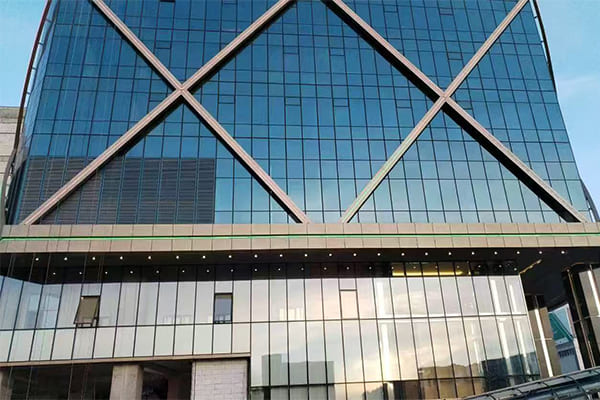
This is the definition of quiet luxury in lighting design. With recessed lighting, you don't see the light source; you only see the beautiful effect it creates. The fixtures are hidden within the architectural elements of the building. This creates a very clean and intentional look, where light seems to magically appear from the structure itself. It's my favorite method for high-end hotels, corporate headquarters, and luxury residences.
The critical thing to understand about this method is that it cannot be an afterthought. It must be planned from the very beginning, during the architectural design phase11. Slots, coves, and niches must be designed into the building to house the fixtures.
The biggest challenge is maintenance. Once a fixture is embedded in concrete, it is very difficult to replace. This is why I always insist on two things for these projects:
- Use the highest quality fixtures available. This is not the place to save money. Look for products with long lifespans, excellent thermal management, and a top-tier IP rating like IP67.
- Design for serviceability where possible. Sometimes we can design removable panels or access points, but it's not always an option.
When done right, recessed lighting provides an unparalleled level of sophistication.
Is It Possible to Create 3D Effects on a Building Without Touching It?
You want to create a temporary, mind-blowing visual spectacle for an event or holiday. Physically altering the building is not an option. Projection mapping offers a non-invasive way to create stunning illusions.
Yes, through projection mapping. This technique uses high-powered projectors to cast images and videos onto a building's surface12. It can create incredible 3D illusions and dynamic animations without any physical installation on the facade, ideal for landmarks and cultural events.
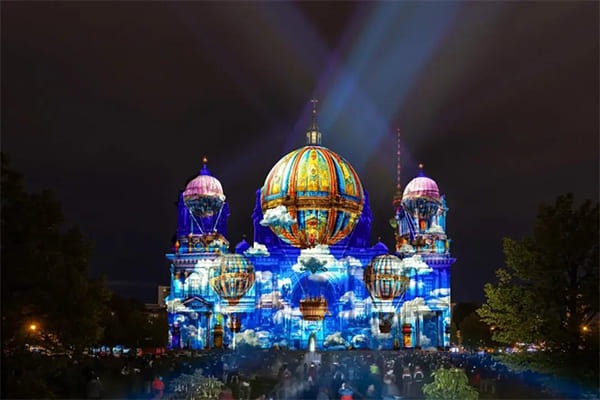
Projection mapping is pure magic. It's less about lighting the building and more about transforming it into a canvas for a story. Using powerful, specialized projectors, you can make it look like the building is crumbling, growing, or dancing. It is the ultimate tool for cultural festivals, product launches, and holiday events. Because there are no fixtures installed on the building, it's a completely non-destructive method, which is perfect for protected historical landmarks.
From my experience, this is a solution for special occasions, not a permanent installation. The technology is amazing, but it has significant limitations. The equipment is extremely expensive to buy or rent. It requires a team of specialists to set up and operate.
Most importantly, the effect is highly dependent on environmental conditions.
- Ambient Light: The area must be very dark for the projection to look crisp. It's easily washed out by streetlights or other light sources.
- Weather: Rain, snow, or fog can completely ruin the show.
- Surface Color: It works best on light-colored, non-reflective surfaces.
While not a practical choice for everyday facade lighting, it is an unbeatable option when you need to create a temporary "wow" moment that people will talk about for years.
Conclusion
Choosing the right facade lighting is a blend of art and science. By matching the method to your budget, aesthetic, and building type, you ensure a successful, stunning project.
"[PDF] Energy Savings Estimates of Light Emitting Diodes in Niche Lighting ...", https://www1.eere.energy.gov/buildings/publications/pdfs/ssl/nichefinalreport_october2008.pdf. A neutral architectural-lighting or energy-efficiency guide supports that floodlighting can illuminate broad exterior surfaces with relatively simple fixture layouts compared with more granular facade-lighting systems. Evidence role: general_support; source type: institution. Supports: Floodlighting is often a cost-effective method for illuminating large building facades.. Scope note: Cost-effectiveness varies by fixture type, controls, labor rates, energy prices, and maintenance assumptions. ↩
"[PDF] LED Outdoor Area Lighting Fact Sheet - Department of Energy", https://www.energy.gov/sites/prod/files/2014/05/f16/outdoor_area_lighting.pdf. Guidance from a dark-sky or public lighting authority explains that poorly controlled exterior floodlighting can emit spill light and uplight, contributing to glare, light trespass, and skyglow. Evidence role: mechanism; source type: institution. Supports: Floodlighting can create light spill or light pollution if optics and aiming are not controlled.. Scope note: Such guidance establishes the mechanism and risk, not that every floodlighting installation causes significant light pollution. ↩
"[PDF] EXTERIOR LIGHTING GUIDE", https://cltc.ucdavis.edu/sites/g/files/dgvnsk12206/files/media/documents/2010_DOE_FEMP_Exterior_Lighting_Guide.pdf. A technical lighting-design source explains that beam angle and aiming determine where luminous flux falls on a target surface and how much light spills beyond it. Evidence role: mechanism; source type: education. Supports: Beam angle selection is critical for directing floodlight output onto the facade and reducing spill.. Scope note: The source would support the design principle rather than prescribe a single beam angle for all facade types. ↩
"light seam | Retail - Cornell University - Intypes", https://intypes.cornell.edu/expanded.cfm?erID=202. An architectural-lighting reference describes wall grazing as placing luminaires close to a textured surface so that shallow-angle light produces shadows that reveal surface relief. Evidence role: mechanism; source type: institution. Supports: Wall grazing creates shadows that accentuate facade textures.. Scope note: The effect depends on surface relief, fixture optics, mounting distance, and viewing position. ↩
"Façade Lighting Design : Concepts & Parameters - Academia.edu", https://www.academia.edu/43113139/Fa%C3%A7ade_Lighting_Design_Concepts_and_Parameters. A lighting-design guide distinguishes wall washing from wall grazing by noting that wall washing typically uses greater luminaire setback to produce a more uniform vertical illuminance. Evidence role: definition; source type: institution. Supports: Wall washing uses fixtures placed farther from the wall than grazing to create a more even illumination effect.. Scope note: Exact setback distances vary with luminaire optics, wall height, and desired uniformity. ↩
"IP code - Wikipedia", https://en.wikipedia.org/wiki/IP_code. The IEC IP Code defines IP66 enclosures as dust-tight and protected against powerful water jets, which contextualizes their suitability for exposed outdoor lighting applications. Evidence role: definition; source type: institution. Supports: An IP66 rating indicates protection against dust and water exposure relevant to outdoor facade fixtures.. Scope note: An IP66 rating addresses dust and water ingress only; it does not by itself prove corrosion resistance, thermal performance, or long-term product reliability. ↩
"RDM (lighting) - Wikipedia", https://en.wikipedia.org/wiki/RDM_(lighting). The DMX512 standard is a digital communication protocol for controlling lighting equipment, supporting the article’s claim that facade luminaires can be programmed for color and effect changes. Evidence role: definition; source type: institution. Supports: DMX512 can be used to control dynamic lighting effects such as color changes and programmed sequences.. Scope note: The standard enables control communication; the range of visual effects also depends on fixture capabilities, controller software, and system design. ↩
"A framework for designing complex media facades - Academia.edu", https://www.academia.edu/67172508/A_framework_for_designing_complex_media_facades. Research on media facades describes building envelopes that integrate individually addressable light elements or pixels to display dynamic visual content across architectural surfaces. Evidence role: definition; source type: paper. Supports: Programmable LED dots arranged across a facade can form a media facade.. Scope note: The source supports the concept of media facades but not the performance of any specific pixel-dot product or installation. ↩
"RGB color model - Wikipedia", https://en.wikipedia.org/wiki/RGB_color_model. A technical or academic source on LED display systems explains that arrays of RGB light-emitting elements function as pixels whose combined intensities produce colored images and animations. Evidence role: mechanism; source type: education. Supports: RGB or RGBW LED dots can function as pixels in a large low-resolution facade display.. Scope note: Facade pixel spacing is usually much larger than conventional screens, so image resolution and viewing distance strongly affect legibility. ↩
"[PDF] A Guide Sea Turtle Lighting", https://www.umt.edu/media/wilderness/toolboxes/documents/night/Beachfront%20Lighting%20Guide.pdf. Architectural lighting references define recessed luminaires as fixtures installed within a building surface so that the visible aperture is flush or nearly flush with the surrounding construction. Evidence role: definition; source type: education. Supports: Recessed lighting fixtures are installed flush into architectural surfaces.. Scope note: The source defines recessed installation generally; exterior facade applications may require additional waterproofing and structural detailing. ↩
"[PDF] Designing with integrated lighting & acoustic solutions", https://www.focalpointlights.com/sites/default/files/Acoustic_DesignGuide_2024May.pdf. Building-design guidance on integrated lighting design states that concealed or recessed lighting requires early coordination with architectural, structural, electrical, and maintenance requirements. Evidence role: expert_consensus; source type: institution. Supports: Recessed facade lighting generally requires early planning during architectural design.. Scope note: Some retrofit recessed installations are possible, but they may require more invasive construction or design compromises. ↩
"Projection mapping technologies: A review of current trends and ...", https://pmc.ncbi.nlm.nih.gov/articles/PMC11105974/. Academic and technical sources define projection mapping as the use of calibrated projectors to align visual content with irregular three-dimensional surfaces such as buildings. Evidence role: definition; source type: paper. Supports: Projection mapping casts images and videos onto building surfaces using projectors.. Scope note: The source supports the general technique; projector brightness requirements depend on surface size, ambient light, throw distance, and content design. ↩