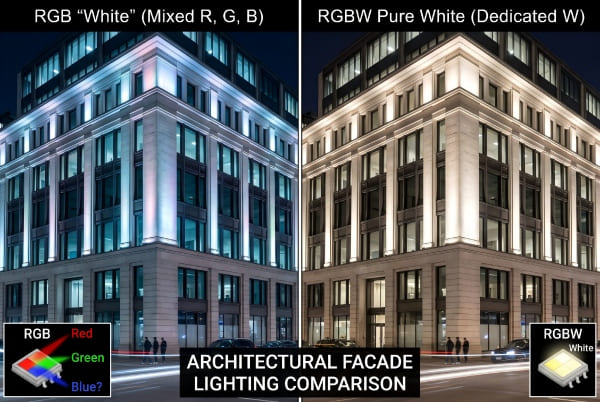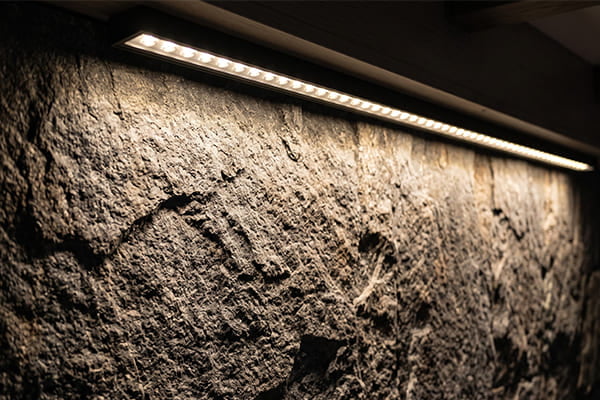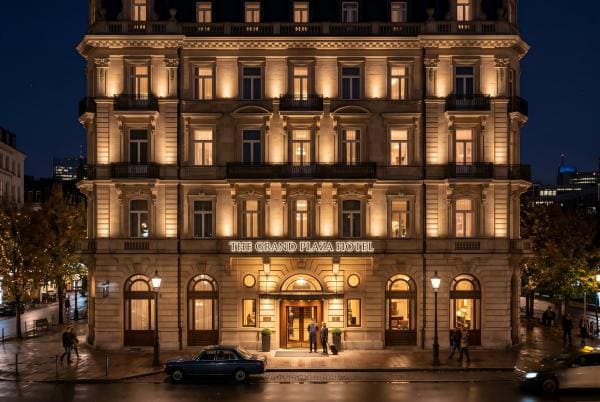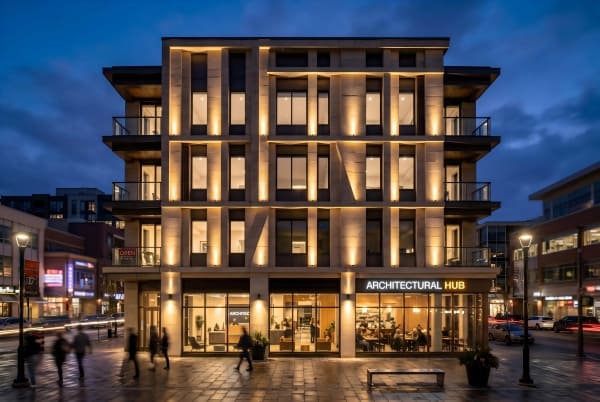
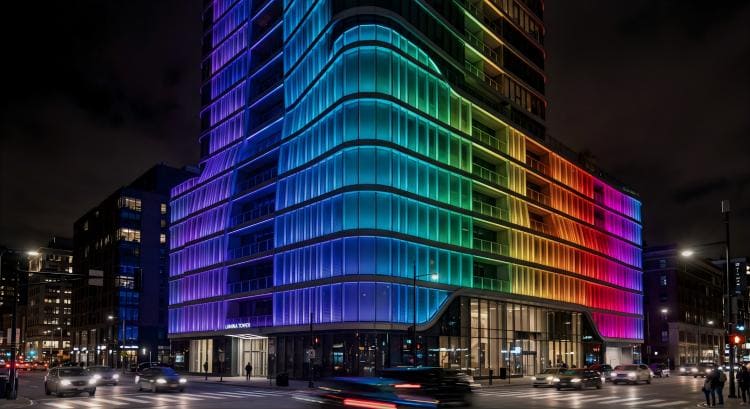
Your architectural lighting looks great, but the color transitions are jerky. This choppiness makes your high-end project feel cheap. There is a way to achieve perfectly smooth, liquid-like color changes.
The secret to perfectly smooth color transitions is using 16-bit DMX512 control1. This technology provides 65,536 grayscale levels2, which is 256 times more precise than standard 8-bit control3. It eliminates the visible steps and banding4 that ruin slow fades, especially at low brightness levels.
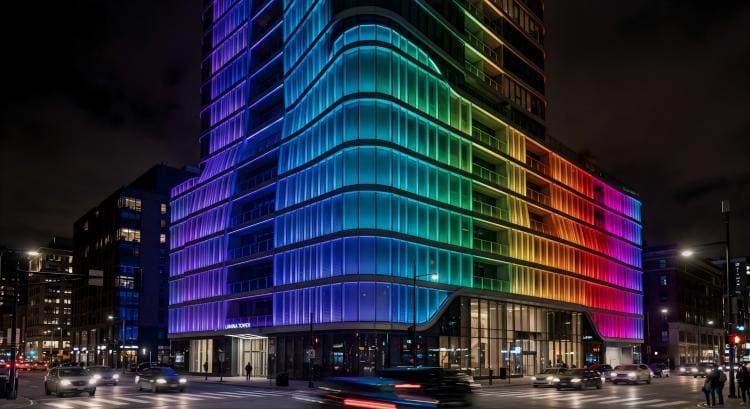
I've worked on countless lighting projects over the years. I can tell you that the difference between a good project and a truly breathtaking one often comes down to the details. One of the most common issues I see is choppy color fades. It's a problem that can undermine an entire design. But it's also a problem with a clear technical solution. It’s time to move past basic lighting and embrace true lighting artistry. Let's explore how we achieve that flawless, silky smooth effect that makes a project unforgettable.
Why Do My LED Color Changes Look Jerky and Unprofessional?
You specified beautiful, high-quality fixtures for your project. But now that they're installed, the slow fades look like a series of steps. This can make the whole installation look amateurish.
The problem is almost always standard 8-bit DMX control. It offers only 256 levels of brightness for each color.5 When fading slowly or at low light levels, the jump between these 256 steps becomes obvious to the human eye, creating a blocky, "banding" effect.
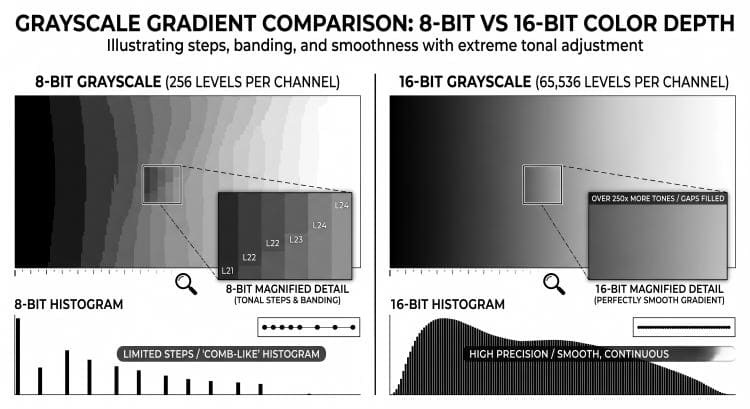
Let's break this down. In the world of digital lighting control, "bit depth" determines how many steps you have between off (0%) and full brightness (100%). For years, the industry standard has been 8-bit control. The math is simple: 2 to the power of 8 (2⁸) gives you 256 steps. This is fine for quick changes or when the lights are bright. But the problem appears in the subtle scenes. Imagine a slow, 30-second fade from dark blue to light blue. With only 256 steps, the light has to make noticeable "jumps" every few moments. Our eyes are very good at detecting these jumps, especially in the darker range.6 This is what we call banding or stepping, and it completely ruins the illusion of a smooth, natural transition. It’s like trying to draw a smooth curve with a thick marker instead of a fine-tipped pen.
| Feature | 8-bit Control | 16-bit Control |
|---|---|---|
| Grayscale Levels | 256 (2⁸) | 65,536 (2¹⁶) |
| Precision | Standard | 256x Higher |
| Visual Effect | Visible steps in slow fades | Silky smooth transitions |
| Best For | Fast effects, static scenes | Slow fades, artistic effects |
How Do We Achieve 65,536 Grayscale Levels?
You understand that 256 levels are not enough for high-end projects. But getting to 65,536 levels sounds complicated and expensive. You might worry it requires a whole new control system.
We achieve 65,536 levels of detail by using a clever 16-bit control method. It works by pairing two standard 8-bit DMX channels for each color7. One channel makes the big, coarse adjustments, while the second channel handles all the tiny, fine adjustments in between.
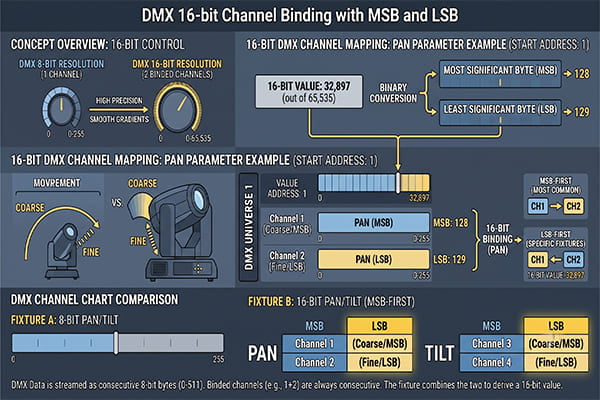
This technique doesn't reinvent the wheel, it just uses it more intelligently. We are still using the reliable DMX512 protocol. The key is in how the fixture's internal driver and the programming software work together. We call the two channels MSB and LSB.
- MSB (Most Significant Bit)8: This is the "coarse" control channel. It works like a standard 8-bit channel, making big jumps in brightness. Think of it as moving the slider in big steps.
- LSB (Least Significant Bit): This is the "fine" control channel. It divides each single step of the MSB channel into another 256 smaller steps.
So, you get 256 coarse steps, and for each of those, you get 256 fine steps. The result is 256 x 256 = 65,536 total levels of brightness. This means your project planning needs to account for more DMX channels. It's a simple trade-off for incredible quality.
| Light Type | 8-bit Mode Channels | 16-bit Mode Channels |
|---|---|---|
| RGB | 3 Channels | 6 Channels (3 colors x 2) |
| RGBW | 4 Channels | 8 Channels (4 colors x 2) |
Are More Grayscale Levels Enough for Smoothness?
You've upgraded to 16-bit control, but something still feels slightly off. You invested in the higher precision, but the final visual effect isn't quite perfect yet. What could be missing?
No, just having 65,536 levels is not the complete solution. For true visual perfection, you also need two other critical technologies: Gamma Correction9 and a high-frequency PWM driver. These ensure the fade looks natural to our eyes and is free from any flicker on camera.
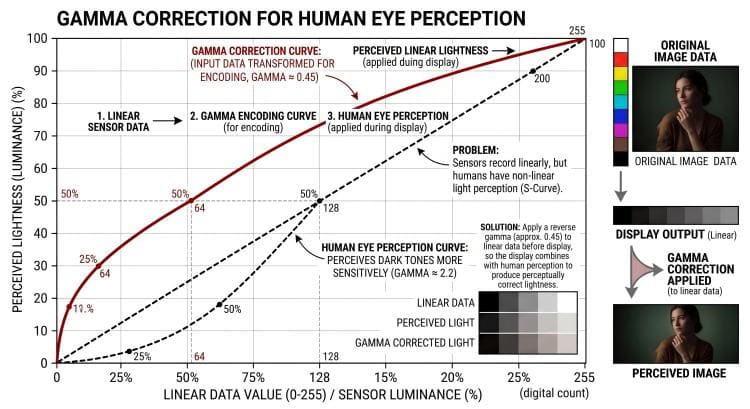
First, let's talk about Gamma Correction. Our eyes are not linear instruments. We are much more sensitive to changes in brightness in dark environments than in bright ones.10 A change from 1% to 2% brightness is very noticeable, but a change from 90% to 91% is barely visible. Gamma Correction is a smart algorithm that accounts for this. It dedicates more of the 65,536 grayscale steps to the low-brightness range (0%-20%), where our eyes are most critical. This makes the fade appear perfectly linear and smooth to a human observer, which is what really matters.
Second is the high-frequency PWM driver. PWM, or Pulse Width Modulation, is how LEDs dim by turning on and off very quickly.11 If this frequency is too low, our eyes can sometimes detect a flicker, and cameras will definitely see it as ugly bands rolling through the video.12 In all our fixtures at JUXUANLED, we use a high PWM frequency of at least 4kHz (4,000 times per second). This is far too fast for the eye or standard cameras to detect, ensuring a stable, flicker-free output that's essential for any media facade or project that might be filmed.
Where Does This Technology Make the Biggest Impact?
This all sounds very advanced. You might be wondering if your specific project really needs this level of detail. You don't want to specify technology that is overkill and wastes the budget.
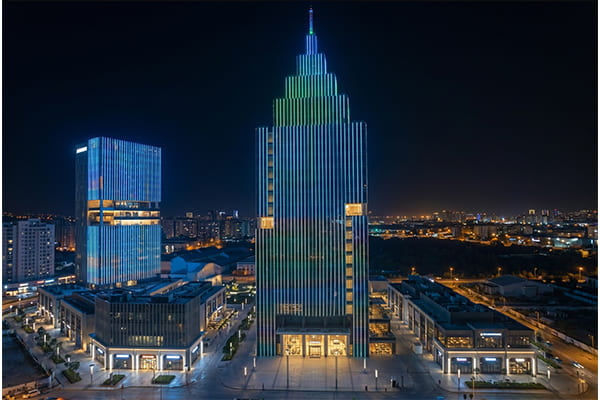
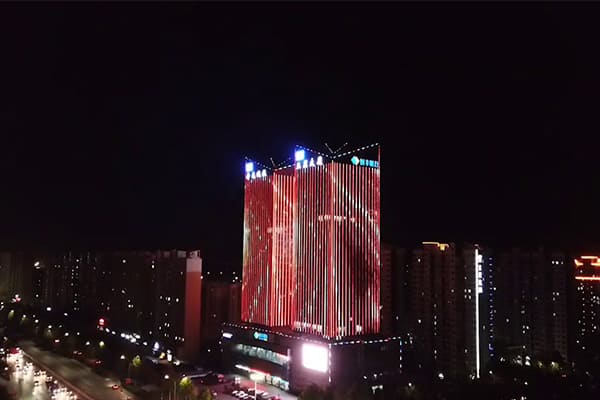
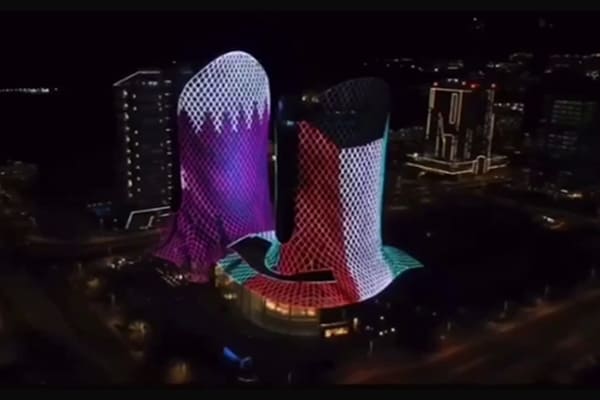
This high-precision technology is absolutely essential for any premium lighting project where visual quality is the top priority. It's the defining feature for super-tall skyscrapers, large-scale media facades, luxury hotels, and iconic public landmarks. It is the key to creating artistic lighting.
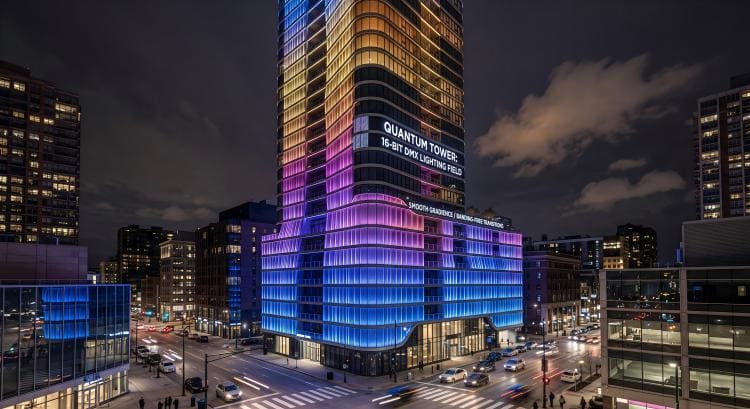
Let me give you some concrete examples where this technology moves a project from functional to phenomenal. On a super-tall building, you can program a slow, seamless transition that mimics a natural sunset, with warm oranges fading into deep nocturnal blues. Without 16-bit control, this would look like a series of distinct color bands. For a media facade, playing fluid video content or abstract color flows is impossible with jerky gradients; it shatters the illusion. The smoothness of 16-bit is non-negotiable here.
In luxury hotels and restaurants, the goal is atmosphere. Subtle, almost imperceptible shifts in light create a mood of comfort and sophistication. Any sudden jump in brightness is jarring and feels cheap. Finally, think of a historic bridge or landmark building. Highlighting the delicate architectural forms with subtle layers and gradients of light requires the utmost precision. This is how you create depth and turn a static structure into a dynamic work of art at night. This is the difference between simply lighting something up and creating a true lighting experience.
Conclusion
To create truly smooth, artistic color transitions, you need 16-bit control for 65,536 grayscale levels, combined with Gamma Correction and high-frequency PWM. This is the professional standard for premium projects.
"RDM (lighting) - Wikipedia", https://en.wikipedia.org/wiki/RDM_(lighting). A technical reference on DMX512 should be cited to establish that standard DMX data slots are 8-bit values and that higher-resolution fixture attributes are commonly implemented by combining coarse and fine channels. Evidence role: definition; source type: institution. Supports: The source should explain that DMX512 uses 8-bit data slots and that lighting fixtures can combine two slots to represent higher-resolution 16-bit parameters.. Scope note: This would support the control mechanism, but not independently prove that every installation will appear visually smooth. ↩
"High color - Wikipedia", https://en.wikipedia.org/wiki/High_color. A reference on bit depth should be cited for the mathematical basis that a 16-bit value represents 2^16, or 65,536, discrete states. Evidence role: definition; source type: encyclopedia. Supports: The source should confirm that 16-bit digital values can encode 2^16, or 65,536, possible levels.. ↩
"Color depth - Wikipedia", https://en.wikipedia.org/wiki/Color_depth. An educational source on digital bit depth should be cited to support the comparison that 16-bit encoding provides 65,536 possible values versus 256 values for 8-bit encoding. Evidence role: definition; source type: education. Supports: The source should document that 8-bit values provide 256 levels and 16-bit values provide 65,536 levels, making the latter 256 times larger in discrete resolution.. Scope note: The ratio supports numerical resolution, not necessarily perceived visual improvement in all lighting conditions. ↩
"Book Review: Perception of Pixelated Images - PMC - NIH", https://pmc.ncbi.nlm.nih.gov/articles/PMC4982319/. Research or technical literature on quantization artifacts should be cited to support the claim that limited discrete levels can produce visible contouring or banding in gradual transitions. Evidence role: mechanism; source type: research. Supports: The source should explain that coarse quantization of a continuous signal can produce visible contouring, banding, or steps in gradients.. Scope note: Most available evidence may come from imaging or display science rather than architectural LED lighting specifically. ↩
"DMX512 - Wikipedia", https://en.wikipedia.org/wiki/DMX512. A DMX512 protocol reference should be cited to establish that each standard DMX slot carries an 8-bit value, giving 256 possible parameter levels from 0 to 255. Evidence role: definition; source type: institution. Supports: The source should verify that a DMX512 slot carries an 8-bit value, typically interpreted as 0 to 255 for a fixture parameter.. Scope note: Fixture dimming curves and driver electronics can modify how these values translate into actual light output. ↩
"Image luminance changes contrast sensitivity in visual cortex - PMC", https://pmc.ncbi.nlm.nih.gov/articles/PMC7886026/. Vision-science literature should be cited to support the point that human brightness perception is nonlinear and that sensitivity to luminance differences varies across the intensity range. Evidence role: expert_consensus; source type: paper. Supports: The source should describe nonlinear luminance perception or contrast sensitivity showing that perceived brightness changes are not proportional to physical light output.. Scope note: The cited work may describe general visual perception rather than a specific DMX lighting installation. ↩
"DMX512 - Wikipedia", https://en.wikipedia.org/wiki/DMX512. A lighting-control technical reference should be cited to document that 16-bit DMX fixture attributes are commonly encoded as paired coarse and fine 8-bit channels. Evidence role: mechanism; source type: institution. Supports: The source should explain that some DMX fixtures use paired coarse and fine channels to provide 16-bit control over a parameter.. Scope note: This supports the common control method, but individual fixture behavior depends on the manufacturer's implementation. ↩
"Sign bit - Wikipedia", https://en.wikipedia.org/wiki/Sign_bit. A digital-systems reference should be cited to define the most significant and least significant parts of a binary value and explain their roles in determining numerical magnitude. Evidence role: definition; source type: encyclopedia. Supports: The source should define most significant bit or byte and least significant bit or byte in positional binary notation.. Scope note: The terminology source would define binary representation generally, not lighting-control practice specifically. ↩
"Gamma correction - Wikipedia", https://en.wikipedia.org/wiki/Gamma_correction. An educational or technical source on gamma correction should be cited to support the claim that nonlinear value mapping is used to make brightness changes appear more perceptually uniform. Evidence role: mechanism; source type: education. Supports: The source should explain that gamma correction maps encoded values to luminance in a nonlinear way to better match display behavior or human visual perception.. Scope note: Gamma correction principles are general; the exact curve used in an LED fixture may differ by manufacturer and application. ↩
"Weber–Fechner law - Wikipedia", https://en.wikipedia.org/wiki/Weber%E2%80%93Fechner_law. A psychophysics source should be cited to support the statement that brightness discrimination is nonlinear and varies with the observer's adaptation level. Evidence role: expert_consensus; source type: paper. Supports: The source should support that human perception of brightness is nonlinear and depends on luminance adaptation conditions.. Scope note: The evidence would support the perceptual principle rather than the article's specific numerical example of 1% to 2% versus 90% to 91%. ↩
"LED Lighting - Department of Energy", https://www.energy.gov/energysaver/led-lighting. A lighting-engineering source should be cited to support the description of PWM dimming as rapid on-off switching in which duty cycle controls the effective light output. Evidence role: mechanism; source type: government. Supports: The source should explain PWM dimming for LEDs as rapid switching with the perceived output determined by duty cycle.. Scope note: Some LED systems also use constant-current reduction or hybrid dimming, so PWM is not the only LED dimming method. ↩
"Flicker Research - Department of Energy", https://www.energy.gov/cmei/ssl/flicker-research. Research or standards guidance on temporal light modulation should be cited to support the claim that low-frequency PWM can produce perceptible flicker and camera banding artifacts. Evidence role: mechanism; source type: research. Supports: The source should explain that modulated LED output can create visible flicker or stroboscopic effects and can interact with camera sampling to produce banding.. Scope note: The word "definitely" should be treated cautiously because camera artifacts depend on the camera sensor, shutter speed, frame rate, exposure, and PWM waveform. ↩