Your office building looks great during the day, but disappears into the darkness at night. This makes your brand invisible. The right facade lighting can transform your building into a landmark.
The best office facade lighting uses a "less is more1" approach. Focus on outlining the building's shape with linear lights, emphasizing vertical lines to add height, and washing walls with soft light to highlight textures. A smart control system will add flexibility and save energy.
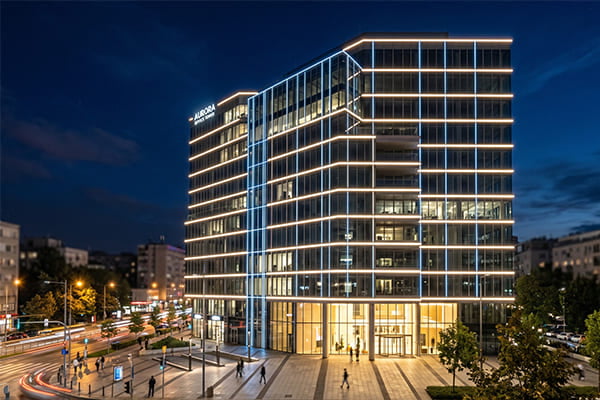
I've been in the lighting business for over a decade, and I've seen it all. The most common mistake people make is thinking that brighter is better. They just throw a bunch of floodlights at a building and call it a day. But that creates glare, annoys the neighbors2, and frankly, it looks cheap. The true art of facade lighting is more subtle. It’s about telling a story and enhancing the architect's original vision, not overpowering it. Let's dive into how you can achieve a truly professional and stunning look for your building.
How Can You Make Your Building Stand Out with Clean, Modern Lines?
A boxy, undefined building can easily get lost in the city skyline at night. It looks anonymous and lacks a strong identity. Defining its shape with light will give it a sharp, memorable presence.
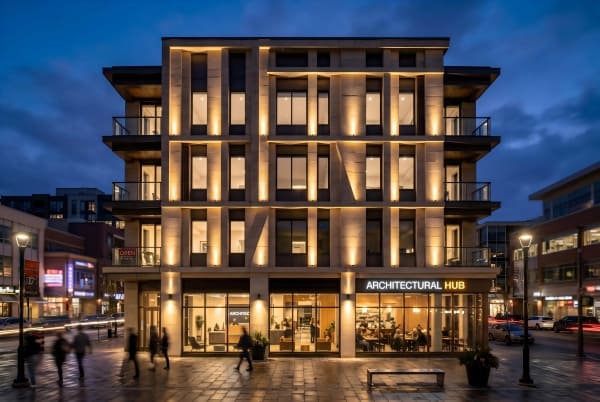
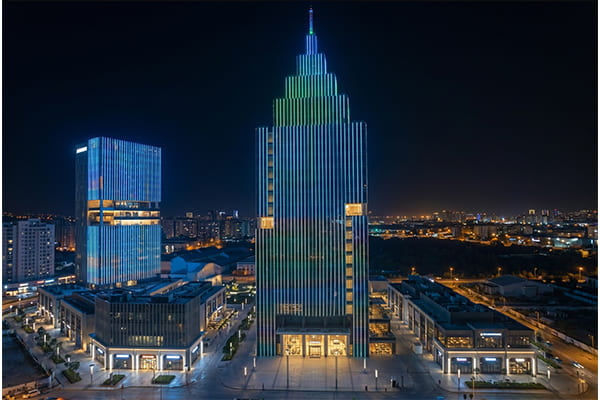
Use architectural outline lighting to make your building instantly recognizable. By tracing the edges, roofline, and key structural lines with linear LED lights3, you create a clean, high-tech look4 that is perfect for corporate headquarters or financial centers.
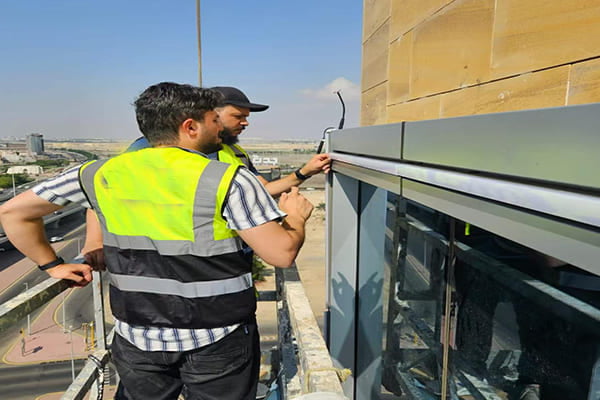
When we work on a project, our first goal is often based on the principle of "seeing the light, but not the fixture." This is especially true for outline lighting. The magic happens when the light seems to just appear, perfectly tracing the building's form. We achieve this by carefully integrating our linear LED fixtures into the building's structure, like in window frames, under eaves, or within architectural reveals. This creates a very clean and sophisticated effect. It's a popular choice because it communicates precision and modernity. I remember a project for a tech company's headquarters. They wanted to look innovative and forward-thinking. By just outlining their building's unique geometric shape, we made it a landmark in the tech park. At night, it looked less like a building and more like a digital blueprint against the sky.
| Feature | Description | Best For |
|---|---|---|
| Effect | Clean, minimalist, modern, high-tech | Corporate HQs, financial centers, tech parks |
| Technique | Tracing edges and rooflines with linear LEDs | Buildings with strong geometric shapes |
| Benefit | High nighttime recognition and brand identity | Establishing a strong, modern brand image |
How Do You Highlight Your Building's Texture and Height?
Your building's facade has beautiful materials and details, but they all look flat and boring at night. All that texture and architectural effort is completely lost in the dark, making the building look one-dimensional.
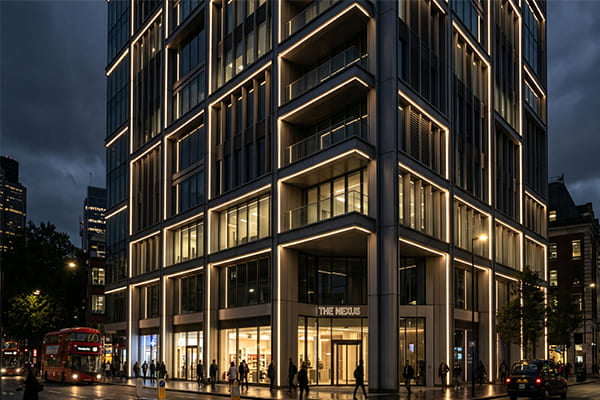
Use vertical lighting to make your building appear taller5 and more majestic. Combine this with wall grazing or wall washing to bring out the unique textures6 of the facade materials, creating a sophisticated, high-end business feel.
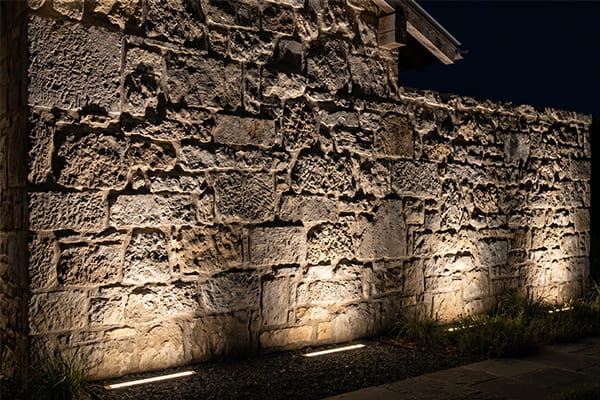
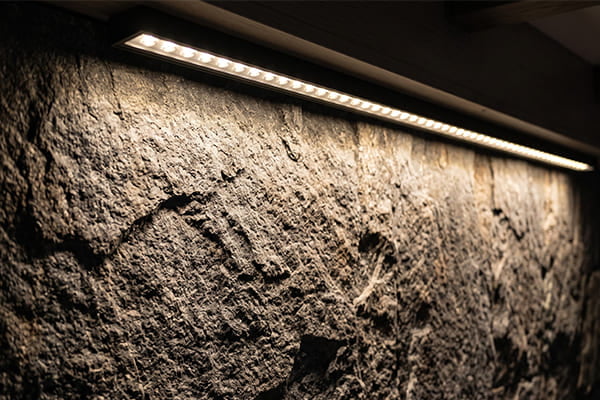
This is where we get to play with light and shadow to add depth and drama. It’s not just about making the building visible; it's about making it interesting. The techniques you choose depend entirely on the building's surface and the mood you want to create. For a client with a beautiful rough-cut stone facade, we used a technique called wall grazing. By placing the lights very close to the wall and aiming them upwards, we created long, dramatic shadows that made the texture pop7. The result was stunning. It gave the building a sense of history and permanence. On the other hand, for a sleek office with a glass and metal curtain wall, we used wall washing to create a smooth, even glow8. This technique reinforces a feeling of modern elegance and professionalism.
Emphasizing Height with Vertical Rhythm
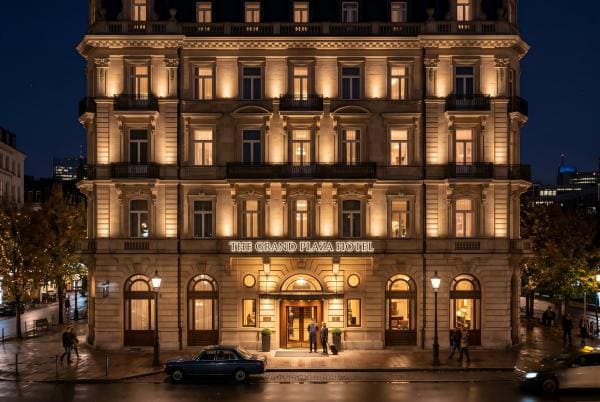
To make a building feel more imposing and grand, we often light its vertical elements, like columns or mullions. By placing spotlights at the base of these features, we create repeating lines of light that draw the eye upward. This creates a strong sense of order and rhythm. The key here is precision. We have to use fixtures with a very controlled beam angle9 to ensure the light goes exactly where we want it, illuminating the structure without spilling into office windows and disturbing the people inside.
Grazing vs. Wall Washing
These two techniques are often confused, but they produce very different results. Here’s a simple breakdown:
| Technique | Fixture Placement | Effect | Best for Materials |
|---|---|---|---|
| Wall Grazing | Very close to the wall | Creates strong shadows, highlights texture | Stone, brick, textured concrete |
| Wall Washing | Further from the wall | Creates a smooth, even wash of light | Smooth surfaces, glass, metal panels |
What Makes a Facade Lighting System Truly Smart and Sustainable?
Using the same bright lights all night is wasteful and boring. You're either paying high energy bills for a static look, or your building sits dark when it could be celebrating a holiday or event.
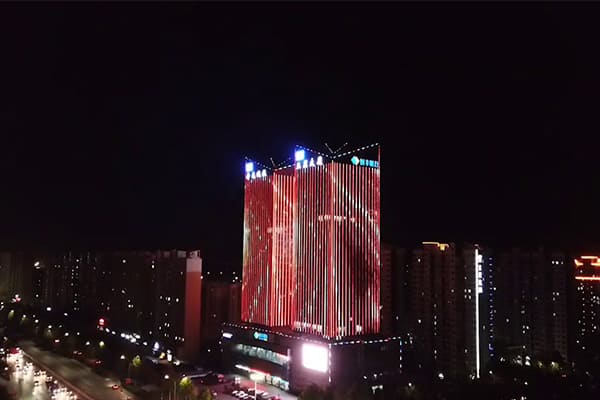
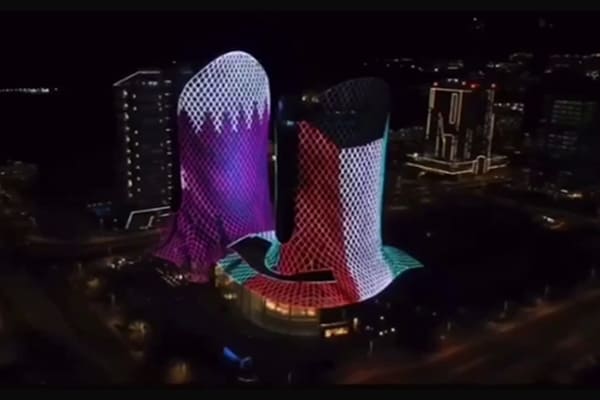
A smart lighting system uses controls like DMX or DALI to switch between modes. You can have calm, professional lighting for daily use and exciting, colorful dynamic shows for holidays, all while saving energy with scheduled dimming.
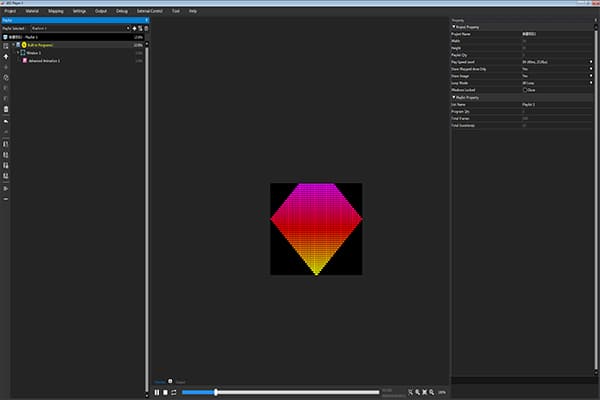
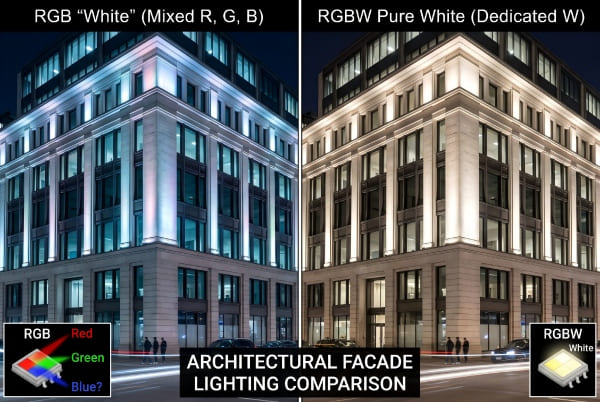
The biggest shift I’ve seen in my career is the move towards intelligent lighting. It’s no longer just about on or off. It’s about flexibility, efficiency, and storytelling. A smart system gives you complete control. For one of our clients in a major city, we programmed a system with two primary modes. From Monday to Friday, the building has a sophisticated, warm white glow (around 3000K-4000K) that reflects its business-like nature. But on national holidays or for special city events, the system switches to a fully programmable RGB mode. The building comes alive with color and movement, becoming part of the celebration. This dynamic capability turns the building from a static structure into a living canvas. And the best part? It’s all automated and highly efficient.
The Power of Dynamic Control
A modern facade lighting system is more than just lights; it's a complete ecosystem. The brain of this system is the controller. We often use a hybrid of DMX and DALI controls. DMX is fantastic for creating fast, colorful, dynamic effects10, like you'd see in a media facade. DALI is excellent for managing individual or groups of lights for dimming and energy management11 in a more architectural setting. Combining them gives us the best of both worlds.
Key Factors for a Flawless Project
A great lighting design is worthless if it's not implemented correctly or is a nightmare to maintain. That’s why we focus on these technical details from day one:
- Invisible Installation: We work with architects to hide fixtures in structural gaps and crevices. The focus should always be on the light, not the metal box it comes from.
- Anti-Glare Control: No one likes being blinded by a light. We use fixtures with built-in shields, baffles, and louvers to direct the light precisely onto the facade, preventing light pollution and ensuring visual comfort.
- Energy Efficiency & Sustainability: We use high-efficiency LED products. But we also program the system for a "late-night mode," where the lighting dims to 30% or turns off completely after midnight to save energy and respect the night sky.
- Ease of Maintenance: Buildings last for decades, and so should the lighting. We select products with long lifespans (50,000+ hours) and plan for easy access so that any future maintenance can be done without a huge fuss.
Conclusion
Great facade lighting is not about being the brightest. It is about using light thoughtfully to define your building's identity, enhance its architecture, and make a powerful, lasting brand statement.
"[PDF] Resources - nyserda", https://www.nyserda.ny.gov/-/media/Project/Nyserda/Files/Programs/Outdoor-Lighting/outdoor-lighting-resources.pdf. Lighting-design guidance commonly emphasizes visual hierarchy, controlled luminance, and restraint in exterior architectural lighting; this supports the article’s “less is more” principle, though it is a design norm rather than a quantified rule. Evidence role: expert_consensus; source type: institution. Supports: The best office facade lighting often uses a restrained approach rather than maximizing brightness.. Scope note: The support is contextual because aesthetic restraint depends on project goals, site context, and local lighting regulations. ↩
"5 Considerations Concerning Lighting Systems | FHWA", https://highways.dot.gov/safety/other/visibility/fhwa-lighting-handbook-august-2012/5-considerations-concerning-lighting. Dark-sky and lighting-engineering guidance identifies poorly aimed or excessive exterior lighting as a source of glare and light trespass; this supports the claim that indiscriminate floodlighting can affect neighboring properties, though annoyance levels vary by site and observer. Evidence role: mechanism; source type: institution. Supports: Using many bright floodlights on a building can create glare and disturb neighboring occupants.. Scope note: The source would support the general mechanism of glare and light trespass, not the outcome of any particular building installation. ↩
"LED Lighting - Department of Energy", https://www.energy.gov/energysaver/led-lighting. LED lighting references describe light-emitting diodes as compact, efficient sources that can be arranged in linear luminaires for architectural applications; this supports the use of linear LED fixtures for outlining forms, though it does not prove the aesthetic effect in every project. Evidence role: definition; source type: government. Supports: Linear LED lights are suitable fixtures for tracing architectural edges and rooflines.. Scope note: The evidence would define and contextualize linear LED technology rather than validate the specific design recommendation. ↩
"Architectural Lighting Design 2025: Enhance Building Appearance", https://falcontgroup.com/architectural-lighting-enhance-appearance/. Studies and design literature on architectural lighting describe how light can emphasize form, edges, and material expression, shaping nighttime perception of buildings; this supports the contextual claim that outline lighting can convey a modern appearance, though aesthetic interpretation is subjective. Evidence role: general_support; source type: paper. Supports: Outline lighting can make a building appear cleaner, more modern, or technologically oriented.. Scope note: The source would support the relationship between lighting and architectural perception, not prove that all viewers perceive the result as high-tech. ↩
"A Thickness Illusion: Horizontal Is Perceived as Thicker than Vertical", https://pmc.ncbi.nlm.nih.gov/articles/PMC6802759/. Visual-perception research and architectural-design guidance indicate that vertical lines can direct the eye upward and influence perceived height; this supports the use of vertical lighting to accentuate height, though perceived scale depends on viewing distance and facade geometry. Evidence role: mechanism; source type: education. Supports: Lighting vertical elements can make a building appear taller by drawing the viewer’s eye upward.. Scope note: The support is based on perception and design principles rather than a universal measurable increase in apparent height. ↩
"Wall washing and wall grazing light | What's the difference?", https://boca.lighting/create-stunning-visual-spaces-with-wall-washing-and-wall-grazing-light/. Architectural-lighting references distinguish grazing and washing as wall-lighting techniques, with grazing emphasizing surface relief and washing producing more even illumination; this supports the claim about revealing facade materials, though the effect depends on fixture placement and surface texture. Evidence role: definition; source type: institution. Supports: Wall grazing and wall washing are established techniques for revealing or presenting facade surfaces.. Scope note: The source would support the general technique, not the exact outcome for every material or fixture. ↩
"Broadband and wide-angle surface relief gratings for single ...", https://ui.adsabs.harvard.edu/abs/2025OExpr..3341436M/abstract. Lighting-design guidance explains that placing luminaires close to a textured surface at a shallow angle produces shadows that reveal surface relief; this supports the wall-grazing mechanism, though the visual strength depends on the surface profile and beam distribution. Evidence role: mechanism; source type: institution. Supports: Wall grazing from close fixture placement creates shadows that emphasize textured surfaces.. Scope note: The evidence supports the optical mechanism but not the described project outcome. ↩
"Vertical lighting: wallwashing for more orientation and a ... - ERCO", https://www.erco.com/en_us/designing-with-light/lighting-knowledge/lighting-design/wallwashing-7483/. Lighting references define wall washing as illumination from a greater offset intended to produce relatively uniform brightness across a wall; this supports the claim that wall washing creates a smooth glow, though uniformity depends on spacing, optics, and mounting height. Evidence role: definition; source type: institution. Supports: Wall washing is used to produce smooth, even illumination on broad surfaces.. Scope note: The support is technical and conditional, not a guarantee of uniform results in all installations. ↩
"[PDF] 2/12/2007 1 of 20", https://www.placer.ca.gov/DocumentCenter/View/8263/NLPIP-2007-Light-Pollution-Archive-PDF. Lighting-engineering guidance links beam control, shielding, and luminaire aiming to reduced spill light, glare, and light trespass; this supports the need for controlled beam angles, though occupant disturbance also depends on interior layouts and operating schedules. Evidence role: mechanism; source type: institution. Supports: Controlled beam angles help direct light onto the facade and reduce spill into windows.. Scope note: The evidence supports the general role of optical control rather than the performance of a specific fixture. ↩
"RDM (lighting) - Wikipedia", https://en.wikipedia.org/wiki/RDM_(lighting). Technical descriptions of DMX512 identify it as a digital communication protocol widely used for theatrical and entertainment lighting control, including rapid channel-based changes; this supports its suitability for dynamic color effects, though system performance depends on controller and fixture capabilities. Evidence role: definition; source type: encyclopedia. Supports: DMX is suited to fast, colorful, dynamic lighting effects.. Scope note: The source would establish protocol capability and common use, not endorse a particular facade system design. ↩
"Digital Addressable Lighting Interface - Wikipedia", https://en.wikipedia.org/wiki/Digital_Addressable_Lighting_Interface. DALI technical documentation describes a digital addressable lighting interface that enables individual or grouped luminaire control and dimming; this supports the article’s statement about management and energy-control functions, though actual energy savings depend on programming and usage patterns. Evidence role: definition; source type: institution. Supports: DALI can control individual or grouped lights and support dimming-based energy management.. Scope note: The evidence supports DALI capabilities, while energy savings require a separate operational assessment. ↩