Are you confused about which CRI to specify for your outdoor lighting project? It’s a choice that can make or break the final look and feel of a space.
For most outdoor applications, high CRI is not necessary. Use CRI 70+ for functional areas like roads, CRI 80+ for general public spaces, and reserve CRI 90+ for high-end projects where accurately rendering colors of landscapes, building materials, and skin tones is critical for the aesthetic.
That’s the quick answer. But understanding the specific scenarios and the trade-offs involved is what separates a good project from a great one. As a manufacturer, I've guided countless clients through this decision, and it almost always comes down to a simple principle. Let's dig into the details so you can choose with confidence and justify your specifications to your clients.
How Do You Choose the Right CRI for Your Outdoor Project?
Every project has unique goals, from safety to pure beauty. Applying a single CRI standard everywhere can make a stunning landscape look flat or waste money on unnecessary specs.
The core principle is simple: the closer people get to the lights, the richer the colors are, and the more high-end the project is, the higher the CRI needs to be. This ensures the visual experience matches the investment and design intent.
This guiding rule helps us categorize projects into three main tiers. Over the years, I've found that breaking it down this way removes all the guesswork. You just need to identify the primary goal of the lighting in a specific area. Is it for seeing a path, enjoying a garden, or showcasing architectural mastery? Each goal points to a different CRI level.
CRI 70+: The Functional Workhorse
When the main goal is safety, security, and basic visibility, CRI 70+ is the perfect choice. This is all about functional illumination. We're talking about large areas like roads, parking lots, and security zones. Here, the priority is high luminous efficacy, which means getting the most brightness for the lowest energy cost. The light just needs to be bright enough for people and cameras to see shapes and outlines clearly. We are intentionally trading perfect color rendition for efficiency and cost-effectiveness. Colors might look a bit washed out, but for these applications, that's an acceptable compromise.
CRI 80+: The Balanced All-Rounder
This is the most common and versatile category. CRI 80+ offers a great balance between energy efficiency and visual comfort. It's the go-to choice for most general outdoor spaces. Think of residential community paths, public parks, and building exteriors where people gather. The color rendering is good enough that the environment looks natural and pleasant, without the extra cost and lower efficiency of a CRI 90+ fixture. For the vast majority of projects we supply, CRI 80+ hits the sweet spot, providing a quality visual experience that meets expectations without over-engineering the solution.
CRI 90+: The Aesthetic Specialist
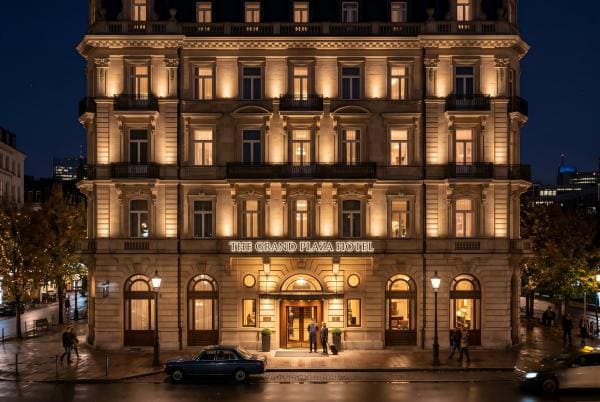
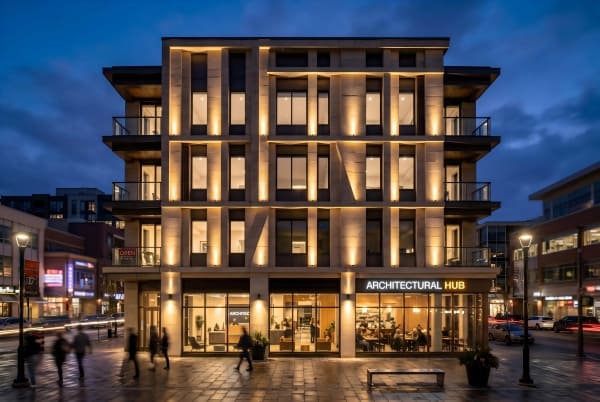
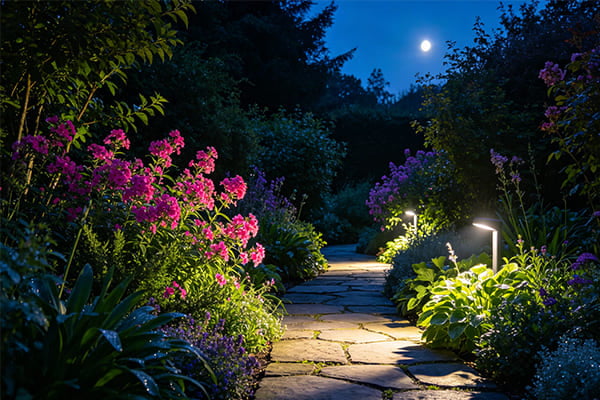
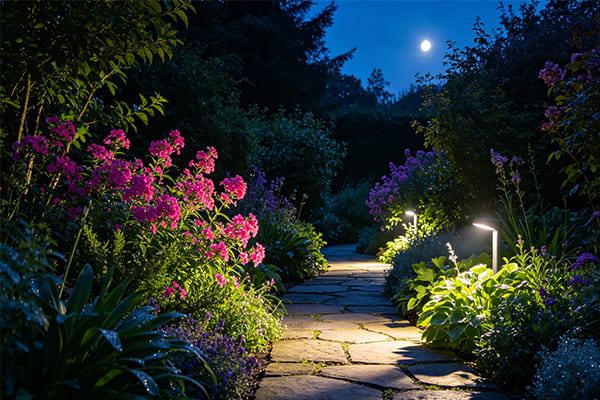
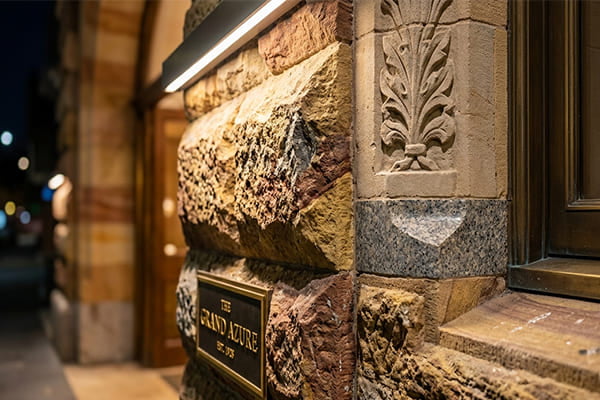
When a project is all about aesthetics and creating a premium atmosphere, CRI 90+ is essential. This is where we need to render colors with almost perfect accuracy, just like in natural daylight. This is critical for high-end landscape lighting, where the true greens of plants and the deep reds of flowers (a high R9 value is key here) must be shown. It's also vital for historical buildings and luxury hotels, where the lighting needs to reveal the rich textures of stone, wood, and metal. Commercial patios and popular photo spots also benefit hugely from CRI 90+, as it makes skin tones look healthy and vibrant, improving the entire guest experience.
| CRI Level | Primary Goal | Typical Applications | Key Benefit |
|---|---|---|---|
| CRI 70+ | Function & Safety | Roads, Parking Lots, Security Perimeters | Max Efficiency & Cost |
| CRI 80+ | General Purpose | Residential Areas, Parks, Public Walkways | Balanced Performance |
| CRI 90+ | Aesthetics & Detail | High-End Gardens, Historic Facades, Luxury Patios, Art | True Color Fidelity |
What's the Real Cost of High CRI Lighting?
You want the best possible color for your project. But specifying CRI 90+ without knowing the trade-offs can impact your budget and the fixture's performance in unexpected ways.
The reality is that high CRI comes at a cost. You will typically see a 10–15% drop in luminous efficacy, meaning less brightness for the same power. The LED chips themselves are also more complex to produce, which directly increases the fixture's price.
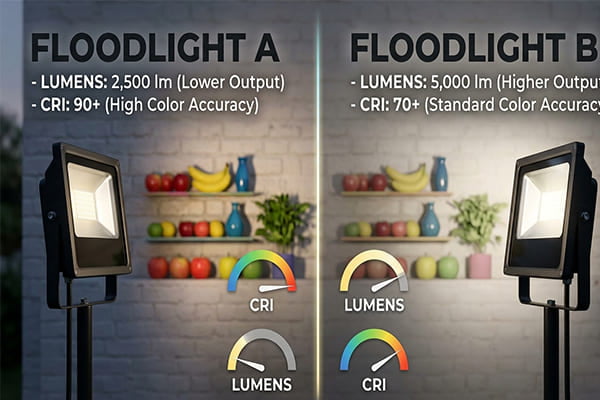
In my experience, many clients are surprised when they see the spec sheet for a CRI 90+ fixture compared to a standard one. They expect everything to be better, but lighting design is always a game of balancing priorities. Pushing for excellence in one area, like color rendering, requires a compromise in another. Let's break down these two main "costs" so you can make an informed decision.
The Performance Trade-Off
To achieve a high CRI, an LED has to produce a more complete, even spectrum of light, much like the sun. This is often done by using more complex phosphor coatings on the LED chip. This process is inherently less efficient at converting electricity into visible light compared to a standard CRI 70 LED, which can focus its energy on the light wavelengths our eyes are most sensitive to. The result? A CRI 90+ fixture might be 10-15% less bright than its CRI 70 counterpart using the same amount of power. This lost energy is converted into heat. More heat means you need a more robust thermal management system (heatsink) to protect the LED's lifespan, which can also add to the fixture's size and weight.
The Financial Investment
The technology behind high-CRI LEDs is more advanced and expensive. The special phosphors and the precision required during the manufacturing process add to the base cost of the LED component. When we build a fixture, this higher component cost naturally translates into a higher final price for you. While the price difference might be small for a single fixture, it can add up significantly on a large-scale project. Therefore, you must weigh whether the visual improvement from CRI 90+ justifies the increased budget. For a luxury hotel facade, the answer is almost always yes. For a municipal parking garage, it's almost always no.
| Metric | Standard CRI 70 Fixture | High CRI 90+ Fixture | Impact |
|---|---|---|---|
| Luminous Efficacy | High (e.g., 120 lm/W) | Lower (e.g., 105 lm/W) | You need more power or more fixtures to achieve the same brightness. |
| Heat Generation | Standard | Higher | Requires better thermal management, potentially affecting longevity. |
| Unit Cost | Baseline | Higher | The fixture itself costs more due to more expensive components. |
Why Do Most Linear and Pixel Lights Have Low CRI?
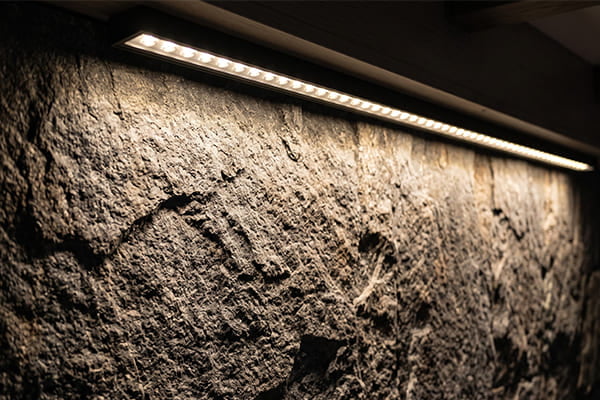
You've probably noticed that many facade lighting products, like linear wall washers and pixel lights, have a low CRI. This can be confusing, and it might make you worry about product quality.
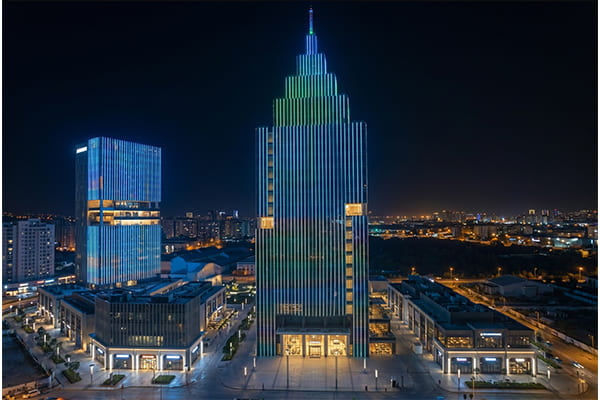
These fixtures often have a CRI around 70 or even lower for very specific reasons. It's a deliberate engineering choice to maximize brightness, achieve saturated colors, and ensure long-term reliability in harsh outdoor conditions, which are often prioritized over perfect color accuracy.
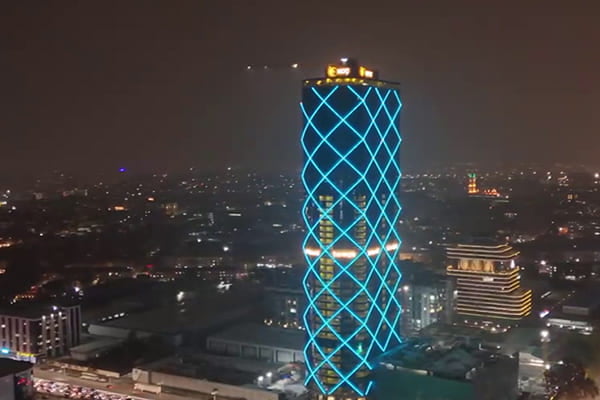
When we design and manufacture these types of lights at JUXUANLED, we are balancing four key factors. It's not about cutting corners; it's about optimizing the product for its intended application, which is typically large-scale, long-distance viewing. Here’s a look inside the engineering decisions that lead to this common specification.
1. Prioritizing Brightness Over Color Accuracy
For a wall washer to illuminate a 20-story building, it needs immense light output (lumens). As we discussed, there is a direct trade-off between CRI and luminous efficacy. To get the sheer power needed to throw light dozens of meters high, we have to sacrifice some color accuracy. Opting for a CRI 70 LED chip instead of a CRI 90 chip can give us that crucial 10-15% boost in brightness, which can be the difference between a building that "glows" and one that just looks dimly lit.
2. The Nature of RGB Color Mixing
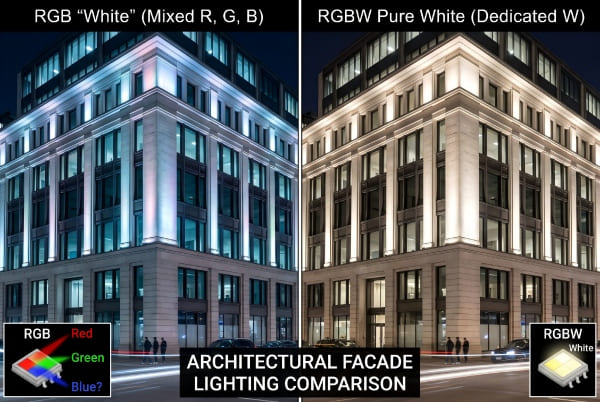
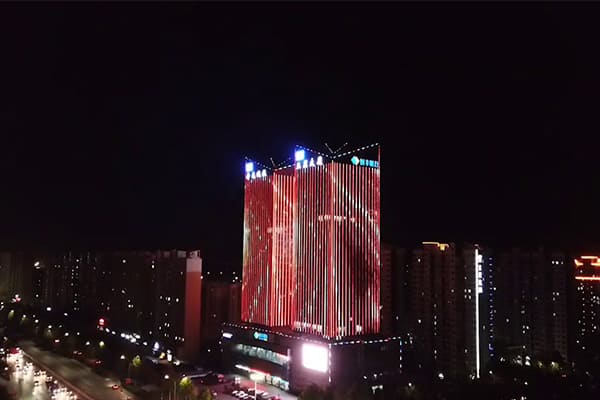
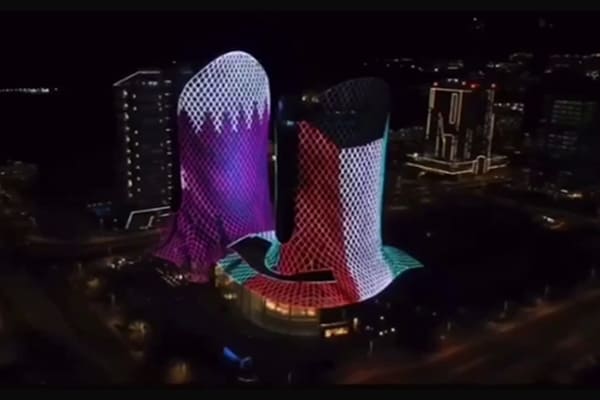
Many facade projects use RGB or RGBW lights to create dynamic, colorful scenes. These systems create color by mixing light from separate red, green, and blue LEDs. The light spectrum they produce is made of three narrow spikes of color, with large gaps in between. The Color Rendering Index is a measure of how well a light source renders colors compared to a full-spectrum source like the sun. Because the RGB spectrum is so incomplete, its CRI score is naturally very low, often between 20 and 40. This is simply a limitation of the technology, and it's accepted because the goal is color saturation and effects, not color accuracy.
3. The Human Eye and Viewing Distance
Facade lighting is almost always viewed from far away. From 50 or 100 meters away, the human eye is not very good at perceiving subtle differences in color tones. Our eyes are much more sensitive to brightness, contrast, and color saturation at these distances. Therefore, it makes more sense to focus the fixture's performance on creating bright, punchy, and dynamic effects rather than on rendering the exact shade of beige on a brick wall with perfect accuracy. The overall visual impact is what matters most.
4. Durability and Warranty Concerns
Outdoor environments are tough. Fixtures have to withstand rain, heat, and cold for years. The simpler, more efficient low-CRI LED packages often prove to be more stable and robust over the long term. They generate less heat, which puts less stress on the electronic components and housing. This increased reliability allows us as manufacturers to confidently offer long warranties, often 3 to 5 years. For a project developer or contractor, this long-term reliability is often more valuable than perfect color fidelity.
Conclusion
Choose high CRI 90+ for projects where aesthetics and detail are paramount. For functional lighting and large-scale effects, a lower CRI is often the smarter and more reliable choice.