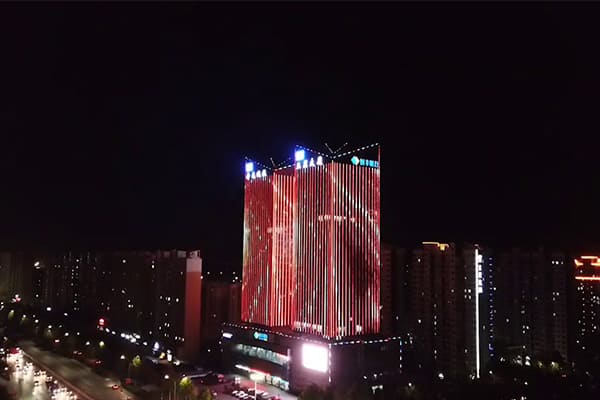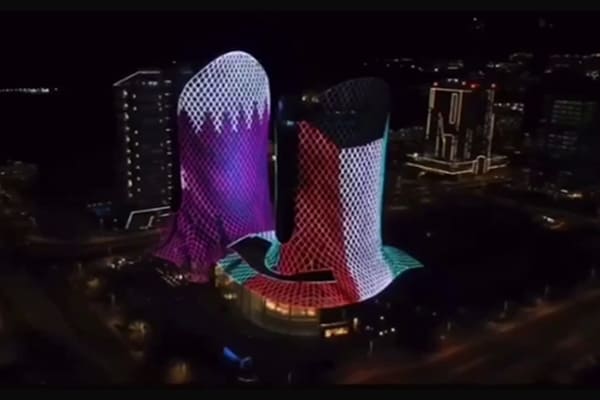
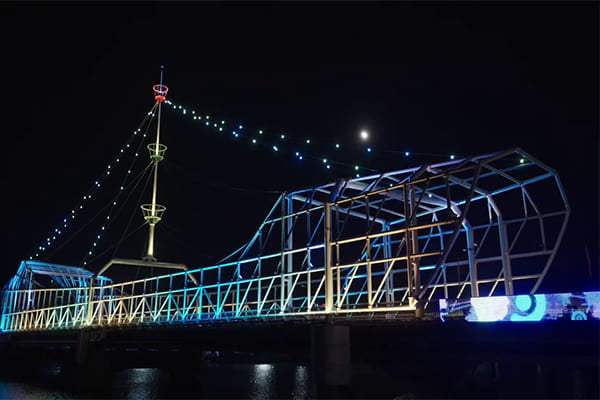
Your bridge project looks plain at night. It disappears into the darkness, failing to capture the city's spirit. We can change that with a strategic lighting design1.
To transform a bridge into a landmark, focus on its unique architecture2. Use light and shadow3 to highlight its form, consider all viewing angles4, and integrate smart controls5. This creates a dynamic, memorable experience6 that tells a story and becomes an icon for the city7.
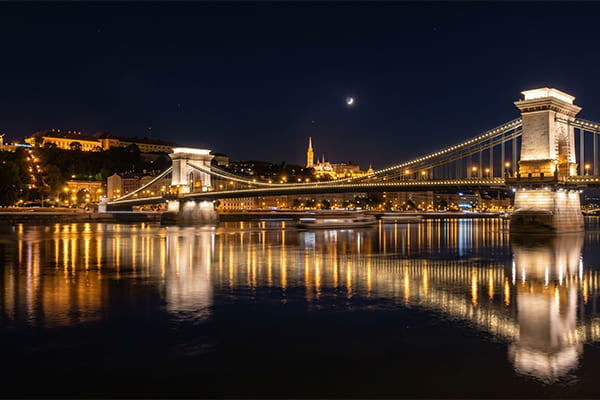
A bridge is more than just a path from A to B. It's a major piece of city architecture. With the right lighting, it can become a true work of art that people remember. Let's explore how you can make this happen for your next project.
How can lighting enhance a bridge's natural structure?
You want to light a bridge, but floodlighting everything just washes it out. This hides the beautiful details of its engineering and looks flat and uninspired.
The best lighting works with the bridge's design. Use precise lights to trace its lines and shapes. Create depth with light and shadow3. This makes the lighting an extension of the architecture itself, not just something added on top.
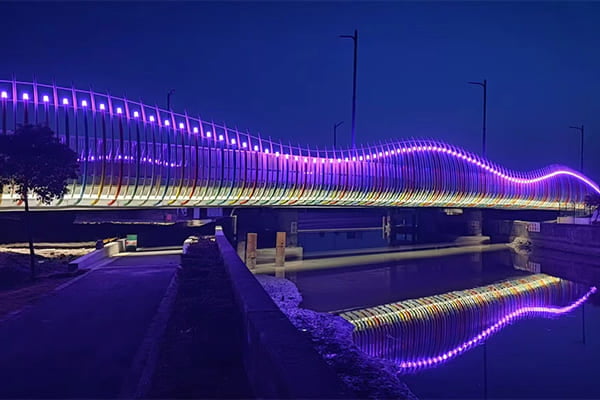
The first rule of great bridge lighting is to respect the structure. Your goal is to reveal its beauty, not cover it up. I always tell my team to think of light as a tool to "sculpt" the bridge at night. Instead of blasting the entire structure with powerful floodlights, we use a more targeted approach8. This means using light to highlight the most important features. For a suspension bridge, we might use narrow-beam spotlights to trace the elegant sweep of the main cables. For an arch bridge, we can use linear wall washers to graze the curved surface, showing its form and texture. It's also critical to use shadow. Leaving some areas dark creates contrast and depth. This "negative space9" makes the illuminated parts stand out even more, giving the bridge a three-dimensional quality at night.
Key Lighting Techniques for Architectural Features
| Technique | Bad Practice (Over-lighting) | Good Practice (Sculpting with Light) |
|---|---|---|
| Goal | Make the bridge visible. | Reveal the bridge's structural beauty. |
| Method | Use a few high-power floodlights to illuminate everything. | Use a mix of precise fixtures to highlight key lines. |
| Result | A flat, one-dimensional, and glaring appearance. | A dynamic, layered look with depth and visual interest. |
Does your design look good from every viewing angle?
Your design looks amazing up close, but from a distance, it's just a blur. Or it's great from afar, but underwhelming for pedestrians walking across it.
A landmark bridge needs to impress from all perspectives. Design for three key views: the distant skyline, the mid-range structural view, and the up-close pedestrian experience. Each angle needs a different approach to create a complete and cohesive visual journey10.
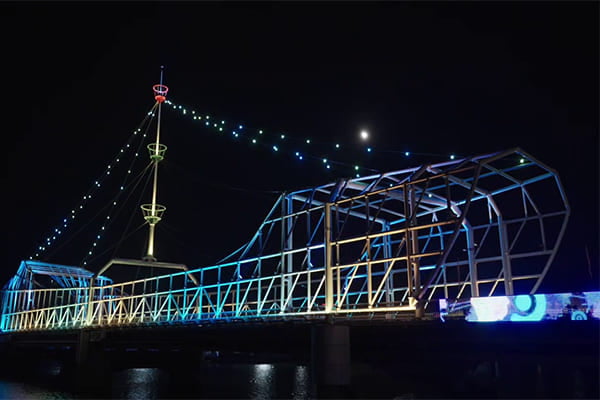
A successful bridge lighting project must consider how people will see it. We break this down into three main viewing distances. First is the long-distance view. From miles away, the bridge should be a clean, recognizable shape on the city's skyline. The lighting here is about creating a strong silhouette. Second is the mid-distance view, maybe from a nearby riverbank or road. From here, people should see the rhythm and detail of the structure—the pattern of the cables, the strength of the piers. This is where you show off the bridge's engineering. Finally, there is the short-distance view for pedestrians and drivers on the bridge. This lighting must be comfortable and safe, without glare. It's an opportunity to create a pleasant experience, maybe with soft, integrated handrail lighting or gentle color effects. Planning for all three ensures the bridge is impressive from every angle.
Designing for Different Viewing Distances
| Viewing Distance | Design Goal | Common Lighting Fixtures |
|---|---|---|
| Far | Create a clear silhouette on the skyline. | High-power spotlights, linear lights on main lines. |
| Medium | Showcase structural details and rhythm. | Wall washers, floodlights, pixel lights. |
| Near | Ensure safety and a pleasant user experience. | In-ground lights, handrail lights, bollard lights. |
Are you making the most of the water's reflection11?
The water below the bridge is a huge, dark space. Ignoring it is a missed opportunity. You're losing a chance to double the visual impact of your project.
Treat the water's surface as a second canvas for your art. Design the lighting to create beautiful, intentional reflections. This adds a magical dimension to your project, but be sure to control light spill to protect the local ecosystem.
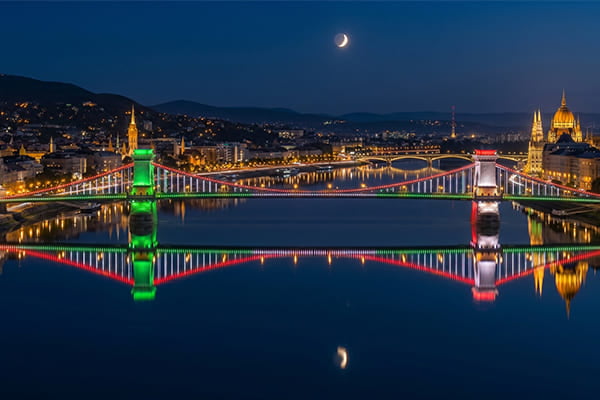
The water under a bridge is a gift to a lighting designer. It's a natural mirror that can double the impact of your work. But you have to be smart about it. The effect you get depends entirely on the water's surface. If the water is calm and still like a lake, you can create sharp, perfect reflections that mirror the bridge exactly. This creates a sense of symmetry and peace. If the water is moving or turbulent, like a fast-flowing river, the reflections will be broken and shimmering. This can create a dynamic, energetic feeling. We plan for this by carefully aiming our fixtures. We also use optics that control the light beam, preventing stray light from spilling into the water. This is not just for a cleaner look; it's also crucial for protecting fish and other aquatic life from light pollution. A well-designed reflection makes the project feel complete and magical.
Water Reflection Strategies
| Water Condition | Reflection Effect | Design Consideration |
|---|---|---|
| Calm / Still | Sharp, mirror-like image | Aim lights to create perfect symmetry. |
| Flowing / Turbulent | Broken, shimmering patterns | Use color and movement to create a dynamic, abstract effect. |
Can your lighting system withstand the elements and adapt to the city's rhythm?
Standard lights won't survive a bridge's harsh environment. Constant vibrations, rain, and humidity will cause failures, leading to high maintenance costs and a poorly lit bridge.
Choose fixtures with high IP ratings12 (IP66/67), vibration resistance13, and anti-corrosion coatings14. Then, integrate a smart control system like DMX51215. This allows you to program different scenes for holidays, daily use, or energy saving, making the bridge truly dynamic.
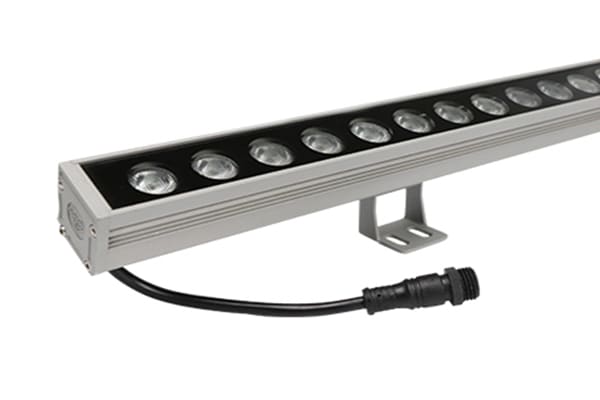
A bridge is one of the toughest places to install lighting. The fixtures are exposed to rain, wind, and temperature swings. They also have to endure constant vibration from traffic. For our projects, we only use products built for these conditions. This means fixtures with an IP66 or IP67 rating, which are fully protected from dust and water. They must also pass vibration tests, like 3G or 5G, to ensure they won't fail from the constant shaking. For bridges near the sea, a C5-M anti-corrosion coating is essential to fight salt spray.
But durability is only half the story. The system needs to be smart. I remember a project we did in Korea earlier this year. The client wanted something spectacular. We installed DMX51215 RGBW wall washers and floodlights along the bridge structure, plus two large 71-meter transparent mesh screens. With the DMX51215 controller, we could make all the lights work together in perfect sync. We could also create layered effects, where the screens showed text for a holiday while the wall washers created a flowing color background. It was a huge success because the system was both tough and flexible.
Does your lighting design connect with the city's heart and soul?
Your lighting is technically perfect, but it feels cold and generic. It could be a bridge in any city, lacking a unique identity that resonates with local people.
Great lighting tells a story. Draw inspiration from the city's local culture16, history, or natural environment. Use color, patterns, and changing rhythms to create a design that is unique to that place. This turns the bridge into a true cultural symbol.
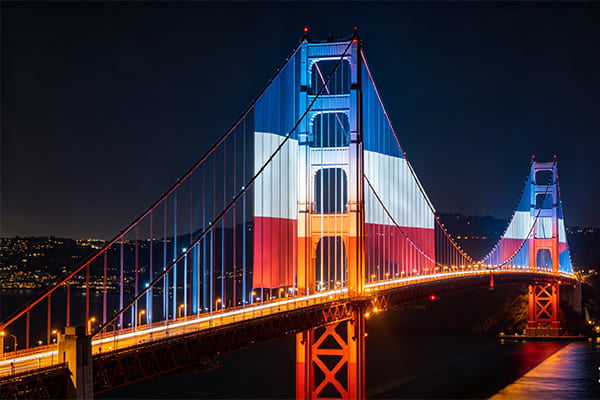
The final step is to give the bridge a soul. The best bridge lighting projects in the world do more than just look good; they mean something to the people of the city. To do this, you need to find a story to tell. This story should come from the city itself. Look at the local culture16 for inspiration. Maybe you can use colors from the city's flag or a famous local festival. You could look at the region's history and create light shows that commemorate important events. Even the natural environment can be a source of ideas, like mimicking the flow of the river or the colors of a local sunset. By using a smart control system, you can program these ideas into dynamic scenes17. The lighting can change its colors and rhythm to celebrate a holiday, a sports team victory, or a season. This is how a bridge stops being just a piece of infrastructure and becomes a living, breathing part of the city's identity.
From Cultural Theme to Lighting Design
| Cultural Theme | Lighting Idea | Example Effect |
|---|---|---|
| National Holiday | Use colors from the national flag. | A slow crossfade between the flag's colors. |
| Local Flower | Use the flower's color palette. | A gentle pulsing effect in shades of pink and white. |
| River History | Mimic the flow of water. | A chasing blue light effect that moves across the bridge. |
Conclusion
A landmark bridge combines art, engineering, and culture. By following these tips, your lighting project will become an unforgettable icon, connecting the city and its people.
Explore how strategic lighting design can transform ordinary bridges into stunning landmarks. ↩
Learn how unique architectural features can be highlighted through innovative lighting techniques. ↩
Understand the importance of using light and shadow to reveal a bridge's beauty. ↩
Discover how different viewing angles affect the perception of bridge lighting. ↩
Find out how smart controls can enhance the functionality and aesthetics of bridge lighting. ↩
Discover the key elements that contribute to a memorable bridge lighting experience. ↩
Learn the strategies to transform a bridge into a cultural icon through lighting. ↩
Explore the benefits of a targeted lighting approach for showcasing architectural details. ↩
Learn how negative space can create depth and contrast in bridge lighting. ↩
Understand how to create a cohesive visual journey through thoughtful bridge lighting. ↩
Learn how to utilize water reflections to create stunning visual effects in bridge lighting. ↩
Understand the significance of IP ratings in ensuring durability for bridge lighting. ↩
Discover how vibration resistance can prolong the life of bridge lighting fixtures. ↩
Learn about the importance of anti-corrosion coatings for outdoor lighting durability. ↩
Explore how DMX512 technology can enhance the versatility of bridge lighting. ↩
Learn how local culture can inspire creative and meaningful bridge lighting solutions. ↩
Explore how dynamic scenes can make bridge lighting more engaging and interactive. ↩