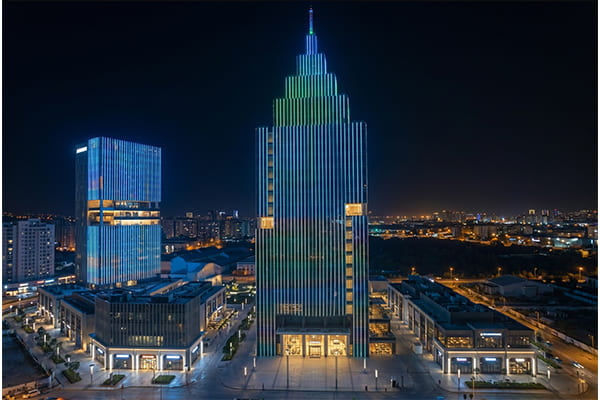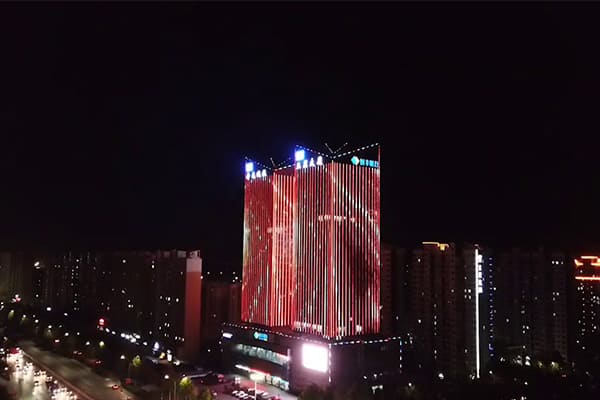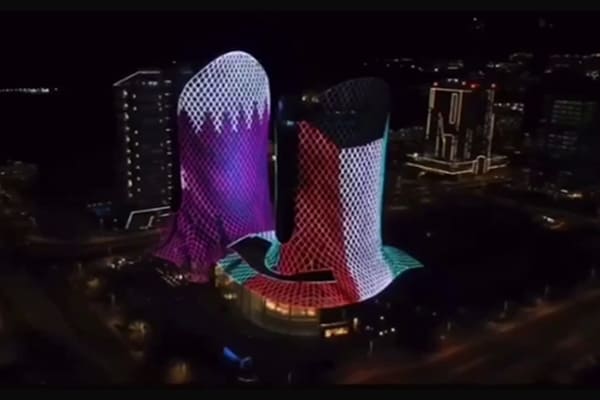
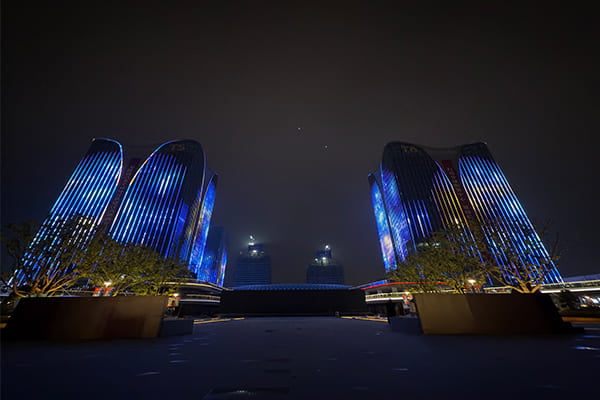
Tired of static, boring building lights? You want to create a visual spectacle that stops people in their tracks. DMX control1 can transform your project into a dynamic masterpiece2.
DMX is a digital communication system3 that gives you precise control over every single light fixture. It allows you to program dynamic colors4, scenes, and movements, turning your building's facade into a living, breathing canvas that tells a story and captures attention.
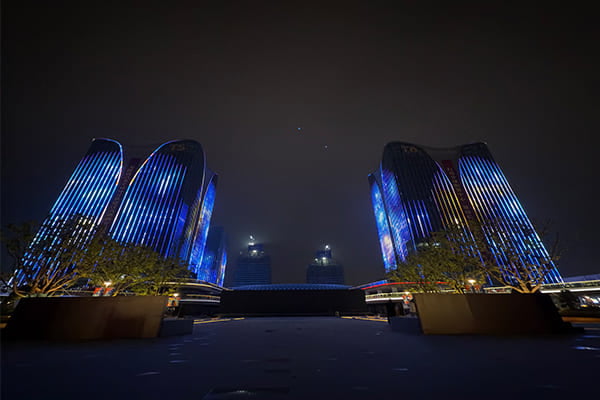
I've seen countless projects go from forgettable to iconic just by adding intelligent lighting. It's not magic; it's technology. But to really understand if it's right for you, we need to look at how it actually works behind the scenes. Let's break it down.
How Does DMX Control Actually Work?
Are you confused by terms like "universes" and "channels"? It sounds complicated, but the core idea is simple. Let's demystify the technology that powers stunning light shows.
DMX works like a nervous system for your lights. A central controller (the brain) sends digital commands down a cable to each light fixture (the muscles). Every light has a unique address, so it knows exactly which commands to follow, allowing for perfect synchronization and control.
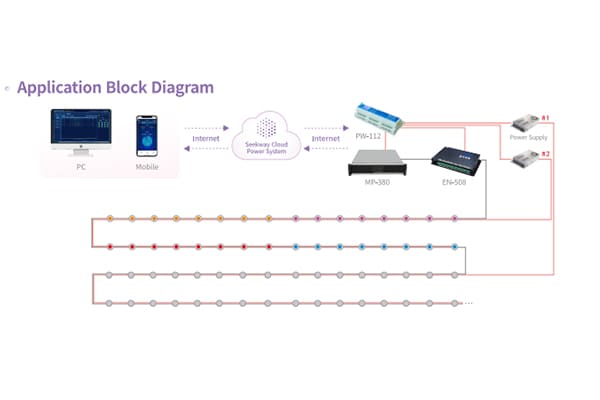
At its heart, the DMX system is a beautiful and straightforward way to manage complex lighting. I like to explain it to my clients with a simple analogy: the controller is the brain, and the lights are the muscles. The brain sends a specific signal telling each muscle exactly what to do and when to do it.
The Brain and the Muscles
The "brain" of the operation is the DMX controller1ler. This can be a physical console with faders and buttons, or it can be powerful software on a computer, like Madrix. The controller is where we create and store all the lighting scenes and effects. The "muscles" are the light fixtures themselves. Many of our JUXUANLED products, like our pixel lights and wall washers, have DMX decoders built right in. For other lights, a small external decoder is used. This decoder is what receives the signal from the controller and tells the light how to behave—what color to be, how bright to shine, or when to flash.
Addresses and Channels Explained
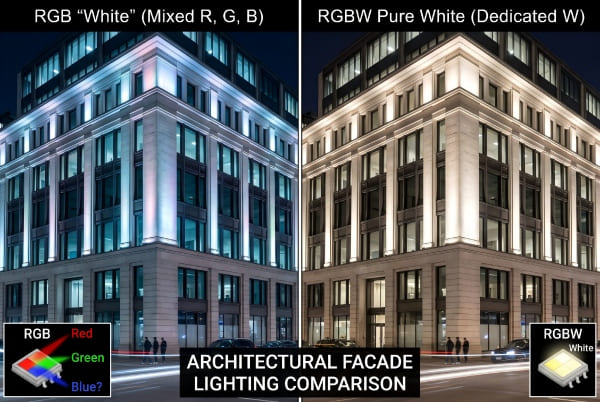
Every DMX network, or "universe," contains 512 control channels5. Each channel controls one specific parameter of a light, like the intensity of the color red. A simple, single-color light might only use one channel for brightness. A more complex RGBW light6, which can create millions of colors, will use four channels: one for red, one for green, one for blue, and one for white. Each channel has a value from 0 (off) to 255 (full intensity). By mixing the values on these channels, we can achieve any color or brightness level we want.
| Light Fixture Type | Channels Used | Example Functions |
|---|---|---|
| Single Color Light | 1 Channel | Brightness (0-255) |
| RGB Light | 3 Channels | Red, Green, Blue Intensity |
| RGBW Light | 4 Channels | Red, Green, Blue, White Intensity |
| Moving Head Light | 16+ Channels | Pan, Tilt, Color, Gobo, etc. |
The Physical Connection
DMX systems are physically connected in a simple chain. We run a special twisted-pair cable from the controller to the first light, then from the first light to the second, and so on. This is called a "daisy chain." At the very end of the line, it is critical to plug in a small DMX terminator, which is just a resistor. This prevents the signal from reflecting back down the line and causing the lights to flicker or misbehave. I remember a project in Vietnam where the lights were flickering randomly. The local team was stumped. It turned out to be a missing $2 terminator at the end of a 100-meter line. It's a simple fix, but a absolutely crucial one.
How Can DMX Really Make Your Building "Come Alive"?
Is your building just another structure after sunset? Imagine it telling a story, changing with the seasons, or even reacting to music. DMX makes this dynamic transformation possible.
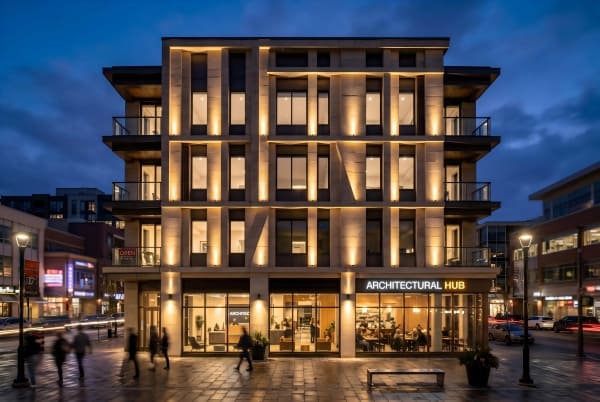
DMX breathes life into architecture by enabling dynamic storytelling. You can program flowing water effects, gentle color fades, or even map video content directly onto the facade. This transforms a static building into an engaging visual experience that connects with people on an emotional level.
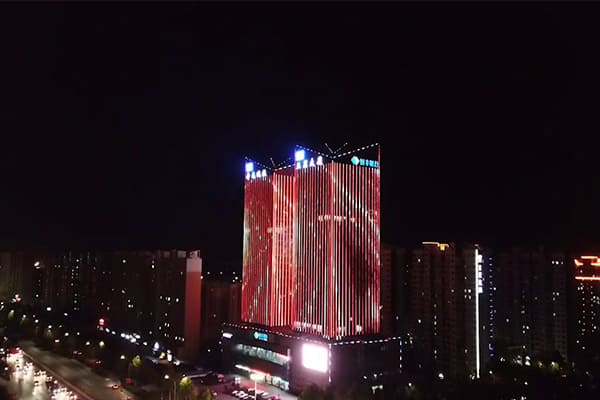
The real magic of DMX is not in the hardware, but in what it allows you to create. It elevates lighting from a simple utility to a powerful form of communication. Your building stops being just a place and starts becoming an experience.
From Illumination to Communication
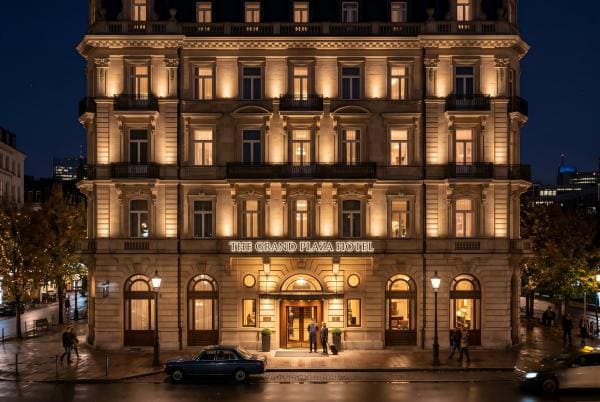
Traditional lighting just makes a building visible at night. DMX lighting allows a building to communicate. It can convey a brand's identity with corporate colors, celebrate a national holiday with a patriotic display, or create a calming atmosphere with slow, gentle color transitions. For many of our clients who use our pixel lights and media screens, we can even map any video file directly onto the building. Imagine your building's facade playing a dynamic video advertisement or a piece of digital art. It transforms the structure into a landmark, a true visual carrier of a message. This ability to tell a story is what truly separates a DMX project from standard lighting.
Unmatched Flexibility
One of the greatest benefits of DMX is its flexibility. Once the lights are installed, you never have to touch the hardware again to change the entire look and feel of the building. Everything is controlled through software. This is incredibly valuable for our clients who manage commercial properties. They can have a set of pre-programmed scenes for any occasion.
| Scene Name | Description | Use Case |
|---|---|---|
| "Corporate" | Static, elegant display of brand colors. | Daily, professional look. |
| "Holiday" | Dynamic red and green chasing effects. | Christmas season. |
| "National Day" | A flowing animation of the national flag. | National celebrations. |
| "Energy" | Fast-paced, vibrant color changes. | Special events or product launches. |
With a single click, the building's entire personality can change. This saves tremendous time and resources compared to physically changing lighting gels or fixtures.
Creating Interactive Experiences
DMX can go even further by integrating with other systems. We can connect the lighting controller to sensors. This allows the lighting to react in real-time to its environment. Imagine the lights on a building changing color as more people walk by, or the facade pulsing in time with music from a nearby festival. This level of interactivity creates an immersive and unforgettable experience for anyone who sees it, making the building a dynamic part of the urban landscape.
Is DMX a Worthwhile Investment for Your Project?
Are you worried about the cost of advanced lighting control? The price tag can seem high, but the return on investment7 can be massive. Let's determine if it's the right choice for you.
DMX is a high-value investment for projects aiming to become landmarks, attract customers, or create unique experiences. For hotels, commercial towers, and event venues, the increased brand visibility and appeal far outweigh the initial cost. For basic lighting, simpler systems are more economical.
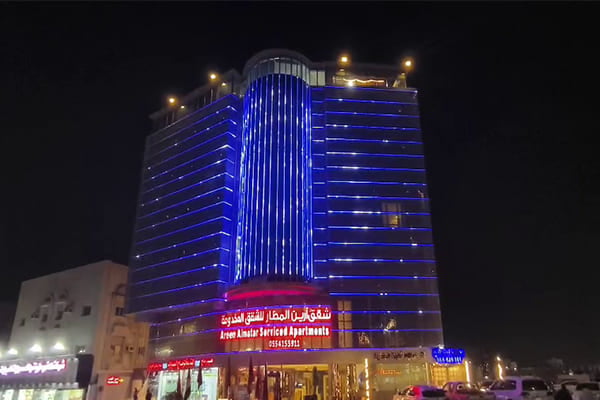
Deciding on a control system is a big financial decision. As an engineer and supplier, I always want my clients to choose the right tool for the job. DMX is incredibly powerful, but it's not always necessary. The decision comes down to your project's goals.
When to Invest in DMX
You should strongly consider DMX if your project fits into one of these categories. The goal here is not just to light up a building, but to make a statement and see a return on that investment.
- High-Impact Properties: This includes hotels, flagship retail stores, corporate headquarters, bridges, and major tourist attractions. For these projects, the visual identity is paramount. A dynamic DMX facade increases brand recognition, attracts foot traffic, and can directly lead to higher revenue and property value. It turns the building into a 24/7 marketing tool.
- Performance and Event Venues: For theaters, concert halls, banquet rooms, and stadiums, dynamic lighting is not a luxury; it's a core requirement. The ability to create moods and effects is essential to the customer experience.
- Future-Proofing a Project: DMX is a mature, stable, and universally adopted industry standard. By choosing DMX, you ensure that your system will be compatible with new fixtures and technologies for years to come. It also integrates well with larger Building Management Systems (BMS) like BACnet, which is a major benefit for large-scale construction projects.
When to Consider Alternatives
On the other hand, DMX can be overkill for simpler needs.
- Basic Illumination: If your only goal is to provide safe and simple lighting for a space like a warehouse, parking garage, or a standard office interior, DMX is not the most cost-effective choice. Simpler control systems like 0-10V dimming or DALI are much more economical for these applications.
- Strict Budget Constraints: The upfront cost for DMX controller8, decoders, and programming can be higher than other systems. However, this is where your choice of partner becomes crucial. Many companies charge significant fees for programming and creating effects. At JUXUANLED, we see this differently. For all the projects I've worked on, we provide the professional programming9 and effect creation completely free of charge for our clients. If they need to update the scenes for a new holiday or event later, we help with that for free, too. This service significantly lowers the total cost of ownership and removes a major barrier for many of our partners.
Conclusion
DMX is the key to unlocking your building's visual potential. If your goal is to create a unique, interactive landmark, it's a long-term investment that pays for itself.
Explore how DMX control can revolutionize your lighting design and create stunning visual effects. ↩
Learn techniques to transform your project into a captivating visual spectacle. ↩
Understand the technology behind modern lighting systems and their capabilities. ↩
Discover methods to enhance your lighting with vibrant, changing colors. ↩
Understand how control channels work and their significance in lighting design. ↩
Explore the capabilities of RGBW lights and their color mixing potential. ↩
Understand the financial benefits of investing in advanced DMX lighting systems. ↩
Get insights into the central component of DMX systems and its functionalities. ↩
Explore the benefits of having expert programming for your lighting effects. ↩