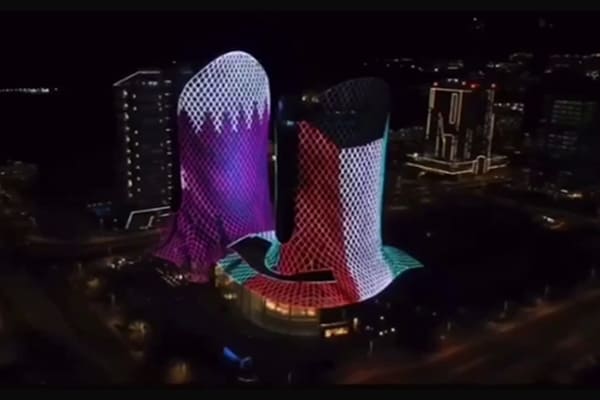
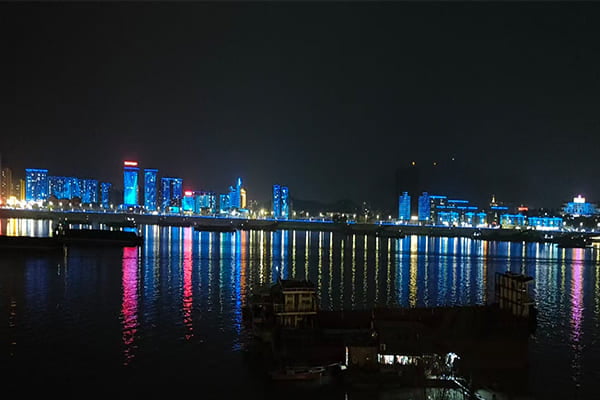
Your large-scale lighting project needs stunning, synchronized effects, but basic controls just can't handle it. This can lead to a boring, static display that fails to impress anyone.
DMX is the right choice when your project requires precise, synchronized control1 over many lights to create complex dynamic effects2. It is essential for architectural facades, landscape shows, and stages where visual artistry3, color-changing animations, and pixel-perfect effects are the primary goal.
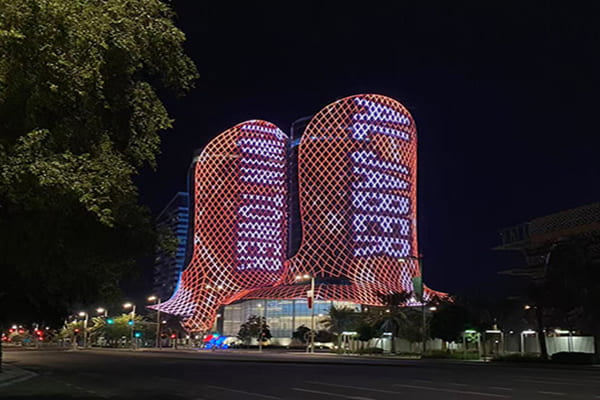
So, you know DMX is for big, fancy projects. But what does that actually mean for your specific needs? I've seen clients invest in complex systems they didn't need, and others try to cut corners only to be disappointed with the result. Let's break down the exact scenarios where DMX truly shines. Understanding this difference is key to a successful and cost-effective lighting design, ensuring you get the stunning visuals you're paying for.
What Kind of Projects Absolutely Need DMX Control?
You have a grand vision for a dynamic building facade that comes alive at night. But you're worried that standard controls can't achieve the fluid, pixel-perfect animations4 you imagine.
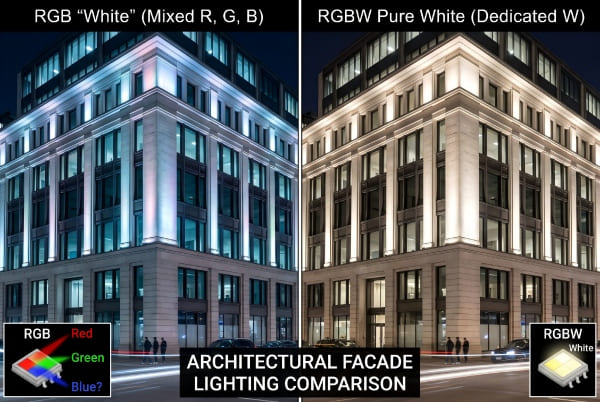
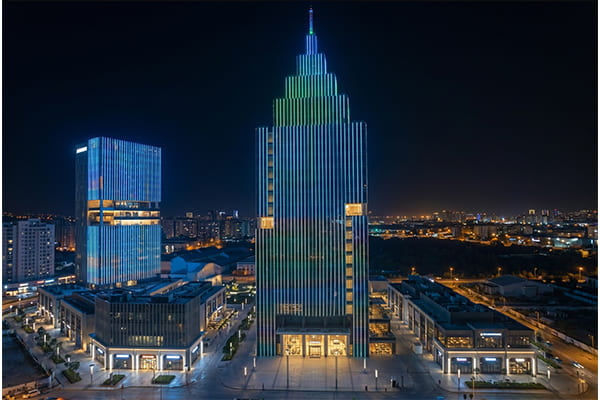
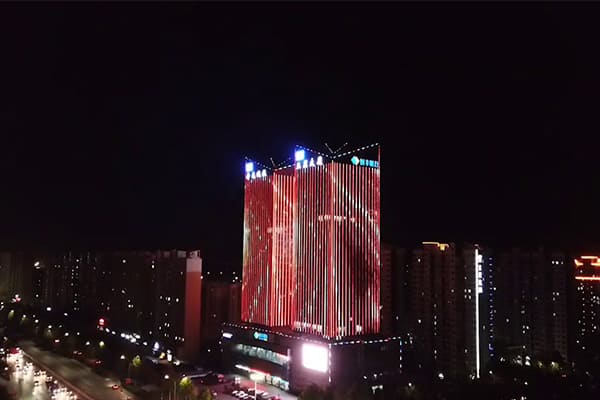
DMX is essential for projects requiring complex, synchronized dynamic effects like RGBW color chasing5, large-scale wall washing6, and media facades7. It ensures thousands of lights act as one cohesive, animated display without lag or error, creating a powerful visual impact.
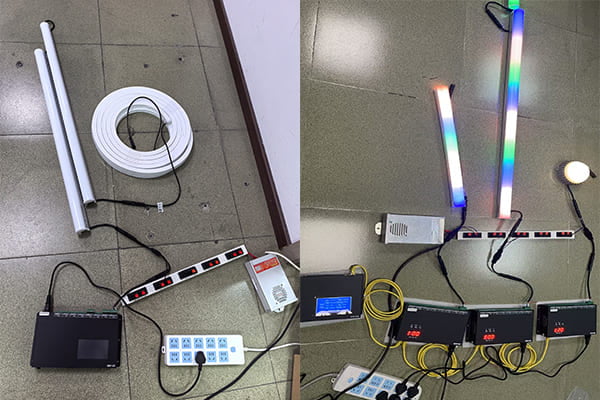
I remember a project for a large commercial complex. The client wanted the entire building to "breathe" with light, with waves of color washing over the facade. This is impossible without a protocol like DMX. It’s built for these demanding, artistic applications. It's not just about turning lights on and off; it's about conducting an orchestra of light. We use DMX to handle three main areas where nothing else will do.
Ultimate Dynamic Effects
This is the heart of DMX. When you need more than just a single color, DMX is the answer. Think about effects like RGB or RGBW color changing, where light flows smoothly from one hue to another. Or consider wall washing, chasing effects, and other complex animations. DMX even allows for pixel-level control, turning an entire building facade into a giant video screen, often called a media facade. And while it excels at color, it's also perfect for high-precision single-color control. We can program DMX-controlled white light, warm white light, or any single color to fade and pulse exactly as needed for an artistic effect.
Flawless Large-Scale Synchronization
Imagine a skyscraper, a long bridge, or a massive public park. You need hundreds, or even thousands, of light fixtures to work together perfectly. They must change color and intensity at the exact same moment. DMX is designed for this. It ensures that even with long cable runs, every single light is perfectly synchronized without any delay or flickering. We typically achieve this with a system of a main controller that sends the master signal to several sub-controllers distributed throughout the project. This architecture guarantees that the signal is strong and stable everywhere.
Smart Programming and Integration
A modern lighting project needs to be smart. With DMX, we can pre-program countless lighting scenes. For example, we can create a specific "Holiday Mode" that can be activated with a single click. We can also integrate the lighting system with a central building management system or an astronomical clock, so the lights automatically turn on at sunset and change scenes throughout the evening. We can even pre-set a whole week's or month's worth of lighting shows in advance. Furthermore, with RDM (Remote Device Management)8, a feature that works with DMX, we can remotely monitor the status of each individual light fixture, making maintenance much easier.
| Scenario | DMX Application | Key Benefit |
|---|---|---|
| Visual Artistry | RGB/RGBW color changing, chasing, flowing animations | Creates stunning, fluid visual experiences. |
| Architectural Scale | Building facades, bridges, landscape lighting | Synchronizes thousands of lights without delay. |
| Automation | Pre-set scenes, integration with clocks and sensors | Provides effortless, automated control. |
Is DMX Always the Best Choice for Smart Lighting?
DMX sounds powerful and impressive, and it is. But jumping in without knowing the drawbacks could lead to budget overruns and installation headaches you weren't prepared for.
No, DMX isn't always the best choice. While its control precision and scalability are unmatched for visual effects, its complexity and higher cost make it unsuitable for simple applications. The need for specialized wiring and programming means it's overkill for basic dimming or small-scale projects.
I always advise my clients to weigh the pros and cons carefully. It's easy to get excited by the possibilities of DMX, but sometimes a simpler, less expensive solution is the smarter business decision. You wouldn't use a race car to go grocery shopping. In the same way, you don't need DMX for every lighting job. Let's look at where it excels and where its power becomes a practical drawback.
The Unmatched Advantages of DMX
The biggest advantage of DMX is its powerful control capability. It allows you to control every single light, or even a single pixel within a light, independently. This gives you incredible freedom to create detailed and intricate lighting designs. The signal itself is very stable and robust, which is critical for professional projects where failure is not an option. It's also incredibly scalable. A single DMX universe can control 512 channels, but by using protocols like Art-Net9, we can expand the system to control an almost infinite number of lights. This makes it future-proof for even the most ambitious projects.
The Practical Limitations to Consider
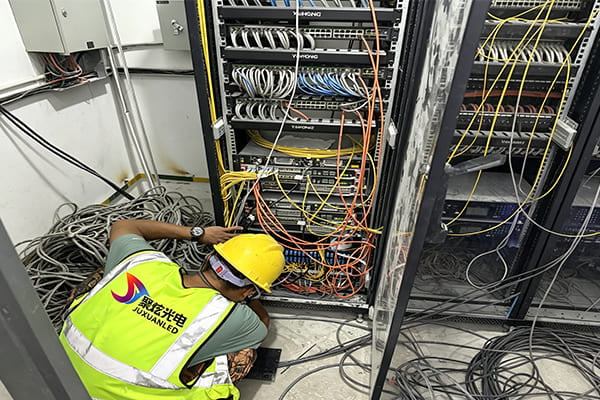
The power of DMX comes with complexity. The system requires professional installation and setup. You can't just plug it in and go. It requires specific wiring, usually a shielded twisted-pair cable10, to prevent signal interference. Each fixture in the system needs to be given a unique "address" so the controller knows which light to talk to. This addressing process can be time-consuming on a large project. Finally, the cost is a major factor. The controllers, the DMX-enabled fixtures, and the specialized labor all add up, making a DMX system significantly more expensive than a basic dimming system like 0-10V.
| Aspect | Advantage | Limitation |
|---|---|---|
| Control | Individual pixel-level control for complex effects. | Requires professional address coding11 for each fixture. |
| Signal | Highly stable and reliable over long distances. | Requires specific shielded twisted-pair wiring. |
| Scalability | Easily expandable to thousands of lights with Art-Net9. | Higher initial cost for controllers and fixtures. |
| Setup | Professional-grade and robust. | More complex installation and programming. |
How Do I Choose Between DMX and Other Control Systems?
You know you need smart lighting control, but the options are confusing. Choosing the wrong system could mean paying for features you don't need or getting a system that can't deliver your vision.
Choose DMX for projects focused on "visual art" and "special effects," like commercial facades, landscape shows, and stages. For basic dimming or energy management in offices, consider DALI or 0-10V. For simple home or small-area control, wireless options are better.
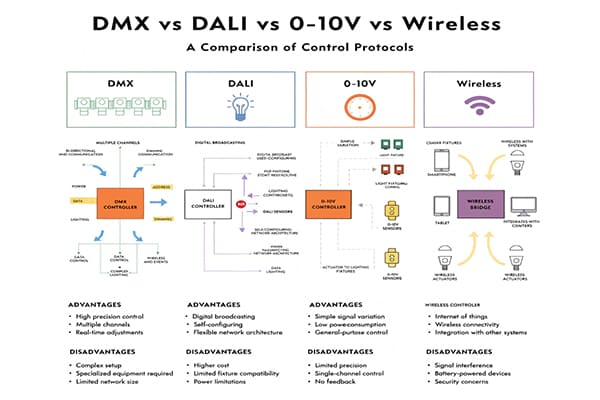
The key is to match the control system to the project's goal. I always ask clients one simple question: "Is your goal to create a visual spectacle, or is it just to provide functional light?" The answer to that question usually points us in the right direction. If the lighting itself is the main attraction, DMX is probably the answer. If the lighting is just there to help people see, other systems are more practical.
When to Go with DMX
You should choose DMX when your project is a "visual art" piece. This includes commercial complexes that want a dynamic facade, landscape shows designed to wow visitors, concert stages, and high-end art installations. In these cases, the lighting is not just functional; it's a core part of the experience. The investment in DMX is justified because it delivers the special effects and visual impact that the project depends on. It's for projects that need to perform.
A Note on DMX IC Chips
When you do choose DMX fixtures, it's important to know that the internal components matter. The "brain" of a DMX fixture is its IC chip12. There are many different types on the market, such as the UCS512 series, SM16512, TM512, and GS8512. For projects with many linear lights of different custom lengths, I often recommend fixtures that use an IC with an auto-addressing feature, like the SM17500. This feature can save a massive amount of time during installation because the system can assign addresses automatically, which makes programming much faster and more accurate. It's a technical detail, but one that can make a big difference on a complex job.
Exploring the Alternatives
DMX is not the only smart lighting protocol. For different needs, there are better-suited options. For commercial buildings like offices or warehouses where the main goals are energy saving and basic dimming control, DALI is often a better choice. For very simple, budget-conscious dimming applications, the classic 0-10V system still works well. And for home use or small, single-room commercial spaces, wireless systems13 like Zigbee or Bluetooth offer easy installation and convenient control from a smartphone without the need for complex wiring.
| System | Best For | Complexity | Cost | Key Feature |
|---|---|---|---|---|
| DMX | Dynamic effects, large-scale shows, media facades7 | High | High | Artistic control, pixel-level effects |
| DALI | Commercial buildings, offices, energy management | Medium | Medium | Two-way communication, energy efficiency |
| 0-10V | Basic dimming for functional spaces | Low | Low | Simple, reliable analog dimming |
| Wireless | Homes, single rooms, retrofits | Low | Low-Medium | Easy installation, no new wires |
Conclusion
Ultimately, DMX is the professional's choice for large-scale projects demanding dynamic visual effects. For simpler lighting needs where the goal is function over spectacle, other systems are a better fit.
Learn how synchronized control can elevate your lighting projects to new heights. ↩
Discover the magic of complex dynamic effects and how they transform visual experiences. ↩
Understand the role of visual artistry in creating impactful lighting experiences. ↩
Learn about the technology behind pixel-perfect animations for captivating displays. ↩
Find out how RGBW color chasing can create stunning visual displays in your projects. ↩
Understand the impact of large-scale wall washing on architectural aesthetics. ↩
Explore the innovative use of media facades in modern lighting design. ↩
Learn about RDM and its benefits for managing lighting systems remotely. ↩
Find out how Art-Net expands the capabilities of DMX lighting systems. ↩
Explore the necessity of using shielded twisted-pair cable for reliable DMX performance. ↩
Learn about the process of address coding and its significance in DMX setups. ↩
Understand the importance of the IC chip in ensuring effective DMX lighting control. ↩
Explore the benefits of wireless systems for easy and flexible lighting control. ↩