Struggling to make sense of LED data sheets? You see a wall of numbers and acronyms, making it hard to choose the right light. This confusion can lead to costly mistakes.
To truly understand an LED data sheet, look beyond just lumens (brightness) and watts (power). Focus on efficacy (lm/W) for efficiency, CCT for light color, CRI for color accuracy, beam angle for light spread, and the IP rating for durability. Mastering these ensures you select the perfect fixture.

You're a professional. You know that the success of a lighting project depends on the details. Just picking the brightest light or the one with the lowest power consumption isn't enough. The real magic happens when you understand the story the data sheet is telling you. It's the difference between a project that simply works and one that wows your client and stands the test of time. Let's break down these specifications together, so you can specify and purchase with total confidence.
What’s More Important Than Brightness: Efficacy and Power Consumption?
Are you focused only on watts to judge power usage? This can be misleading. A low-wattage lamp isn't always the most efficient, which can hurt your project's budget over time.
Luminous efficacy, measured in lumens per watt (lm/W), is the true measure of efficiency. It tells you how much light you get for every watt of power consumed. A higher efficacy means more light for less money, making it a critical spec for any project.
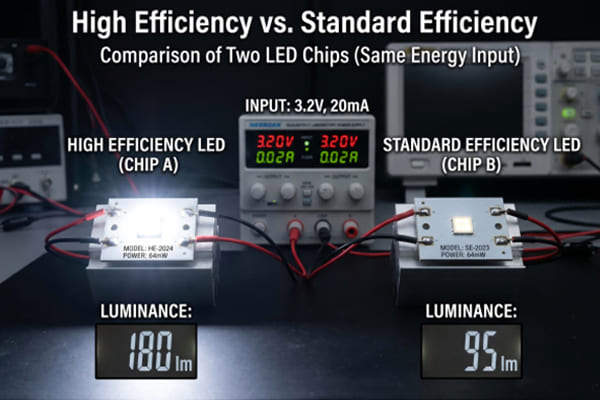
Let's dive deeper into this. For years, we were all taught to look at watts. But with LED technology, lumens (lm) and luminous efficacy (lm/W) are far more important. Lumens measure the total amount of visible light a fixture emits. Simply put, more lumens mean a brighter light. Watts (W) measure the energy the fixture consumes. The goal is to get the most lumens for the fewest watts. That is exactly what luminous efficacy tells us. A modern, high-quality LED can have an efficacy of 150 lm/W or more, while an older or cheaper model might be down at 90 lm/W. This difference has huge implications for large-scale projects. For our outdoor linear lights, we typically use 10-12W models. For wall washers, power can range from 12W up to 72W or even 108W for powerful applications. By choosing a high-efficacy fixture, you ensure maximum brightness while minimizing long-term electricity costs for your client.
| Specification | Light Fixture A | Light Fixture B |
|---|---|---|
| Lumens (lm) | 15,000 lm | 15,000 lm |
| Watts (W) | 150 W | 100 W |
| Efficacy (lm/W) | 100 lm/W | 150 lm/W |
| Conclusion | Both are equally bright. | Fixture B is 50% more efficient. |
How Do You Choose the Right Light 'Color' with CCT and CRI?
Have you ever installed lights that made a building's facade look dull or unnatural? The problem might not be the light's brightness, but its color properties, which can ruin the desired atmosphere.
Use Correlated Color Temperature (CCT) to set the mood (warm or cool) and the Color Rendering Index (CRI) to ensure colors look true and vibrant. CCT creates the atmosphere, while CRI brings out the beauty of the surfaces you are illuminating.
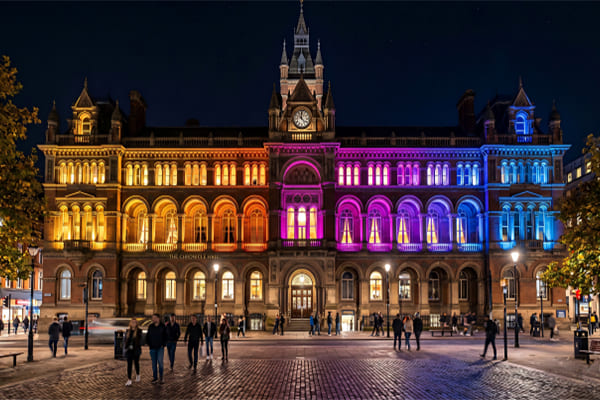
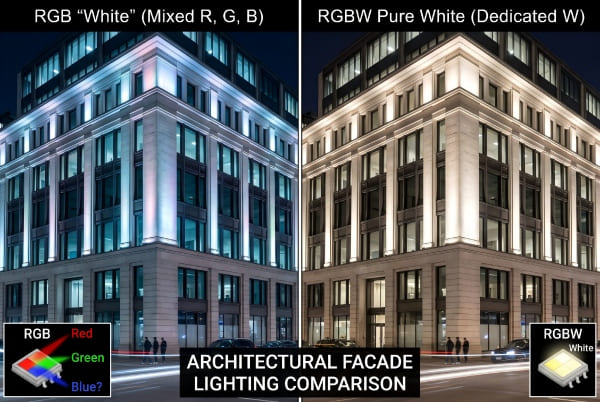
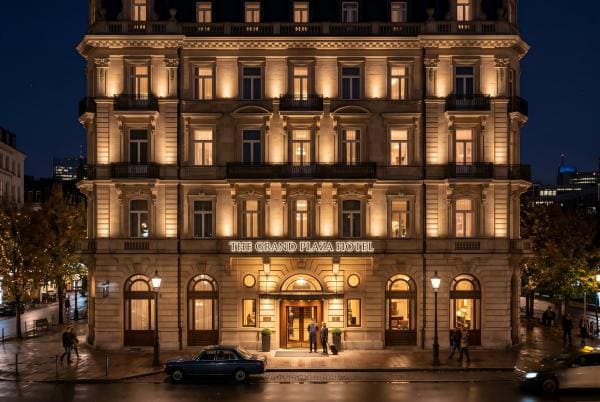
Let's break these two down. CCT is measured in Kelvin (K) and describes how "warm" (yellowish) or "cool" (bluish) the white light appears. A low CCT like 2700K creates a cozy, warm glow, perfect for historical buildings. A neutral CCT around 4000K is great for modern commercial spaces. A high CCT like 6000K produces a crisp, day-like light. CRI, on the other hand, is about accuracy. It’s a scale from 0 to 100 that measures how well a light source reveals the true colors of an object compared to natural daylight (CRI 100). For a museum or high-end retail, you need a CRI of 90+ to make colors pop. But what about outdoor landscape lighting? I often see people worry that our lights have a CRI below 70. This is intentional. For facade lighting, our goal is usually atmosphere and visual impact, not perfect color accuracy. We use wall washers, linear lights, and pixel lights with RGB or RGBW to create dynamic, saturated color effects. In these cases, high brightness and rich colors are more important than CRI.
How Does Beam Angle Shape Your Lighting Design?
Choosing a light with the wrong beam angle can completely undermine your design. A beam that's too wide will wash out details, while one that's too narrow will create harsh, disconnected hotspots.
The beam angle determines how light is distributed, from a tight spotlight to a wide flood. A narrow angle (3°-20°) is for accenting features, while a wide angle (60°-120°) is for broad, even illumination. Matching the angle to the task is essential for a professional result.
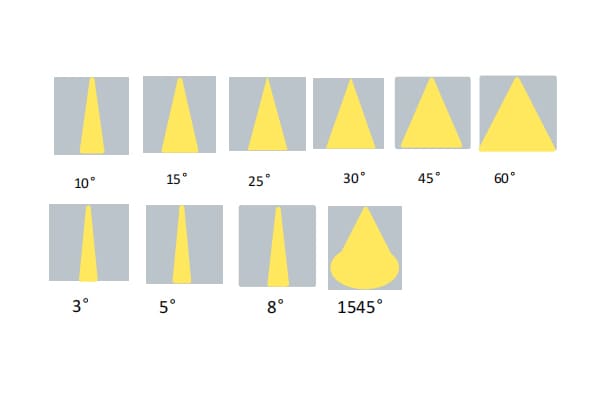
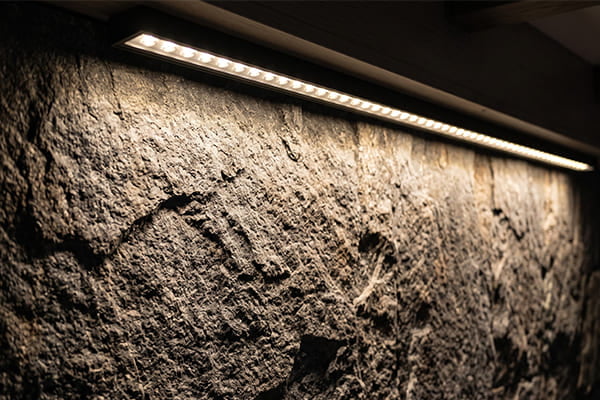
The beam angle is one of the most powerful tools in a lighting designer's kit. It dictates how the light from a fixture will spread across a surface. Think of it like the nozzle on a hose. You can have a tight, powerful jet or a wide, gentle spray. In lighting, a narrow beam angle, like 5° or 10°, is perfect for highlighting architectural columns, statues, or creating dramatic grazing effects on a textured wall from a distance. Our wall washers and linear lights offer many narrow and asymmetrical options like 10*60° to achieve this. A medium angle might be used for general task lighting. A wide angle, like 120°, is what we typically use for our pixel lights. This wide distribution is ideal for creating smooth, uniform fields of color on a media facade or for general floodlighting where you want to cover a large area evenly. Selecting the right beam angle is a balance between the fixture's placement, the distance to the target, and the effect you want to achieve.
| Light Fixture | Common Beam Angles | Typical Application |
|---|---|---|
| LED Wall Washer | 5°, 15°, 30°, 45°, 10*60° | Grazing walls, highlighting texture |
| LED Linear Light | 10°, 30°, 120°, 20*45° | Outlining building structures, cove lighting |
| LED Pixel Light | 120° | Media facades, large area color washing |
Is a Higher IP Rating Always Better for Outdoor Lights?
Many contractors believe that for outdoor lighting, the highest possible IP rating is always the best choice. This leads them to ask for IP68 fixtures for everything, a decision that can be both costly and counterproductive.
No, a higher IP rating is not always better. For most outdoor facade lighting, IP65 or IP66 is the ideal choice. These ratings provide excellent protection against dust and rain while allowing for better heat dissipation, which is crucial for the LED's longevity.
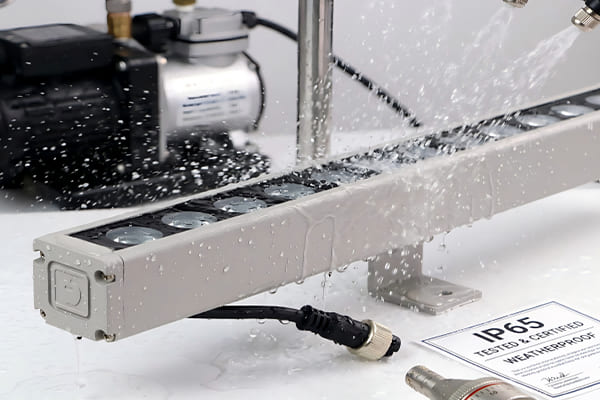
Let's clarify what an IP rating means. It's a two-digit number. The first digit (0-6) is for dust protection, where 6 means it's completely dust-tight. The second digit (0-9) is for water protection. An IP65 fixture is protected against jets of water from any direction, like heavy rain. IP66 is protected against powerful jets. And IP68 means the fixture can be continuously submerged in water. For our wall washers and linear lights mounted on a building facade, they will face rain and dust, but they will never be underwater. So, IP65/IP66 is perfectly sufficient. Why not use IP68 just to be safe? Because achieving an IP68 rating often requires fully sealing the unit with potting glue, which traps heat. Heat is the number one enemy of an LED chip. A well-designed IP65 fixture has gaskets and seals but also allows heat to escape through its aluminum housing. This keeps the LED cooler and ensures a much longer lifespan. We only recommend IP68 for fixtures that are truly installed underwater, like in pools or fountains. For everything else, IP65/66 is the smarter, more reliable, and cost-effective choice.
What Advanced Specs Help You Avoid Common Lighting Pitfalls?
You've chosen a light with the right brightness and color, but the project still fails. The lights flicker, some are a different shade of white, or they dim prematurely. What did you miss?
Look at advanced specs like L70 for true lifespan, SDCM for color consistency, and PF for driver efficiency. These "hidden" numbers separate professional-grade fixtures from cheap alternatives and protect you from common project failures.
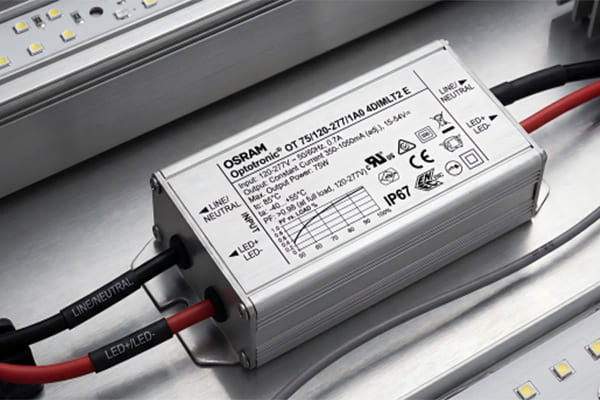
These are the details that we, as manufacturers, obsess over. First is the L70 rating. An LED doesn't just burn out; it slowly fades. L70 tells you how many hours it takes for the light to dim to 70% of its initial brightness. A 50,000-hour L70 rating ensures a long, usable life. Next is SDCM, or Standard Deviation of Color Matching. Have you ever seen a row of new lights where some look slightly pinkish and others slightly greenish? That's poor color consistency. An SDCM value below 3 means the color difference between fixtures is virtually invisible to the human eye, which is essential for a uniform look on a large building. Finally, check the Power Factor (PF). This measures how efficiently the driver uses electricity. A PF of 0.9 or higher means the fixture is using power effectively and won't cause issues on the electrical grid. When we provide project support, we ensure all these parameters are met, guaranteeing a flawless and durable installation for our partners.
Conclusion
Understanding an LED data sheet is about more than just lumens and watts. Mastering efficacy, CCT, CRI, beam angle, and IP rating empowers you to deliver exceptional and reliable lighting projects.