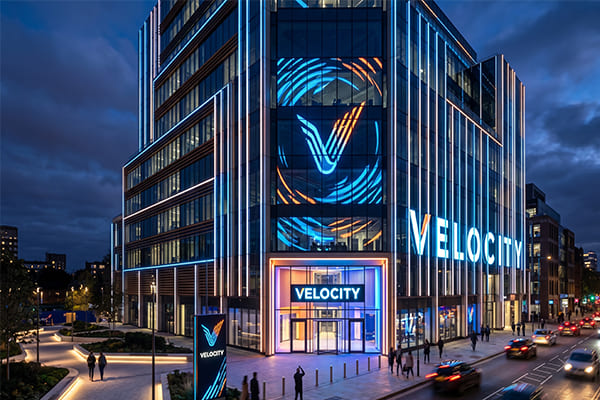
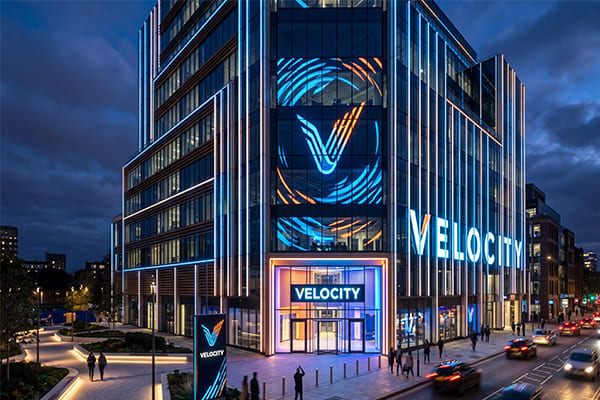
Your building looks great during the day but disappears into the darkness at night. Your brand identity, so carefully built, is completely lost after sunset. This is a huge missed opportunity.
The best way to reflect your brand identity with light is to combine three key elements. First, use color temperature to set the brand's personality1. Second, use specific lighting techniques to create layers and highlight features. Finally, add dynamic controls to bring the building to life.
This might sound like a complex technical task. But it's really about making a few smart choices to tell a story without words. As a lighting expert, I've seen how the right illumination can turn a simple building into a powerful brand ambassador. It's about more than just making things bright; it's about giving your building a soul. Let’s break down how we approach this, one step at a time.
How Can Color Temperature Define Your Brand's Personality at Night?
Choosing the right light color can feel overwhelming. A wrong choice can send a message that is completely different from what your brand stands for. This can really undermine your identity.
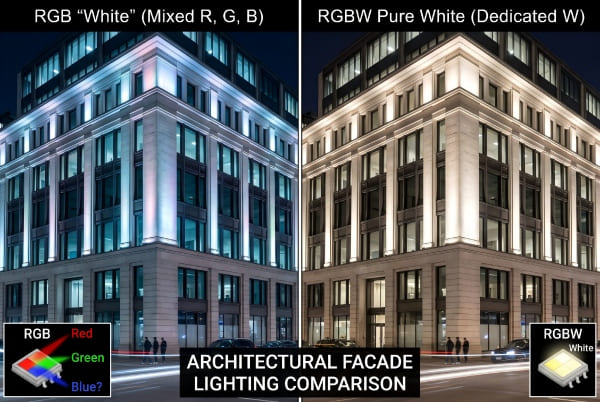
Color temperature is your brand’s first impression at night. Warm white (around 3000K) creates a feeling of luxury and welcome.2 Neutral white (4000K) shows professionalism and clarity.3 Cool white (5000K+) communicates innovation and a futuristic vision.4 Matching the light color to your brand's core values is key.
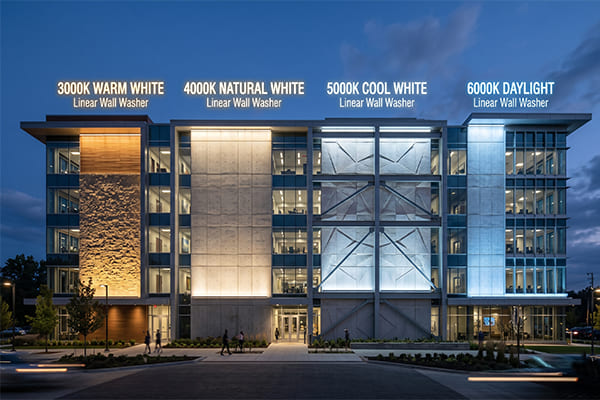
Think of light color as the tone of voice for your brand's story. It sets the mood before a single detail is seen. At JUXUANLED, the first question we always ask a client is about their brand's personality. Is it warm and traditional, or is it sleek and modern? The answer helps us choose the right color temperature, measured in Kelvin (K). A lower Kelvin number means a warmer, more yellow light. A higher number means a cooler, bluer light.5
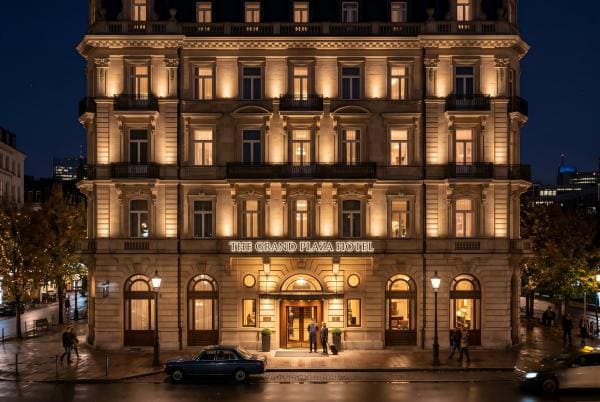
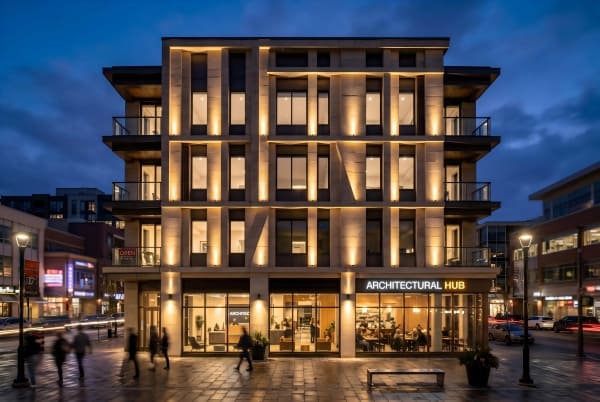
I remember a project for a luxury boutique hotel. Their brand was all about timeless elegance and comfort. We used very warm 2700K linear lights to graze the historic stone walls. The light brought out the rich texture and made the entire building glow with a welcoming, golden hue. It felt exclusive and warm, exactly like the brand.
Here’s a simple guide we use:
| Color Temperature | Feeling / Personality | Best For |
|---|---|---|
| Warm (2700K-3000K) | Luxurious, Welcoming, Classic | High-end hotels, historic sites, restaurants |
| Neutral (4000K) | Professional, Efficient, Clear | Corporate headquarters, offices, public spaces |
| Cool (5000K+) | Innovative, Modern, Tech-savvy | Technology parks, modern factories, showrooms |
Choosing the right color is the foundation. It ensures the first feeling people get from your building at night is the right one.
Which Lighting Techniques Create Depth and an 'Invisible Luxury' Effect?
Many buildings are just blasted with powerful floodlights. This makes them look flat and uninteresting. It is also expensive and wastes a lot of energy.6
To create an 'invisible luxury' effect, you should use specific techniques instead of general floodlighting. Wall grazing highlights material textures, which shows quality.7 Outline lighting defines the building's shape and logo, which boosts recognition. Playing with high contrast between light and shadow creates drama.
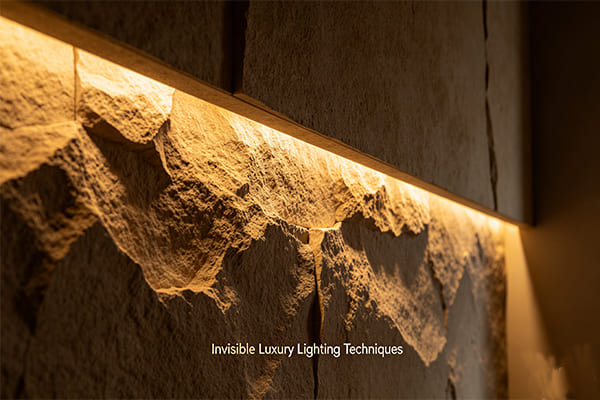
The highest level of lighting design is often described as "seeing the light, but not the fixture." It's about creating a sophisticated look where the focus is on the building, not the equipment. This is what we mean by "invisible luxury." Instead of brute force, we use light like a surgical tool to carve out an image from the darkness.
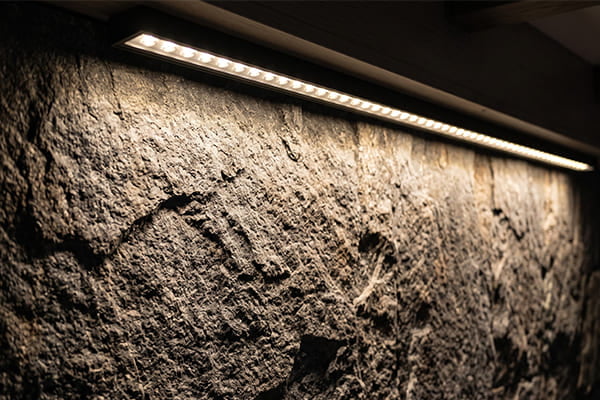
First, we use wall grazing. This technique places linear lights very close to a surface. The light shoots up or down the wall at a steep angle. This is perfect for bringing out the texture of materials like stone, brick, or textured concrete. We once lit a new corporate headquarters that had a unique ribbed metal facade. By using our wall grazer fixtures, we made each rib stand out with a sharp line of light and shadow. The client was amazed; they said the building looked more three-dimensional and impressive at night than it did during the day.
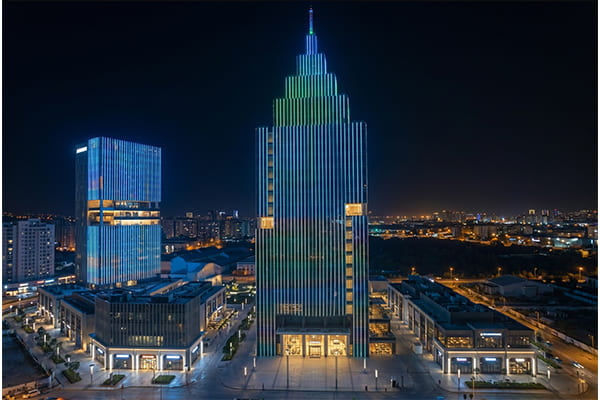
Next, we use outline lighting8. This involves using flexible linear lights or pixel lights to trace the important architectural lines of a building. It could be the roofline, the corners, or the frame of a main entrance. This technique is excellent for reinforcing brand recognition, especially if the building has a unique shape or a prominent logo. It simplifies the building into a clear, memorable symbol against the night sky.
Finally, the most important part is using contrast. Shadow is just as important as light.9 By lighting only key features and leaving other areas dark, we create depth and mystery. This makes the building feel like a piece of art in a gallery. It draws the eye and makes people curious. This approach uses less energy and makes a much stronger statement than just lighting everything up.
How Can Dynamic Lighting Make Your Brand Feel Alive and Modern?
A static lighting design can look the same every single night. This can feel boring and outdated. Your brand is always evolving, but your building looks stuck in time.
Dynamic lighting uses smart control systems like DMX51210 to change the light over time. You can create gentle 'breathing' effects, change colors for holidays, or program full light shows. This makes your brand feel current, engaged, and full of energy.
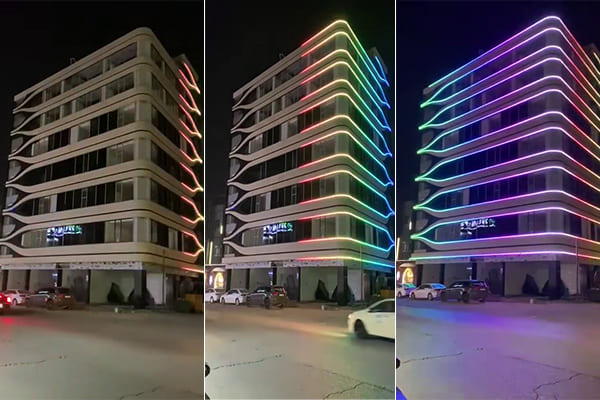
Static light is good, but dynamic light tells an ongoing story. Modern brands are not static; they are part of a living, breathing community. Their headquarters should reflect that. This is where smart control systems like DMX512 come in. Think of DMX512 as a director for an orchestra of lights. It allows us to control every single fixture individually, telling it when to turn on, what color to be, and how bright to be.11
This opens up a world of possibilities. For a corporate client in a major city, we designed a very subtle "breathing" effect for their facade lighting. Throughout the night, the neutral white light would slowly and gently pulse, almost like the building was breathing. It gave the massive structure a sense of life and made it feel like the beating heart of the company.
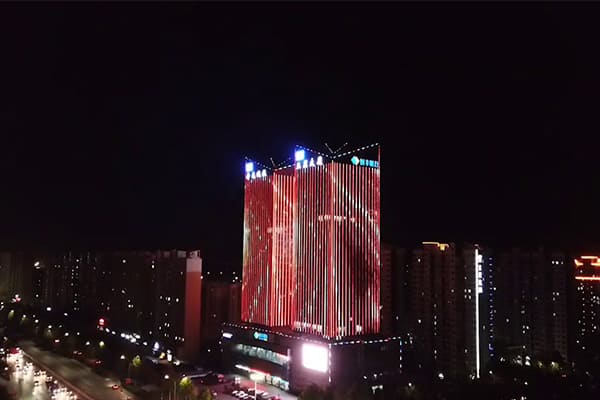
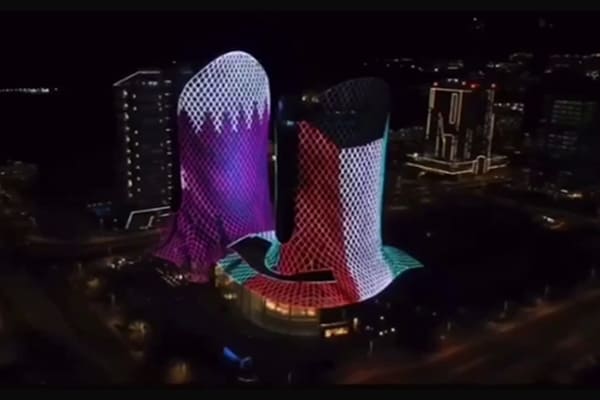
Dynamic lighting is also fantastic for engaging with the community. You can program the lights to turn green for a national holiday, or show the colors of the local sports team after a big win. This shows that your brand is present and cares about what's happening around it. It turns the building from a private office into a public landmark.
This technology also helps brands show they are responsible. We can program the lighting to sync with the city's rhythm. For example, the lights can be at full creative expression until midnight, then dim down to a simpler, energy-saving mode in the late hours. This reduces light pollution and shows a commitment to sustainability12, which is a powerful brand message in itself.
Conclusion
Great lighting does more than just make a building visible. It tells a story. By carefully choosing the right color, using smart techniques, and adding dynamic life, your building becomes a powerful symbol for your brand.
"Impact of Correlated Color Temperature on Visitors' Perception and ...", https://pmc.ncbi.nlm.nih.gov/articles/PMC9956383/. Research on lighting perception indicates that correlated color temperature influences perceived atmosphere and visual impression, providing contextual support for using warmer or cooler light to shape brand-related impressions. Evidence role: general_support; source type: paper. Supports: Color temperature can be used as one element to shape how a building’s brand personality is perceived at night.. Scope note: The evidence supports perceptual associations with lighting conditions, not a universal or guaranteed brand-personality response. ↩
"Effect of warm/cool white lights on visual perception and mood in ...", https://pmc.ncbi.nlm.nih.gov/articles/PMC8481791/. Studies in environmental and lighting psychology report that warm-white light is commonly associated with relaxed, pleasant, and hospitable atmospheres, which contextually supports its use for welcoming or upscale settings. Evidence role: expert_consensus; source type: paper. Supports: Warm white lighting around 3000K can create a welcoming impression and may support a luxury-oriented atmosphere.. Scope note: The source may support warmth and comfort associations more directly than the specific marketing term “luxury.” ↩
"Effect of warm/cool white lights on visual perception and mood in ...", https://pmc.ncbi.nlm.nih.gov/articles/PMC8481791/. Lighting guidance and human-factors studies often describe neutral-white light near 4000K as suitable for offices and task environments because it supports visual clarity and alertness, offering contextual support for professional settings. Evidence role: general_support; source type: institution. Supports: Neutral white lighting around 4000K is commonly associated with clear, professional, office-like visual environments.. Scope note: This evidence would support suitability for office or task visibility more directly than the broader branding association of “professionalism.” ↩
"Effect of warm/cool white lights on visual perception and mood in ...", https://pmc.ncbi.nlm.nih.gov/articles/PMC8481791/. Research on color temperature perception finds that high-CCT, bluish-white lighting is often perceived as cooler, brighter, and more technologically modern, which provides contextual support for associating cool-white light with a modern image. Evidence role: general_support; source type: paper. Supports: Cool white lighting above about 5000K can contribute to a modern or technology-oriented impression.. Scope note: The evidence is likely to support perceived coolness or modernity rather than directly proving that viewers infer “innovation” or a “futuristic vision.” ↩
"Correlated color temperature - Wikipedia", https://en.wikipedia.org/wiki/Correlated_color_temperature. Standard definitions of correlated color temperature explain that lower Kelvin values correspond to warmer, yellowish light and higher values correspond to cooler, bluish light. Evidence role: definition; source type: encyclopedia. Supports: Kelvin color temperature describes whether white light appears warm/yellowish or cool/bluish.. ↩
"Text-Alternative Version: Glare in LED Outdoor Lighting", https://www.energy.gov/cmei/ssl/text-alternative-version-glare-led-outdoor-lighting. Energy-efficiency guidance for exterior lighting notes that excessive or poorly directed outdoor illumination can waste electricity and create glare or light trespass, supporting the critique of indiscriminate floodlighting. Evidence role: general_support; source type: government. Supports: Indiscriminate high-power floodlighting can be inefficient and visually problematic.. Scope note: The source would substantiate energy waste and poor lighting practice generally, not evaluate every building using floodlights. ↩
"Façade Lighting Design : Concepts & Parameters - Academia.edu", https://www.academia.edu/43113139/Fa%C3%A7ade_Lighting_Design_Concepts_and_Parameters. Architectural lighting references describe wall grazing as placing luminaires close to a surface at a steep angle to emphasize texture through shadow and highlight patterns. Evidence role: mechanism; source type: institution. Supports: Wall grazing is a lighting technique used to emphasize surface texture.. Scope note: The source supports the texture-emphasis mechanism, while the judgment that this “shows quality” remains an aesthetic interpretation. ↩
"Architecture of the night - Wikipedia", https://en.wikipedia.org/wiki/Architecture_of_the_night. Architectural lighting guidance describes outline or contour lighting as a method for tracing edges and architectural forms so that a building’s massing and silhouette remain legible at night. Evidence role: definition; source type: institution. Supports: Outline lighting can define a building’s shape and key architectural lines at night.. Scope note: The evidence supports the technique’s visual function, not the full marketing outcome of improved brand recognition. ↩
"Factors affecting depth perception and comparison of ... - PMC - NIH", https://pmc.ncbi.nlm.nih.gov/articles/PMC7522094/. Visual perception and lighting design literature emphasize that luminance contrast and shadow are essential cues for depth, form, and texture perception in three-dimensional environments. Evidence role: mechanism; source type: paper. Supports: Shadows and contrast are important for perceiving depth and form in architectural lighting.. Scope note: This supports the perceptual role of shadows generally rather than prescribing a specific facade-lighting composition. ↩
"DMX512 - Wikipedia", https://en.wikipedia.org/wiki/DMX512. Technical documentation for DMX512 describes it as a digital communication protocol widely used to control stage and architectural lighting parameters such as intensity and color across multiple fixtures. Evidence role: definition; source type: institution. Supports: DMX512 is a lighting-control protocol used to control multiple luminaires and dynamic lighting parameters.. Scope note: A protocol source defines DMX512 capabilities but does not itself prove the branding benefits of dynamic facade lighting. ↩
"Understanding the Basics of Programming Lighting With DMX-512", https://pro.harman.com/insights/entertainment/touring/understanding-the-basics-of-programming-lighting-with-dmx-512/. Descriptions of addressable lighting-control systems explain that protocols such as DMX512 transmit channel data that can control fixture attributes including intensity and color when fixtures are individually addressed. Evidence role: mechanism; source type: institution. Supports: DMX-style control systems can individually control lighting fixtures’ brightness, color, and timing when properly configured.. Scope note: The degree of individual control depends on fixture addressing, wiring topology, controller capacity, and the specific luminaires used. ↩
"Rural Outdoor Lighting District Ordinance - LA County Planning", https://planning.lacounty.gov/long-range-planning/rold/. Outdoor-lighting guidance from dark-sky and environmental authorities states that reducing illumination levels, limiting operating hours, and dimming lights when not needed can reduce light pollution and energy use. Evidence role: expert_consensus; source type: institution. Supports: Dimming facade lighting during late hours can reduce light pollution and energy consumption.. Scope note: The source supports the environmental effect of dimming and curfews; whether observers interpret this as a brand commitment to sustainability is a marketing inference. ↩