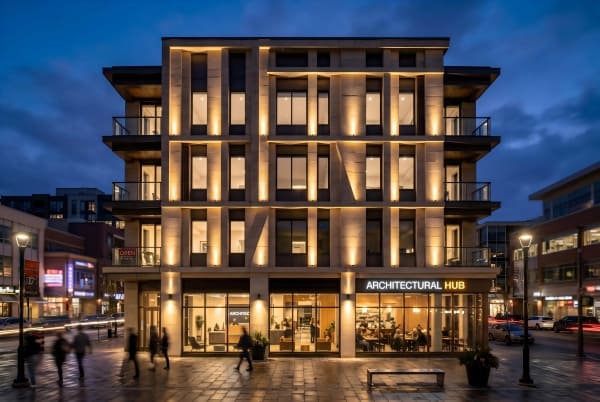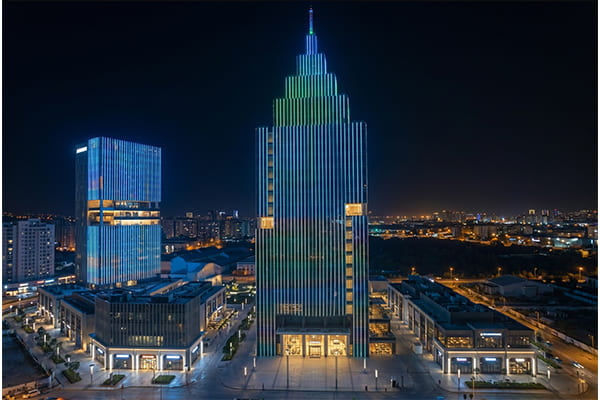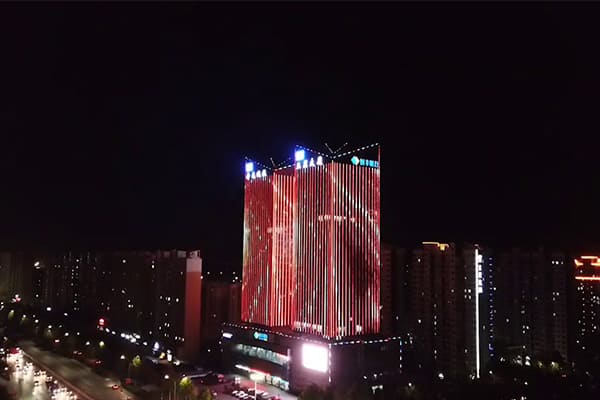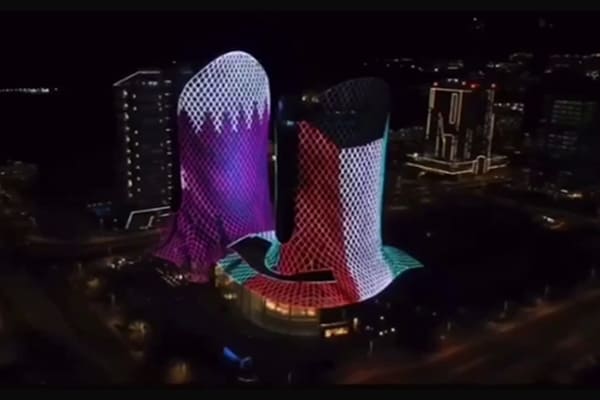
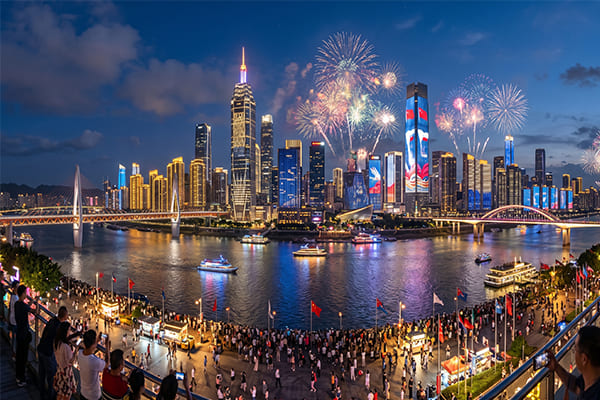
Your building looks great during the day but vanishes at night. This makes it lose value and opportunity. Professional facade lighting transforms your property into a landmark1 that shines 24/7.
Investing in facade lighting is a strategic move that delivers returns in four key areas. It boosts aesthetic appeal to increase asset value2, provides economic benefits through savings and higher rents, improves functional safety, and creates positive social impact by activating community spaces.
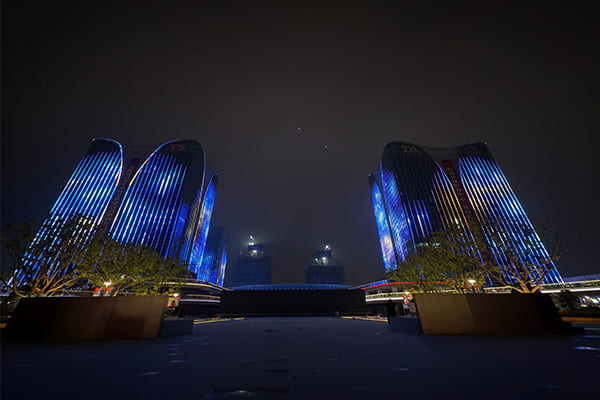
We see lighting as more than just a utility. It's a powerful tool for transformation. For years, I've seen clients hesitate, viewing facade lighting as just another expense. But once they see the results, they understand it's one of the smartest investments they can make. It touches everything from brand identity to the bottom line, from safety to community spirit. Let's dig deeper into these four core values to see how light can work for your property.
How Does Lighting Boost a Building's Aesthetic Value and Brand Image?
Your building's unique architecture gets lost in the dark. This makes your brand forgettable after sunset. We use light to paint a new identity onto your building, making it unforgettable.
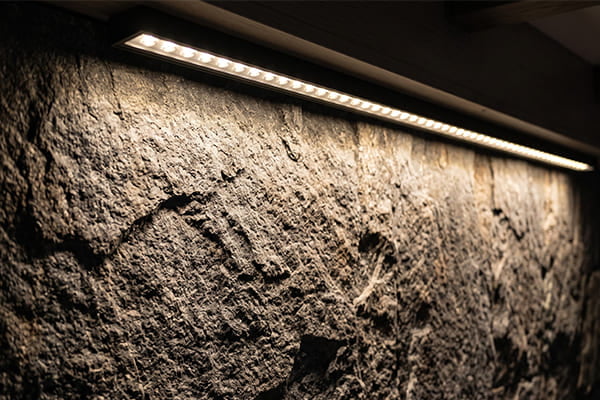
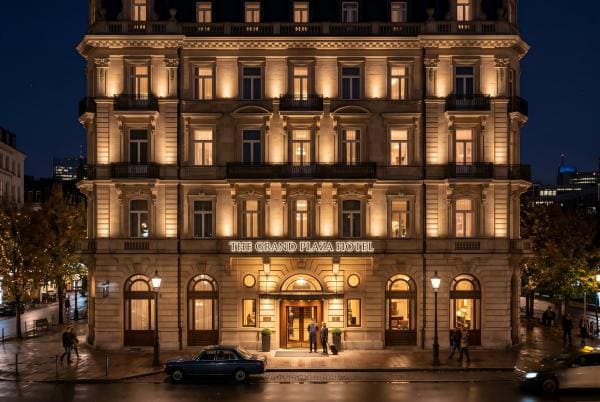
Great lighting turns a building into a landmark. It uses fixtures like wall washers and linear lights to highlight textures and shapes3. This creates a strong brand image and significantly increases the property's perceived value4, making it stand out from the crowd.
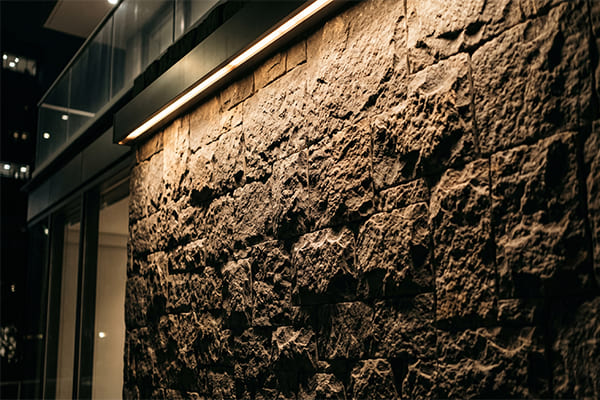
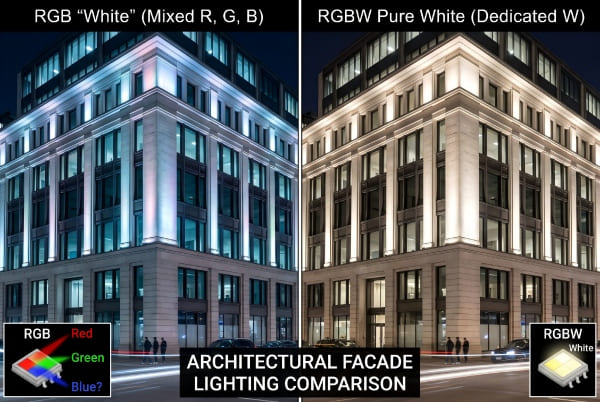
At its core, facade lighting gives a building a new "personality" at night. It's not just about making it visible; it's about telling a story. We strategically use different types of fixtures to achieve this. For example, our linear wall washers can graze a textured surface, revealing the rich detail of brick or stone that you'd miss otherwise. We use pixel lights to create dynamic, media-like effects for a modern feel. Floodlights provide the broad strokes, while linear lights can outline the building's unique silhouette. I remember a project we did on a corporate headquarters. By day, it was a sleek but standard glass tower. At night, we used an RGBW color system to bathe it in the company's brand colors. It instantly became a beacon on the skyline and a powerful branding tool. The CEO told me it did more for their brand recognition than a year's worth of marketing. This is the power of aesthetic lighting; it reshapes perception and turns steel and glass into a living landmark.
Key Aesthetic Lighting Strategies
| Strategy | Fixture Used | Desired Effect |
|---|---|---|
| Highlighting Texture | Wall Washers, In-ground Lights | Emphasizes material quality and depth. |
| Defining Structure | Linear Lights, Pixel Lights | Outlines the building's form and shape. |
| Creating Drama | Floodlights, Spotlights | Creates focal points and visual hierarchy. |
| Dynamic Branding | RGBW & DMX Controlled Systems | Allows for color changes and media effects. |
What Are the Direct Economic Returns of Facade Lighting?
You worry about high operational costs and low rental income. Old lighting is expensive to run and does not attract tenants. Our modern LED solutions cut costs while boosting your property's appeal.
Investing in facade lighting directly increases revenue and cuts costs. It can raise commercial asset value by 15-20%5 by attracting more tenants at higher rates. Modern LED systems also slash energy bills by over 50%6 and require minimal maintenance for years.
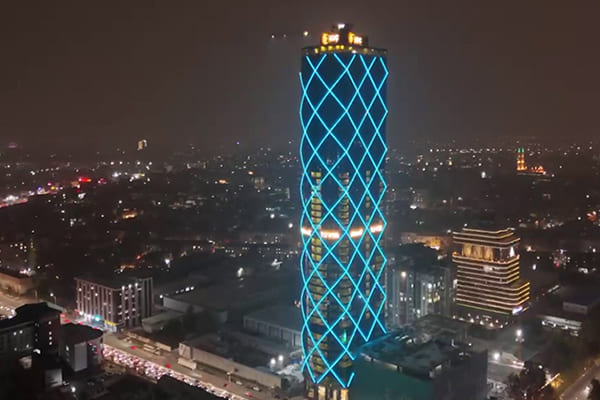
Let's talk numbers, because that's where an investment really proves its worth. A beautifully lit building is more desirable. It commands higher rent and attracts premium tenants, leading to lower vacancy rates. We've seen clients increase the value of their commercial assets by 15% to 20% after a lighting upgrade. But the return on investment doesn't stop there. The other side of the coin is cost savings. Traditional lighting is a massive energy drain. Our modern LED solutions, especially when paired with smart control systems like DALI or DMX512, can cut energy consumption by more than 50%. On top of that, our fixtures are built to last. You're looking at a lifespan of 5 to 10 years7 with very little maintenance. When you combine lower energy bills, minimal upkeep costs, and increased rental income, the system often pays for itself within 3 to 5 years8. A client who owned a hotel chain once told me that their new facade lighting was their best-performing asset. It attracted more guests, allowed them to increase room rates, and cut their utility bills significantly. It's a clear win-win.
Economic Value Breakdown: LED vs. Traditional
| Factor | Traditional Lighting (e.g., Halogen) | Modern LED Lighting (JUXUANLED) |
|---|---|---|
| Energy Consumption | High | Low (Over 50% savings) |
| Lifespan | 1-2 Years | 5-10 Years |
| Maintenance | Frequent (Bulb changes, repairs) | Minimal |
| Control | Basic On/Off | Smart (DALI, DMX512) |
| ROI Period | N/A (Cost Center) | 3-5 Years (Profit Center) |
How Does Facade Lighting Improve a Building's Functional Use and Safety?
Dark, poorly lit areas around your property feel unsafe. This limits how people use the space after dark. Proper lighting creates a safe, welcoming environment that extends the building's functional hours.
Facade lighting enhances safety and extends a building's functionality. It eliminates dark spots and blind corners, making the property more secure. It also provides clear guidance, improving navigation and allowing outdoor spaces like plazas and walkways to be used safely at night.
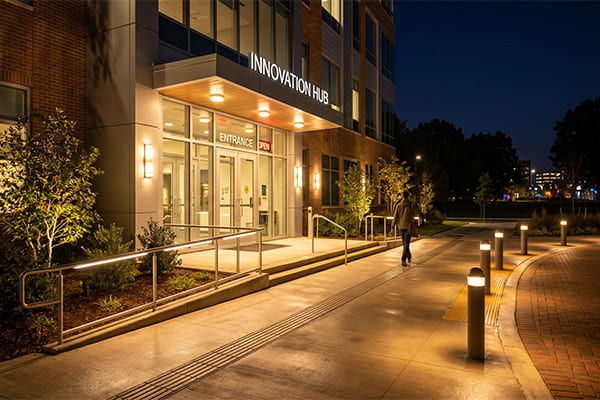
Beyond beauty and budget, lighting serves a very practical purpose: it makes a space work better. The most important functional benefit is safety and security. Well-lit facades and surrounding areas eliminate dark corners where criminal activity could occur, acting as a natural deterrent9. It makes tenants, visitors, and employees feel safer when arriving or leaving at night. We worked on a large residential complex where residents were concerned about walking from the parking garage to their building entrance after dark. By installing a comprehensive lighting scheme that included facade lights and pathway lights, we transformed the atmosphere. It immediately felt more secure and welcoming. But function also means extending use. A building's plaza or outdoor seating area is useless after sunset if it's dark. With proper lighting, that same space can become a vibrant spot for an evening market, a restaurant patio, or simply a pleasant place for people to gather. This extends the commercial and social life of the building well into the night, creating more value from the same square footage.
Key Functional Benefits
- Enhanced Security: A well-lit perimeter deters unauthorized access and vandalism.
- Improved Safety: Reduces trip and fall hazards10 on pathways, stairs, and entrances.
- Clear Wayfinding11: Guides visitors clearly to entrances, exits, and key areas of the property.
- Space Activation: Transforms previously dark and unused outdoor areas into functional, revenue-generating spaces.
What is the Social Impact of Great Architectural Lighting on a Community?
Cities can feel dull and disconnected at night. Buildings become dark voids instead of community assets. Lighting can turn buildings into vibrant centers that bring people together and build civic pride.
Architectural lighting fosters community and culture. It activates the nighttime economy12 by creating attractive public spaces. Dynamic lighting can celebrate holidays and events, reinforcing a city's identity and making residents feel a stronger sense of belonging. The building becomes a landmark for everyone.
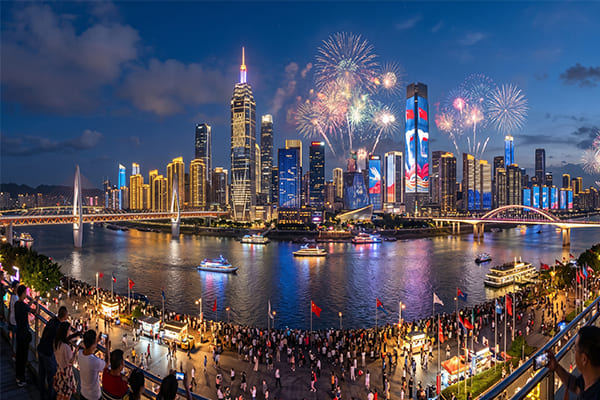
This is the value that goes beyond a single property owner and benefits the entire city. A building's lighting becomes part of the urban fabric. It contributes to the creation of a vibrant and safe nighttime economy, encouraging people to walk, shop, and socialize after dark. When a building becomes a beautiful landmark, it instills a sense of pride and belonging among residents. It becomes a meeting point, a point of reference. I've had the privilege of seeing this firsthand. We programmed the lighting on a major tower to display special colors and patterns for a national holiday. Thousands of people gathered in the streets below just to watch the light show. The building stopped being just a private office block; for that night, it belonged to the city and its people. With DMX controls, a building can participate in city-wide events, support causes by displaying certain colors, or celebrate local sports team victories. It becomes a dynamic canvas, a "shining business card" that communicates the city's spirit and culture to the world. This social value is powerful and creates a lasting legacy.
Lighting for Community Engagement
| Event | Lighting Application | Social Impact |
|---|---|---|
| National Holiday | Display of flag colors, patriotic symbols | Promotes civic pride and unity. |
| Cultural Festival | Dynamic, festive color scenes | Enhances the celebratory atmosphere. |
| Charity Awareness | Display of campaign colors (e.g., pink) | Raises public awareness and support. |
| New Year's Eve | Countdown animations, vibrant effects | Creates a central point for celebration. |
Conclusion
Facade lighting is not just an expense; it is a strategic investment. It boosts your property's aesthetic, economic, functional, and social value, delivering returns for years to come.
"(PDF) NIGHTSCAPE OF URBAN SQUARES IN LANDSCAPE ...", https://www.academia.edu/29061152/NIGHTSCAPE_OF_URBAN_SQUARES_IN_LANDSCAPE_ARCHITECTURAL_DESIGN_Analysis_and_Evaluations_on_Nightscape_of_Merdeka_Square_in_Kuala_Lumpur. A source on architectural lighting or urban nightscape design should support that exterior illumination can increase nighttime visibility and make buildings function as recognizable urban reference points; this supports the landmark effect conceptually rather than proving it for any specific property. Evidence role: general_support; source type: education. Supports: Professional facade lighting can transform a property into a recognizable landmark at night.. Scope note: Contextual support; whether a particular building becomes a landmark depends on location, design quality, and public recognition. ↩
"[PDF] Understanding the Contribution of Curb Appeal to Retail Real Estate ...", https://pdxscholar.library.pdx.edu/cgi/viewcontent.cgi?article=1044&context=busadmin_fac. Real-estate and urban-design literature can show that visual quality, curb appeal, and building presentation influence perceived property value; this provides indirect support for linking facade-lighting aesthetics with asset value. Evidence role: general_support; source type: paper. Supports: Improved exterior aesthetics can contribute to higher perceived or appraised property value.. Scope note: The evidence is likely indirect because studies may address visual appeal or curb appeal broadly, not facade lighting alone. ↩
"[PDF] Lighting Depth", https://www.engr.psu.edu/ae/thesis/portfolios/2008/amw304/assignments/Walker%20Lighting%20Depth.pdf. Architectural lighting guidance should explain that grazing, washing, and accent lighting reveal surface texture, form, and architectural detail, supporting the mechanism described for facade fixtures. Evidence role: mechanism; source type: education. Supports: Wall washers, linear lights, and related facade fixtures can be used to emphasize building textures, forms, and shapes.. ↩
"Environmental Lighting Conditions, Phenomenal Contrast, and the ...", https://pmc.ncbi.nlm.nih.gov/articles/PMC11505859/. Research on environmental design, place image, or retail/real-estate atmospherics should support that lighting and visual presentation affect perception and brand image; any connection to property value should be treated as perceptual rather than a measured valuation effect unless the source directly studies real estate. Evidence role: general_support; source type: paper. Supports: Facade lighting can influence brand image and perceived property value.. Scope note: May support perception and image more directly than measurable increases in property value. ↩
"Why Energy Efficiency Matters", https://www.energy.gov/energysaver/why-energy-efficiency-matters. A real-estate valuation source would need to document typical value premiums from exterior upgrades or lighting improvements; if only broader renovation or curb-appeal evidence is available, it should be cited as contextual and not as proof of a universal 15–20% uplift. Evidence role: statistic; source type: paper. Supports: Facade lighting upgrades can increase commercial asset value by 15–20%.. Scope note: The exact 15–20% figure is likely project- and market-specific and should not be presented as universal without direct empirical support. ↩
"LED Lighting | Department of Energy", https://www.energy.gov/energysaver/led-lighting. Government or energy-agency data on LED lighting should support that LED systems often use substantially less electricity than incandescent, halogen, or other legacy lighting, making energy reductions of around 50% or more plausible in suitable retrofit contexts. Evidence role: statistic; source type: government. Supports: Modern LED facade-lighting systems can reduce energy bills by more than 50% compared with traditional lighting.. Scope note: Actual savings depend on the baseline technology, operating hours, controls, and lighting design. ↩
"LED Lighting | Department of Energy", https://www.energy.gov/energysaver/led-lighting. Technical data from an energy agency or lighting research source should support that LED luminaires commonly have rated lifetimes measured in tens of thousands of hours, which can correspond to 10–15 years depending on nightly operating hours. Evidence role: statistic; source type: government. Supports: LED facade-lighting fixtures can have service lives on the order of 10 to 15 years.. Scope note: Calendar lifespan depends on operating schedule, heat management, driver quality, and environmental exposure. ↩
"[PDF] Case Study: Troffer Retrofits - Better Buildings Solution Center", https://betterbuildingssolutioncenter.energy.gov/sites/default/files/attachments/ILC_CKE.pdf. Energy-efficiency case studies or retrofit evaluations can document payback periods for LED lighting upgrades, but such evidence should be framed as comparable examples rather than proof that every facade-lighting project pays back within 3–5 years. Evidence role: case_reference; source type: government. Supports: Facade-lighting or exterior LED retrofit projects can achieve a 3–5 year payback period under favorable conditions.. Scope note: Payback varies with capital cost, electricity price, incentives, operating hours, maintenance costs, and revenue effects. ↩
"Improved Street Lighting and Crime Prevention: A Systematic Review", https://www.ojp.gov/ncjrs/virtual-library/abstracts/improved-street-lighting-and-crime-prevention-systematic-review. A systematic review or criminology study should support that improved outdoor lighting can reduce some nighttime crime or fear of crime in certain settings; the evidence should also note that effects vary by context and lighting design. Evidence role: expert_consensus; source type: paper. Supports: Well-lit facades and surrounding areas can deter criminal activity or improve perceived security.. Scope note: Crime-deterrence effects are not uniform and depend on place, social conditions, surveillance, and lighting quality. ↩
"Shedding Light on Falls: The Effect of Lighting Levels on Fall Risk in ...", https://pmc.ncbi.nlm.nih.gov/articles/PMC12227831/. Safety or lighting-standards sources should support that adequate illumination improves visibility of walking surfaces, stairs, changes in level, and obstacles, thereby reducing conditions associated with trips and falls. Evidence role: mechanism; source type: government. Supports: Proper exterior lighting can reduce trip-and-fall hazards on pathways, stairs, and entrances.. Scope note: Lighting reduces visibility-related hazards but does not address all causes of trips and falls, such as surface defects or user behavior. ↩
"[PDF] human response to architectural lighting: a systematic review", https://ufdcimages.uflib.ufl.edu/UF/E0/05/92/69/00001/Gavrina_A.pdf. Wayfinding and environmental-design literature should support that visual cues, including lighting, help users identify routes, entrances, exits, and destinations in built environments. Evidence role: mechanism; source type: paper. Supports: Facade and site lighting can improve navigation and wayfinding around a property.. Scope note: Lighting is one component of wayfinding and is most effective when integrated with signage, layout, and other visual cues. ↩
"[PDF] Leveraging nighttime light data to measure economic development", https://www.nesdis.noaa.gov/s3/2022-07/Goldblatt-Nighttime_Lights_International_Dev.pdf. Urban policy or planning research on the night-time economy should support that attractive, safe, and well-managed evening public spaces can encourage commercial, cultural, and social activity after dark; this is contextual support for facade lighting as one contributing factor. Evidence role: general_support; source type: institution. Supports: Architectural lighting can help activate the nighttime economy by making public-facing spaces more attractive and usable after dark.. Scope note: Night-time economy activation depends on many factors beyond lighting, including transport, safety management, land use, and programming. ↩