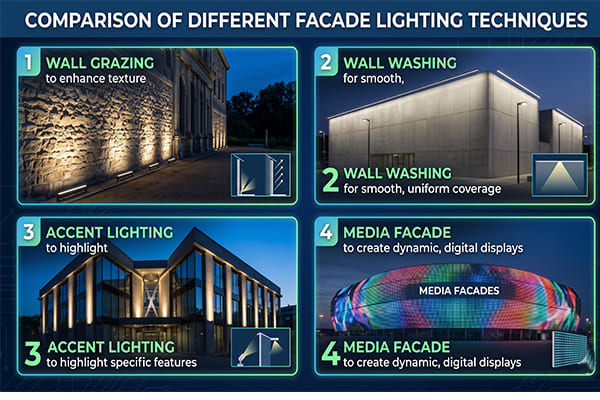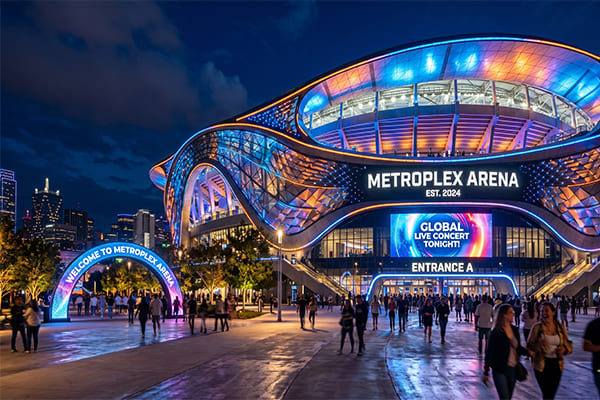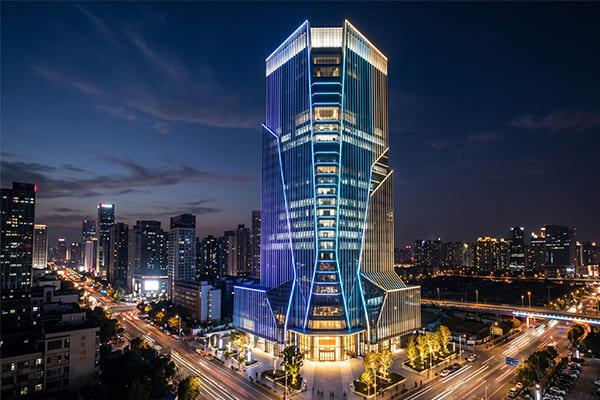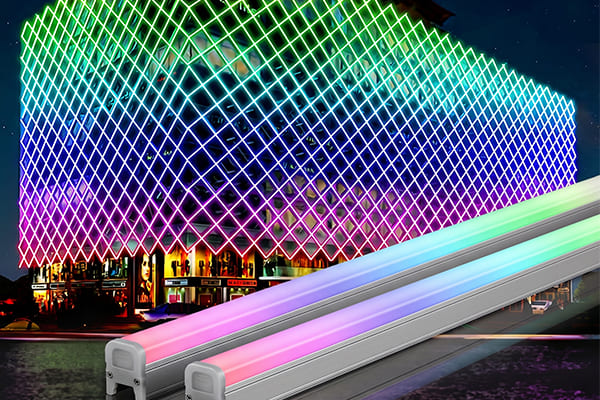
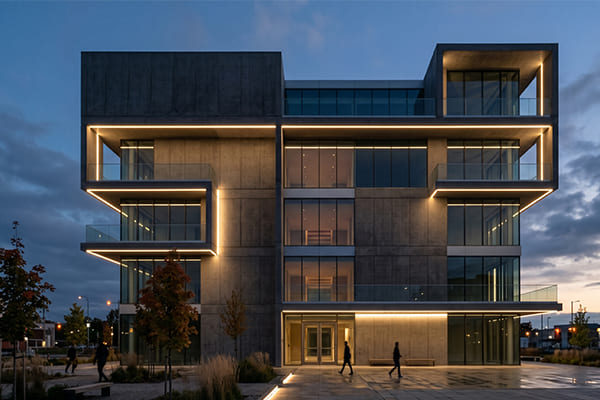
Your minimalist building looks amazing by day, but traditional lighting can ruin its clean lines at night1. This washes out textures, making your design look flat and generic.
The best ideas for minimalist facade lighting focus on "light without seeing the lamp2." You integrate linear fixtures into architectural details like joints and grooves. This method uses precise, warm light to highlight structure and texture, creating a sophisticated nighttime aesthetic instead of just flooding the building with light.
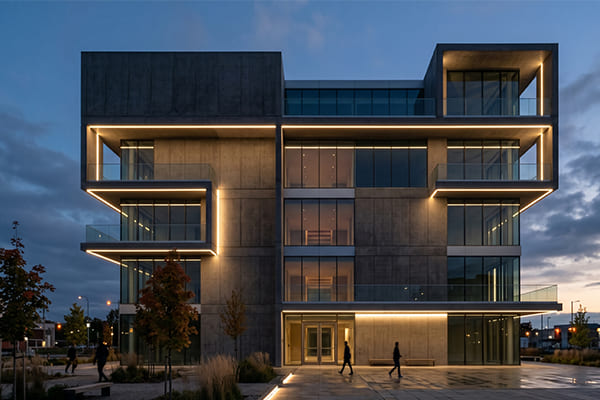
I've seen many projects struggle with this. They have a beautiful minimalist design, but the lighting feels like an afterthought. It just doesn't do the architecture justice. It doesn't have to be this way. When you understand the core philosophy, you can create something truly special. Let's explore how to get it right.
What's the Core Philosophy Behind Minimalist Architectural Lighting?
Many lighting plans just want to make a building visible at night. This "brute force" approach often creates glare and ignores the architect's vision, making the building look generic. But there is a better way.
The core idea is "light without seeing the lamp." You don't just blast a building with light. Instead, you use light strategically to reveal its form, texture, and structure3. The fixture itself should be invisible, leaving only pure, intentional light and shadow to tell the story.
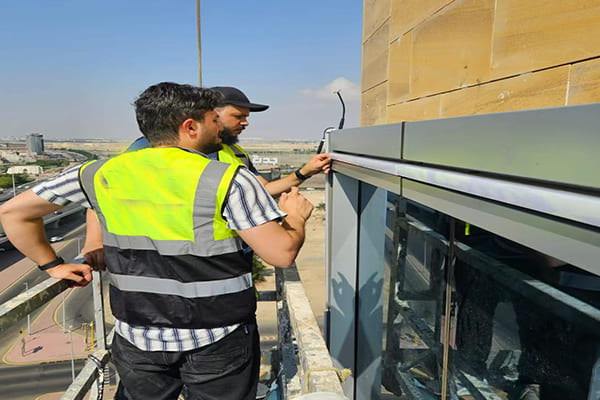
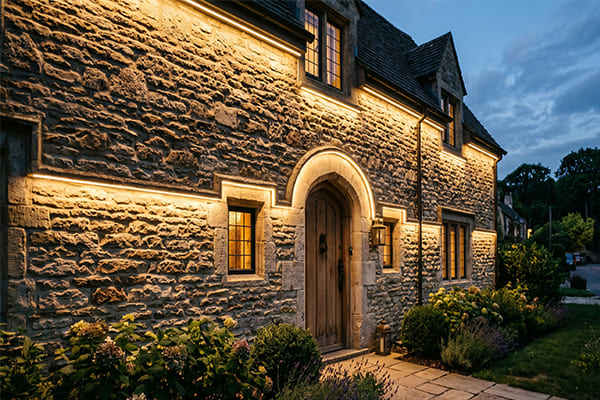
The goal is not to "illuminate the building." The real goal is to use the least amount of light to precisely express the building's structure and materials. We achieve this by hiding the linear lights. We integrate them directly into the building's fabric. Think of places like curtain wall joints, stone panel gaps, eaves, and grooves. During the day, the fixtures are completely invisible. They don't interfere with the clean architectural lines. At night, you don't see a lamp. You only see a pure, clean line of light.
This is the opposite of traditional floodlighting4. We actively use darkness as part of the design. Not every surface needs to be lit. By leaving some areas dark, you create contrast, depth, and drama5. This approach highlights the building's height, layers, and form. It can even create a sense of lightness, as if parts of the building are floating.
| Feature | Minimalist Lighting Philosophy | Traditional Lighting |
|---|---|---|
| Goal | Express structure & texture | Make the building visible |
| Technique | "Light without seeing the lamp" | Floodlighting, wall washing |
| Fixtures | Integrated, hidden | Visible, mounted on surface |
| Use of Dark | Darkness is a design element | Tries to eliminate all shadows |
| Result | Sophisticated, artistic, deep | Flat, bright, generic |
How Do You Choose the Right Linear Lights for a Minimalist Project?
You've embraced the minimalist philosophy, but the wrong fixtures can ruin the effect. Visible seams, mismatched colors, or dotted light patterns can make a high-end project look cheap.
For minimalist designs, choose linear lights with narrow beam angles (10°-30°)6 for precision. Ensure high color consistency (SDCM≤37) to avoid color shifts. Look for features like seamless connectors for no dark spots, and high-density COB sources for smooth, dot-free light.
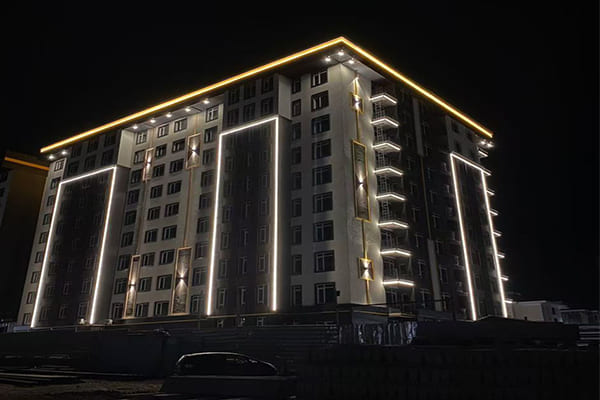
Minimalist projects have no tolerance for error. Every detail matters. From my experience, technical specifications are everything. First, let's talk about optics. You need precise light control. We recommend using fixtures with narrow beam angles, something between 10 and 30 degrees. This, combined with asymmetric wall washing optics, allows you to put the light exactly where you want it and nowhere else. It prevents messy light spill and glare.
Next is color consistency. This is critical for long lines of light. We measure it in SDCM, which stands for Standard Deviation of Color Matching. You need a rating of SDCM≤3. Anything higher, and you risk seeing visible color differences along the fixture run. I remember one project where one section looked slightly yellower than the rest. It was a tiny difference, but it was all you could see. We had to replace the whole line. You also need fixtures that produce a perfectly smooth line of light. Look for products that offer seamless, end-to-end connections to avoid any dark spots. High-density COB (Chip on Board) sources or quality diffusers are essential to eliminate the grainy, dotted look of individual LED chips8.
| Technical Specification | Why It Matters for Minimalism |
|---|---|
| Narrow Beam Angle (10°-30°) | Puts light only where needed, creates sharp lines, reduces light pollution. |
| Color Consistency (SDCM≤3) | Ensures a uniform color across the entire installation, looks professional. |
| Seamless Connection | Creates a continuous, unbroken line of light with no dark gaps. |
| Anti-Glare Structure | Hides the light source to reduce glare and focus on the light's effect. |
| Outdoor Rating (IP65/IP679) | Ensures the fixture will survive rain, dust, and humidity for years. |
| Anti-UV Potting (Silicone/PU) | Prevents the fixture from yellowing or cracking under sun exposure. |
What Are the Best Color Temperatures and Control Systems for Minimalist Facades?
The wrong color of light can make expensive materials look cheap and cold. A harsh, cool white light can feel clinical, while simple on/off lighting lacks any subtlety or grace.
For high-end minimalist buildings, a warm white color temperature of 2700K to 3000K10 is ideal. It enhances the natural texture of materials. Combine this with DALI or DMX control systems11 for subtle, dynamic effects like slow fades, breathing, and scheduled dimming.
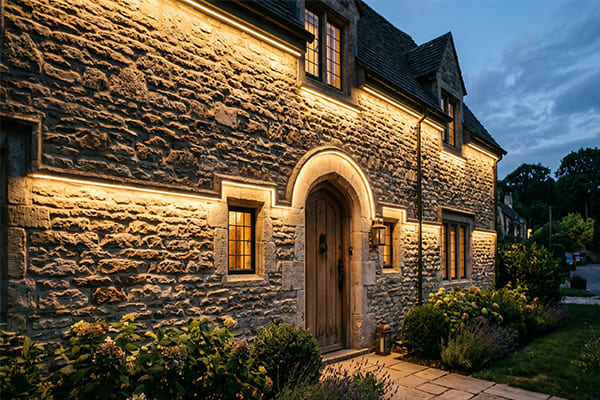
The color of the light has a huge impact on the feeling of a building. For luxury and high-end minimalist projects, we almost always recommend a warm white color temperature between 2700K and 3000K. This warm light is inviting. It brings out the inherent beauty and texture in materials like stone, wood, concrete, and metal. It makes them feel rich and tactile. A cool white light, over 4000K, can often feel stark and sterile, which fights against the sophisticated aesthetic we want to create.
Then you need to control the light. Smart control systems like DALI or DMX are essential. They let you move beyond a simple "on/off" switch. With these systems, we can program subtle, elegant effects. We aren't talking about a flashy light show. For minimalist architecture, the effects should be slow and gentle. Think of a slow, breathing pulse, a gradual fade from one area to another, or scheduled dimming throughout the night to save energy. These low-dynamic, low-saturation scenes add life to the facade without being distracting. It makes the building feel like it is quietly breathing.
| Material | Recommended Color Temperature (Kelvin) | Effect |
|---|---|---|
| Natural Stone / Travertine | 2700K – 3000K | Emphasizes texture and warm tones. |
| Architectural Concrete | 3000K | Brings out raw texture without feeling cold. |
| Metal Panels (Bronze, Copper) | 2700K | Enhances the richness and color of the metal. |
| White Stucco / Render | 3000K | Provides a clean, welcoming warmth. |
What Is the Future of Minimalist Architectural Lighting?
Just keeping up with current trends isn't enough in the world of design. If your projects still rely on old "light it all up" methods, they will soon look dated and irresponsible.
The future is moving from "building illumination" to "quiet nighttime architectural aesthetics." This means using fewer lights, lower brightness, and more precise control to reduce light pollution. The biggest trend is the deep integration of lighting fixtures directly into the building's structure.

The entire mindset is shifting. We are moving away from the brute-force approach of "architectural illumination" and toward something more refined: a "quiet nighttime architectural aesthetic." This future is built on a few key principles. The first is "less is more." This means using fewer fixtures, lower brightness levels, and being more conscious of our environmental impact. It’s about reducing light pollution and creating a nightscape that is beautiful but also responsible.
The second principle is an obsession with precision. As technology advances, we'll have even better optics to control light with surgical accuracy. This allows us to create stunning effects with minimal energy. But the most important trend is deep integration. Lighting is no longer an afterthought or something that is bolted on. In forward-thinking projects, we, as lighting specialists, are brought in to collaborate with architects from the very beginning. The lighting is designed into the building itself. It becomes part of the architectural drawings. This ensures a truly seamless and intentional result. The ultimate goal is to let the architecture speak for itself at night. The light is there to serve the building, not to be the main event.
Conclusion
Minimalist facade lighting is about precision, integration, and letting the architecture shine. It's a philosophy where less is more, creating a sophisticated and timeless result for your project.
"[PDF] Outdoor Lighting Design Guide - California State University", https://www.calstate.edu/csu-system/doing-business-with-the-csu/capital-planning-design-construction/operations-center/Documents/guidelines/Outdoor-Lighting-Design-Guide-R3-2018-12-10.pdf. Lighting-design literature distinguishes indiscriminate floodlighting from controlled architectural lighting, noting that poorly aimed exterior luminaires can create glare, obscure form, and reduce visual comfort. Evidence role: expert_consensus; source type: institution. Supports: Traditional exterior lighting can undermine minimalist architectural lines at night.. Scope note: This supports the general lighting-design concern, not the quality of any specific project shown in the article. ↩
"Modern niches and hidden light with KLUŚ profiles", https://klusdesign.eu/en/blog/modern-niches-and-hidden-light-with-klus-profiles-inspirations-for-architects-and-designers_1. Architectural lighting references describe concealed or integrated luminaires as a method for emphasizing surfaces and spatial form while minimizing the visibility of the light source itself. Evidence role: definition; source type: education. Supports: Minimalist facade lighting commonly aims to show the effect of light while concealing the fixture.. Scope note: The phrase itself is a design maxim rather than a standardized technical term. ↩
"the art of grazing: enhancing architectural elegance - Ideolux", https://ideolux.it/the-art-of-grazing-enhancing-architectural-elegance/. Guidance on architectural lighting explains that grazing, washing, and directional light can make surface relief, material texture, and building form more legible at night. Evidence role: mechanism; source type: institution. Supports: Strategic lighting can reveal architectural form, texture, and structure.. Scope note: The effect depends on surface material, fixture placement, beam angle, and viewing distance. ↩
"Architectural lighting design - Wikipedia", https://en.wikipedia.org/wiki/Architectural_lighting_design. Exterior-lighting guidance commonly treats floodlighting as broad-area illumination, while contemporary recommendations emphasize shielding, aiming, and limiting spill light to reduce glare and skyglow. Evidence role: definition; source type: institution. Supports: Concealed, targeted facade lighting differs from broad floodlighting.. Scope note: Floodlighting can be designed responsibly; the source would support the contrast in typical methods, not an absolute condemnation of all floodlighting. ↩
"[PDF] DEPTH PERCEPTION AS A FUNCTION OF LIGHTING, TIME AND ...", https://faculty.washington.edu/inanici/Publications/Tai-depth_perception_lighting_time_spatiality1.pdf. Visual-perception and lighting-design sources describe contrast between illuminated and unilluminated areas as a key factor in depth perception, visual hierarchy, and scene modeling. Evidence role: mechanism; source type: education. Supports: Selective darkness can increase perceived contrast and depth in architectural lighting.. Scope note: Terms such as “drama” are aesthetic judgments; the evidence mainly supports contrast and depth perception. ↩
"Accent Narrow Beam LED - 30W | DECORS USA", https://www.decorsusa.com/product-page/accent-narrow-beam-led-30w?srsltid=AfmBOooYsjjFH0uPv7jINbWqHoEwUrJrI1Rug8MOLhLtkdgjewVUuzZS. Lighting-engineering references define beam angle as the angular spread of a luminaire’s output and show that narrower distributions concentrate light more precisely than wide beams. Evidence role: mechanism; source type: education. Supports: Narrow beam angles provide more precise light placement for facade applications.. Scope note: The specific 10°–30° range is a design recommendation; suitability varies with mounting distance and desired illuminance distribution. ↩
"MacAdam ellipse - Wikipedia", https://en.wikipedia.org/wiki/MacAdam_ellipse. LED lighting standards and technical references use Standard Deviation of Color Matching or MacAdam-step ratings to describe color consistency, with smaller step values indicating less perceptible chromatic variation between light sources. Evidence role: definition; source type: institution. Supports: An SDCM value of 3 or less indicates tighter LED color consistency and reduces visible color shifts.. Scope note: A threshold of three steps is commonly used for high consistency, but human perception also depends on adaptation, surface color, and installation conditions. ↩
"SPOTS BEGONE! Finally, smooth LEDs! - YouTube", https://www.youtube.com/watch?v=X-F_RDyjpNo. LED packaging and optical-design sources explain that chip-on-board arrays and diffusers increase apparent emitting area and blend individual LED points, reducing visible pixelation or dotting. Evidence role: mechanism; source type: research. Supports: COB LEDs and diffusers can help produce a smoother, less dotted linear light appearance.. Scope note: The degree of smoothing depends on LED pitch, diffuser material, optical depth, and viewing distance. ↩
"IP code - Wikipedia", https://en.wikipedia.org/wiki/IP_code. The IEC ingress-protection coding system defines IP65 as dust-tight with protection against water jets and IP67 as dust-tight with protection against temporary immersion under specified test conditions. Evidence role: definition; source type: institution. Supports: IP65 and IP67 ratings indicate protection against dust and specified water exposure for outdoor luminaires.. Scope note: IP ratings describe standardized ingress tests; they do not by themselves guarantee long-term durability against UV exposure, corrosion, heat, or installation defects. ↩
"Understanding Kelvin Color Temperature & LED Light Colors", https://www.ledlightexpert.com/understanding_led_light_color_temperatures_ep_79?srsltid=AfmBOoqOsDu6lk80gIpuzLpxR7AMNB3KR76p7QvQWRkmy8oyLqF0rknX. Lighting references classify 2700–3000 K as warm-white light, a correlated color-temperature range commonly associated with warmer visual appearance in architectural and interior lighting contexts. Evidence role: definition; source type: institution. Supports: 2700–3000 K is a warm-white color-temperature range used to create a warmer visual appearance.. Scope note: Whether this range is “ideal” for a facade is a design judgment that varies by material, context, culture, and local lighting regulations. ↩
"DMX512 - Wikipedia", https://en.wikipedia.org/wiki/DMX512. Technical documentation for DALI and DMX describes them as digital lighting-control protocols used for dimming, addressing, scene setting, and programmed control of luminaires. Evidence role: definition; source type: institution. Supports: DALI and DMX systems enable programmable control such as dimming, scenes, and fades.. Scope note: The source would establish protocol capabilities, not prove that these controls are necessary for every minimalist facade project. ↩