How to Illuminate Tall Palm Trees Effectively?
A tall palm tree1 can be a stunning nighttime feature. But poor lighting turns it into a dark silhouette. The wrong approach creates ugly glare or even harms the tree, wasting your effort and investment. I believe the solution is a layered strategy that respects both the tree and the landscape.
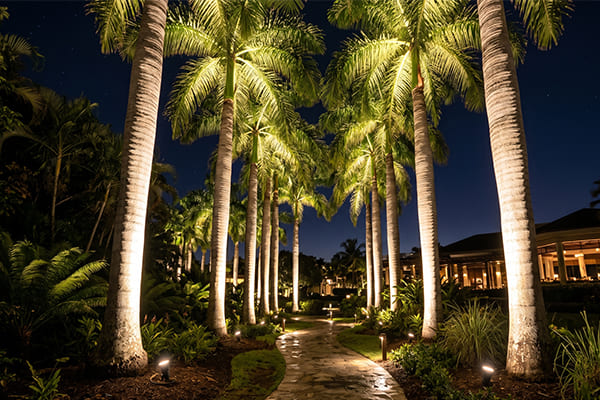
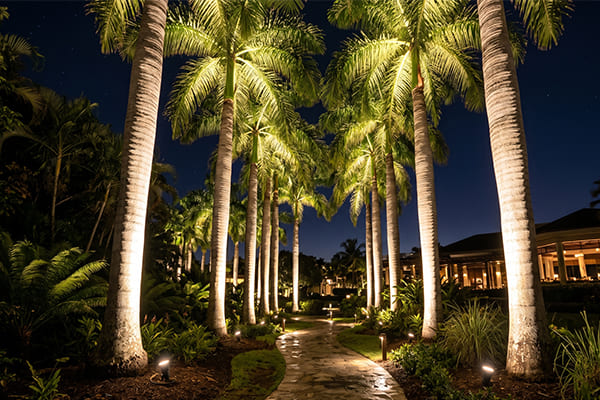
The most effective way to light a tall palm tree is with uplighting2. Use two to three narrow-beam spotlights3 (10°–30°) placed 0.5 to 2 meters from the trunk. This technique highlights the trunk's texture and dramatically illuminates the canopy from below.
That’s the core method, but the real magic is in the details. Getting it right involves choosing the right techniques, fixtures, and installation methods. I’ve lit hundreds of palms on projects from Dubai to Southeast Asia. Let me walk you through my process for creating a beautiful and sustainable result every time.
What Are the Best Lighting Techniques for Palm Trees?
Just pointing a floodlight at a palm tree isn't enough. This common mistake creates a flat, washed-out look and annoying glare for anyone walking by. To create depth and mood, you need to use lighting techniques that work with the tree's unique shape.
I use three primary techniques for palm trees: uplighting2 to create drama and highlight height, moonlighting to cast natural shadows, and in-venting to make the crown glow from within. Combining these methods delivers a professional, layered effect.
Uplighting: The Classic Foundation
This is my starting point for almost every palm tree. The goal is to graze the trunk with light, revealing its texture and drawing the eye upward to the fronds. I place two or three fixtures in the ground around the base, about 0.5 to 2 meters away from the trunk. Using a narrow beam angle, between 10 and 30 degrees, is critical. A narrow beam shoots a column of light straight up the trunk without spilling everywhere.
For palms over 10 meters tall, you’ll need more powerful lights, typically 800-1500 lumens or more, to ensure the light reaches the entire canopy. This technique is simple but powerful. It defines the tree's vertical presence in the landscape.
Moonlighting: The Natural Touch
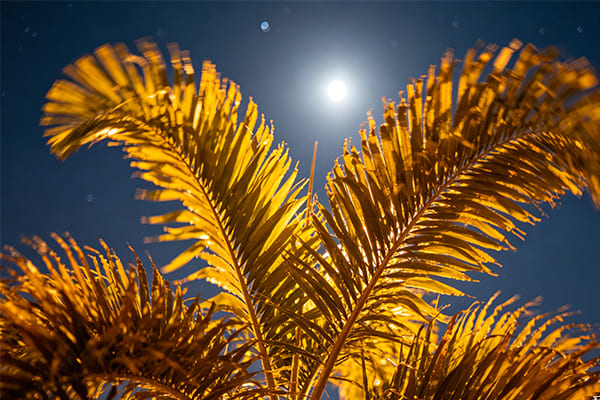
Sometimes, you want a softer, more natural effect. Moonlighting achieves this by mimicking how real moonlight filters through the leaves. Instead of lighting from the ground up, I mount a fixture high up in the palm itself or in a nearby tree or structure. The light shines down through the fronds.
This creates beautiful, dappled shadows of the swaying leaves on the ground below. It’s a subtle and elegant technique that adds a sense of calm and mystery to a garden or pathway. The key is to hide the light source so the effect feels completely natural.
In-Venting: The Dramatic Surprise
For a truly unique effect, I use a technique called in-venting. This involves placing one or two small, wide-beam fixtures deep inside the palm’s crown, nestled among the fronds. The light illuminates the canopy from the inside out.
The result is a dramatic glow that makes the palm fronds look translucent and vibrant. It turns the tree into a living lantern. This method works especially well on palms with dense crowns, like Canary Island Date Palms. It's a showstopper, but be sure the fixtures are well-hidden to maintain the illusion.
| Technique | Goal | Fixture Placement | Best For |
|---|---|---|---|
| Uplighting | Create drama, highlight texture | 2-3 fixtures at the base, 0.5-2m away | Highlighting the trunk and canopy |
| Moonlighting | Natural, subtle atmosphere | High up, shining down through fronds | Casting soft, moving shadows on the ground |
| In-Venting | A surprising, dramatic glow | Hidden inside the dense crown | Making the canopy glow from within |
Which Fixtures and Specs Should I Choose?
Choosing the right fixture is just as important as the lighting technique. An outdoor environment is harsh. The wrong light will fail from water damage, corrosion, or heat. This leads to costly replacements and an unreliable lighting scheme. I always select fixtures based on performance and durability.
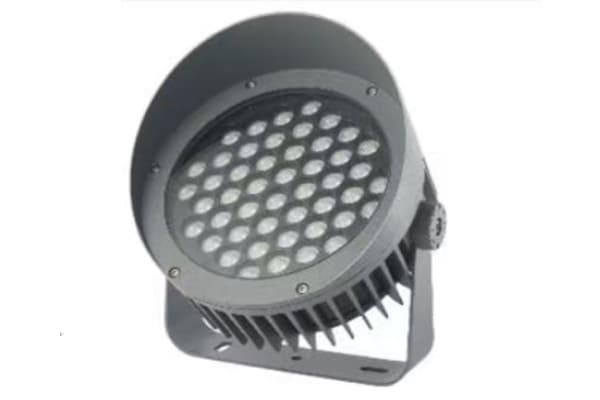
For palm trees, choose LED fixtures with an IP65 or higher rating, made from corrosion-resistant aluminum or copper. Use a warm white color temperature4 (2700K–3000K) with a CRI above 80. A low-voltage DC24V system is always my recommendation for safety.
Light Source and Color
I almost exclusively use LEDs for landscape lighting5. They are energy-efficient and have a very long life, which reduces maintenance. For palm trees, the color of the light is crucial. A warm white light between 2700K and 3000K brings out the natural greens and browns of the tree. It feels welcoming and high-end. Avoid cool white light, which can make plants look sickly.
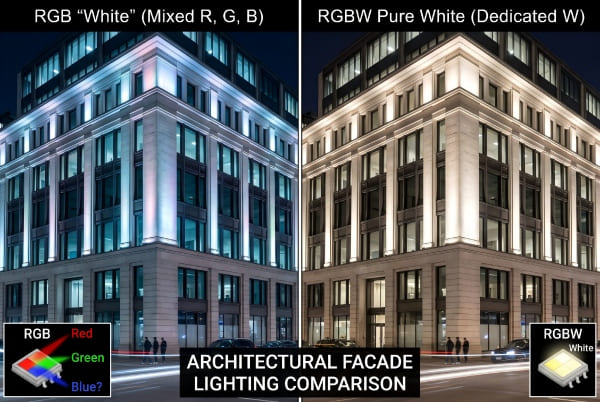
A high Color Rendering Index (CRI)6 of 80 or more is also important. It ensures the colors of the tree look true and vibrant, not washed out. For projects where clients want to create a festive atmosphere, I sometimes use DMX512-controlled RGBW fixtures7. This allows us to change the colors for holidays or special events, adding a layer of dynamic fun.
Durability and Safety
Outdoor fixtures must withstand rain, dust, and humidity. An IP (Ingress Protection) rating of at least IP65 is non-negotiable. This means the fixture is dust-tight and protected against jets of water. For areas with sprinklers or heavy rain, I often go up to IP67.
The fixture housing material also matters. In coastal areas with salt spray, I specify copper or brass fixtures because they develop a natural patina and don’t corrode. In other environments, powder-coated aluminum is a great, durable choice.
Finally, safety is paramount. I always design my landscape systems using low-voltage DC24V power. This minimizes the risk of electric shock, making it safer for installers, gardeners, and anyone enjoying the space.
| Parameter | Recommended Spec | Why It Matters |
|---|---|---|
| IP Rating | IP65 or higher | Protects against dust and water for long-term reliability. |
| Material | Copper, Brass, or Powder-Coated Aluminum | Resists corrosion from moisture, soil, and salt spray. |
| Color Temp (CCT) | 2700K – 3000K | Creates a warm, natural look that enhances plant colors. |
| CRI | > 80 | Renders the colors of the trunk and fronds accurately. |
| Voltage | DC24V | Ensures safety in wet, outdoor environments. |
How Can I Install Lights Without Harming the Tree?
Mounting a light directly to a tree trunk can seem easy. But I have seen too many projects where metal straps or screws have cut into the bark over the years. This can girdle the tree, restricting its flow of nutrients and eventually killing it. A professional installation protects the tree for its entire life.
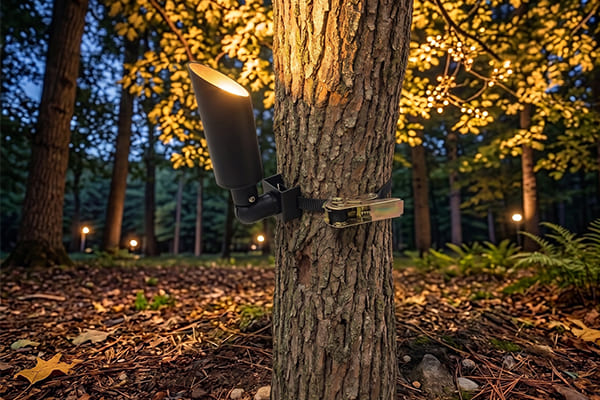
Always use tree-safe, adjustable mounting systems like stainless steel clamps or flexible PVC ties that allow for growth. Conceal fixtures and cables to maintain the natural aesthetic, and use glare shields to prevent light from shining into people's eyes.
Concealment and Glare Control
Great lighting design8 is about seeing the effect, not the source. I make sure to hide light fixtures as much as possible. For uplighting2, fixtures can be nestled among smaller shrubs at the base of the palm. For moonlighting, the fixture should be hidden within the canopy. All wiring should be buried in trenches and sealed with waterproof connectors.
Glare is the enemy of good lighting. It’s uncomfortable and ruins the mood. I always add glare shields or louvers to fixtures, especially those near pathways or windows. This simple accessory directs the light exactly where it’s needed—on the tree—and keeps it out of sightlines.
Tree-Friendly Mounting
When you must mount a fixture on the tree itself, never use nails or screws that puncture the bark. Instead, I use expandable, non-abrasive mounting systems. On one project in a high-end resort, we used stainless steel clamps with spring-loaded extensions. These systems expand as the tree grows, so they never constrict the trunk. Flexible PVC ties are another excellent, lower-cost option.
The key is to plan for the future. A young palm will grow significantly wider over a decade. Your mounting system must accommodate that growth without needing constant, damaging adjustments. A little extra care during installation ensures the health of the tree and the longevity of your design.
| Step | Action | Key Consideration |
|---|---|---|
| 1. Placement | Position fixtures for the desired effect (uplight, moonlight). | Hide fixtures behind foliage when possible. |
| 2. Wiring | Bury all low-voltage cables in a shallow trench. | Use waterproof direct-burial cable and connectors. |
| 3. Mounting | For ground fixtures, use a stable spike. For tree mounts, use adjustable straps. | Never penetrate the tree bark with screws. Allow room for growth. |
| 4. Aiming | Aim the fixtures carefully to graze the trunk and light the canopy. | Install glare shields to prevent light trespass. |
What Are the Best Practices for Maintenance and Control?
You finished the installation, and the palm trees look magnificent. But the job isn't done. Over time, leaves and dirt will cover the lenses, and the growing tree might shift the light's focus. Without a plan for maintenance and control, even the best design will degrade.
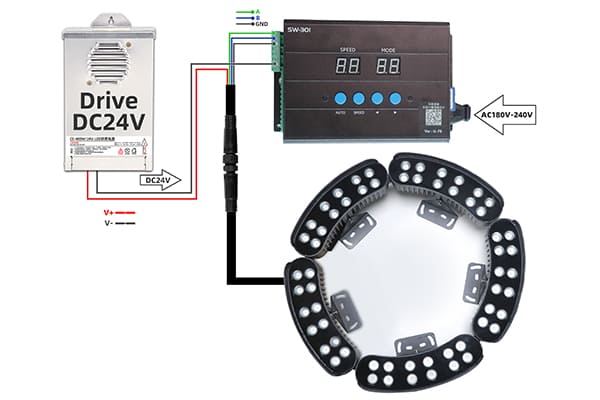
A simple routine of cleaning lenses and adjusting angles ensures long-term performance. I also recommend connecting the lights to a smart control system9, like a timer or DMX512, to save energy, reduce light pollution, and easily adjust the scene.
A Simple Maintenance Routine
Maintenance doesn't have to be complicated. For my projects, I provide a simple checklist for the property owner. The most important task is cleaning. Every few months, wipe the fixture lenses with a soft cloth to remove dust, hard water spots, and debris. A clean lens can increase light output by up to 30%.
As the palm tree grows and its fronds shift, you will also need to re-aim the lights. Once or twice a year, check the alignment at night. Make small adjustments to ensure the light is still hitting its target beautifully. This quick check keeps the original design intent alive for years.
Smart Control for Efficiency
Running landscape lights all night is wasteful and contributes to light pollution. I always integrate a control system. The simplest option is an astronomical timer, which automatically adjusts on/off times based on the season and your location. This ensures the lights are only on when it's dark, saving energy.
For more complex projects, especially those with RGBW lights, a DMX512 system is ideal. It allows for full control over color, brightness, and timing. You can program different scenes for different occasions. This not only adds versatility but also allows you to dim the lights late at night, respecting wildlife and sleeping neighbors while still providing a gentle glow.
| Frequency | Task | Tools / Notes |
|---|---|---|
| Quarterly | Clean fixture lenses and housings. | Soft cloth, water or mild cleaner. |
| Quarterly | Clear away fallen leaves or overgrown plants. | Gardening gloves, trimmers. |
| Annually | Check and adjust fixture angles at night. | Check for even coverage on the trunk and canopy. |
| Annually | Inspect wiring and connections for damage. | Look for exposed or frayed wires. |
Conclusion
Lighting a tall palm tree1 is about more than just visibility. It’s about using light to reveal the tree's majestic form, create a captivating atmosphere, and enhance the entire landscape.
Discover effective techniques to highlight the beauty of tall palm trees at night. ↩
Learn how uplighting can dramatically showcase the texture and height of palm trees. ↩
Explore the benefits of narrow-beam spotlights for creating focused lighting effects. ↩
Explore how warm white light enhances the natural colors of plants and trees. ↩
Find out essential tips for creating effective and beautiful landscape lighting. ↩
Learn how CRI affects the appearance of colors in your landscape lighting. ↩
Discover how RGBW fixtures can add dynamic color and versatility to your lighting. ↩
Learn the fundamental principles that guide successful lighting design. ↩
Learn about the advantages of integrating smart controls for energy efficiency. ↩