Planning a facade lighting project but have no idea about the budget? The costs can seem unpredictable, making it hard to even start. I'll break it down for you.
The cost for facade lighting ranges from a few thousand to millions of dollars.1 A small project might be $2,000-$15,000, while a major landmark could exceed $1 million. The price depends on building size, lighting complexity, system quality, and installation difficulty.
It seems like a huge range, right? To get a real handle on your budget, we need to look closer at what kind of project you're planning. The final number is a mix of many different factors. I’ve seen projects of all sizes in my years in this business, from small boutiques to massive skyscrapers. Let's start by breaking down the costs based on the typical size of a building. This will give you a good first estimate.
What's the Typical Cost for Different Sized Projects?
You have a project, but is it small, medium, or large? Misjudging the scale can lead to a budget that is completely wrong from the start. Let's clarify this.
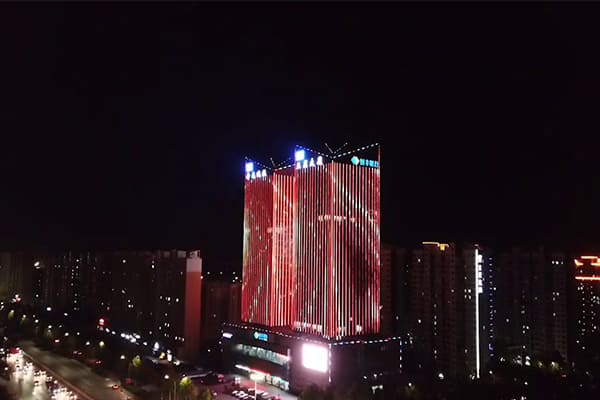
For small commercial buildings, expect to pay $2,000–$15,000. Mid-sized projects run $15,000–$100,000. Large hotels or landmarks start at $100,000 and can go into the millions. Media facades often start at over $1 million, sometimes reaching $20 million for iconic structures.2
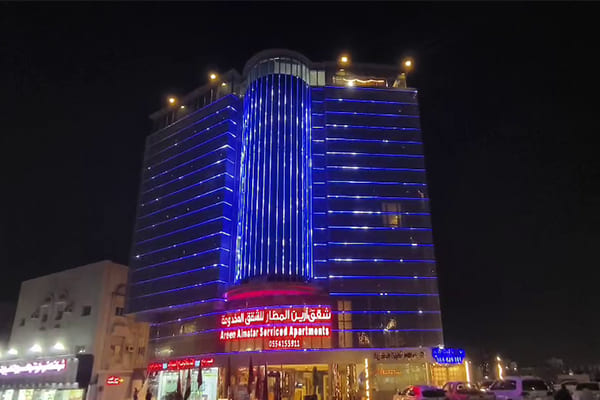
The scale of your building is the number one factor that sets the budget range. More surface area simply means more lights, more cable, and more labor. But it's not just about size; the building's purpose also plays a huge role. A simple static wash on a small warehouse will be much cheaper than dynamic lighting on a boutique hotel of the same size. I always tell my clients to first categorize their project to get a realistic starting point. On a recent project, a client wanted to light up a five-story hotel. The final cost was around $50,000. But for a 60-story skyscraper in Asia we quoted, the budget was over $2 million. The difference is the sheer number of fixtures and the complexity of reaching every floor safely.
Project Scale vs. Budget
Here is a simple table to help you visualize the costs.
| Project Type | Typical Budget Range | Description |
|---|---|---|
| Small Commercial/Residential | $2,000 – $15,000 | A small retail store, a private villa, or a local restaurant. Usually involves simple wall washing or accent lighting. |
| Medium Commercial Building | $15,000 – $100,000 | A mid-sized office building, a community center, or a 3-star hotel. Effects might include color-changing features. |
| Large-Scale & Landmarks | $100,000 – $2,000,000+ | A large hotel, a corporate headquarters, a stadium, or a city landmark. These projects often have complex, dynamic lighting scenes. |
| Media Facade | $1,000,000 – $20,000,000+ | The entire building facade acts as a low-resolution screen. These are iconic projects designed to be major attractions. |
Where Does the Money Actually Go in a Facade Lighting Project?
You think the lights are the main cost, right? This mistake can wreck your budget when installation and system costs pile up. Let's see the real cost breakdown.
The light fixtures themselves are only 20%-50% of the total cost.3 The biggest chunk often goes to installation (30%-40%).4 Other major costs include control systems (5%-15%), cables and accessories (10%-20%), plus international shipping, tariffs, and design fees.
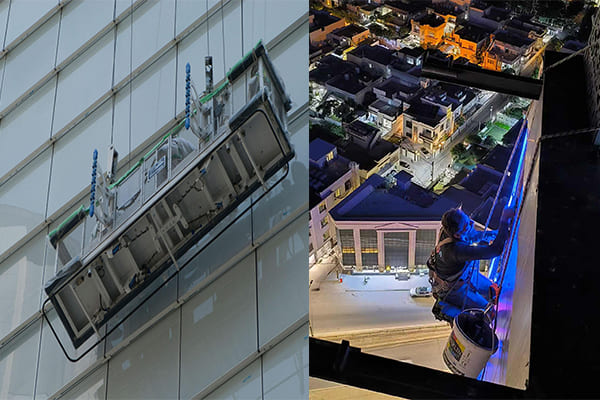
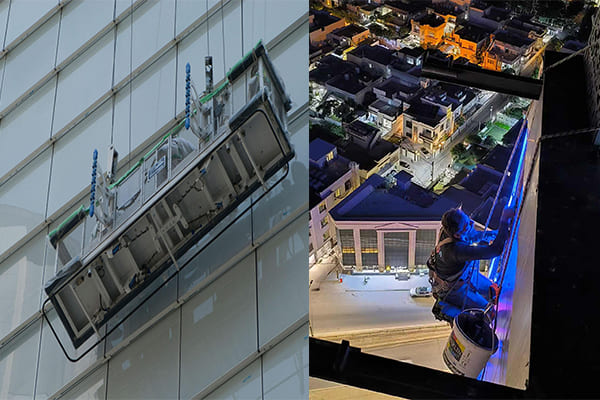
I remember a client for a project in the Middle East. He was shocked that the installation quote was almost as high as the cost of all the LED fixtures. He only budgeted for the hardware. But his building had a complex glass curtain wall. This meant them needed specialized lifts, custom mounting brackets, and highly skilled technicians who could work at great heights. The fixtures are just one piece of the puzzle. Understanding the complete cost structure from the beginning helps you avoid surprises and manage your project budget effectively. It's not just about buying lights; it's about bringing a vision to life, and that takes a whole system.
Beyond the Fixtures: A Complete Cost Breakdown
Let's look at where every dollar typically goes. This is a general guide, and percentages can shift based on project specifics.
| Cost Component | Percentage of Total Budget | Notes |
|---|---|---|
| Light Fixtures | 20% – 50% | This includes linear lights, wall washers, pixel lights, etc. The percentage is lower for complex installations. |
| Installation & Labor | 30% – 40% | This is a major cost. It covers labor, equipment rental (cranes, lifts), and structural modifications. |
| Cables & Accessories | 10% – 20% | All the power and data cables, connectors, mounting brackets, and conduits. Don't underestimate this part. |
| Control System | 5% – 15% | The "brain" of the system. This includes DMX controllers, power supplies, and the software to run the lighting shows. |
| Other Fees | 5% – 10% | This bucket includes design fees, commissioning, programming, international shipping, and import duties. |
What Key Factors Drive Up the Total Cost?
Trying to keep your facade lighting costs down? Small design choices can have huge budget impacts. Overlooking these factors early on is a common and expensive mistake.
The biggest cost drivers are building complexity (height, material)5, the lighting effect (static color vs. dynamic media), fixture quality (IP rating, chip brand), and concealment requirements. Making lights invisible during the day can significantly increase structural and installation costs.6
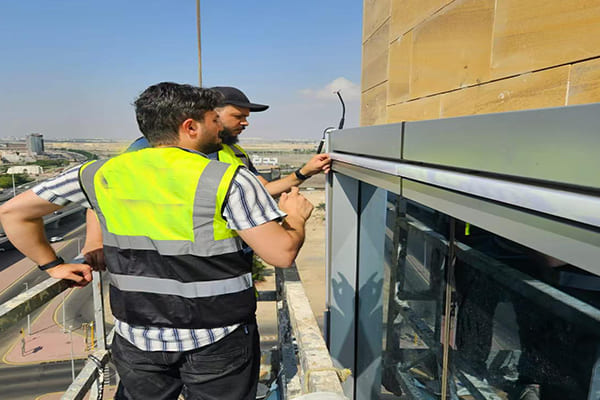
Every project has its own unique challenges that affect the price. I worked on two office buildings of the same height. One was a simple, flat concrete structure. The other was a heritage building with delicate stonework and many architectural details. The cost to light the heritage building was nearly double. Why? We needed custom brackets, careful drilling, and more precise fixture placement to respect the architecture. These four factors—complexity, effect, quality, and concealment—are where the budget can quickly grow if you don't plan for them. Thinking about these things early in the design process is the best way to control your costs.
The Four Main Cost Drivers
Let's dive deeper into each of these factors.
1. Building Complexity
The shape and material of your building are huge cost factors. A simple, flat facade is easy and cheap to work on. A building with many curves, angles, balconies, or a delicate glass curtain wall requires more planning, more labor, and often custom installation solutions. Height is also a major issue. Working above 10 stories requires expensive equipment and specialized teams.7
2. Lighting Effect
What do you want the lights to do?
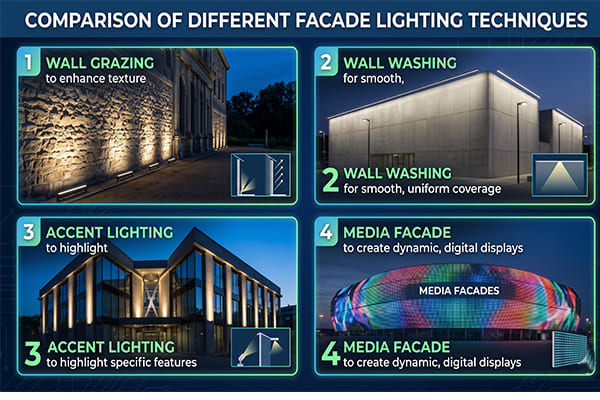
- Static Floodlighting: The cheapest option. The building is lit with a single, unchanging color.
- Dynamic Color: This involves RGB or RGBW fixtures that can change color. The cost goes up because you need a DMX control system and programming.
- Media Facade: The most expensive option. This turns your building into a giant video screen with pixel lights. It requires a powerful control system and extensive content creation.
3. Quality Grade
You get what you pay for. Choosing fixtures with high IP ratings (like IP67) for weather resistance8, top-brand LED chips (like Cree or Osram), and good thermal management will cost more upfront. But they last longer and perform better9, saving you money in the long run.
4. Concealment Requirements
If you want the fixtures to be completely hidden during the day, it adds to the cost. This often means cutting into the building structure, creating custom housings, or designing special architectural details to hide the lights. This adds significant labor and material costs.
Are There Hidden Costs I Should Be Aware Of?
Your project is installed and looks great, but the spending isn't over. Unexpected long-term costs can turn a great investment into a financial drain. Let's uncover them.
Yes, be aware of hidden costs. Annual maintenance can be 5-10% of the initial investment.10 High-altitude repairs are expensive, often needing thousands for equipment rental alone. Also, long wiring runs may require thicker, more expensive cables to avoid voltage drop.
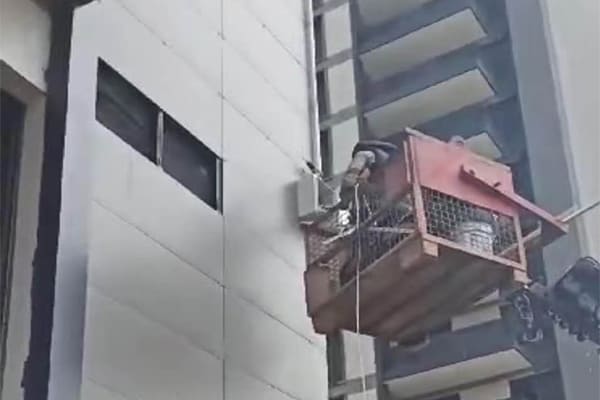
I always have a frank conversation with my clients about the total cost of ownership, not just the initial price. One of the biggest "gotchas" is maintenance and repairs. A single failed light on the 40th floor of a building can cost over $2,000 to replace. Not for the light itself, but for renting the specialized crane and crew for a day. Another hidden cost is voltage drop. If you have long cable runs from the power supply to the fixture, you lose voltage. To fix this, you need much thicker, more expensive copper cables. Planning for these "hidden" costs from day one is the mark of a professional and well-managed project.
Protecting Your Investment: Long-Term Costs
Thinking about the full life cycle of your lighting system is key.
Maintenance Costs
Your beautiful lighting system needs regular care. This includes cleaning the fixtures to maintain brightness, checking electrical connections, and updating software. A good rule of thumb is to budget 5-10% of your initial project cost for annual operation and maintenance.
High-Altitude Repair Costs
As I mentioned, replacing a fixture on a tall building is not a simple task. The cost of access equipment like boom lifts or scaffolding can easily run into thousands of dollars for a single repair job. This is why using high-quality, reliable fixtures from the start is so important.
Voltage Drop Compensation
For large buildings, fixtures can be located hundreds of feet from their power source. To ensure the last light on the line is as bright as the first, you need to use thicker gauge cables to compensate for voltage drop. This can add a surprising amount to your material costs if not calculated properly in the beginning.
My professional advice is always the same: Spend 20-30% more upfront on high-quality fixtures. Choose products with reliable brand-name chips, excellent heat dissipation, and a high IP rating. This initial investment will dramatically reduce your maintenance and repair costs, lowering the total cost of ownership over the system's entire life.
Conclusion
A successful facade lighting project balances cost, effect, and long-term quality. Understanding the full budget picture is the first step to creating a stunning and sustainable landmark.
"The impact of facade lighting on environmental sustainability", https://www.academia.edu/126563919/The_impact_of_facade_lighting_on_environmental_sustainability_Investigation_methods. A construction or lighting-cost reference supports that exterior architectural lighting budgets vary by project scale and system complexity, from small installations to landmark-scale capital projects; the evidence is contextual because published sources may report representative ranges rather than a universal pricing rule. Evidence role: general_support; source type: institution. Supports: Facade lighting projects can range from a few thousand dollars to millions of dollars.. Scope note: Cost ranges are market- and project-dependent, so a source may only substantiate the order of magnitude rather than every listed price point. ↩
"(DOC) Media Facades: When Buildings Perform - Academia.edu", https://www.academia.edu/41515986/Media_Facades_When_Buildings_Perform. Published media-architecture case studies and project reports document that large media façades can involve multimillion-dollar budgets; this supports the magnitude of the claim, although individual costs vary substantially by façade area, pixel density, and structural integration. Evidence role: case_reference; source type: institution. Supports: Large media façade projects can cost more than $1 million and may reach tens of millions for iconic structures.. Scope note: Likely evidence will be based on selected case studies, not a comprehensive global price survey. ↩
"[PDF] New Construction Component Estimated Incremental Cost Guidelines", https://www.nyserda.ny.gov/-/media/Project/Nyserda/Files/Programs/MPP-Existing-Buildings/library/NC-V6/Guidelines/MPP-NC---Estimated-Incremental-Cost-Guidelines-v6.pdf. A lighting project cost-estimating reference can substantiate that luminaire procurement is only one component of installed lighting cost, alongside labor, controls, wiring, commissioning, and access equipment; the percentage range should be treated as a representative estimate rather than a fixed allocation. Evidence role: statistic; source type: institution. Supports: Light fixtures typically account for only a portion, not all, of total facade lighting project cost.. Scope note: The exact percentage varies by location, labor rates, fixture type, and installation difficulty. ↩
"Construction Cost Estimating and Cost Control I | Columbia Plus", https://plus.columbia.edu/content/construction-cost-estimating-and-cost-control-i. Construction cost-estimating data for exterior lighting installations can support that labor, equipment access, mounting, and commissioning are major installed-cost components; the cited percentage should be presented as a typical range rather than a universal rule. Evidence role: statistic; source type: institution. Supports: Installation commonly represents a major share of the total cost of a facade lighting project.. Scope note: Installation share can be lower or higher depending on wage rates, building height, access constraints, and retrofit conditions. ↩
"[PDF] Fitzsimons Building – Phase 1 Roof Anchors & Fall Protection", https://www.cuanschutz.edu/docs/librariesprovider260/design-and-construction/rfp/23_0627---cua-fitz-bldg-ph1-roof-anchors-addendum-1.pdf?sfvrsn=97cc35bb_0. Facade engineering and construction-access guidance supports that building height, façade material, geometry, and attachment conditions affect installation methods, labor, safety planning, and cost; this provides mechanism-level support rather than a direct price formula. Evidence role: mechanism; source type: education. Supports: Building height and façade materials are major drivers of facade lighting installation cost.. Scope note: The source may explain cost drivers qualitatively without assigning exact dollar impacts. ↩
"Innovative Architectural Lighting for Facades | PORT Lighting", https://www.portlighting.com/architectural-lighting. Architectural integration guidance for façade lighting supports that concealed luminaires often require custom housings, structural coordination, or modified mounting details, increasing design and installation effort; this is contextual support and does not quantify the cost increase for every project. Evidence role: mechanism; source type: institution. Supports: Concealing façade lighting fixtures can add structural and installation cost.. Scope note: Evidence is likely to describe added coordination and construction requirements rather than provide a fixed percentage premium. ↩
"Fall Protection | Occupational Safety and Health Administration", http://www.osha.gov/fall-protection. Occupational safety and building-maintenance guidance documents that work at height requires specialized access systems, trained personnel, and fall-protection procedures; this supports the cost mechanism, although the ten-story threshold is a practical example rather than a universal regulatory cutoff. Evidence role: mechanism; source type: government. Supports: High-rise facade work requires specialized access equipment and trained crews, increasing installation cost.. Scope note: Regulations usually define work-at-height hazards by risk and elevation, not specifically by number of stories. ↩
"IP code - Wikipedia", https://en.wikipedia.org/wiki/IP_code. The IEC ingress-protection rating system defines IP67 as dust-tight and protected against temporary immersion in water, supporting its relevance to outdoor weather-resistant lighting fixtures; this verifies the rating meaning rather than the overall product quality. Evidence role: definition; source type: institution. Supports: IP67-rated fixtures provide a defined level of protection against dust and water ingress relevant to outdoor façade lighting.. Scope note: An IP rating indicates enclosure protection under test conditions, not long-term durability in every climate or installation condition. ↩
"LED Lighting | Department of Energy", https://www.energy.gov/energysaver/led-lighting. LED reliability research from government or laboratory sources shows that junction temperature and thermal management strongly influence lumen maintenance and lifetime, supporting the claim that better heat control improves long-term performance; it does not by itself establish the upfront price premium. Evidence role: mechanism; source type: research. Supports: Thermal management affects LED performance and service life in facade lighting fixtures.. Scope note: The source can support the lifetime and performance mechanism, while the cost premium may need separate product or cost evidence. ↩
"[PDF] Life Cycle Cost Analysis Handbook: Cost Benefit Guide", https://education.alaska.gov/facilities/publications/LCCAHandbook.pdf. Facility life-cycle cost references commonly estimate annual operations and maintenance as a percentage of initial capital cost for building systems, providing contextual support for budgeting an annual maintenance reserve; the 5–10% range should be verified against a lighting-specific or facilities-management source. Evidence role: statistic; source type: government. Supports: Facade lighting owners should budget annual maintenance as a percentage of initial project cost.. Scope note: A general facilities source may not be specific to façade lighting, and maintenance percentages vary by access difficulty and operating hours. ↩