
Your beautiful lighting design is failing in the humidity, causing frustrating short circuits. This damages your reputation and leads to costly callbacks. But there is a systematic way to prevent this.
The best way to prevent short circuits in high-humidity landscape projects is to use a three-part strategy. This includes selecting hardware with the right waterproof rating (IP65+)1, using low-voltage (12V/24V) systems2, and following strict installation rules for sealing, drainage, and condensation control3.

I've been in the lighting business for a long time. I have seen amazing projects brought to life with light. I have also seen projects fail because of a tiny amount of water. High-humidity environments are tough. Places with lots of rain, fog, or coastal air can destroy an outdoor lighting system. But you can beat the moisture. It just takes a plan. You need to think about water from the very start. This guide will show you how we approach waterproofing. It's about blocking water, preventing problems before they start, and protecting the whole system. Let's make sure your projects last.
How Do You Choose the Right Waterproof Hardware?
You're at the store, looking at a wall of parts. Everything says "outdoor" or "waterproof," but you know not all are created equal. Choosing the wrong component can doom your project.
To choose the right hardware, focus on three things. First, select fixtures and cables with a high IP rating4, like IP65 to IP68. Second, always choose a low-voltage 12V or 24V system. Third, use professional-grade connectors5 and seals, not simple electrical tape.
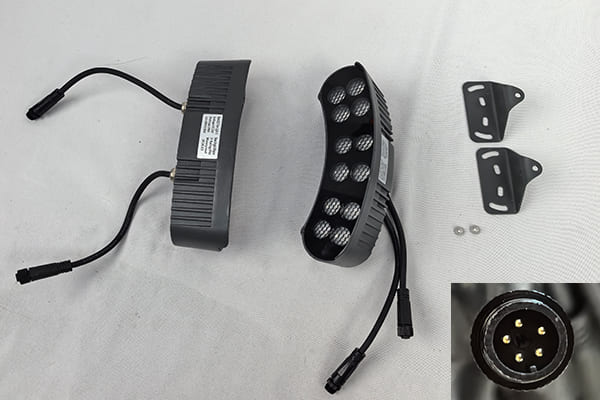
Let's dive deeper into selecting the right gear. It's the first line of defense. In my experience, this is where many projects go wrong before a single wire is even run.
Hardware Grades are Crucial
The IP rating4 is your most important number. It tells you how well a fixture can resist dust and water. Don't settle for less than IP65.
| IP Rating | Protection Against Water | Best Use Case |
|---|---|---|
| IP65 | Protected against low-pressure water jets from any direction. | Wall washers, general facade lighting. |
| IP66 | Protected against powerful water jets. | Areas with heavy rain or pressure washing. |
| IP67 | Protected against immersion up to 1 meter for 30 minutes. | In-ground lights, areas prone to temporary flooding. |
| IP68 | Protected against long-term immersion under pressure. | Underwater lights for pools and fountains. |
For cables, you can't just use any outdoor wire. Look for UF-B rated cables6, which means "Underground Feeder" and can be buried directly in the ground. For extra protection, I always run these cables inside liquid-tight conduits7.
Low Voltage is Your Friend
High voltage (like 120V or 220V) and water are a dangerous mix. That's why we strongly recommend converting the system to low voltage, usually 12V or 24V DC. At our company, JUXUANLED, almost all our professional outdoor fixtures are designed for DC24V. This dramatically reduces the risk of dangerous shocks and makes short circuits less catastrophic. It is a fundamental safety choice.
Sealing is Everything
Never use standard black electrical tape for outdoor connections. It will fail. Instead, you must use professional sealing methods. We use heat-shrink tubing8 that has an adhesive lining on the inside. When you heat it, it shrinks and the glue melts, creating a solid waterproof seal. For wire connections, waterproof wire nuts filled with silicone or gel are perfect. For our fixtures, we rely on high-quality M12 nylon or metal connectors9 to ensure a factory-perfect seal every time.
What Are the Critical Installation Details to Prevent Water Damage?
You bought the best IP68 lights and low-voltage system. But after a few months, some lights are flickering. Water can still get in if the installation isn't perfect.
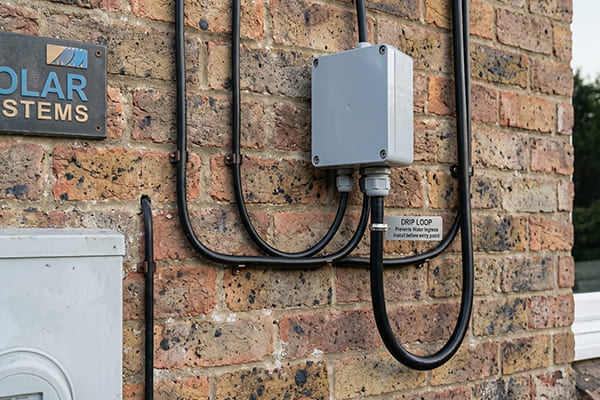
To prevent water damage during installation, you must manage water flow and condensation. Create "U" shaped drip loops10 for all wires entering a fixture. Also, install transformers and control boxes at least 15cm off the ground to keep them away from puddles.
Buying the right parts is only half the battle. How you put them together is just as important. I've learned these small details make a huge difference in how long a system lasts, especially in humid climates. Let's look at the critical techniques.
Use Gravity to Your Advantage
Water is lazy. It follows the easiest path down. You can use this to your advantage with something called a "drip loop." Before a wire enters any fixture, junction box, or power supply, let it hang down and come back up in a "U" shape. This simple loop means any water running along the wire will drip off at the bottom of the "U" instead of flowing right into your connection. It's a simple, free, and incredibly effective trick.
Fight Condensation from the Inside
Sometimes, the enemy is already inside. Changes in temperature between a hot day and a cool night can cause condensation—water droplets—to form inside a sealed box or fixture. This "sweating" can cause as much damage as rain. To fight this, you need a plan. For sealed control boxes, you can add a small desiccant packet11 to absorb moisture. A more advanced trick is to install a breathable waterproof valve12. It lets water vapor out but doesn't let liquid water in. When we produce some of our fixtures like potted wall washers, we intentionally don't hermetically seal the glass or end caps. This allows any condensation that forms to safely escape, preventing long-term moisture buildup.
Get Your Equipment Off the Ground
Never let transformers, power supplies, or control boxes sit directly on the ground or soil. They will get wet. I always mount them on a post, a wall, or a small concrete pad. The rule is to keep them at least 15cm (about 6 inches) off the ground. This physical separation keeps them safe from puddles, sprinklers, and mud. As an extra step, I always apply a bit of dielectric grease to the metal pins and terminals inside the control box. This non-conductive grease blocks out moisture and air, preventing rust and corrosion on these critical contact points.
How Can You Ensure Long-Term Safety and System Reliability?
The lights are on, and the client is happy. But your job isn't over. A system that fails in a year is bad for everyone. You need to build for the long term.
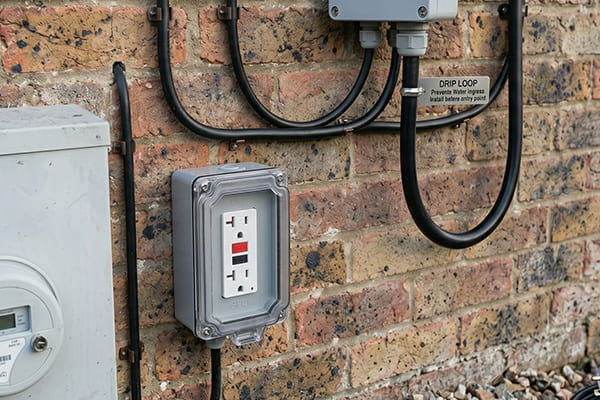
For long-term reliability, every 220V circuit must have a GFCI or RCD13 for safety. You must also design proper drainage around fixtures and perform regular maintenance checks. This ensures the system remains safe and functional for years.
A successful project is one that people forget about because it just works, year after year. This requires thinking about safety from day one and having a simple plan for maintenance. This is how you build a reputation for quality work that lasts. Here are the final, crucial steps.
Your Safety Lifeline: The GFCI
This is not optional. Every circuit that uses mains voltage (like 120V or 220V) to power your transformers must be protected by a Ground Fault Circuit Interrupter (GFCI) or a Residual Current Device (RCD). Think of it as a super-fast safety switch. It constantly monitors the flow of electricity. If it detects even a tiny leak of current—like what would happen if electricity was flowing through water to the ground—it shuts off the power in a fraction of a second. This device is the single most important thing for preventing dangerous electric shocks.
Design for Drainage
Electrical equipment should never sit in a puddle. For any in-ground fixtures or junction boxes, you must think about drainage. Don't just bury them in the dirt. First, dig a slightly larger hole. Then, fill the bottom with a layer of gravel or crushed stone before you place the fixture. This creates a drainage layer14, allowing water to flow away from the equipment instead of pooling around it. Direct contact with wet soil is a death sentence for any electrical component.
Create a Maintenance Checklist
A lighting system is not a "set it and forget it" installation, especially outdoors. Give your client, or your own team, a simple annual checklist. This proactive approach catches small problems before they become big ones.
| Maintenance Task | Frequency | Why It's Important |
|---|---|---|
| Inspect Seals & Gaskets | Annually | Rubber seals can become hard, cracked, and brittle over time. Check them and replace if necessary. |
| Clean Debris | Twice a Year | Clear away leaves, dirt, and weeds that can block drainage paths around fixtures. |
| Check Fixture Lenses | Annually | Clean lenses for best light output and check for any signs of internal moisture. |
| Test GFCIs | Monthly | Every GFCI has a "Test" and "Reset" button. Use it to make sure the safety device is working. |
This simple routine can add years to the life of the installation and ensures it remains safe.
Conclusion
Proper waterproofing is not an extra feature; it is essential for landscape lighting. By choosing the right hardware, installing it carefully, and planning for safety, you protect your project and reputation.
Understanding the significance of IP ratings can help you choose the right fixtures for your outdoor projects. ↩
Low-voltage systems enhance safety and reduce the risk of short circuits in humid environments. ↩
These factors are crucial for preventing water damage and ensuring the longevity of your lighting systems. ↩
Learn how IP ratings determine the durability and water resistance of lighting fixtures. ↩
Using high-quality connectors ensures reliable and waterproof electrical connections. ↩
UF-B cables are essential for safe underground installations, preventing moisture-related issues. ↩
These conduits provide essential protection against moisture and physical damage to electrical wiring. ↩
Discover the benefits of using heat-shrink tubing for reliable and durable electrical connections. ↩
These connectors ensure a secure and waterproof connection, enhancing system reliability. ↩
Understanding drip loops can significantly enhance the reliability of your outdoor lighting systems. ↩
Using desiccants can effectively manage moisture levels inside sealed fixtures, prolonging their lifespan. ↩
Learn how these valves can prevent moisture buildup while allowing vapor to escape. ↩
These devices are critical for safety, preventing electric shocks in wet conditions. ↩
Creating a drainage layer helps protect electrical components from water damage. ↩