Lighting a skyscraper seems simple, but it's not. The real challenge is making sure the lights work safely and reliably in extreme conditions, year after year.
To light a skyscraper successfully, you need a systems approach. Use flexible mounts for wind, install IP67-rated fixtures with breathable vents for weather, and place power drivers in accessible rooms for easy maintenance. A robust control system using DMX512 and fiber optics is essential for reliability.
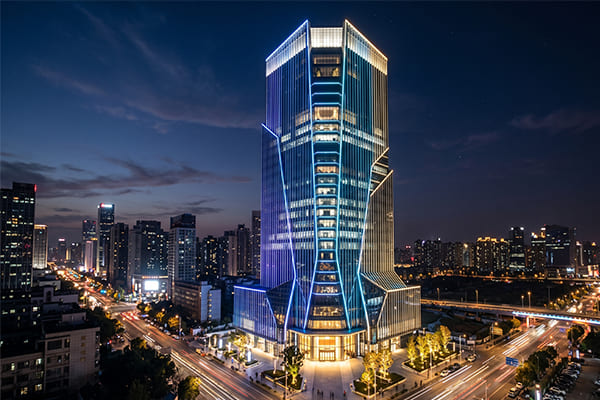
It's about so much more than just turning on the lights. On these massive projects, you are fighting against wind, rain, heat, and gravity itself. Every detail matters, because a small mistake at 500 meters high becomes a huge and expensive problem to fix. We've spent years figuring out how to get it right. Let's break down the biggest challenges and how we solve them one by one.
How Do You Stop High Winds from Damaging Skyscraper Lights?
Strong winds make tall buildings sway.1 This constant movement can stress and break rigidly installed lights over time, leading to dangerous failures. We use special flexible mounts to absorb motion.
To prevent damage, we use flexible brackets, shock-absorbing connections, and anti-loosening hardware2. This setup allows fixtures to move with the building's sway and thermal expansion, preventing stress. We also prefer lightweight linear lights to reduce the load on the facade.
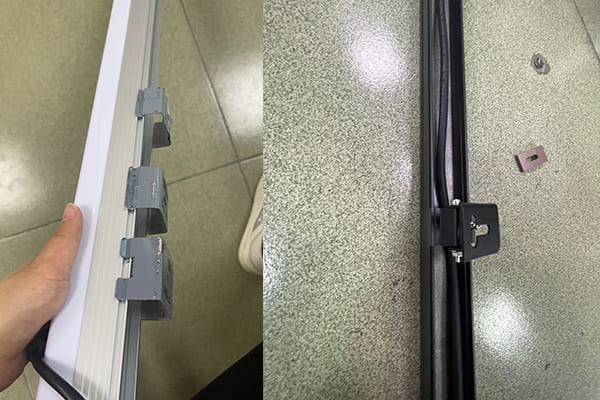
When you're working on a building that's over 300 meters tall, you have to think differently. Wind load isn't a small factor; it's a primary force. A building that tall can sway a few centimeters or even more at the top3. If a light fixture is bolted on rigidly, that movement creates immense stress at the anchor points. Over thousands of cycles, this leads to metal fatigue4 and eventually, failure. I remember a project on a 400-meter tower where simulations showed the top could move nearly a meter in extreme storm conditions. We had to design a custom mounting system that acted like a gimbal joint, allowing the light to pivot freely without putting stress on the fixture or the curtain wall. We also now almost exclusively use lightweight fixtures like our slim linear lights and wall washers. Reducing the weight on each anchor point dramatically lowers the long-term fatigue risk on the building's structure.
Mounting Systems: Rigid vs. Flexible
| Feature | Rigid Mounting | Flexible Mounting |
|---|---|---|
| Best For | Low-rise buildings, stable structures | Skyscrapers, bridges, high-wind areas |
| Wind Resistance | Poor (High stress on fixture & facade) | Excellent (Absorbs motion and vibration) |
| Durability | Lower | Higher |
| Cost | Lower initial cost | Higher initial cost, lower lifetime cost |
What's the Secret to Waterproofing Lights Hundreds of Meters in the Air?
Water getting into high-altitude lights is a project-killing nightmare. Heavy rain, pressure changes, and UV rays can all cause seals to fail, leading to expensive and dangerous repairs.
The secret is a combination of high-rated IP66/IP67 fixtures5 and ePTFE breathable vents6. These vents equalize air pressure to prevent condensation. We also hide all cables inside the building's structure to protect them from water and sun damage.
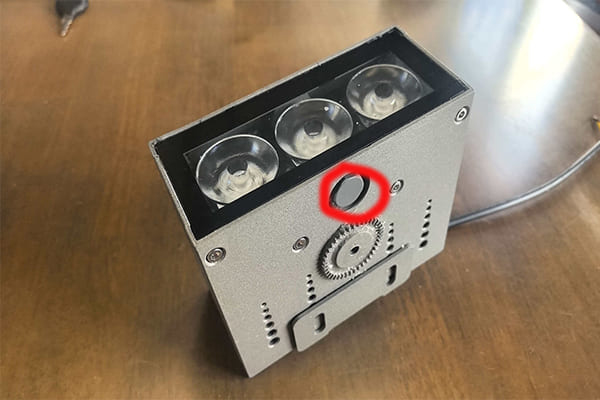
Waterproofing a light on the ground is one thing. Waterproofing it on the 80th floor is another world. Up there, rain is often driven by high winds, hitting the fixture with the force of a pressure washer. More importantly, the temperature and air pressure change constantly7. When a light heats up, the air inside expands and pushes out. When it cools, it creates a vacuum that tries to suck in moist air from the outside. This "breathing" is what kills most outdoor lights. I once saw a competitor's project fail after just one year. The lights filled with water because they used standard fixtures without vents. The daily temperature cycle pumped them full of moisture. That’s why we insist on using fixtures with an IP67 rating and a breathable vent. Think of the vent as GORE-TEX for your lights; it lets air and pressure escape, but its microscopic pores are too small for water molecules to get in. This stops condensation before it starts. We also learned to protect the cables. Exposed cables will fail.8 We now work with the architects to run all wiring inside the curtain wall mullions or dedicated maintenance cavities.
Key Waterproofing Strategies
- High IP Rating: Use a minimum of IP66, but IP67 is our standard for high-rise projects. This ensures the fixture can withstand powerful water jets and temporary immersion.
- Breathable Vents: Install ePTFE membrane vents to allow pressure equalization, which prevents the "breathing" that draws in moisture and causes condensation.
- Protected Cabling: Run all power and data cables inside the building's structure (mullions, conduits) to shield them from UV radiation and direct water exposure. All connectors must be IP68-rated.
How Can You Manage Heat and Maintenance on a Giant Media Facade?
Skyscraper lights get very hot, especially behind glass, and fixing them is extremely difficult. A single failed light at a high altitude can be almost impossible to reach, ruining the building's appearance.
We solve this with two main strategies. First, we use fixtures with large, efficient passive cooling heat sinks. Second, we separate the power supplies (drivers) from the lights, placing them in accessible equipment rooms for easy maintenance.
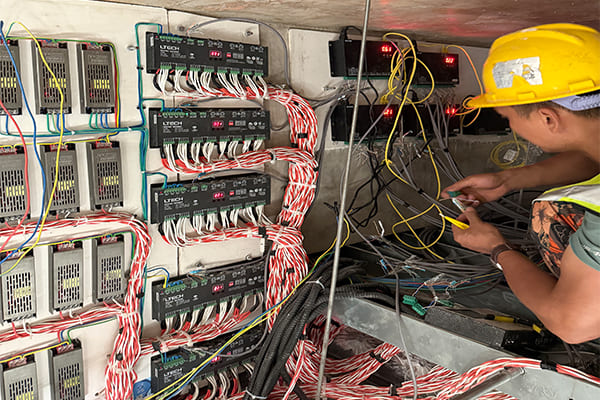
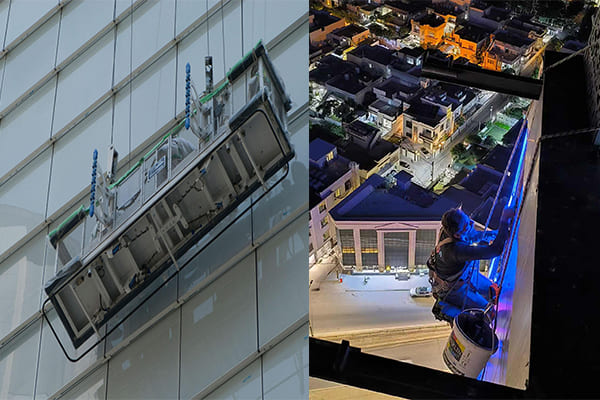
Heat is the number one enemy of LEDs.9 On a glass curtain wall, temperatures can soar in the direct sun. The thin air at high altitudes is also less effective at cooling10. So, the fixture itself must be an excellent heat sink, built from high-grade aluminum with a large surface area. But the biggest breakthrough for us was separating the light from its power source11. In the past, the power driver was built into the light fixture. If it failed, you had to hire a specialized rope access team to climb up and replace the entire unit. It was incredibly expensive and disruptive. Now, we use an "external driver" design. The LED fixtures on the facade are just the lights. The power drivers are all grouped together in a climate-controlled equipment room on a service floor. If a driver fails, a technician can walk into the room and swap it out in five minutes. No climbing, no danger, no huge cost. This approach is now our standard for all major high-rise projects.
Internal vs. External Drivers
| Aspect | Internal Driver (At Fixture) | External Driver (In Equipment Room) |
|---|---|---|
| Maintenance | Extremely difficult and expensive | Easy and safe |
| Heat at Fixture | Higher (Driver adds heat) | Lower (Only heat is from LEDs) |
| Reliability | Lower (Driver exposed to elements) | Higher (Driver in controlled environment) |
| Best For | Small-scale, low-access projects | High-rise buildings, large media facades |
This system also integrates with a robust control network. For a media facade with thousands of pixel lights, we use a DMX512 signal protocol running over a fiber optic backbone. Fiber is immune to the electrical interference common in large buildings and can carry a perfect signal for kilometers.12 We can even monitor the entire system remotely from our office, checking the temperature and status of every light and driver. This allows us to predict problems and schedule maintenance before a failure even happens.
Conclusion
Lighting a skyscraper is about more than looks. It demands a complete system to handle wind, water, heat, and control, ensuring long-term safety and success.
"(PDF) Wind-induced motion of tall buildings - Academia.edu", https://www.academia.edu/116348153/Wind_induced_motion_of_tall_buildings. Civil-engineering literature on tall-building dynamics describes wind as a primary lateral load that causes measurable along-wind, across-wind, and torsional motion in high-rise structures. Evidence role: mechanism; source type: paper. Supports: Strong winds make tall buildings sway.. ↩
"[PDF] Analysis of Mounting Layouts for Improved Vibration Isolation ...", https://kb.osu.edu/bitstreams/3e2e2a75-4641-5fd1-a9a2-903adc4b8bbc/download. Mechanical and structural design literature treats flexible or vibration-isolating connections and locking fasteners as methods for reducing cyclic stress, vibration transmission, and loosening in assemblies exposed to dynamic loads. Evidence role: mechanism; source type: paper. Supports: Flexible brackets, shock-absorbing connections, and anti-loosening hardware help reduce damage from building movement and vibration.. Scope note: Such sources would support the engineering principle, not verify the performance of a particular lighting bracket design. ↩
"[PDF] Regenerative electromagnetic dampers in high-rise buildings by ...", https://krex.k-state.edu/bitstreams/3432d6f1-b97e-4c02-8dd7-1d7ad82d78c9/download. Studies of serviceability design for tall buildings report that wind-induced top displacement can be on the order of centimeters to larger values depending on height, stiffness, damping, and wind climate. Evidence role: general_support; source type: paper. Supports: A building over 300 meters tall can sway a few centimeters or more at the top.. Scope note: The exact displacement for any building depends on its structural system, local wind speeds, and design criteria; the source would support plausibility rather than this article’s specific project example. ↩
"[PDF] Mechanisms of Fatigue Crack Initiation and Growth", https://fcp.mechse.illinois.edu/files/2014/07/2-Mechanisms.pdf. Materials-engineering references define metal fatigue as progressive damage caused by repeated or fluctuating stresses, which can lead to cracking and eventual failure below the material’s static strength. Evidence role: definition; source type: encyclopedia. Supports: Repeated movement and cyclic stress at fixture anchor points can lead to metal fatigue and eventual failure.. ↩
"IP code - Wikipedia", https://en.wikipedia.org/wiki/IP_code. The IEC 60529 ingress-protection code defines IP66 as protection against powerful water jets and IP67 as protection against temporary immersion under specified test conditions. Evidence role: definition; source type: institution. Supports: IP66/IP67 fixtures provide defined levels of resistance to water ingress relevant to outdoor high-rise lighting.. Scope note: The rating describes standardized test resistance and does not by itself guarantee long-term performance on a specific skyscraper facade. ↩
"IP Rated POREX PTFE Vents for Electronic Enclosures - ISP", https://www.interstatesp.com/blog/post/ip-rated-porex-ptfe-vents-for-electronic-enclosures/. Technical literature on expanded polytetrafluoroethylene membranes describes their microporous structure as allowing gas exchange while resisting liquid-water penetration, a property used for pressure equalization in sealed enclosures. Evidence role: mechanism; source type: paper. Supports: ePTFE breathable vents can equalize pressure while limiting liquid-water ingress in outdoor lighting enclosures.. Scope note: The source would support the material mechanism generally, not prove that a specific vent prevents condensation in every fixture design. ↩
"Air Pressure | National Oceanic and Atmospheric Administration", https://www.noaa.gov/jetstream/atmosphere/air-pressure. Atmospheric-science references document that air pressure varies with altitude and weather, while outdoor enclosure temperatures vary with solar exposure and diurnal heating and cooling. Evidence role: general_support; source type: education. Supports: High-altitude outdoor fixtures experience changing temperature and air-pressure conditions.. Scope note: This supports the environmental premise but does not quantify pressure and temperature cycling for a particular building elevation or climate. ↩
"Effects of UV radiation on natural and synthetic materials - PMC", https://pmc.ncbi.nlm.nih.gov/articles/PMC10088630/. Standards and materials literature on outdoor electrical installations describe ultraviolet radiation, moisture, and environmental exposure as causes of polymer insulation degradation and reduced cable service life unless cables are suitably rated or protected. Evidence role: general_support; source type: government. Supports: Exposed outdoor cables are vulnerable to UV and moisture-related degradation, making protected routing important for long service life.. Scope note: The source would support increased degradation risk, while the absolute statement that all exposed cables will fail depends on cable rating, installation quality, and maintenance interval. ↩
"A Critical Review on the Junction Temperature Measurement of ...", https://vtechworks.lib.vt.edu/items/716d988f-e17c-47d5-8958-5a5ffa094eef. LED reliability studies identify junction temperature as a major determinant of luminous-flux depreciation, color shift, and electronic package lifetime. Evidence role: expert_consensus; source type: paper. Supports: Excess heat is a major factor reducing LED performance and lifetime.. Scope note: The phrase “number one enemy” is rhetorical; the evidence would support heat as a major reliability factor rather than rank it against every other failure cause. ↩
"MMA Memo 203 Forced Air Cooling at High Altitude", http://legacy.nrao.edu/alma/memos/html-memos/alma203/memo203.html. Heat-transfer references show that convective cooling depends on air density and related fluid properties, which decrease with altitude and can reduce natural or forced convection effectiveness. Evidence role: mechanism; source type: education. Supports: Lower-density air at higher elevations can reduce convective cooling effectiveness.. Scope note: The practical size of the effect at skyscraper elevations depends on local altitude, wind speed, fixture geometry, and installation conditions. ↩
"Designing for Weapons Maintainability—A Necessity for ...", https://www.waru.edu/library/damag/september-october2022/designing-weapons-maintainability. Reliability and maintainability engineering literature distinguishes field-replaceable or remotely located components as design choices that can reduce service time and improve maintainability when access to the primary installation location is difficult. Evidence role: mechanism; source type: paper. Supports: Locating LED drivers in accessible equipment rooms can improve maintainability compared with placing all electronics at hard-to-reach facade fixtures.. Scope note: This supports the maintainability logic of remote drivers but does not quantify cost savings for a specific media-facade project. ↩
"Optical fiber - Wikipedia", https://en.wikipedia.org/wiki/Optical_fiber. Communications-engineering references state that optical fiber transmits data using light in dielectric media, making it immune to electromagnetic interference and capable of kilometer-scale links depending on fiber type, transmitter power, and network design. Evidence role: mechanism; source type: encyclopedia. Supports: Optical fiber is resistant to electromagnetic interference and can support long-distance data transmission in building-control networks.. Scope note: The word “perfect” is imprecise; optical links still have attenuation, dispersion, connector losses, and design limits. ↩