Choosing between wall washing and floodlighting feels complicated. Make the wrong call, and the entire architectural vision is lost. We can help you understand the core difference simply.
Wall washing1 creates a uniform, smooth light canvas with wide beams at close range. Floodlighting2 uses narrow, powerful beams from a distance to create dramatic highlights and contrast. The choice depends on creating a uniform surface versus a high-impact focal point for your building's facade.
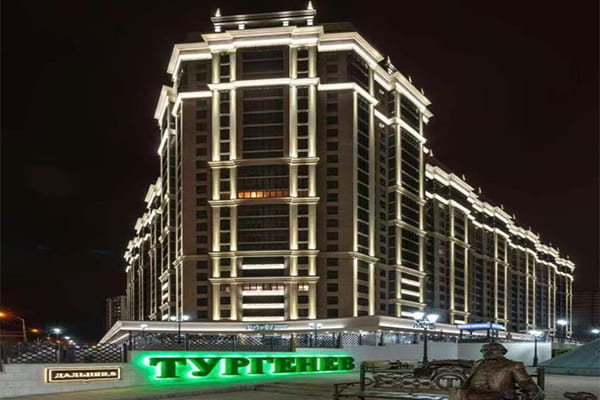
When I first started in this industry, I saw many projects where the lighting just felt "off." The building was beautiful, but the nighttime effect was messy or underwhelming. It took me a while to realize that the problem wasn't the quality of the lights, but the fundamental strategy behind them. The designers had failed to ask the most important first question: are we painting with light, or are we sculpting with it? Once you understand that distinction, choosing the right fixture becomes incredibly clear. Let's break down exactly how these two techniques achieve such different results.
What's the Core Difference: A Smooth Canvas or a Dramatic Accent?
You want to illuminate a facade, but you are not sure what the end goal is. Should it be soft and uniform or bold and dramatic? You must first decide if you are painting a canvas or creating a spotlight.
Wall washing1 aims to create a uniform "canvas" of light, eliminating shadows and emphasizing the building's overall shape. Floodlighting2, on the other hand, acts like a spotlight, creating high-contrast points or lines to highlight specific architectural features3, textures, and create a sense of drama.
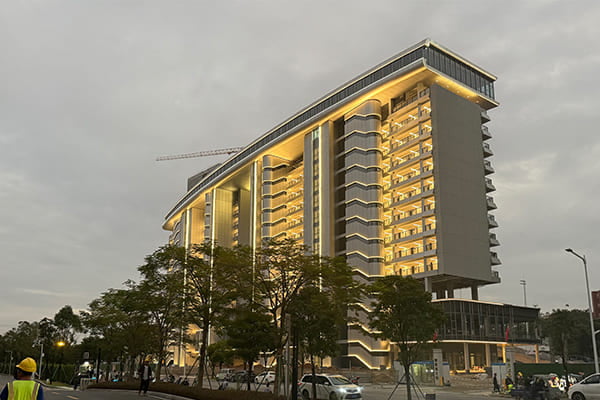
Let's dive deeper into this core concept. Think of it as two different artistic philosophies. One values harmony and wholeness, while the other values focus and intensity. Both are powerful, but they serve completely different purposes.
The "Canvas" Approach: Wall Washing for Uniformity
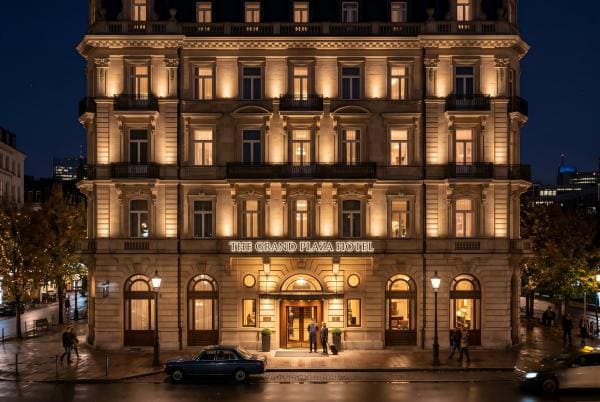
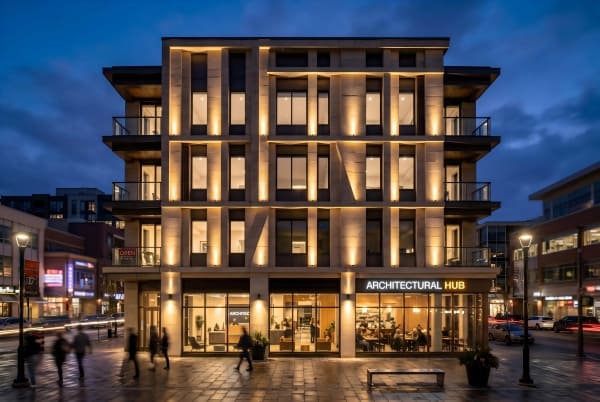
The goal of wall washing is to make a surface look clean, smooth, and evenly lit. We want to erase shadows and create a single, cohesive plane of light. This technique is perfect for emphasizing the sheer size and volume of a building or for showcasing modern, smooth materials. I often recommend it for facades with glass, metal panels, or smooth-rendered concrete. To achieve this, we use fixtures with either wide beam angles4 or, more effectively, asymmetric lenses5. These special lenses, with angles like 10x60 or 15x45 degrees, are designed to "throw" the light sideways and upwards, painting the wall evenly from a close distance. This also minimizes light spilling into the sky. Because the fixtures are close, we also need to manage glare. Using fixtures with built-in honeycomb louvers or a recessed design is something I always insist on to ensure pedestrians aren't blinded by the light source.
The "Spotlight" Effect: Floodlighting2 for Impact
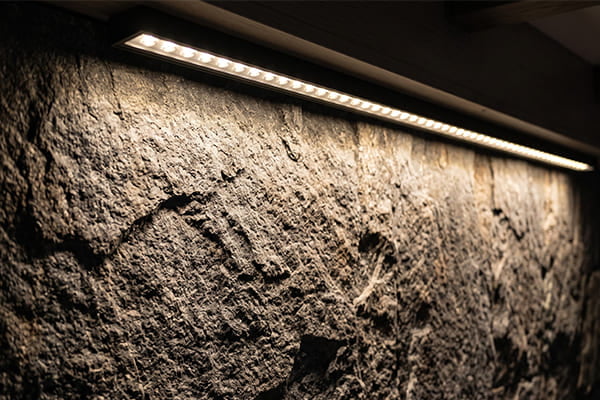
Floodlighting is the complete opposite. Here, we embrace shadows. We use light and dark to create a visual spectacle. The goal is to draw the eye to specific features—a grand column, intricate stonework, or the peak of a tower. This technique creates a sense of power, depth, and texture. I remember a project we did on an old government building with rough-cut stone walls. Using wide wall washers would have flattened its character. Instead, we used narrow-beam floodlights placed at a distance. The intense light raked across the stone, making every crack and contour pop. It gave the building a powerful, timeless presence at night. Floodlighting is all about high contrast. It’s a tool for storytelling, highlighting the parts of the building that matter most and letting other areas fall into shadow.
How Do You Match Key Specs Like Beam Angle and Lumens?
You have decided on the lighting style you want, but the technical specs are overwhelming. Choosing the wrong beam angle or lumen output6 means wasted money and a poor final result. The key is to match the specifications directly to your design goal.
For wall washing, use wide beam angles4 (30°-60°+) or asymmetric lenses and place fixtures close to the wall. For floodlighting, use narrow beams (5°-30°) placed far away, requiring higher lumens and intensity to compensate for the distance and create a powerful punch of light.
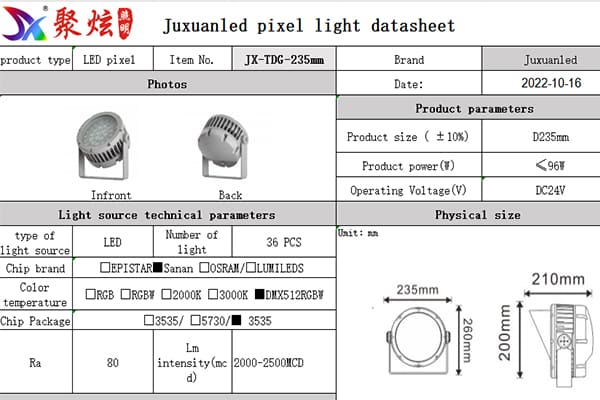
Getting the technical details right is where a project succeeds or fails. It's not enough to just know you want a "uniform" or "dramatic" look; you have to select the hardware that can physically produce that effect. Over the years, I've learned that these four parameters—beam angle, installation position7, lumen requirements, and the final visual effect8—are all interconnected. You can't change one without affecting the others.
Matching Parameters for Your Project
To make it simple, I've put together a table that we use internally at JUXUANLED to guide our clients. It breaks down the typical specifications for each lighting approach.
| Dimension | Wall Washing | Floodlighting2 |
|---|---|---|
| Beam Angle | Medium/Wide (30°-60°+) or Asymmetric Lenses (e.g., 10x60°) | Narrow/Medium (5°-60°) |
| Installation Position | Close to the wall (typically 1/10 to 1/4 of the wall height away) | Far from the wall (distance depends on beam and desired effect) |
| Lumen Requirement | Medium; focus is on density and overlapping lights for uniformity | High; requires high intensity (candela) to overcome distance decay |
| Visual Effect | Soft, clean, flat, uniform coverage | Striking, dramatic, high contrast, focused highlights |
Let’s talk about why these numbers matter. For wall washing, a wide beam is essential because the light is positioned so close to the surface. You need the light to spread out quickly to cover a large area and overlap with the next fixture. If you used a narrow beam here, you'd get ugly, bright "hot spots." For floodlighting, the opposite is true. The fixture is far away, so you need a narrow, focused beam to act like a laser, concentrating all its energy on a distant target. A wide beam would dissipate and lose all its punch over that distance. This is also why floodlights need much higher lumen and candela ratings. They are fighting against distance, which is the biggest enemy of light.
Is There a Simple Formula for Choosing the Right Light?
You have a good grasp of the concepts, but you are still not sure how to apply them to your specific project. Guessing can lead to costly mistakes and project delays. You can avoid this by using a simple selection logic and a basic formula.
Yes. For a quick estimate, the required beam angle = 2 arctan(target width / (2 distance)). More simply: for wall washing, think close distance + wide beam for a uniform effect. For floodlighting, think far distance + narrow beam for high-contrast impact.
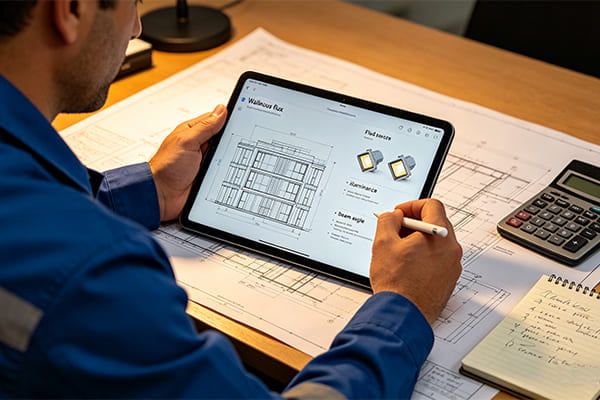
While every project is unique, I always come back to a few core principles and a simple piece of math to get started. You don't need complex software for a preliminary design. You just need to understand the relationship between distance, coverage area, and beam angle. This foundational knowledge will prevent 90% of common lighting mistakes9.
A Practical Calculation for Beam Angle
Before selecting a product, you can get a good idea of the beam angle you need. There's a simple trigonometry formula10 for this: *`Required Angle = 2 arctan(W / 2D)` Here, W is the width of the area you want to light up, and D** is your distance from that surface. Don't let the "arctan" scare you; any scientific calculator can do it. For example, if you want to light a 10-meter-wide section from 5 meters away, this formula will tell you exactly what beam angle to look for. This simple check helps you quickly filter out unsuitable fixtures and focus on the ones that can actually do the job. It's a quick reality check I run on every single project plan.
My Go-To Selection Logic
Beyond the math, I rely on a simple mantra:
- Wall Washing = Close + Wide + Uniform
- Floodlighting2 = Far + Narrow + Bright
For wall washing, the most critical factor that people forget is overlap. To avoid the ugly "scalloping" effect (a series of bright fan shapes on the wall), the light beams from adjacent fixtures must overlap by at least 50%. This means you need to plan the density and spacing of your lights carefully to create that seamless sheet of light. This method is my default choice for modern, sleek buildings.
For floodlighting, the key metric is center beam candela power (CBCP)11. This tells you how intense the light is at the very center of the beam. A high CBCP value means the light has serious "punch" and can travel a long way without losing its brightness. This is what you need when you're trying to hit the top of a skyscraper or highlight a statue from across a plaza. It's the perfect choice for historic buildings, monuments, and any structure where you want to emphasize strength and texture.
Conclusion
In short, choose wall washing for a smooth, uniform look up close. Pick floodlighting for dramatic, high-impact highlights from a distance. It’s all about matching the tool to the vision.
Explore this link to understand how wall washing creates a smooth, uniform light canvas for facades. ↩
Discover how floodlighting can create dramatic highlights and contrast in architectural designs. ↩
Find out effective techniques for using lighting to emphasize architectural features. ↩
Understand the importance of beam angles in achieving desired lighting effects for architecture. ↩
Learn about asymmetric lenses and how they enhance wall washing techniques in lighting. ↩
Explore how lumen output impacts the effectiveness of lighting in architectural projects. ↩
Find out how the installation position of lighting fixtures affects their performance and impact. ↩
Learn about various visual effects that lighting can create to enhance architectural features. ↩
Learn about common lighting mistakes to avoid for successful architectural lighting. ↩
Discover how trigonometry can help in calculating lighting requirements for projects. ↩
Understand the significance of CBCP in selecting powerful floodlighting fixtures. ↩