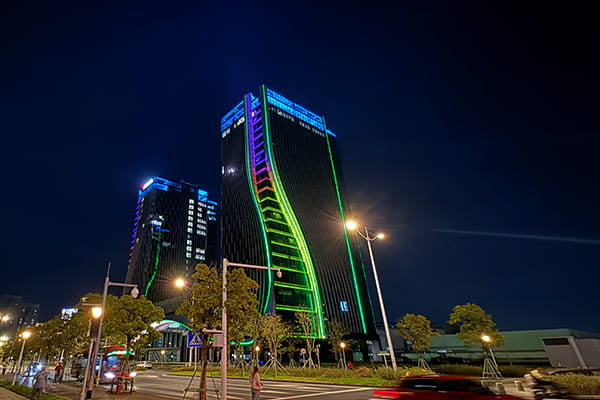
DMX5121 vs. SPI2: Which Control Protocol is Right for My Architectural Lighting Project?
Choosing the right control protocol3 feels overwhelming. A wrong choice can lead to flickering lights, budget overruns, or maintenance nightmares. You might overspend on a complex system or pick one that just can't handle the job.
DMX5121 is an industrial-grade protocol ideal for reliable, long-distance control of fixtures like wall washers and floodlights. SPI2 is a high-speed, low-cost protocol perfect for high-density pixel displays4 like media facades, but it has shorter transmission distances and a different wiring structure5.
I see this question on almost every project I work on. Whether we are lighting a massive city landmark or a small commercial building, the control protocol3 is the brain of the system. Getting it right is critical. Let's break down the two most common options so you can choose with confidence.
When Should I Choose DMX5121 for Maximum Reliability?
Need rock-solid stability for a landmark project? Worried about electrical noise or long cable runs? DMX5121 is your industrial-grade solution, the king of stability in our field.
Choose DMX5121 when project reliability is your top priority. It's best for high-power fixtures like floodlights and wall washers, especially when they are spread out over long distances. Its signal is highly resistant to interference, ensuring a stable and professional result.
The Power of a Stable Signal
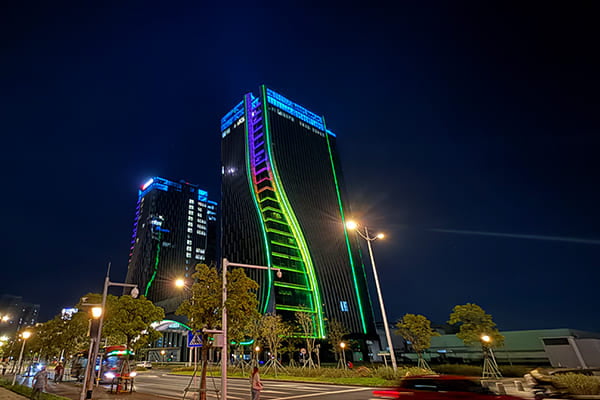
DMX5121 uses an RS-485 differential signal. This sounds technical, but it simply means the signal is very robust. It resists the electromagnetic interference6 (EMI) that is common on busy construction sites with lots of power cables. I’ve run DMX cables hundreds of meters without a single flicker. This is why we use it for major bridges, monuments, and high-rise towers. When the lights absolutely cannot fail, I trust DMX. The signal just works, day in and day out.
How DMX Wiring Protects Your Project
DMX systems are wired in a parallel or daisy-chain structure. This is a huge advantage for maintenance. If one light fixture fails, the signal continues to the next one. The rest of your lighting scene stays perfectly intact. This is completely different from other protocols where one bad light can take down the whole line. Many DMX systems also support RDM (Remote Device Management), which allows us to check fixture status from the control room. It’s a massive time-saver.
The Trade-Offs: Cost and Complexity
Reliability comes at a price. DMX5121 is more expensive than SPI2. The control chips, the cables, and the waterproof connectors7 all cost more. I've seen projects where choosing DMX over SPI2 for a linear light increased the fixture cost by 50% to 80%. It also requires more planning. Each fixture needs a unique address, which you have to set manually. If a fixture is replaced, it needs to be re-addressed. And while the system is robust, troubleshooting a short circuit on a DMX line can be difficult.
| Feature | DMX5121 Advantage | DMX5121 Disadvantage |
|---|---|---|
| Signal | Extremely stable (RS-485) | Requires specific shielded cable |
| Topology | Robust (one failure doesn't stop the line) | Harder to troubleshoot short circuits |
| Distance | Very long (hundreds of meters) | Signal boosters may be needed |
| Cost | lower | High (expensive chips, cables, connectors7) |
| Setup | easy | Complex (requires manual addressing) |
Is SPI2 a Better Choice for High-Density Media Facades?
Want to create smooth, flowing video effects on a facade? Working with a tight budget and need a simple installation? SPI2 might be the perfect fit for your project.
Yes, SPI2 is often better for high-density media facades. It controls every single pixel individually at a high refresh rate, creating fluid video animations. Its lower cost and simpler wiring make it a great value choice for pixel lights8 and linear strips.
Per-Pixel Control for Stunning Visuals
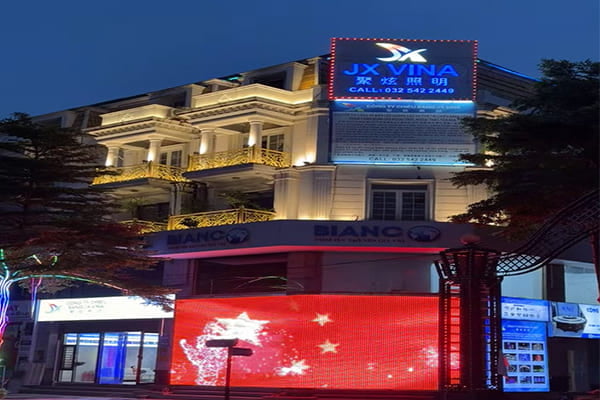
SPI2 (Serial Peripheral Interface) is the magic behind most of the amazing media facades you see today. It communicates directly with simple integrated circuits (ICs) like the WS2811 or UCS1903. This allows it to control every single RGB pixel on a strip or dot light independently. This granular control, combined with a very high refresh rate, is perfect for playing video content9. The animation looks smooth and seamless, not choppy. DMX controls fixtures or segments; SPI2 controls pixels.
The Reality of SPI2's Limitations
SPI2 is not as robust as DMX. It uses a single-ended TTL signal, which is more sensitive to electrical noise. This is why its transmission distance is very short. I recommend keeping the distance from the controller to the first light under 10 meters, and the distance between lights under 5 meters. Its biggest historical weakness was its serial structure. If one pixel IC failed, the data stopped, and the rest of the lights in the chain went dark. Modern "breakpoint resume" chips have mostly solved this, but it’s still a risk to consider.
Why Contractors Love SPI2 for Installation
From an installer's point of view, SPI2 is a dream. The wiring is incredibly simple. There is no manual addressing to worry about. The controller just sends out a stream of data, and the lights display it in order. Troubleshooting is also very easy. If the lights stop working at a certain point, you know the problem is with the last working light or the first dark one. You just swap out that fixture, and the problem is usually solved in minutes. This simplicity makes it a favorite for projects with tight deadlines.
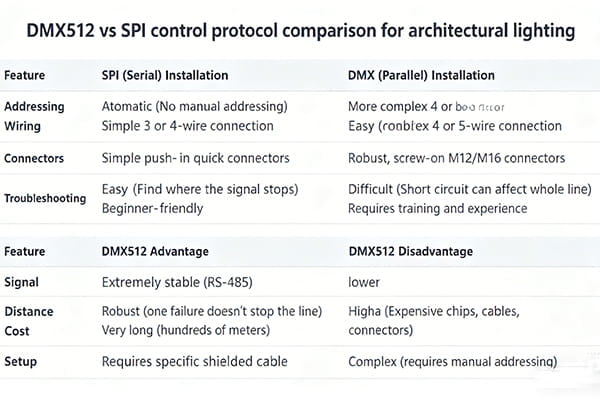
| Feature | SPI2 (Serial) Installation | DMX (Parallel) Installation |
|---|---|---|
| Addressing | Automatic (No manual addressing) | Manual (Each fixture needs a unique address) |
| Wiring | Simple 3 or 4-wire connection | More complex 4 or 5-wire connection |
| Connectors | Simple push-in quick connectors7 | Robust, screw-on M12/M16 connectors7 |
| Troubleshooting | Easy (Find where the signal stops) | Difficult (Short circuit can affect whole line) |
| Installer Skill | Beginner-friendly | Requires training and experience |
What Are the Real-World Installation Differences Between DMX and SPI2?
The spec sheet is one thing, but how do these protocols differ on-site? Confused about cables, connectors7, and power runs? Let's clear it up with my field experience.
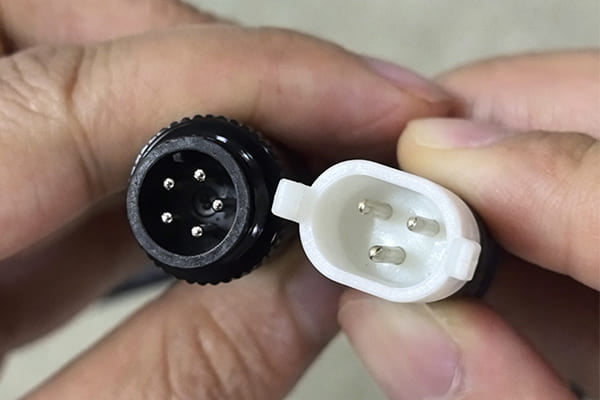
The biggest difference is in wiring topology and power management10. DMX uses a robust parallel daisy-chain with 5-pin connectors7. SPI2 uses a simpler serial connection with 3-pin connectors7. DMX also allows for longer single-power runs, which can reduce cable and labor costs.
Connectors and Cables: A Quick Guide
You can often tell the protocol just by looking at the connectors7. SPI2 fixtures typically use simple 3-pin quick connectors7 (Power, Data, Ground). Sometimes you see a fourth pin for a backup data line. DMX, on the other hand, almost always uses beefy 5-pin, solid, screw-on connectors7. This provides a more secure and weatherproof connection suitable for permanent outdoor installations. The thicker cable and robust connectors7 are part of why DMX is more reliable and more expensive.
Solving the Voltage Drop Problem
This is a huge factor that saves money on site. With SPI2 linear lights, power is fed from one end. Because of voltage drop, you can usually only run a single 10-meter length before you see color issues at the far end. For a 20-meter column, you need two separate power feeds. With DMX linear lights, we can design them with a middle power feed. This allows us to power a 10-meter section to the left and a 10-meter section to the right from a single cable drop. For a facade with many vertical columns under 20 meters, this cuts the number of power supplies and cables in half. I did this on a hotel project in Dubai and saved the contractor nearly 20% on their installation budget.
On-Site Troubleshooting
I mentioned this before, but it's worth repeating. When an SPI2 light fails, the problem is obvious. The signal stops dead. You can see exactly where the fault is. When a DMX line has a short circuit, the entire line can start flickering or go dark. Finding that one bad cable or connector among hundreds can take hours. So, while DMX is more reliable overall, SPI2 is often faster to fix when something does go wrong.
| On-Site Factor | DMX5121 | SPI2 |
|---|---|---|
| Typical Connector | 5-pin screw-on | 3-pin quick-connect |
| Power Injection | Can be fed from the middle | Must be fed from the end |
| Max Single Power Run | ~20 meters (with middle feed) | ~10 meters |
| Fault Diagnosis | Difficult for short circuits | Easy to locate signal breaks |
Can I Combine DMX5121 and SPI2 in the Same Project?
Why choose one when you can have both? Modern projects often need the strengths of each protocol. The best solution is often a hybrid system11 that works together seamlessly.
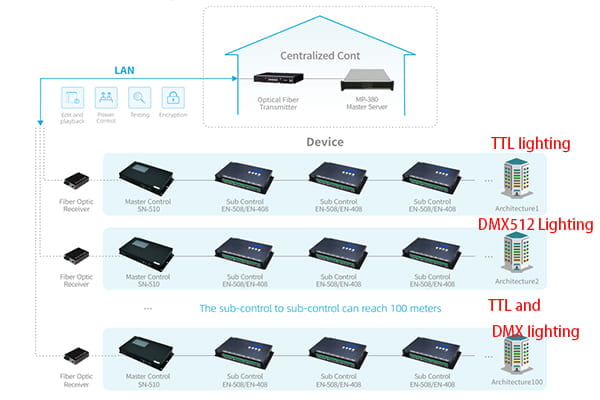
Absolutely. Large-scale projects now use a hybrid approach for the best results. A high-speed Ethernet protocol like Art-Net12 or sACN13 acts as the backbone. Then, DMX controls structural lighting while SPI2 handles the high-resolution video display areas.
The Modern Hybrid Architecture
The most advanced projects I work on today don't rely on just one protocol. We build a layered system. The main control signal travels from the media server over a fiber optic backbone using an Ethernet-based protocol like Art-Net12 or sACN. This can carry huge amounts of data over very long distances. On the facade, we place gateway devices. Some gateways convert the Art-Net12 signal to DMX for the floodlights and wall washers. Other gateways convert the Art-Net12 signal to SPI2 for the dense pixel mesh screen. This gives us the best of both worlds.
A Real-World Project Example
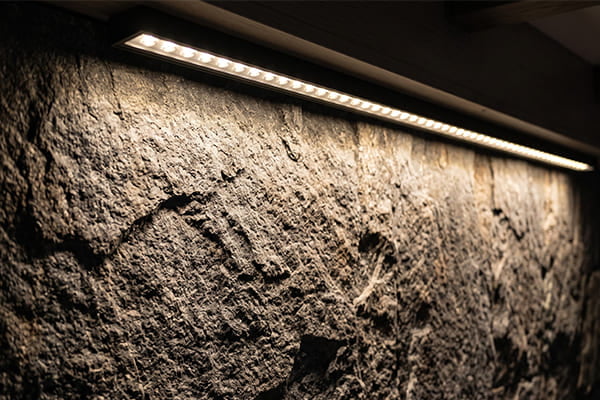
Imagine lighting a new museum. We would use DMX-controlled wall washers to graze the stone columns at the entrance, highlighting their texture with powerful, stable light. Then, on the large glass facade above, we would install a grid of SPI2 pixe light. During the day, they are invisible. At night, they come alive to show artistic video content9. Both systems run from the same master controller, perfectly synchronized. This hybrid approach delivers both architectural elegance and dynamic media effects without compromise.
Choosing the Right Converters
The key to making a hybrid system11 work is the hardware that bridges the protocols. These are called gateways or controllers. You will need an Art-Net12 (or sACN) to DMX gateway for your DMX fixtures, and an Art-Net12 (or sACN) to SPI2 controller for your pixel lights8. When planning a project, it's critical to ensure all these components are compatible and can handle the required number of pixels or DMX universes.
| System Layer | Protocol / Technology | Primary Role |
|---|---|---|
| Control Layer | Lighting Design Software | Create and schedule the lighting show |
| Backbone Layer | Art-Net12 / sACN over Fiber | Transmit massive data over long distances |
| Execution Layer | DMX5121 | Reliable control for high-power architectural lights |
| Execution Layer | SPI2 | High-speed control for dense pixel media displays |
Let's wrap this up.
Choosing between DMX5121 and SPI2 depends entirely on your project's goals. If you need ultimate reliability for structural lighting, choose DMX. If you need high-resolution video effects on a budget, choose SPI2. And for the most ambitious projects, combine them.
Explore the DMX512 protocol to understand its reliability and advantages for architectural lighting projects. ↩
Learn about the SPI protocol and how it can enhance high-density media facades in your lighting projects. ↩
Discover various control protocols to make informed decisions for your architectural lighting designs. ↩
Understand the applications of high-density pixel displays in modern architectural lighting. ↩
Understand the wiring structures of DMX and SPI to choose the right setup for your project. ↩
Learn about electromagnetic interference and its impact on lighting systems to ensure optimal performance. ↩
Explore the different connectors used in DMX and SPI systems for reliable connections. ↩
Understand pixel lights and their applications in creating dynamic lighting effects. ↩
Discover how to effectively integrate video content into architectural lighting designs. ↩
Learn about power management strategies to optimize your lighting installations. ↩
Discover the benefits of hybrid lighting control systems that combine DMX and SPI for optimal results. ↩
Learn about Art-Net and its role in modern lighting control systems for enhanced performance. ↩
Explore sACN technology and its advantages for transmitting lighting control data. ↩