Struggling to choose the right lighting control protocol1? A wrong decision can lead to flickering lights, budget overruns, and project delays. This guide clarifies which protocol is best for you.
DMX5122 is the industrial standard for reliability, ideal for long-distance and critical lighting. SPI3 is the cost-effective choice for high-density media facades4 requiring pixel-level control. The best option depends entirely on your project's balance of stability, precision, and budget.
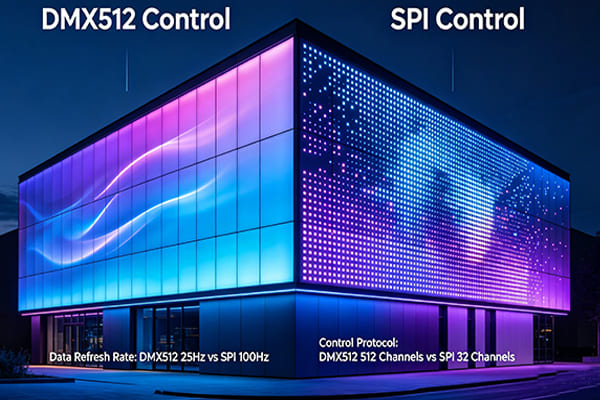
That's the quick summary. But the real value comes from understanding the specific details that make one protocol better than the other for certain jobs. To make the right call, you need to know their core differences. Let's dig deeper into the industry's workhorse, DMX5122, to see why it's trusted for the most important projects.
What makes DMX512 the king of stability for facade lighting?
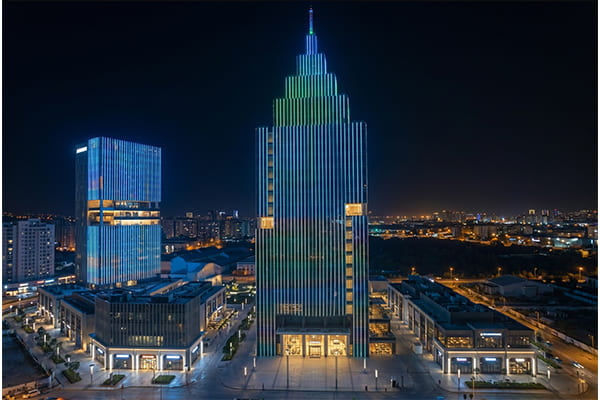
Your landmark project demands flawless performance every single night. You can't afford to let signal interference or a single faulty fixture ruin the entire lighting display. DMX5122's industrial-grade design ensures your lighting performs perfectly.
DMX512 uses a robust RS-485 differential signal5, making it highly resistant to electrical noise over very long distances. Its parallel wiring6 means if one light fails, the others stay on, guaranteeing maximum uptime for critical architectural lighting projects.
The secret to DMX512's strength is its technical foundation. It uses an RS-485 differential signal5, which sends data over two wires. Any electrical noise tends to affect both wires equally, so the receiver can easily filter it out. This allows for stable data transmission over hundreds of meters, which is essential for large buildings. I once worked on a project where the control room was over 200 meters from the first fixture. SPI3 would have been impossible, but DMX5122 handled it without a single issue. Another key feature is its parallel structure. The signal passes through each light, but power is typically wired in parallel. This means one bad fixture won't break the entire chain of lights after it. This reliability is why we always spec DMX512 for high-power floodlights and wall washers on critical facades.
Strengths vs. Limitations
Of course, this stability comes at a price. DMX512 components, from the IC chips to the 5-pin waterproof connectors and cables, are significantly more expensive. A DMX5122 RGB linear light can cost 50-80% more than its SPI3 equivalent. The system is also more complex to set up. Each light needs a unique address, and if you replace a fixture, you have to manually program the new one. This can be time-consuming on a large-scale project.
Why is SPI3 the go-to choice for high-density, budget-friendly projects?
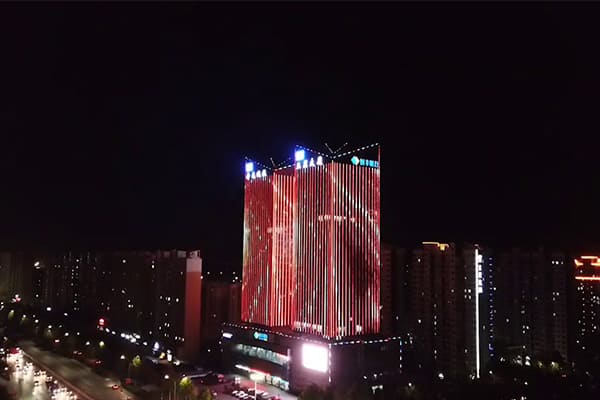
You need to create a vibrant, dynamic video facade for your client. But you're facing a tight budget and the design calls for thousands of closely-spaced pixels. SPI protocol offers that pixel-perfect control at a fraction of the cost.
SPI3 (Serial Peripheral Interface) excels at controlling individual pixels in dense arrays like media screens. It is extremely cost-effective because the control IC is simple and integrated. This makes it the perfect solution for projects that require detailed video animation on a limited budget.
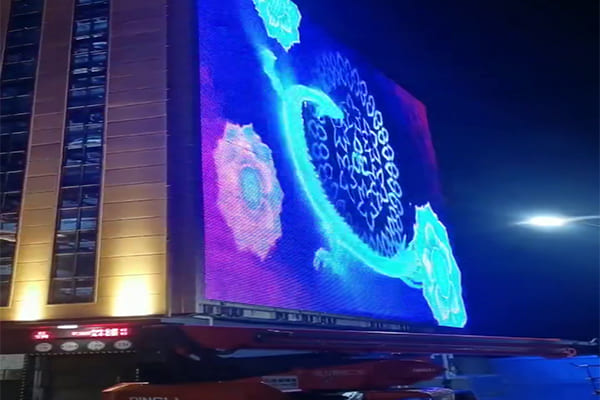
SPI3 is a game-changer for media facades. It uses a simple TTL signal to control common pixel ICs like the WS2811 or UCS1903. This technology allows for incredible refresh rates, making smooth video playback possible on a building's surface. On a recent project, we built a massive media wall using thousands of our pixel lights. By using SPI, we not only achieved a stunning visual effect but also saved the client nearly 40% on the control system compared to a DMX5122 alternative. The simplicity of SPI is a huge advantage during installation. There's no need to manually address each fixture; the data just flows from one to the next. Troubleshooting is also straightforward. If a section of lights goes out, the problem is almost always the last working light or the first dead one. You just replace that fixture, and the line is fixed.
High Reward vs. Known Risks
The biggest drawback of SPI3 is its serial, or cascaded, structure. In a basic setup, if one pixel fails, it can stop the data from reaching all the pixels after it in the chain. This is the classic "one goes out, they all go out" problem. However, modern fixtures with "breakpoint resume" ICs have largely solved this issue. Another limitation is its susceptibility to electrical interference and its short transmission distance. We recommend keeping the distance between lights under 5 meters and the distance from the controller to the first light under 10 meters to ensure a clean signal.
How can you combine DMX5122 and SPI3 for the best results?
Your project is complex, with different types of lighting needs. You have powerful wall washers for the main structure and a high-resolution media screen on the front. Choosing just one protocol means you either overpay for stability or risk performance. A hybrid approach leverages the best of both DMX512 and SPI.
For large projects, a hybrid system is the best strategy. Use a robust Ethernet backbone (Art-Net7/sACN) for main data transmission. Then, assign DMX512 for stable structural lighting and SPI for high-resolution, cost-sensitive media display areas. This gives you reliability and savings.
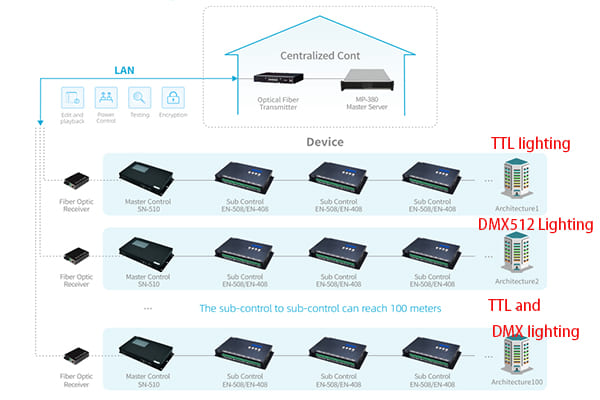
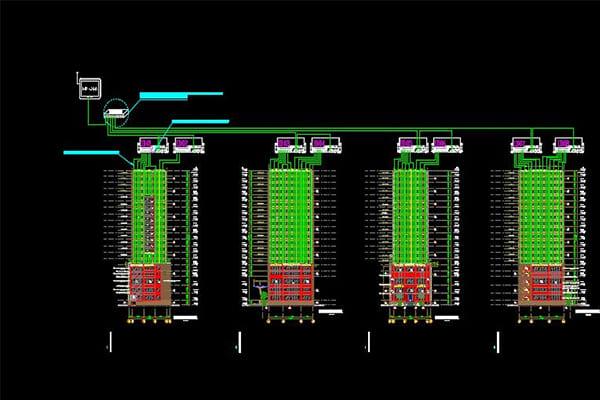
Modern large-scale projects rarely rely on a single protocol. The most efficient design is what we call a "main backbone with mixed control branches." At the top level, we use a powerful Ethernet protocol like Art-Net7 or sACN, often run over fiber optic cables, to send massive amounts of lighting data across the entire site. This backbone then feeds into sub-controllers. For the parts of the building that require absolute stability, like the high-power floodlights illuminating the core structure, we branch out with DMX5122. For the large video display areas, like a media mesh screen, we use SPI3 branches to keep costs down and achieve the high pixel density needed for smooth video.
Key Differences at a Glance
This table breaks down the core comparison:
| Feature | DMX5122 | SPI3 |
|---|---|---|
| Signal Type | RS-485 Differential (High Noise Immunity) | TTL Single-Ended (Low Noise Immunity) |
| Topology | Parallel / Daisy Chain | Serial Cascade |
| Distance | Long (100m+) | Short (<10m) |
| Control Granularity | Fixture/Segment Level | Individual Pixel Level |
| Cost-Effectiveness | Lower (Expensive Hardware) | Very High (Integrated IC) |
One final practical tip I've learned from years in the field involves linear lights. For a tall, continuous installation up to 20 meters, DMX512is a huge cost saver. You can power the entire 20-meter run from a single power supply placed in the middle. SPI3 lights, on the other hand, must be powered from one end, and you'll see a significant voltage drop8 after 10 meters, requiring to give power agian at middle place . This small detail can make a big difference in installation labor and material costs.
Conclusion
Choosing between DMX5122 and SPI isn't about which is better, but which is right for the job. Use DMX for stability, SPI3 for pixels and budget, or combine them for ultimate flexibility.
Discover insights on selecting the right lighting control protocol to avoid common pitfalls like flickering lights. ↩
Explore the benefits of DMX512, the industry standard for reliable lighting control, especially for large projects. ↩
Learn about SPI, a cost-effective solution for high-density media facades, perfect for budget-conscious projects. ↩
Explore the technology behind high-density media facades and how SPI enables pixel-perfect control. ↩
Understand the technical foundation of DMX512 and its advantages in reducing electrical noise. ↩
Find out how parallel wiring enhances reliability in lighting systems, ensuring maximum uptime. ↩
Learn about Art-Net, a powerful protocol for managing large-scale lighting systems efficiently. ↩
Learn about voltage drop issues in lighting systems and how to mitigate them for better performance. ↩