Confused about wall grazing and wall washing? Choosing the wrong one can completely ruin your facade lighting project. I'm here to explain the critical difference in the simplest terms.
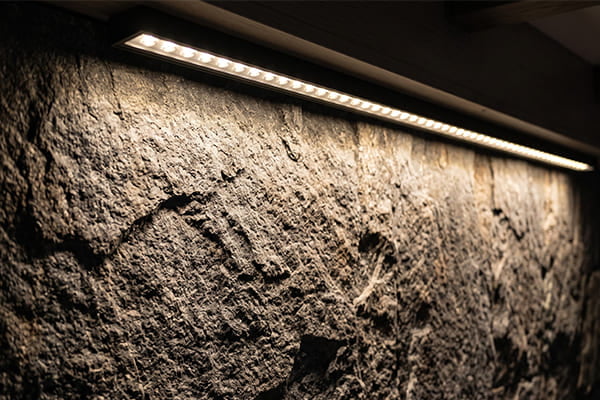
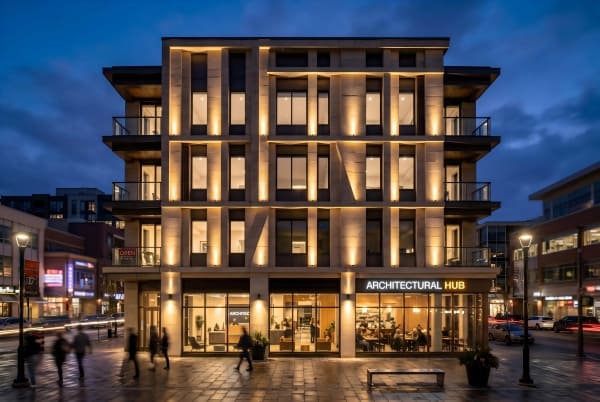
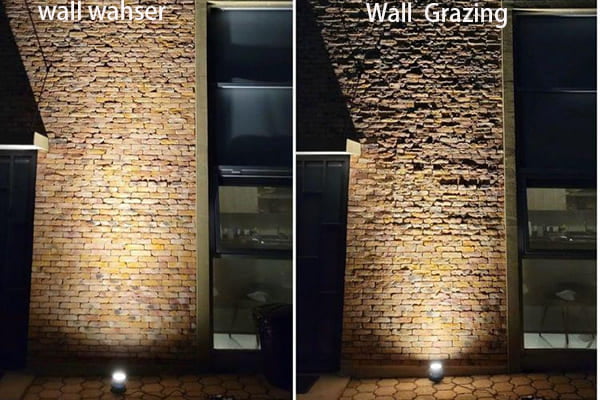
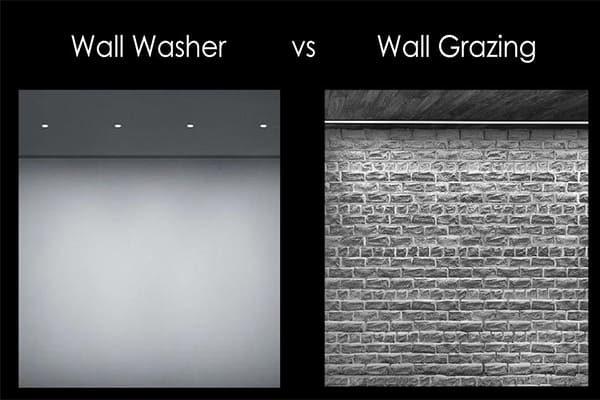
Wall washing creates a smooth, even light that makes imperfections disappear1, while wall grazing uses sharp angles to highlight texture and create dramatic shadows2. Washing is for uniformity; grazing is for drama.
I've been in the outdoor lighting business for over a decade. I’ve seen beautiful architecture diminished by the wrong lighting choice and simple walls turned into masterpieces with the right one. The difference between a "wow" effect and a "what happened here?" moment often comes down to understanding this single concept. To get it right, you need to know more than just the definition. You need to know how it works, when to use it, and what mistakes to avoid. Let's dive into the details so your next project is a success.
What's the Core Difference in How They Work?
The terms "washing" and "grazing" might sound similar, but using them incorrectly leads to disastrous lighting results. Let's break down the technical differences that create their unique effects.
Wall washing uses wide-beam lights placed far from the wall3 to create a flat, even illumination. In contrast, wall grazing uses very narrow-beam lights placed extremely close to the wall4 to create strong highlights and deep shadows.
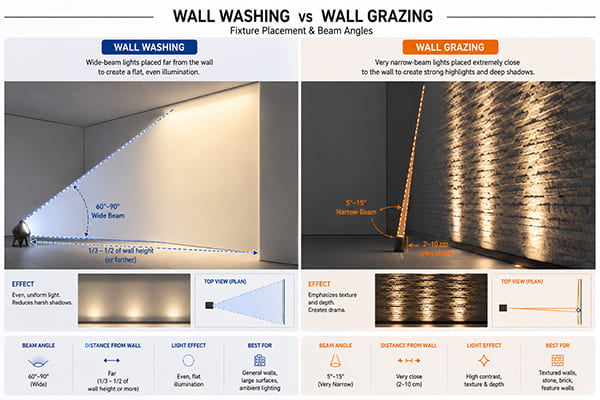
To truly grasp the difference, you have to look at the mechanics behind each technique. It’s all about the interplay of distance, angle, and the resulting visual effect. I always tell my clients to think of it like this: washing is like flood-filling a surface with color, while grazing is like sketching its contours with a fine-point pen. Each has its purpose, and the technical setup is what makes it work. Let's compare them side-by-side to make it crystal clear.
| Feature | Wall Washing | Wall Grazing |
|---|---|---|
| Fixture Distance | Far from the wall (1/3 to 1/2 of wall height)5 | Very close to the wall (10-30 cm / 4-12 inches)6 |
| Beam Angle | Wide beam angle (45° or more)7 | Narrow beam angle (5° to 15°)8 |
| Visual Effect | Soft, uniform, and even; hides shadows | High contrast, dramatic; emphasizes texture |
| Construction Tolerance | High; can hide surface imperfections | Low; magnifies every surface flaw |
With wall washing, we place the fixtures a good distance away from the wall. This allows the wide beam of light to spread out and overlap, effectively erasing shadows9 and creating a uniform "glowing curtain" effect. It's forgiving. If the wall has some minor bumps or waves in the plaster, this technique will help conceal them. For wall grazing, the opposite is true. The light source is positioned just inches from the facade. This extremely close placement forces the narrow beam of light to strike the surface at a sharp, oblique angle. This action "grazes" the wall, catching every raised edge and casting a long shadow behind every depression10. It’s a technique that demands perfection from the building surface.
How Do You Choose the Right Technique for Your Building?
You understand the technicals, but how do you apply them? Choosing the wrong technique can make an expensive, well-built structure look cheap and poorly planned. Here’s a simple guide.
Use wall washing for modern, smooth surfaces like glass or flat-painted walls11 to get a clean, sophisticated look. Choose wall grazing for textured materials like stone, brick, or rough concrete12 to highlight craftsmanship and detail.
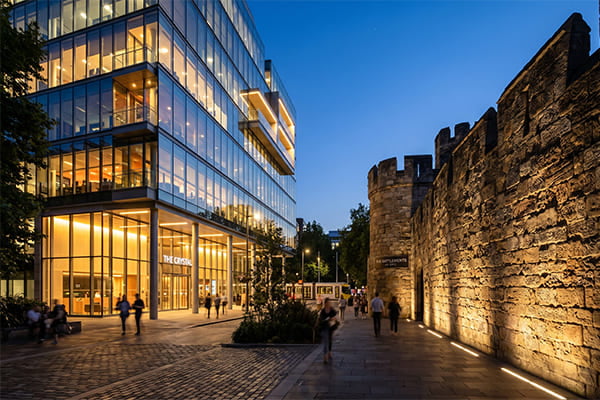
The material of your facade is the biggest clue. Your goal is to use light to enhance the architect's vision, not fight against it. I always ask my clients one question first: "Do you want the wall to disappear into a clean sheet of light, or do you want the wall's texture to tell a story?" The answer immediately points us in the right direction. Let's look at specific scenarios where each technique shines.
When to Use Wall Washing
I recommend wall washing when the goal is a sleek, modern, and uniform appearance. Think of the impressive glass facades on corporate headquarters or the clean lines of a new commercial complex. On these projects, the light is meant to define the building's shape as a whole, not call attention to the wall surface itself. For example, we recently worked on a large shopping mall that had vast, flat-painted exterior walls. The client wanted a high-end, clean feel. We used our JUXUANLED linear wall washers with a 60° beam angle, placed them about two meters from the base of the eight-meter wall, and created a perfectly even field of light. It also works wonders when you need to hide minor construction flaws. On one project, the final plastering job wasn't perfect, but the budget was spent. Wall washing provided a beautiful, even light that completely masked the slight waviness in the finish, saving the day.
When to Use Wall Grazing
Wall grazing is your tool when the material is the hero. Think of historic buildings with old stonework, accent walls made of cultural brick, or modern designs featuring board-formed concrete. Here, the texture is a key part of the design, and your job is to make it pop. By placing a narrow-beam fixture close to the wall, you create a beautiful play of light and shadow that reveals the depth, craftsmanship, and quality of the materials. I remember a project for a boutique hotel that had a stunning feature wall made of reclaimed brick. Using a wall washing technique would have made it look flat and uninteresting. Instead, we used our 10° pixel lights placed just 20cm from the base. At night, every rough edge of the brick caught the light, and the deep mortar joints fell into shadow. The wall came alive and became the main talking point of the building's exterior.
What Common Design Mistakes Must You Avoid?
Even with the right knowledge, a small mistake can sabotage the whole effect. You could spend a fortune on high-quality fixtures, but the result will be a mess if you fall into these traps.
The biggest mistakes are mismatching the lighting technique to the material, using wall grazing on uneven surfaces, and failing to account for glare on reflective materials. Getting this wrong wastes your entire investment.
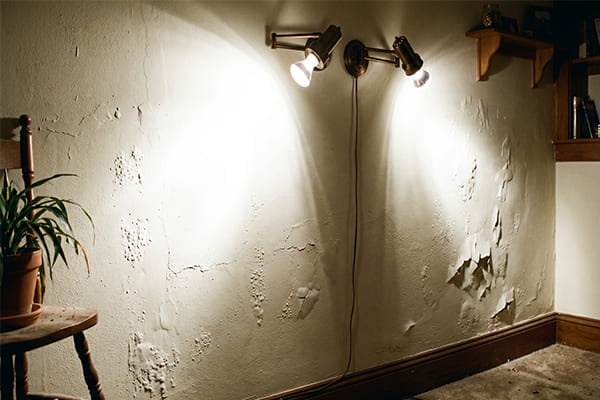
Clients often come to me complaining about lighting projects that need fixing,, and the problems almost always stem from a few fundamental errors. These mistakes are easy to make but also easy to avoid if you know what to look for. Think of this as my personal checklist that I run through before finalizing any facade lighting design. Following it will save you time, money, and a lot of headaches.
The "Car Crash" Scenarios
- Material Mismatch: This is the most common error. Using wall grazing on a smooth, glossy surface doesn't create texture; it just creates ugly hotspots and glare. Conversely, using wall washing on a beautiful, rough stone wall flattens it completely, hiding the very texture you should be celebrating. It makes expensive stone look like cheap plaster. Always match the technique to the material. Rough materials get grazing; smooth materials get washing.
- Ignoring Construction Quality: This is critical. I cannot stress this enough: never use wall grazing on a poorly finished wall. I once saw a project where the contractor wanted a dramatic grazing effect on a new concrete wall. The problem was, the concrete work was sloppy. When they turned on the lights at night, every tiny bump, trowel mark, and imperfection was magnified into a giant, ugly shadow. The wall looked like a disaster zone. The client was furious, and the fix was expensive. If the wall isn't perfectly flat, use wall washing to hide the flaws, not grazing to highlight them.
- The Glare Trap: Be extremely careful with reflective surfaces like polished stone, metal panels, or glass. Both washing and grazing can create intense, blinding glare if not handled carefully. For these materials, you often need to test fixtures on-site at night to find the perfect angle or consider indirect lighting techniques instead. The goal is to illuminate the building, not to blind the people looking at it.
The final decision is simple. Ask yourself: do I want the building to look clean, grand, and unified? Choose wall washing. Do I want the building to look detailed, textured, and full of character? Choose wall grazing.
Conclusion
Choose wall washing for a smooth, uniform look that hides flaws. Pick wall grazing to highlight texture and create drama. Making the right choice ensures your project shines beautifully.
"[PDF] Introduction to Interior Lighting Design - OHIO Personal Websites", https://people.ohio.edu/ziff/ARTI%20288/Intro%20to%20Interior%20Lighting%20Design.pdf. A lighting-design reference should support that wall washing is intended to produce relatively uniform illumination over a vertical surface and can reduce the visibility of surface irregularities by minimizing shadow contrast. Evidence role: mechanism; source type: institution. Supports: Wall washing produces smooth, even illumination and can visually conceal minor wall imperfections.. Scope note: The source may support reduced visibility of imperfections as an optical effect, not guarantee that all construction defects will disappear. ↩
"[PDF] D texture mapping: real-time perceptual surface roughening", https://web.ece.ucsb.edu/~psen/Papers/APGV07_2.5DTextureMapping.pdf. A lighting-design or architectural-illumination source should explain that grazing light is placed close to a surface at a shallow angle, increasing contrast by emphasizing relief and casting shadows from surface texture. Evidence role: mechanism; source type: institution. Supports: Wall grazing uses shallow-angle illumination to emphasize texture and shadow.. Scope note: The degree of shadow and texture emphasis depends on surface relief, fixture optics, and mounting geometry. ↩
"Product Training: Wall Washing Application & Best Practices", https://www.youtube.com/watch?v=vJhjl_pG0zI. A neutral lighting-design source should describe wall washing as a technique that uses broader beam distributions and setback from the wall to achieve overlapping, uniform vertical illumination. Evidence role: definition; source type: institution. Supports: Wall washing typically uses wider beams and greater setback from the wall.. Scope note: Recommended distances vary by fixture photometrics, mounting height, and required illuminance uniformity. ↩
"light seam | Retail - Cornell University - Intypes", https://intypes.cornell.edu/expanded.cfm?erID=202. A lighting-design handbook or educational source should support that wall grazing commonly uses fixtures located close to the illuminated surface with narrow or controlled beams to accentuate surface relief. Evidence role: definition; source type: institution. Supports: Wall grazing generally uses close fixture placement and narrow or controlled beams.. Scope note: Some grazing applications may use linear optics rather than only very narrow spot beams, so the source should be used to support the general principle rather than a universal rule. ↩
"Wall Wash Lighting: Finding the Perfect Distance From Wall", https://lightingnewyork.com/k/lighting/wall-lights/wall-lights/wall-wash-distance-from-wall?srsltid=AfmBOor6AQfd03cLX4ruSt1hGjAhmQbMQkDh4Hf9p3LVz0Hx9J2AqJ6A. A lighting-design reference should support the rule of thumb that wall-washing fixtures are often set back a fraction of the wall height, commonly around one-third or more, to improve vertical uniformity. Evidence role: expert_consensus; source type: institution. Supports: Wall-washing fixture setback is often specified as a fraction of the wall height, such as about one-third to one-half.. Scope note: The exact ratio is a design guideline and must be adjusted for fixture photometrics, aiming angle, ceiling or ground constraints, and target uniformity. ↩
"Tips & Tricks - Wall Wash vs Wall Graze - YouTube", https://www.youtube.com/watch?v=tgF8qAy-by0. A lighting-design source should support that wall-grazing fixtures are typically mounted very near the surface, with close offsets used to produce strong relief shadows on textured materials. Evidence role: expert_consensus; source type: institution. Supports: Wall-grazing fixtures are commonly positioned very close to the wall, sometimes within a few inches or centimeters.. Scope note: The specific 10–30 cm range is application-dependent and may differ for fixture size, beam distribution, wall height, and desired shadow length. ↩
"r/Lighting - Which wall washing beam angle (20/40°) for ...", https://www.reddit.com/r/Lighting/comments/1axvfb1/which_wall_washing_beam_angle_2040_for_these/. A lighting-design reference should support that wider beam spreads are commonly used for wall washing because broad distributions help overlap light and create more even surface illumination. Evidence role: mechanism; source type: institution. Supports: Wall washing commonly uses wide beam angles, such as around 45° or wider, to support uniform illumination.. Scope note: A 45° threshold is a practical guideline rather than a universal standard; actual beam selection depends on photometric data and wall dimensions. ↩
"The Art of Grazing - QTL Lighting", https://www.qtl.lighting/blog/the-art-of-grazing/. A lighting-design source should support that grazing applications often use narrow or tightly controlled beam distributions to direct light along the surface and heighten contrast. Evidence role: mechanism; source type: institution. Supports: Wall grazing often uses narrow beam angles, including ranges around 5° to 15°, for high-contrast texture effects.. Scope note: The 5°–15° range may apply to particular fixtures or high-contrast designs and should not be read as the only acceptable grazing optic. ↩
"[PDF] cdot-lighting-design-guideline.pdf", https://www.codot.gov/safety/traffic-safety/assets/documents/cdot-lighting-design-guideline.pdf. A source on lighting distribution and uniformity should support that overlapping beams reduce contrast and shadow visibility on vertical surfaces, which is the optical basis of wall washing. Evidence role: mechanism; source type: education. Supports: Overlapping wide beams in wall washing reduce shadows and improve uniformity.. Scope note: The phrase “erasing shadows” is figurative; evidence should support reduction of shadow contrast rather than complete elimination under all conditions. ↩
"Raking light - Wikipedia", https://en.wikipedia.org/wiki/Raking_light. A source on grazing illumination or raking light should support that light striking a surface at a low angle accentuates relief by illuminating protrusions and casting shadows from recesses or depressions. Evidence role: mechanism; source type: research. Supports: Low-angle grazing light highlights raised edges and creates shadows in surface depressions.. Scope note: The effect is strongest on surfaces with measurable relief and may be less visible on very smooth or matte surfaces. ↩
"https://oaktrust.library.tamu.edu/server/api/core/...", https://oaktrust.library.tamu.edu/server/api/core/bitstreams/4636d83b-3cd4-4202-99fa-ab943b0b54c4/content. A lighting-design guide should support that wall washing is generally suitable for smooth architectural surfaces where the design goal is uniform vertical brightness rather than texture emphasis. Evidence role: general_support; source type: institution. Supports: Wall washing is generally appropriate for smooth surfaces when a clean, uniform appearance is desired.. Scope note: Material suitability also depends on reflectance, gloss, viewing angle, and glare control, so this supports a general design tendency rather than a fixed rule. ↩
"Essential Wall Grazing Lighting Techniques & Tips", https://www.1800lighting.com/blog/lighting-tips/wall-grazing-lighting-techniques.html?srsltid=AfmBOoomTKl4vPj8vtw4sBz3RSguTEGUU3P3Ky9ZaFf7p_rMiL9YPIXS. A lighting-design source should support that grazing is commonly used on textured materials such as masonry, stone, brick, or rough concrete to emphasize surface relief and material character. Evidence role: general_support; source type: institution. Supports: Wall grazing is commonly recommended for textured materials such as stone, brick, and rough concrete.. Scope note: The source should be applied as contextual design support; suitability still depends on construction quality, desired contrast, and observer position. ↩