What Is an LED Wall Washer Light for Architectural Facade Lighting?
Your building looks great during the day, but at night it just disappears into a flat, dark shape. You want to make an impression, but you're not sure how to light a large facade effectively.
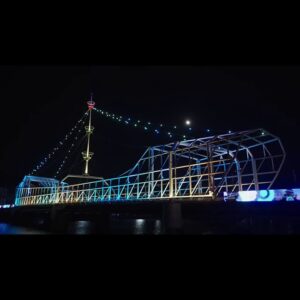
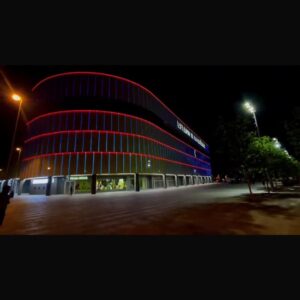
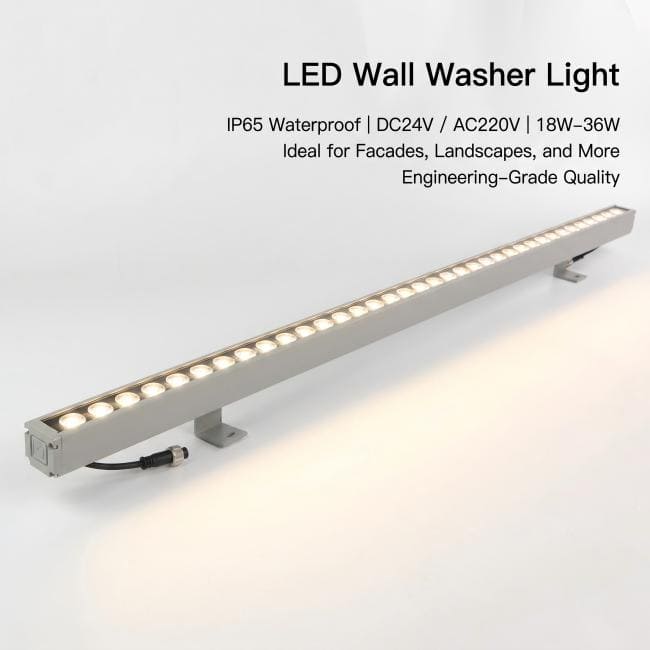
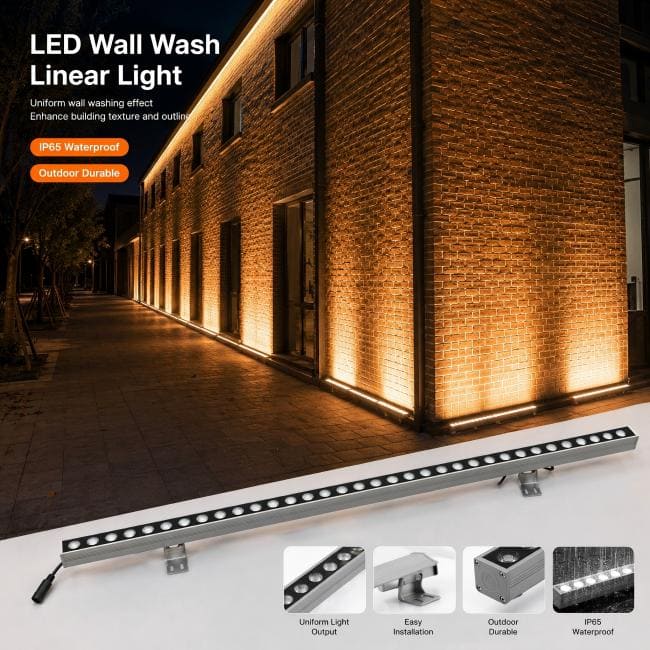
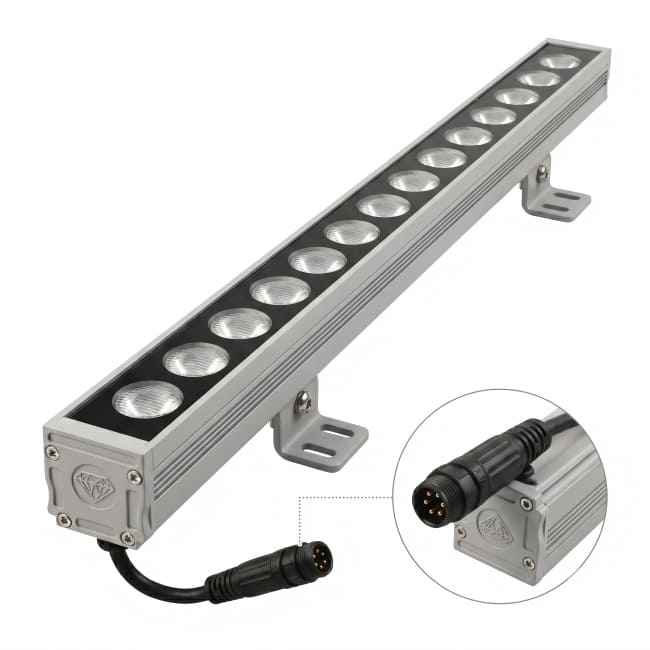
An LED wall washer is a linear lighting fixture designed to produce a wide, uniform sheet of light. It's used to "wash" large surfaces like building facades, bridges, or feature walls with smooth, even illumination, either in static white or dynamic color.
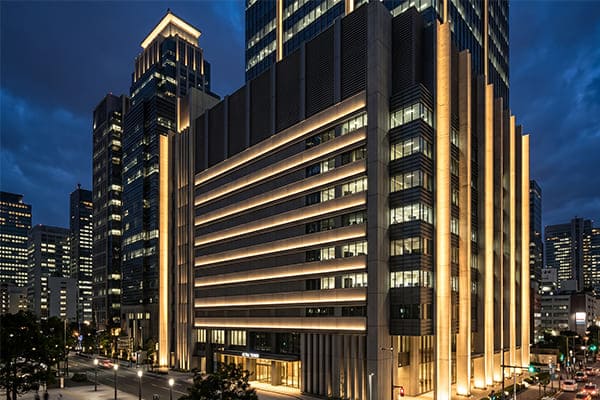
I've used wall washers on hundreds of projects, from towering skyscrapers in Asia to historic landmarks in Europe. They are one of the most powerful tools in my toolbox for transforming architecture after dark. When you understand how they work, you can literally paint a building with light. Let's break down what you need to know.
What Are Its Key Technical Specifications?
Choosing a wall washer can feel overwhelming with all the technical data. If you pick the wrong power or material, your project could end up with dim lighting or fixtures that fail in the first year.
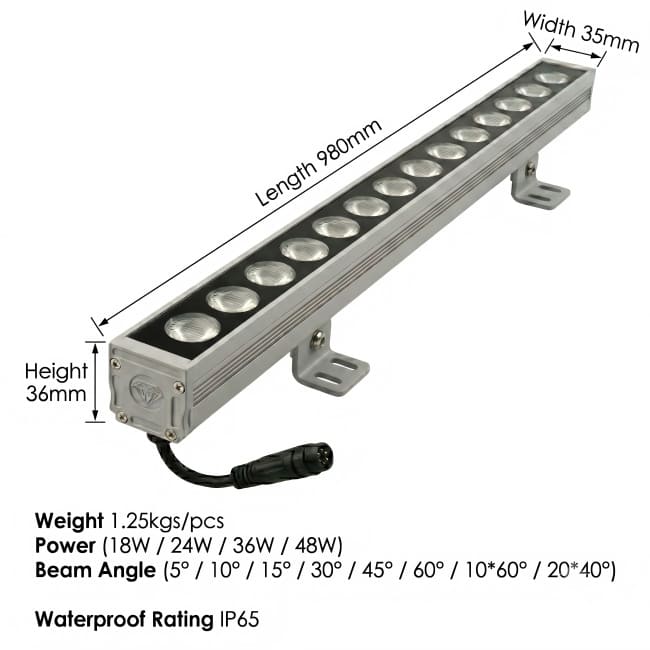
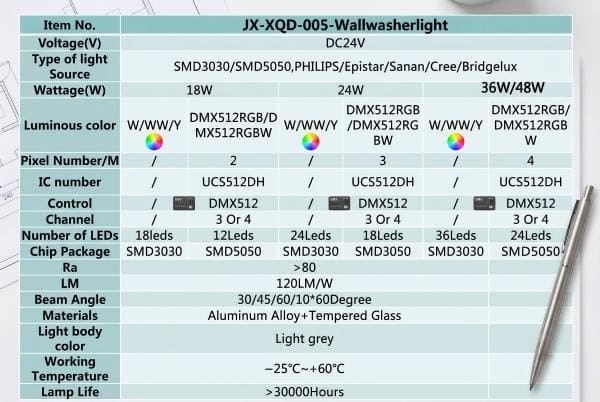
This is a professional-grade, one-meter wall washer running on safe DC24V. It offers multiple power options (18W-48W), is built from durable aluminum and tempered glass, and has a full IP65 waterproof rating for outdoor use.
Power, Voltage, and Efficiency
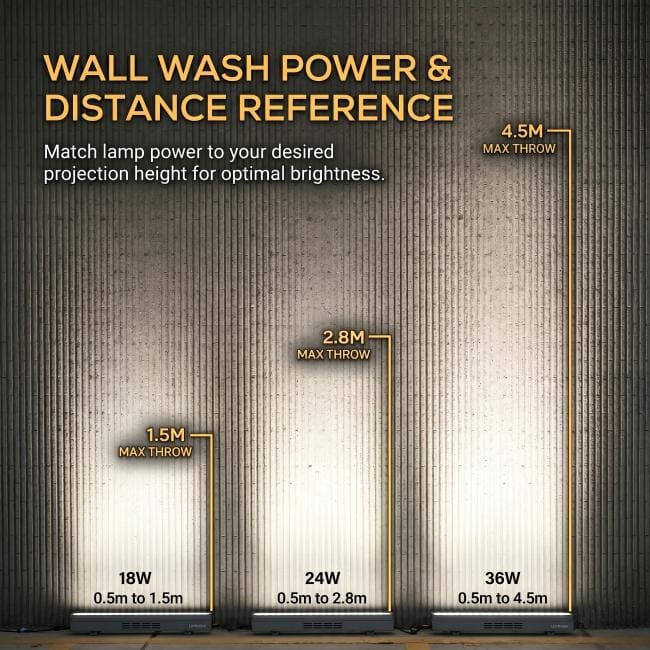
This fixture runs on DC24V. This is the standard for professional outdoor lighting because it's much safer for installers and allows for longer cable runs compared to 12V before you see voltage drop. We offer it in several power levels: 18W, 24W, 36W, and 48W. The power you choose depends on the height of the wall you need to light. An 18W or 24W unit is great for walls up to 2 meters, while a 48W unit can effectively wash walls over 5 meters tall. The use of high-efficiency SMD LED chips (like 3030 or 5050) means you get maximum brightness for every watt of energy you use.
Built for the Outdoors
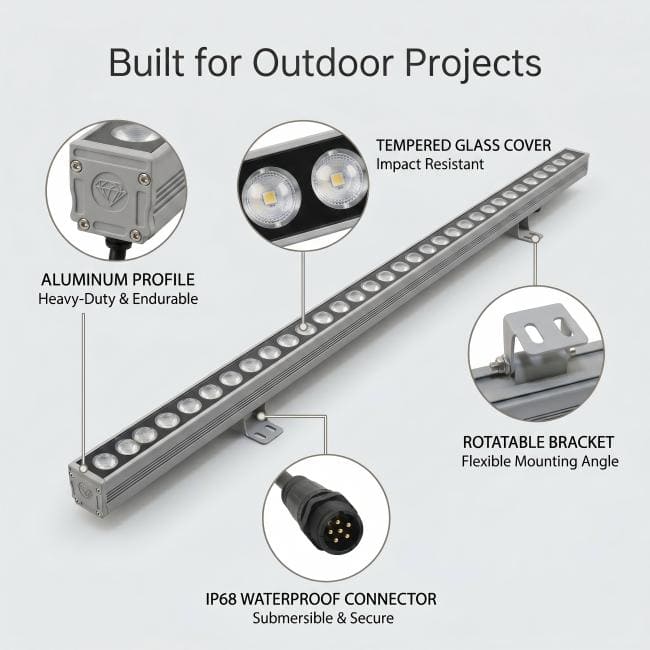
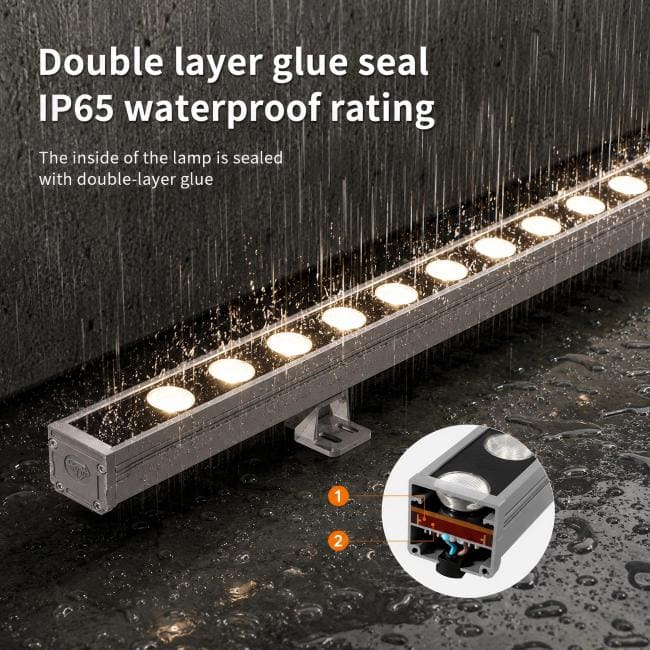
I can't stress this enough: material quality matters. These wall washers have a body made from extruded aluminum and a front cover of tempered glass. The aluminum acts as a massive heat sink, drawing heat away from the LEDs to ensure a long and stable life. The tempered glass is much stronger than regular glass and won't yellow or crack under the sun like cheap plastic covers. The IP65 rating means the fixture is completely sealed against dust and can handle rain and water jets from any direction. It's built to last.
| Power Option | Typical Application Height | Best For |
|---|---|---|
| 18W | 0.5–1.5 meters | Lower accent walls, landscape features, signage. |
| 24W | 0.5–2.8 meters | Small building facades, retail storefronts. |
| 36W | 0.5–4.5 meters | Medium-rise buildings, bridge piers, large columns. |
| 48W | 5+ meters | High-rise facades, tall monuments, towers. |
How Do You Choose the Right Beam Angle?
You've chosen a powerful light, but you pick the wrong beam angle. The result is a disaster. You either have ugly bright spots or the light doesn't reach the top of the wall.
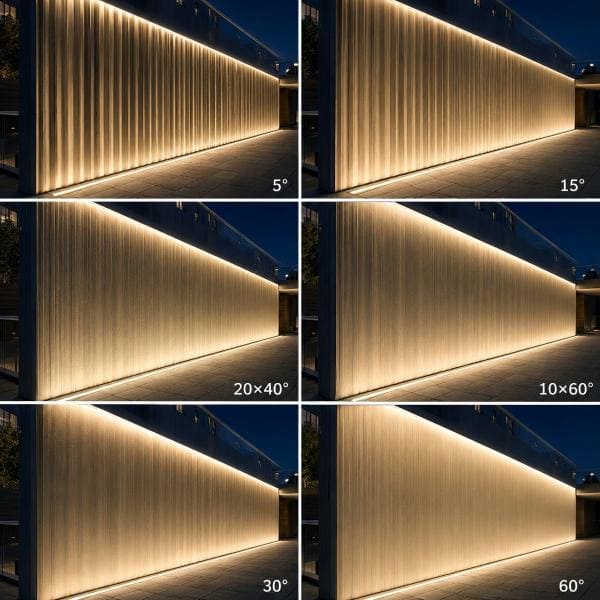
The key is to match the beam angle to the wall's height and your distance from it. Use narrow beams (like 10°) for tall, thin surfaces and wide beams (like 60°) for broad walls at close range.
Narrow Beams for Height and Drama
Narrow beam angles like 5°, 10°, and 15° concentrate the light into a tight, powerful punch. They are your tool for lighting tall structures. I use them to highlight architectural columns, reaching all the way to the top. They are also perfect for "grazing" a textured surface like stone or brick from a close distance. The tight beam creates dramatic shadows that reveal the texture of the material. On a recent hotel project, we used 10° beams to light 20-meter-tall pillars, and the effect was stunning.
Medium and Wide Beams for Even Washing
Medium angles like 30° and 60° are the workhorses for general wall washing. They spread the light out to cover a wider area. You use these when you want to create a smooth, even blanket of light across a facade. The trick is to space them correctly. A wider beam angle allows you to place the fixtures further apart, which can save the client money. A 30° beam is a good all-purpose choice, while a 60° is great when you have a limited setback distance from the wall.
Asymmetrical Beams for Perfect Grazing
Asymmetrical beams, like 1060° or 2040°, are a professional's secret weapon. Instead of being a perfect circle, the beam is oval-shaped. It throws light further up the wall while also spreading it wide horizontally. This is the absolute best way to get an even wash from top to bottom when your fixtures are mounted close to the base of a wall. It directs most of the light upward, reducing wasted light spill into the sky.
| Beam Angle | Best Use Case | Typical Setback from Wall |
|---|---|---|
| 5° / 10° | Lighting tall columns, narrow features, high-rise facades. | 1-2 meters |
| 15° / 30° | General wall washing on medium-height buildings (5-15m). | 1-3 meters |
| 60° | Washing wide walls from a very close distance. | 0.5-1 meter |
| 1060° / 2040° | Creating the most even wash from base to top. | 0.5-1 meter |
How Does DMX512 RGBW Control Work?
A single, static color is nice, but it's limiting. You want the ability to create dynamic scenes for holidays, events, or just to change the building's mood. That's where DMX comes in.
DMX512 is a digital control protocol that gives each wall washer a unique address. This allows a controller to change the color and intensity of every single light independently, creating complex, synchronized lighting shows.
The DMX Daisy Chain
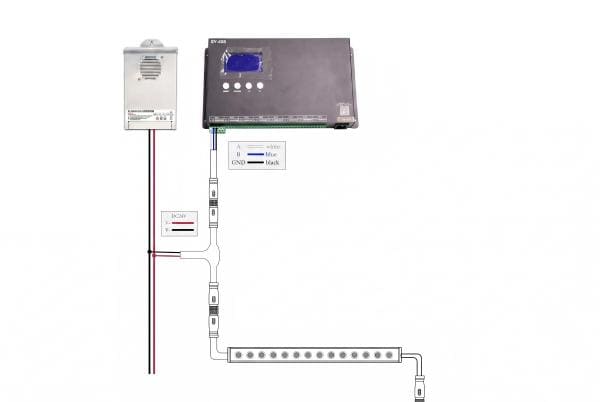
The DMX system is wired in a "daisy chain." A special DMX cable runs from the controller to the "DMX In" port of the first wall washer. Then, another cable runs from the "DMX Out" port of that fixture to the "DMX In" of the next one, and so on down the line. Each fixture is given a unique address (e.g., 1, 2, 3...). The controller sends a stream of data down the line, and each fixture listens only for the instructions meant for its address. This is how you can tell fixture #5 to be blue while fixture #27 is red.
Why RGBW Is Superior to RGB
Standard RGB wall washers mix Red, Green, and Blue light to create colors. To make white, they mix all three at full power. This often results in a bluish or pinkish "white." An RGBW fixture adds a fourth, dedicated White LED chip. This is a game-changer. It allows you to produce a pure, high-quality white light. It also gives you a much wider palette of colors, especially soft pastels. For any high-end architectural project, I always insist on RGBW.
| Component | Its Function | Why It's Important |
|---|---|---|
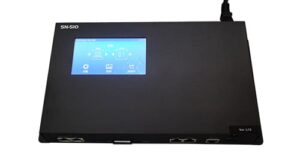
| DMX Controller | Generates and sends the lighting commands. | The "brain" of your lighting show. Stores and plays scenes. |
| Wall Washer | Receives DMX signal and produces light. | The "brush" you use to paint the facade. |
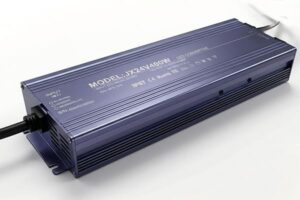
| Power Supply | Converts AC mains to DC24V for the lights. | Provides stable, clean power for reliable performance. |
| DMX Cables | Carries the data signal between fixtures. | Use proper shielded cable to prevent signal interference. |
How Do You Install a Wall Washer Light?
You have the perfect lights, but a poor installation can ruin everything. Incorrect aiming creates ugly hotspots, and bad wiring can lead to water damage and fixture failure. A methodical approach is key.
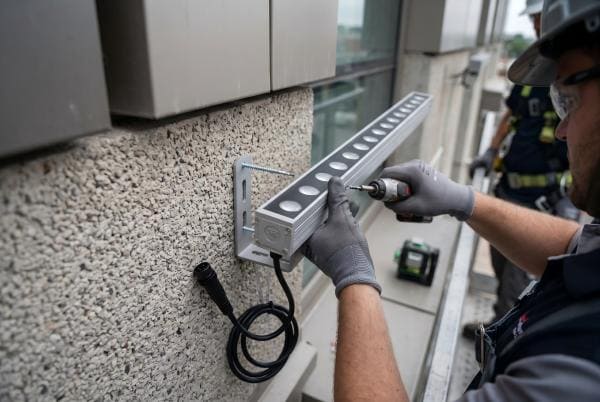
Installation involves mounting adjustable brackets to the surface, attaching and aiming the fixture, and then connecting the waterproof power and DMX cables in a daisy chain from one light to the next.
Mounting and Aiming
Each wall washer comes with adjustable mounting brackets. The first step is to securely bolt these brackets to the mounting surface at the correct spacing as specified in the lighting plan. Once the brackets are in place, you mount the fixture to them. The key is that these brackets allow you to tilt the fixture. The final, critical step is aiming. This should always be done at night. One person adjusts the tilt angle while another person stands back to judge the effect on the wall. You adjust it until the wash is perfectly smooth and covers the desired area.
Wiring for Power and DMX
The wiring must be as robust as the fixtures themselves.
- Daisy Chain: As described earlier, you connect the DMX signal from one light to the next. The power is often run in a similar way, but you have to watch for voltage drop.
- Power Injection: On a long run of DC24V lights, the voltage will decrease. To prevent the lights at the end of the line from being dim, you must inject fresh power from a power supply every 20-30 meters.
- Waterproof Connections: This is non-negotiable. Use the provided IP67-rated connectors for both power and DMX. Make sure they are tightened fully. Any custom splices must be done in a proper waterproof junction box. I have seen too many jobs fail because of a single bad connection letting in water.
| Step | Action | My Professional Tip |
|---|---|---|
| 1. Measure & Mark | Mark the exact location for each mounting bracket based on the design. | Use a laser level to ensure all your lights will be in a perfectly straight line. |
| 2. Mount Brackets | Securely fasten the brackets to the surface. | Use stainless steel hardware to prevent rust. |
| 3. Attach Fixture | Bolt the wall washer to the brackets, leaving the tilt bolts loose for now. | It's often easier to attach the pigtail cables on the ground first. |
| 4. Connect Cables | Connect the DMX and Power cables in a daisy chain. | Always test each section of the run as you complete it. |
| 5. Aim at Night | Power on the lights and adjust the tilt angle for the perfect wash. | Once aimed, tighten all bolts securely so the position doesn't slip. |
FAQ
What is the difference between a wall washer and a floodlight?
A wall washer creates a long, linear, and even sheet of light, ideal for washing large, flat surfaces smoothly. A floodlight produces a more circular or square cone of light, better for illuminating specific objects, trees, or smaller areas.
How far from the wall should I place a wall washer?
This is the "setback distance." It depends on the wall height and beam angle, but a common rule of thumb is to set the fixture back 1/3 of the wall's height. For a 9-meter wall, you would place it 3 meters back. For grazing, it's much closer, often less than 1 meter.
How many wall washers can I connect in one DMX line?
A single DMX universe supports 512 channels. An RGBW fixture uses 4 channels. So, you can theoretically connect up to 128 fixtures. In practice, it's wise to use a DMX signal amplifier after every 32 fixtures to ensure a strong signal.
Is IP65 enough for coastal or very wet areas?
IP65 is suitable for most outdoor applications, including heavy rain. For coastal areas with salt spray or locations where fixtures might be temporarily submerged, upgrading to an IP67-rated fixture is recommended.
Can I get these lights in a specific white color?
Yes. Besides the DMX RGBW version, you can order these in a variety of static white color temperatures (CCT), such as warm white (3000K) for a classic look or cool white (6000K) for a modern feel.
What causes uneven light or "scallops" on the wall?
Scalloping is caused by placing the fixtures too far apart for their beam angle. The light from each fixture doesn't overlap enough. To fix this, you either need to move the fixtures closer together or use a fixture with a wider beam angle.
What is a DMX terminator?
A DMX terminator is a small resistor placed on the "DMX Out" port of the very last fixture in a daisy chain. It's essential for preventing signal reflections that can cause the lights to flicker or behave erratically.
Do I need to clean the lights?
Yes. Over time, dirt and grime will build up on the glass cover, reducing the light output. For a permanent installation, you should plan to clean the fixtures once or twice a year to keep them performing at their best.