What Is an LED Wall Washer Light for Facade Lighting?
You want to light up a building facade, but the result is often patchy and uneven. The building ends up with distracting hot spots and dark areas, looking unprofessional and cheap.
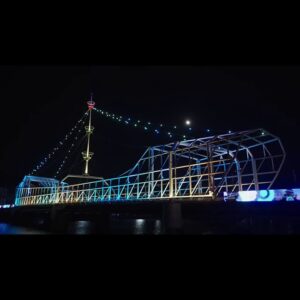
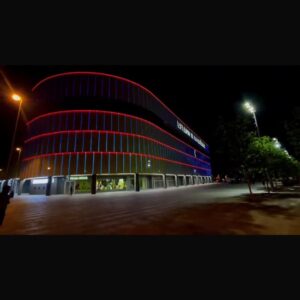
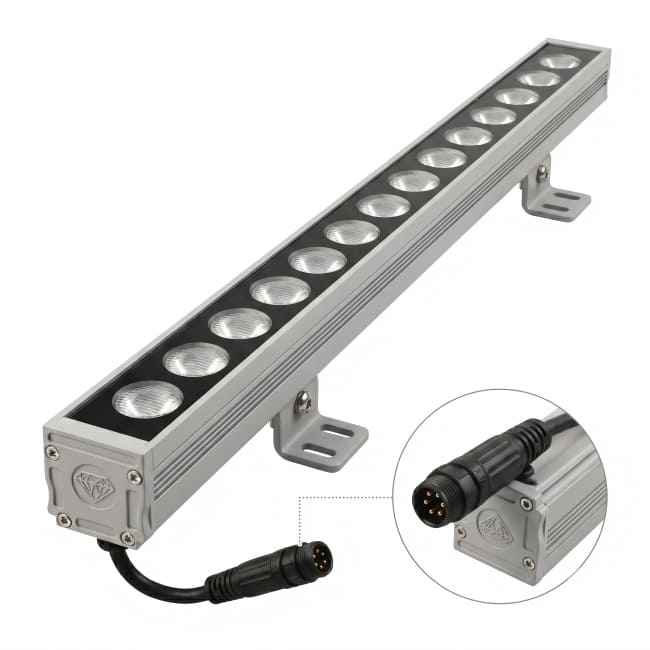
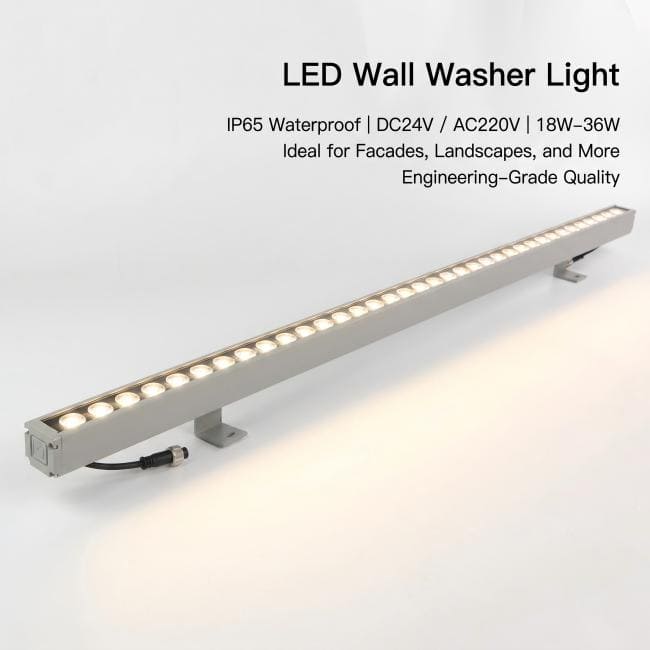
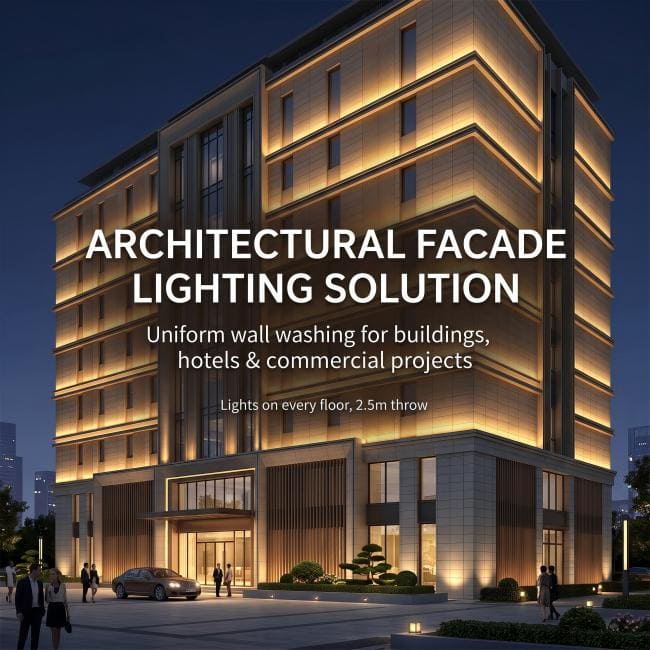
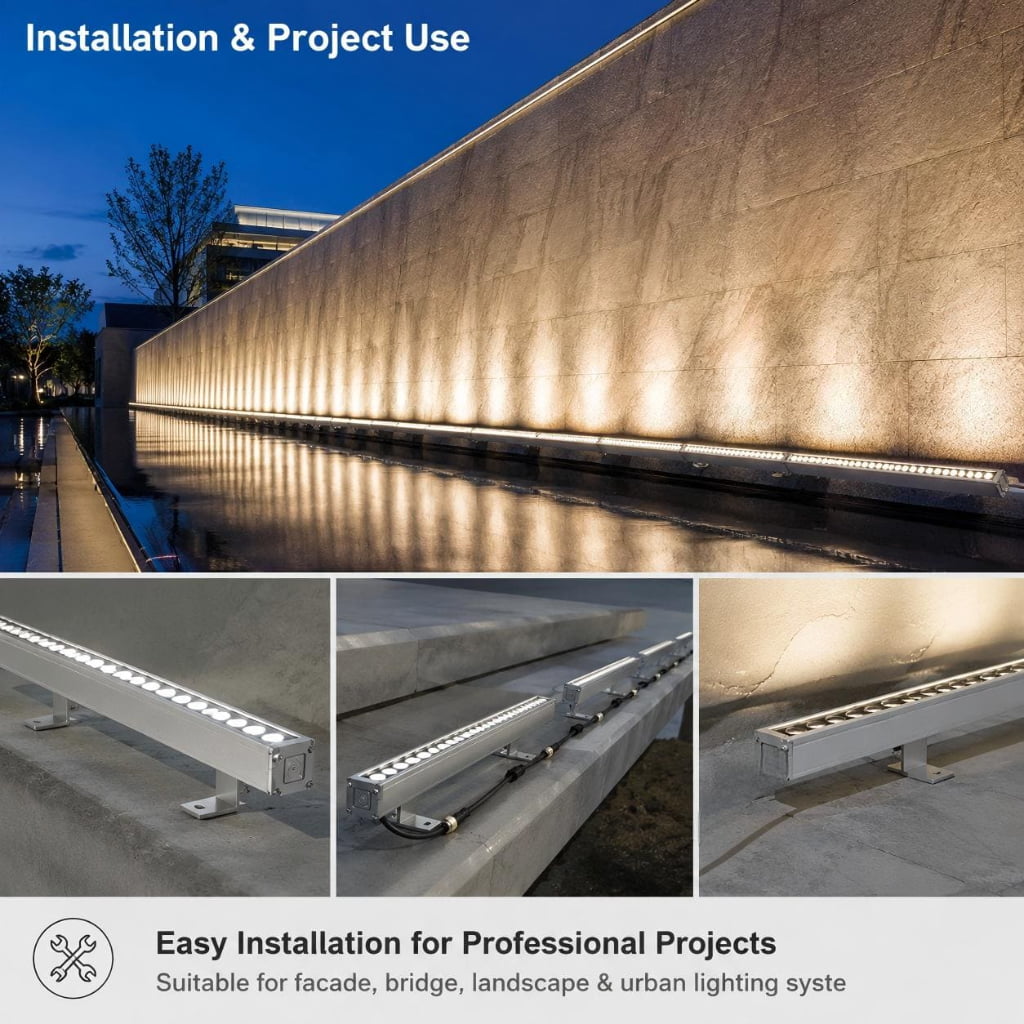
An LED wall washer is a linear lighting fixture designed to create a smooth, powerful, and uniform sheet of light across a large vertical surface. It uses specialized optics to "wash" a wall with light, eliminating shadows and highlighting architectural textures beautifully.
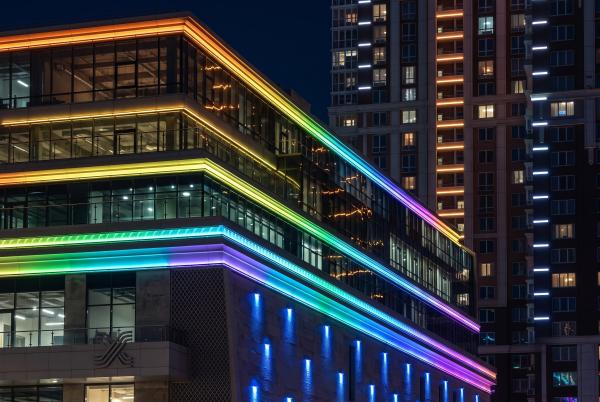
I've used wall washers on countless projects, from historic stone buildings to modern glass towers. When chosen and installed correctly, they are the single most effective tool for transforming a flat, dark facade into a dramatic and elegant statement piece. Let's explore what makes a great wall washer for your next project.
What Are Its Key Technical Specifications?
The spec sheet for a wall washer is full of numbers. Choosing the wrong power, voltage, or material can lead to a failed installation, costing you time, money, and your client's trust.
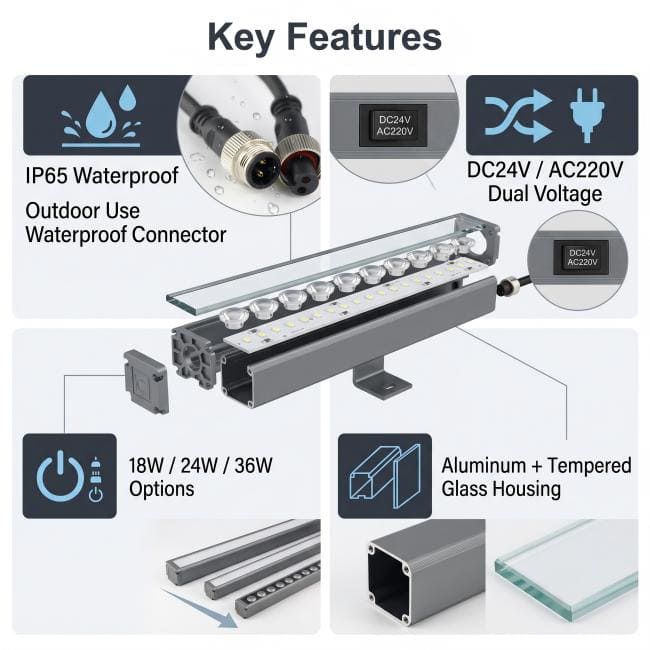
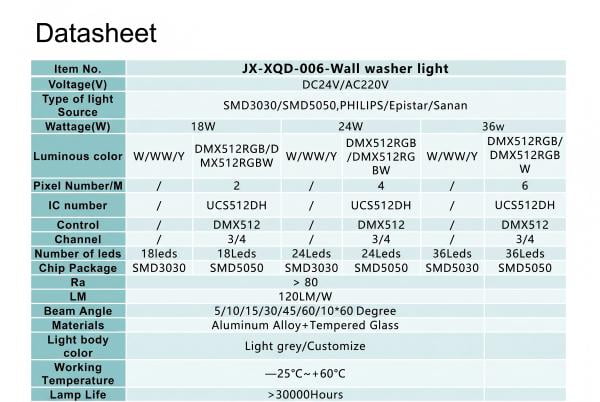
This is a professional-grade, one-meter wall washer available in 18W to 48W options. It runs on safe DC24V power, is built from durable aluminum with a tempered glass cover, and is fully IP65 waterproof for any outdoor condition.
Power, Voltage, and Durability
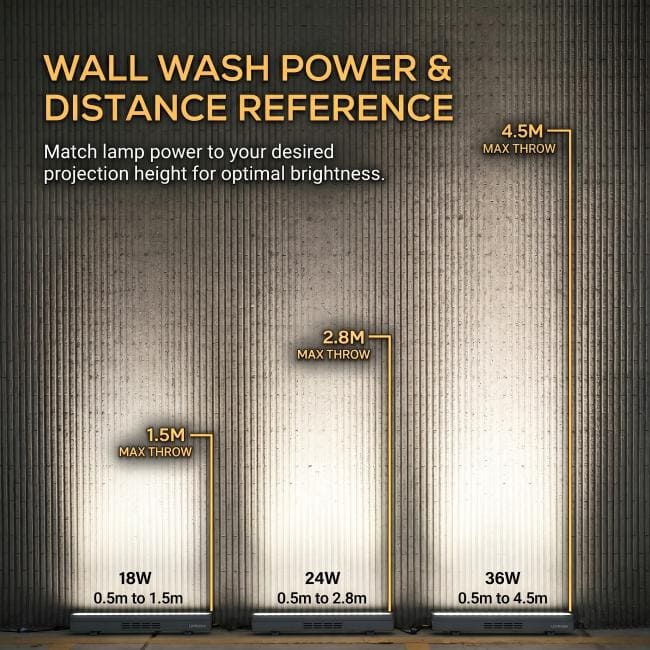
This fixture offers power options from 18W up to 48W, allowing designers to specify the exact brightness needed for a project. I typically use 24W for walls up to 10 meters and go up to 36W or 48W for taller structures. It runs on DC24V, which is my standard for most facade jobs. It's safer to work with and reduces issues with voltage drop over long runs compared to 12V.
The construction is top-notch for outdoor use. The body is extruded aluminum, which acts as a massive heat sink to keep the LEDs cool and extend their lifespan. The front is protected by strong tempered glass, not cheap plastic that will yellow in the sun. With an IP65 rating, it's fully sealed against dust and rain, a must-have for reliable, long-term performance. I’ve seen these lights endure monsoons in Southeast Asia without a single failure.
Advanced Color and Control
This wall washer isn't just about white light. The DMX512 RGBW version is a game-changer. "RGBW" means it has separate chips for Red, Green, Blue, AND a dedicated White. This gives you millions of saturated colors plus a pure, high-quality white that you can't get from mixing RGB alone. It's all controlled via DMX512, the global standard for professional lighting, giving you full creative freedom.
| Specification | Value / Description | Importance for Your Project |
|---|---|---|
| Power Options | 18W / 24W / 36W / 48W | Flexible brightness for different wall heights and effects. |
| Input Voltage | DC24V | Safe, efficient, and good for long cable runs with proper planning. |
| IP Rating | IP65 | Ensures the fixture is protected from rain and dust for outdoor use. |
| Materials | Aluminum + Tempered Glass | Provides excellent heat dissipation and durability against weather. |
| Control | DMX512 RGBW | Allows individual control of each fixture for dynamic color scenes. |
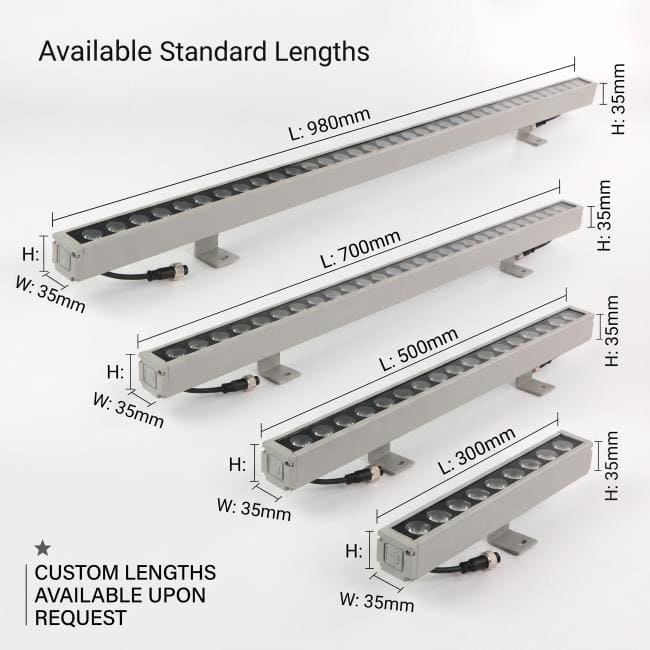
| Size | 35 x 35 x 980 mm | Slim and standard 1-meter length for seamless integration. |
How Do You Choose the Right Beam Angle?
You installed a wall washer, but the effect is wrong. The light either forms a narrow, harsh stripe or a weak, diffused glow that doesn't even reach the top of the wall.
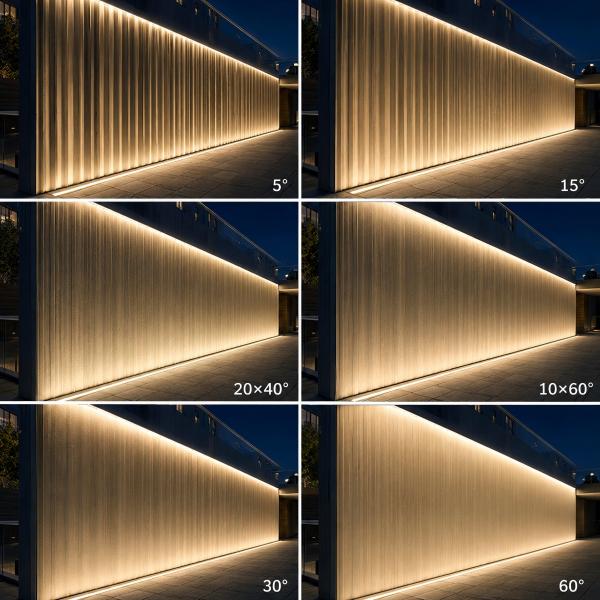
*Choose a narrow beam angle (like 10°) for lighting tall buildings or projecting far. Use a wide angle (like 60°) for short walls or when fixtures are close. Use an asymmetrical angle (like 1060°) for the most even grazing effect.**
Narrow Beams for Height and Punch (5°, 10°, 15°)
When you need to throw light a long way, you need a focused, narrow beam. Think of it like a spotlight. I use 5° or 10° beams to light up columns, flagpoles, or the top floors of a skyscraper from a distance. These angles concentrate all the light's power into a tight beam, ensuring it has enough punch to reach its target. This creates strong, dramatic vertical lines that can make a building look taller and more impressive.
Wide Beams for Smooth Washes (30°, 60°)
When the fixture is placed close to a shorter wall, a wide beam is your best friend. A 30° or 60° angle spreads the light out over a large area, creating a soft, even wash. This is perfect for lighting the lower levels of a building, landscape walls, or any area where you want a broad field of light without harsh edges. The wide beam helps to blend the light from one fixture to the next, creating a continuous, seamless effect.
Asymmetrical Beams for Perfect Grazing (10x60°, 20x40°)
This is the professional's secret weapon for perfect wall grazing. An asymmetrical lens is specially designed to be placed very close to the base of a wall. It shapes the light so it throws a narrow beam straight up the wall (the 10° or 20° part) while also spreading it wide horizontally (the 40° or 60° part). This technique provides the most even illumination from top to bottom, beautifully highlighting the texture of brick or stone without creating a bright "hot spot" at the base.
| Beam Angle | Best Use Case | Fixture Placement | Resulting Effect |
|---|---|---|---|
| 5° - 15° | Tall Structures, Columns | Far from the wall | Strong, narrow beam, high punch |
| 30° - 60° | Short Walls, General Wash | Closer to the wall | Soft, wide, even field of light |
| 10° x 60° | Wall Grazing (any height) | Very close to the wall | Perfectly uniform light from top to bottom |
How Does DMX512 Control Work for RGBW Wall Washers?
Your client wants a dynamic facade that can change colors for holidays or events. A simple on/off switch won't do the job, and you're worried that programming will be too complex.
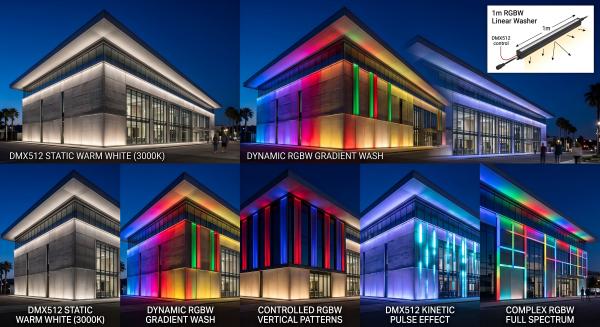
DMX512 gives every single wall washer a unique address. A central controller sends commands to each address, allowing you to change the color and brightness of each light independently to create stunning, synchronized scenes.
The Power of Addressable Control
Think of DMX like a mail delivery system. Each wall washer has its own house number, or "DMX address." The DMX controller is the post office, sending out letters (commands) to every house. Each light only opens and reads the mail addressed to it. This means you can tell fixture #1 to be red, fixture #2 to be blue, and fixtures #3 through #10 to be white. This individual control is what allows lighting designers to "paint" with light, creating everything from simple color fades to complex, video-like effects that flow across the building.
The RGBW Advantage
The "W" in RGBW is critically important for high-quality architectural lighting. Standard RGB lights create white by mixing red, green, and blue at full power. The result is often a cool, bluish-white with poor color rendering. An RGBW fixture includes a dedicated white LED chip. This gives you two major benefits:
- Pure, High-Quality White: You get a true, crisp white light that is perfect for elegant, everyday illumination.
- Pastel Colors: By mixing the dedicated white with the RGB colors, you can create a beautiful range of soft pastel shades that are impossible to achieve with RGB alone.
| DMX Channel | Function | What It Controls |
|---|---|---|
| 1 | Master Dimmer | Overall brightness of the fixture (0-100%) |
| 2 | Red Intensity | Brightness of the red LED chip (0-100%) |
| 3 | Green Intensity | Brightness of the green LED chip (0-100%) |
| 4 | Blue Intensity | Brightness of the blue LED chip (0-100%) |
| 5 | White Intensity | Brightness of the white LED chip (0-100%) |
How Are These Wall Washers Installed on a Facade?
You need to mount dozens of lights on a high-rise building. You're worried about alignment, secure mounting, and making sure the wiring is weatherproof and reliable for years to come.
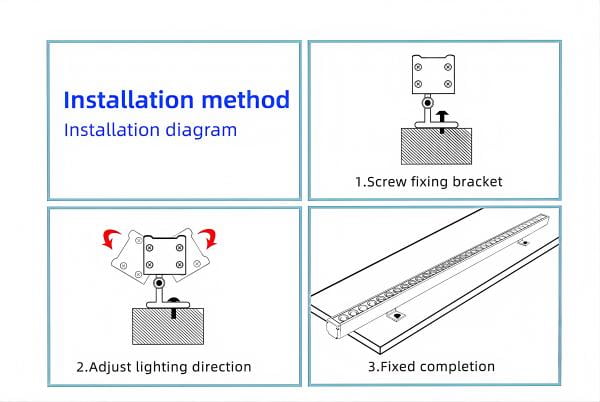
Wall washers are installed using adjustable mounting brackets that are screwed directly to the facade. The fixtures are aimed, locked in place, and then connected in a daisy chain using waterproof DMX and power cables.
Mounting Brackets and Aiming
The key to a good installation is the hardware. These fixtures come with sturdy, adjustable brackets. The process is simple and repeatable for your crew. First, you mount the brackets to the wall at the specified spacing. Then, you attach the wall washer to the brackets. Before tightening everything down, you power on the light and physically tilt it until the beam is aimed perfectly on the wall. On a recent hotel project, we spent an entire evening just aiming the lights to avoid any glare into guest room windows. Once the angle is perfect, you lock the bracket's bolts, and it will hold that position for years.
Cabling for Power and Data
A professional installation is a clean and reliable one. For DMX control, you run a special DMX cable from the controller to the first light, then from that light to the next, and so on, in a "daisy chain." Each fixture has a waterproof DMX input and output connector.
- Plan Your Runs: Never exceed the DMX limit of 32 fixtures per run without a signal booster.
- Waterproof Everything: Make sure every single cable connection is screwed on tight. A single loose connection can let water in and take down the whole line.
- Use a Terminator: The very last fixture in a DMX chain must have a DMX terminator plug. This simple plug prevents signal reflections that can cause the lights to flicker or behave erratically. It's a small step that solves 90% of DMX troubleshooting issues.
FAQ
What is the difference between a wall washer and a flood light?
A wall washer uses special optics to create a long, linear, and uniform sheet of light. A flood light creates a broad, circular or square patch of light. Use a wall washer for even illumination on a flat surface and a flood light to highlight a specific object like a tree or statue.
What does RGBW mean and why is it better than RGB?
RGBW stands for Red, Green, Blue, White. It means the fixture has a dedicated white LED chip in addition to the three color chips. This provides a much purer, higher-quality white light and allows for the creation of soft pastel colors.
How far apart should I space my wall washers?
This depends on the beam angle and your distance from the wall. As a general rule, for a seamless line of light, place the fixtures with very little or no gap between them. For wider beams from a distance, you might space them up to 30cm apart.
Is DC24V or AC220V better for my project?
DC24V is safer to work with and is better for managing long, complex runs with DMX control. AC220V can be simpler for very small projects as it connects directly to mains power without needing external power supplies, but it's less flexible.
What is a DMX terminator and why do I need one?
A DMX terminator is a small plug that goes into the DMX output of the last fixture in a chain. It absorbs the DMX signal, preventing it from reflecting back down the cable and causing errors like flickering or random color changes. It is absolutely essential for a stable system.
Can I control these lights with my phone?
Yes, with the right hardware. You would need a DMX controller that is WiFi-enabled and has a companion app. This allows you to trigger pre-programmed scenes and change colors from a smartphone or tablet.
How many wall washers can be on one DMX line?
The DMX512 standard allows for up to 32 fixtures in a single daisy chain. If you need more, you must use a DMX signal amplifier or opto-splitter to create a new, separate run.
What is the lifespan of this fixture?
With a solid aluminum body for heat dissipation and high-quality LEDs, this fixture is rated for approximately 50,000 hours of operation. If used 12 hours a night, that is a lifespan of over 11 years.
Is it hard to program a DMX show?
For simple scenes, it's quite easy using most DMX controller software. Creating complex, synchronized video-like effects requires a skilled programmer, but setting up static colors, slow fades, or simple chases can be learned quickly.