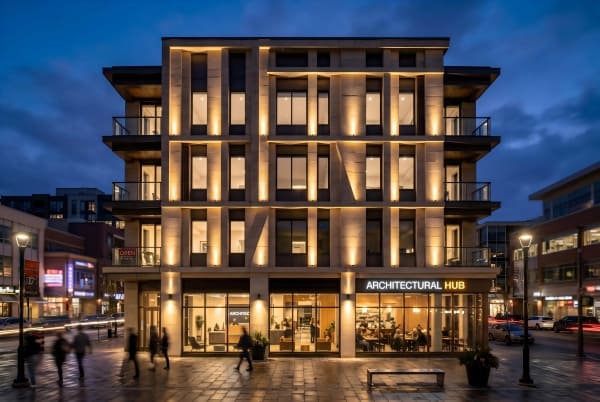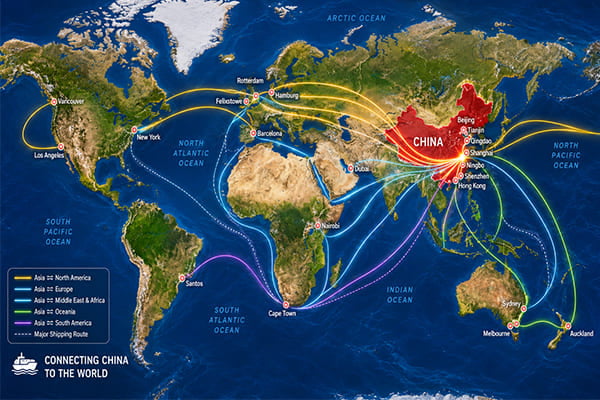
Your building is just a static structure, easily lost in the city skyline. This passive presence costs you attention and potential revenue, making it just another expense instead of an asset.
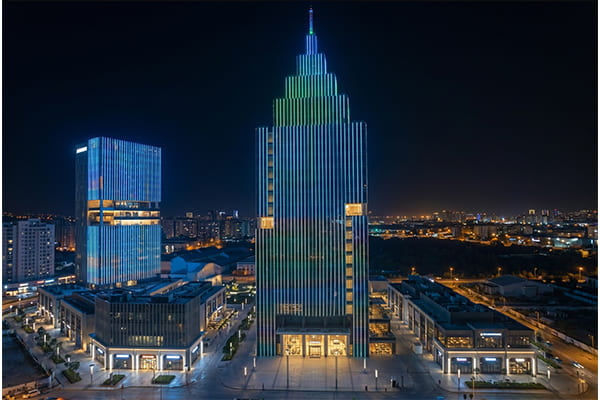
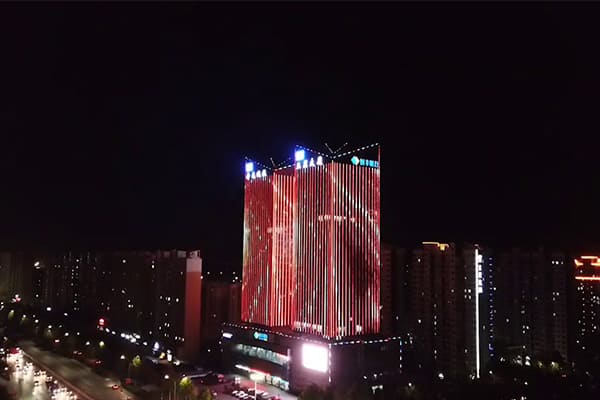
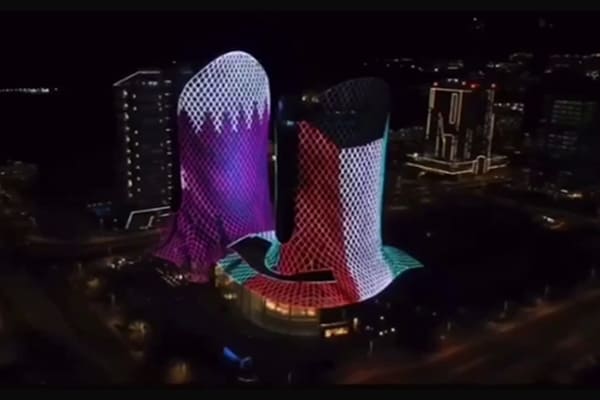
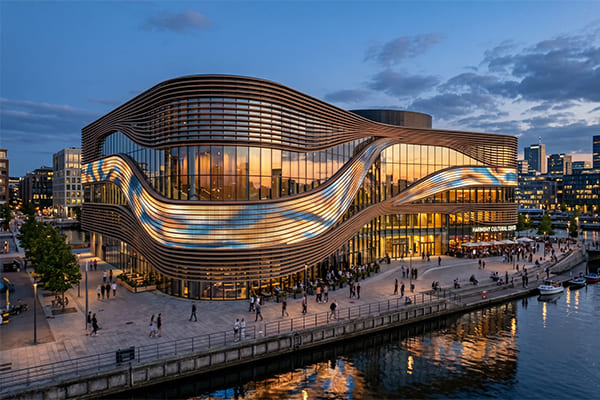
Yes, a media facade transforms your building into a dynamic, high-impact marketing asset1. By integrating programmable LED systems like transparent mesh or pixel lights, it creates stunning visual displays. This directly attracts customers, generates advertising income, and boosts your property's overall brand value.
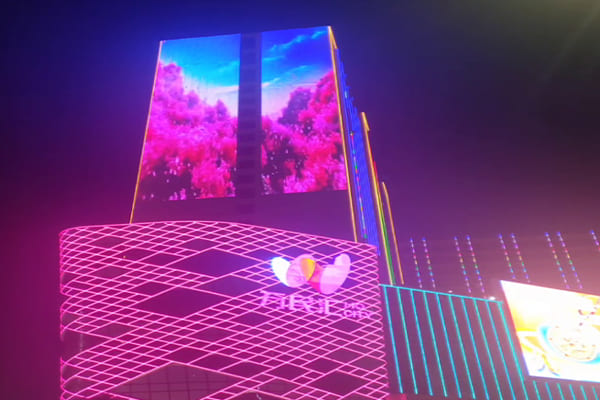
I’ve seen firsthand how a building can go from being completely overlooked to becoming the talk of the town. The difference isn't a change in architecture; it's a change in how the architecture communicates. In the past, lighting was just about making a building visible at night. Today, it’s about giving that building a voice. This shift from simple illumination to a digital asset is a huge opportunity. Let's explore how this technology works and what it can mean for your commercial property. This change is not just about looking good; it's about unlocking a new level of commercial value.
How Does the Technology Actually Transform a Building?
Worried that complex technology might ruin your building's design? The installation can seem complex, and you fear it won’t blend well. We use smart technology that respects your architecture.
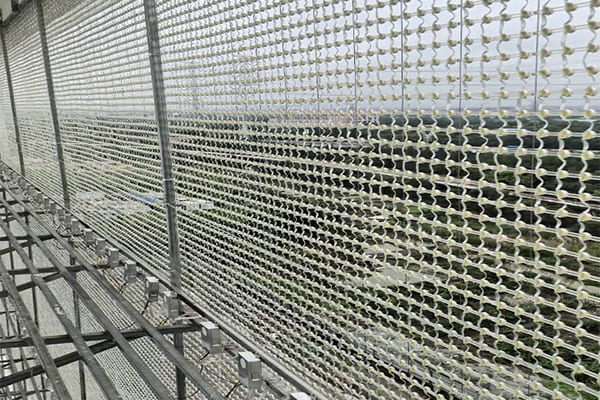
The technology uses advanced control systems like DMX5122 to synchronize thousands of individual lights. For glass walls, we use transparent LED mesh3. For complex shapes, we use flexible pixel lights. This approach ensures a seamless look while delivering high-quality visuals without compromising the building's original design.
When my team and I start a media facade project, we don't just think about lights. We think about integration. The goal is to make the technology feel like a natural part of the building itself. This requires a deep understanding of both the architectural vision and the technical components that bring it to life. The magic is in how these pieces work together to create a single, cohesive visual canvas.
The Core Components of a Media Facade
At its heart, a media facade system has three main parts: the LED fixtures, the control system, and the power supply4. The LED fixtures are the "paintbrushes"—they create the light and color. The control system is the "artist," telling each light exactly what to do and when. And the power supply is the lifeblood, ensuring everything runs smoothly and reliably. We often use protocols like DMX512 or SPI. Think of DMX512 as the conductor of a huge orchestra. It sends signals that ensure every single light, out of potentially thousands, changes color or brightness at the exact same millisecond. This perfect synchronization is what allows us to play smooth, high-definition video across an entire building face without any lag or glitches.
Choosing the Right LED for Your Surface
Not all buildings are the same, so the technology can't be one-size-fits-all. The choice of LED fixture is critical and depends entirely on the building's surface material and structure. Getting this right is key to achieving a "see the light, not the lamp" effect.
| Building Surface | Recommended Solution | Key Benefit |
|---|---|---|
| Glass Curtain Wall | Transparent LED Mesh | It maintains 30-80% transparency5, so people inside can still see out and natural light can come in. |
| Solid Concrete Wall | LED Wall Washers / Floodlights | These provide powerful, even washes of color, ideal for highlighting large, flat architectural surfaces. |
| Irregular or Curved Shape | Flexible Pixel Lights (Dot Lights)6 | These individual points of light offer complete design freedom and can be arranged to fit any curve or contour. |
| Large-Scale Video Display | Media Mesh Screens | These grid-like LED panels are perfect for displaying lower-resolution video content over vast areas. |
Finally, durability is non-negotiable. All our outdoor products have an IP67 rating7. In simple terms, this means they are completely sealed against dust and can handle heavy rain and storms. A media facade is a long-term investment, and it needs to perform flawlessly day in and day out, no matter the weather.
Can a Media Facade Really Generate Direct Revenue?
Your building's exterior is currently a maintenance cost. It just sits there, not contributing to your bottom line. We can help you turn that expensive wall into a money-making machine.
Absolutely. A media facade generates direct revenue by turning your building into a premium advertising space8. You can rent it out for brand launches, digital art, or commercials. It also indirectly boosts revenue by drawing more foot traffic to your hub, which benefits all your tenants.
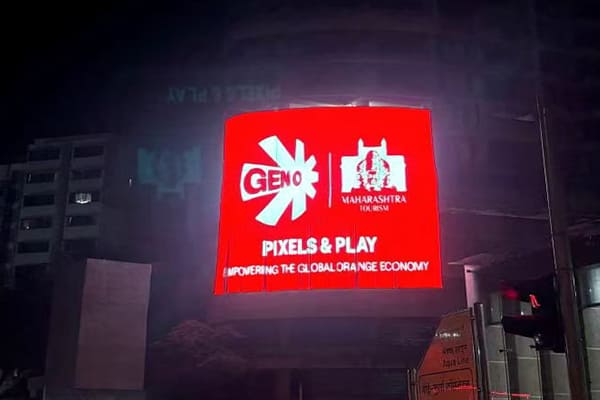
I remember a client who owned a large shopping mall in a competitive downtown area. The building was beautiful, but it blended in. The exterior walls were just a cost—cleaning, repairs, and basic lighting. After we installed a dynamic media facade, everything changed. That wall went from a line item in the expense column to the top line in the revenue column. It’s a clear example of how to turn a static part of a building into an active, profitable asset.
Pathways to Monetization
The transformation from a "cost center" to a "profit center" happens through several clear pathways. It’s not just about making the building look cool; it’s about creating a tangible financial return. Here are the most common ways our clients monetize their new digital assets:
- Direct Advertising Sales: This is the most straightforward route. You can sell screen time to other companies. Luxury brands, car manufacturers, and movie studios pay premium rates to advertise on landmark buildings in high-traffic areas.
- Sponsorships & Long-Term Partnerships: Instead of short-term ads, you can partner with a major brand for long-term sponsorship. They might get exclusive rights to the facade for a year, co-branding the building and creating a powerful marketing association.
- Event-Based Rentals: The facade becomes a centerpiece for city-wide events. Think about renting it out for New Year's Eve countdowns, major sporting events, or large-scale product launches. These high-profile events command very high rental fees.
- Enhanced Tenant Value and Higher Rents: A building with a landmark media facade is a destination. This increased foot traffic directly benefits retail tenants9 on the ground floor, justifying higher rents across the property10. The building's enhanced profile and prestige make it a more desirable address for all tenants.
Financial Impact: Before vs. After
The fundamental role of the building's facade changes. Let's look at a simple comparison of the financial shift.
| Metric | Standard Building Facade | Building with a Media Facade |
|---|---|---|
| Primary Function | Shelter & Basic Aesthetics | Marketing & Revenue Generation |
| Financial Role | Cost Center (Maintenance) | Profit Center (Ad Revenue, Higher Rent) |
| Customer Traffic | Passive / Incidental | Active Attraction (A Destination) |
| Property Value | Stable / Market-Dependent | Significantly Increased (Landmark Status) |
The shopping mall client I mentioned earlier saw their weekend foot traffic increase by over 30% in the first six months. The facade became a local selfie spot. They secured a year-long sponsorship deal with an automotive brand that covered the entire cost of the installation and turned a profit in its first year of operation. This is the power of turning your building into a high-impact asset.
What Makes a Media Facade Project Truly Successful?
You've seen bad lighting projects. They are too bright, the colors are off, and they annoy everyone nearby. You worry your investment will become an ugly eyesore. A great project is about smart, balanced design.
A truly successful project seamlessly blends technology with the building's architecture. It focuses on high-quality visuals, stable long-term operation, and responsible design. This means involving lighting experts early11, choosing reliable components, and creating content that enhances the city, not just creates light pollution.
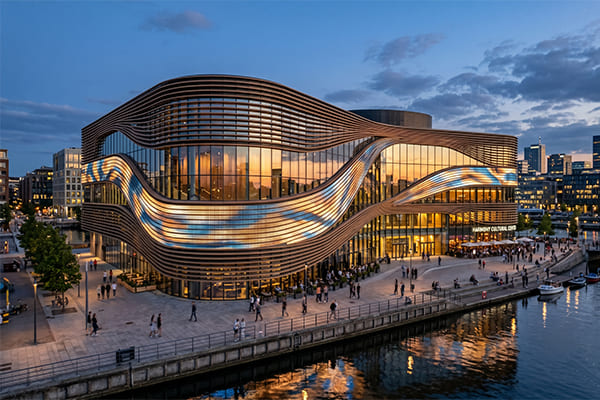
The difference between a stunning media facade and a glaring mistake often comes down to planning and philosophy. A project's success is determined long before the first light is ever installed. In my experience, the best results happen when we are brought into the conversation at the very beginning, during the architectural design phase. When lighting is treated as an integral part of the building's design, rather than an add-on, the result is a beautiful, cohesive, and effective installation that adds real value for decades.
Key Factors for a High-Return Installation
A successful media facade is more than just bright. It's intelligent, beautiful, and sustainable. It respects its environment while capturing attention. Here are the critical factors that we focus on to ensure a project delivers a strong return on investment. It's about getting the technical details right to serve the larger aesthetic and commercial goals.
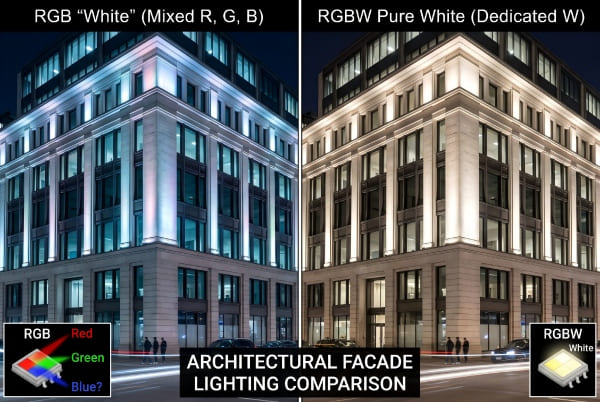
- Balancing Color and Efficiency: Achieving beautiful, accurate colors is crucial. We specify control systems that include a separate channel just for pure white light (a W channel). This works with the DMX512 protocol to give us a high Color Rendering Index (CRI of 80 or more), meaning colors look natural and vibrant12. This setup also allows for much more efficient and nuanced dimming, which saves energy.
- Avoiding Light Pollution: A responsible facade isn't always the brightest one. It's the smartest. We program our systems to adjust brightness automatically based on the time of day and the amount of ambient light. This ensures the display is always visible but never overwhelming. It respects the night sky and the surrounding community, which is essential for maintaining public goodwill and avoiding regulatory issues.
Your Project Success Checklist
To help our clients navigate the process, I often share a simple checklist. Thinking through these points early on can prevent major headaches later and ensures the final result meets everyone's expectations.
- [ ] Early Collaboration: Have you involved lighting specialists during the architectural design (CAD) phase?
- [ ] Component Reliability: Are you prioritizing components with proven durability, like an IP67 waterproof rating?
- [ ] Quality of Light: Does your plan include specifications for high CRI (≥80) and smart dimming controls?
- [ ] Content Strategy: Do you have a plan for the content that will be displayed, not just the hardware?
- [ ] Environmental Responsibility: Have you implemented a strategy to manage brightness and prevent light pollution?
Ultimately, a well-planned, high-quality media facade is a hard-working asset that delivers value 24/7. A poorly planned one quickly becomes an expensive liability. Quality is what determines the long-term return.
Conclusion
A media facade is more than just lights. It is a strategic investment that turns your building into a powerful marketing tool, a direct revenue generator, and a memorable city landmark.
"Media Facades and Urban Media Environments – Developments of ...", https://www.academia.edu/27692192/Media_Facades_and_Urban_Media_Environments_Developments_of_Art_Practices. Urban media architecture and digital out-of-home signage literature describes building-scale displays as communication surfaces that can increase public visibility and support advertising or branding functions. Evidence role: general_support; source type: research. Supports: A media facade can turn a building exterior into a dynamic marketing asset.. Scope note: This supports the general commercial function of media facades, not the financial outcome of any specific installation. ↩
"RDM (lighting) - Wikipedia", https://en.wikipedia.org/wiki/RDM_(lighting). The DMX512 standard is widely documented as a digital communication protocol for controlling stage and architectural lighting equipment, including multiple fixtures over a control network. Evidence role: definition; source type: institution. Supports: DMX512 is a control protocol used to synchronize lighting fixtures in media facade systems.. Scope note: The standard establishes the control method; performance at the scale of thousands of lights depends on system design and hardware implementation. ↩
"Complete Analysis of 4 Mainstream LED Transparent Screen ...", https://www.doitvision.com/mainstream-led-transparent-screen/. Research and technical descriptions of transparent display technologies explain that mesh or sparse LED arrangements can display images while preserving partial visual transparency through the facade. Evidence role: mechanism; source type: research. Supports: Transparent LED mesh can be used on glass facades to provide visual displays while retaining some see-through quality.. Scope note: Transparency and image quality vary by product pitch, LED density, brightness, and installation conditions. ↩
"LED Lighting Benefits - Energy Management - IUP", https://www.iup.edu/energymanagement/howto/led-lighting-benefits.html. Technical guides to LED lighting systems identify the luminaire or LED module, control electronics, and power supply/driver as core elements required for controlled LED installations. Evidence role: definition; source type: education. Supports: A basic media facade lighting system consists of LED fixtures, control systems, and power supply components.. Scope note: Large media facades may also require additional infrastructure such as data distribution, mounting systems, sensors, and content servers. ↩
"Difference between Transparent Flexible Media Mesh Facade and ...", https://www.3cinno.com/pl/transparent-media-facade-difference-with-other-screens/. Studies and technical literature on transparent LED and mesh display systems report that transparency is a key design parameter determined by pixel pitch, aperture ratio, and LED density, with practical products spanning a wide range of transmittance values. Evidence role: statistic; source type: research. Supports: Transparent LED mesh can preserve partial transparency, commonly expressed as a percentage transmittance range.. Scope note: A precise 30–80% range may need verification from non-vendor technical data or multiple product-independent sources, because transparency varies substantially by system design. ↩
"Architectural Façade Lighting using pixel LED's - Advatek", https://www.advateklighting.com/blog/guides/architectural-facade-lighting-guide. Architectural lighting references describe pixel-based LED systems as individually addressable light points that can be mapped across non-rectilinear surfaces, enabling displays on irregular or curved architectural forms. Evidence role: mechanism; source type: education. Supports: Flexible pixel lights can be arranged to follow irregular or curved building shapes.. Scope note: The source would support the design principle; suitability for a particular curved facade still requires engineering review. ↩
"IP code - Simple English Wikipedia, the free encyclopedia", https://simple.wikipedia.org/wiki/IP_code. The IEC ingress protection code defines IP6X as dust-tight protection and IPX7 as protection against temporary immersion in water under specified test conditions. Evidence role: definition; source type: institution. Supports: An IP67 rating indicates dust-tight construction and a defined level of water-ingress protection.. Scope note: IP67 verifies performance under standardized test conditions and does not by itself guarantee resistance to all storms, corrosion, UV exposure, or long-term outdoor degradation. ↩
"Strategies for success - IU Digital Signage Knowledge Center", https://documentation.digitalsignage.iu.edu/documentation/measuring-success.html. Digital out-of-home advertising industry and public-sector market analyses describe large-format digital displays in high-traffic locations as advertising inventory that can be sold to brands and media buyers. Evidence role: general_support; source type: institution. Supports: A media facade can function as sellable outdoor advertising space.. Scope note: This supports the advertising-space concept, not whether a particular facade will command premium rates. ↩
"Data science for pedestrian and high street retailing as a framework ...", https://pmc.ncbi.nlm.nih.gov/articles/PMC9527144/. Retail studies commonly use pedestrian footfall as an indicator of store exposure and potential sales opportunity, showing that higher customer traffic is associated with improved retail performance under suitable conditions. Evidence role: general_support; source type: paper. Supports: Increased foot traffic can benefit retail tenants by increasing exposure and sales opportunities.. Scope note: Foot traffic does not automatically translate into sales or rent increases; tenant mix, conversion rates, pricing, and local market conditions also matter. ↩
"[PDF] A Market Feasibility Study for Rental Housing, Commercial Retail ...", https://pinecitymn.gov/vertical/sites/%7B6C78F918-835C-4B30-A7AF-EAF471BF7BB3%7D/uploads/Pine_City_Housing_Demand_Market_Study_2020_Final.pdf. Commercial real estate research links higher location quality, amenity value, and tenant demand to rent premiums, providing context for why a more visible or attractive property may support higher rents. Evidence role: general_support; source type: paper. Supports: Enhanced property visibility and desirability may support higher commercial rents when they increase tenant demand.. Scope note: This is contextual support only; it does not prove that installing a media facade alone will raise rents. ↩
"Lighting Design: Techniques to Transform Interior Spaces", https://marymount.edu/blog/lighting-design-techniques-to-transform-interior-spaces/. Architectural lighting design guidance emphasizes early coordination among architects, engineers, and lighting designers to integrate lighting performance, aesthetics, controls, and maintenance requirements into the building design process. Evidence role: expert_consensus; source type: institution. Supports: Media facade projects are more likely to be well integrated when lighting specialists participate early in design.. Scope note: Early involvement is a recognized best practice, but it does not guarantee project success without adequate budget, governance, and technical execution. ↩
"Color rendering of light sources | NIST", https://www.nist.gov/pml/sensor-science/optical-radiation/color-rendering-light-sources. Lighting standards and educational sources define the Color Rendering Index as a measure of how accurately a light source renders colors compared with a reference source, and values around 80 or above are commonly described as acceptable or good for many applications. Evidence role: definition; source type: institution. Supports: CRI measures color rendering quality, and a CRI of 80 or higher is generally associated with good color appearance.. Scope note: CRI is an imperfect metric, especially for LED sources, and high CRI does not alone determine perceived color quality on a media facade. ↩