Picking the wrong flood light wastes money and leaves your space poorly lit. Don't get stuck with a bad purchase. Let's review 10 factors to ensure you buy wisely.
To choose the right LED flood light, focus on brightness (lumens), energy efficiency (lm/W), and durability (IP rating and materials). Also, consider the beam angle for coverage and the supplier's reliability. These factors ensure you get a high-performing, long-lasting light for your needs.
Choosing the right flood light is more than just picking the brightest one on the shelf. The details really matter for performance and longevity. Let's break down each of these 10 factors so you can make an informed decision with confidence.
How Do You Choose the Right Light Quality for Your Space?
Confused by lumens, Kelvin, and watts? Choosing incorrectly can result in a space that's too dim or harsh. Let's demystify these terms for you.
Focus on lumens for brightness, not watts. Choose a higher "lumens per watt" (lm/W) for better energy efficiency. Select the color temperature (Kelvin) to create the right mood, and check the CRI for accurate color rendering.
When we talk about the quality of a light, we are really talking about three main things. First is brightness, then efficiency, and finally the color of the light itself. Getting these right is the first step to a successful lighting project. It determines if your space is welcoming, secure, or just plain visible. Let's look at each one.
1. Brightness (Lumens)
The most important rule is to look at lumens (lm), not watts. Lumens tell you how bright a light is. Watts only tell you how much energy it uses.1 A higher lumen value means a brighter light.
| Application Area | Recommended Lumens2 |
|---|---|
| Garden or Small Patio | 700–1,500 lm |
| Driveway or Building Facade | 2,000–5,000 lm |
| Large Venue or Sports Field | 10,000+ lm |
2. Power & Energy Efficiency
LED lights are much more energy-efficient than old halogen or incandescent bulbs.3 To compare efficiency, look at the "luminous efficacy4," measured in lumens per watt (lm/W). A higher number means the light gives you more brightness for less energy. I always recommend choosing products with an efficiency of at least 100 lm/W5. This will save you money on electricity bills in the long run.
3. Color Temperature (Kelvin) & CRI
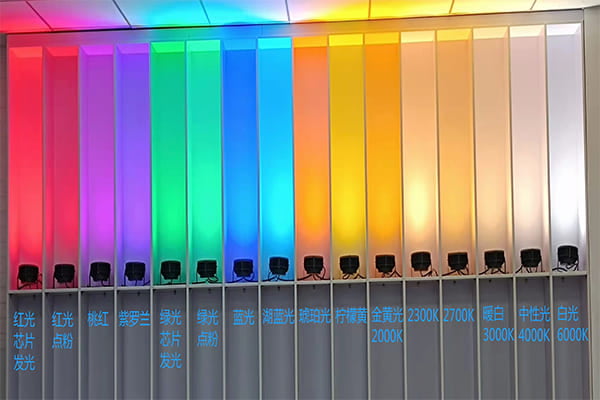
Color temperature, measured in Kelvin (K), describes the tone of the white light.6 It affects the mood of the space. The Color Rendering Index (CRI) tells you how accurately the light shows colors.7 For general use, a CRI over 70 is fine. For security cameras or sports fields, a CRI over 80 is better.
| Color Temperature | Description | Best For |
|---|---|---|
| 2700K–3500K | Warm White | Soft, cozy light for homes and gardens. |
| 4000K–5000K | Neutral White | Balanced, clear light for general outdoor areas. |
| 6000K–6500K | Cool White / Daylight | Bright, intense light for security and task lighting. |
What Physical Features Make a Flood Light Truly Weatherproof and Effective?
Worried your outdoor light won't survive the rain or cover the right area? A poor-quality fixture can fail quickly. Let's look at the features that guarantee durability.
A durable flood light needs a wide beam angle (90°-120°) for broad coverage, a die-cast aluminum body for heat dissipation, and a high IP rating (IP65 or higher) to protect against dust and water. These features ensure long-term outdoor performance.
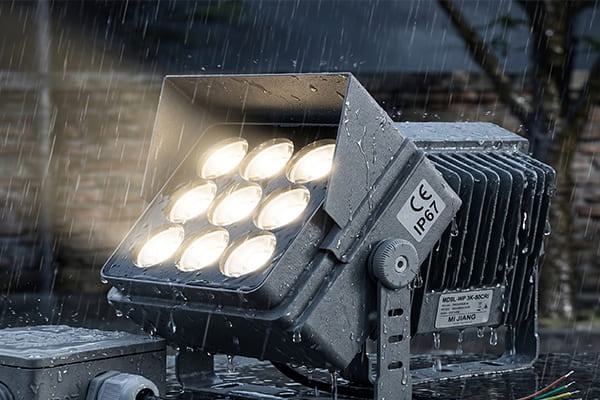
The light's performance isn't just about what's inside the chip. The physical body of the flood light is just as important, especially for outdoor use. A well-built fixture will last for years, resisting rain, heat, and dust. It also directs the light exactly where you need it. A poor one will fail at the first sign of bad weather.
4. Beam Angle
The beam angle determines how wide the light spreads. A narrow beam is for highlighting specific features, while a wide beam is for illuminating large areas.
| Beam Angle | Type | Best For |
|---|---|---|
| 5°–60° | Spotlight | Highlighting trees, statues, or architectural details. |
| 90°–120°8 | Floodlight | Lighting up driveways, building facades, and large yards. |
5. Body Material & Heat Dissipation
Outdoor lights need to be tough. The best material for the housing is die-cast aluminum. It's strong, resists corrosion, and is excellent at dissipating heat. Good heat dissipation is critical for the LED's lifespan.9 For the cover, look for tempered glass or a strong PC lens. These materials can handle impacts and temperature changes without cracking.
6. Waterproof & Dustproof (IP Rating)
The IP (Ingress Protection) rating tells you how well the light is sealed against solids and liquids.10 It has two numbers. The first is for dust protection (0-6), and the second is for water protection (0-8). For outdoor use, you need a good rating.
| IP Rating | Protection Level | Recommended Use |
|---|---|---|
| IP65 | Dust-tight and protected against water jets.11 | Standard outdoor use, can handle rain easily. |
| IP66/IP67 | Protected against powerful water jets / immersion. | Harsh environments or areas with heavy downpours. |
What Practical Details Ensure Your Flood Light is a Good Long-Term Investment?
Think you found the perfect light? Installation issues, short lifespans, or an unreliable supplier can ruin a project. Let's cover the final checks before you buy.
Ensure the voltage matches your system (AC85-265V is versatile). Check for an adjustable bracket for easy installation. Look for a long lifespan (25,000+ hours) with a solid 3-5 year warranty. Most importantly, choose an experienced and reliable supplier for quality assurance.
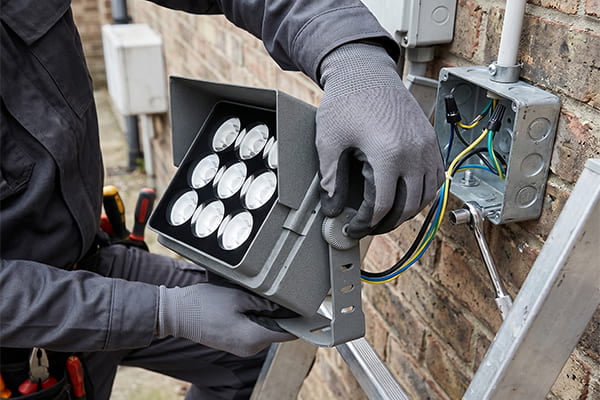
You have found a light with the right brightness, color, and build quality. Now, you need to think about the practical side of things. How easy is it to install? How long will it last? And who are you buying it from? These final factors separate a good purchase from a great one. A great flood light is not just a product, it's a reliable, long-term solution.
7. Voltage & Control Options
Check the voltage requirements. Models that support a wide voltage range like AC85-265V are very versatile and work with most electrical systems. For specific applications like solar power, a low-voltage DC24V model is safer and more suitable. You can also choose different control types. Some lights are simple on/off fixtures. Others have motion sensors, remote controls, or even DMX512 compatibility for complex, programmable lighting shows in large projects.
8. Installation Convenience
Installation should be simple. Look for a flood light with an adjustable mounting bracket. This allows you to easily aim the light exactly where you need it. Also, check that the power cable is easy to connect and that the mounting holes are standard.
9. Lifespan & Warranty
A quality LED flood light should last for a long time, often between 25,000 and 50,000 hours12. A long lifespan means you won't have to worry about replacements for years. Always check the manufacturer's warranty. A company that offers a 3-5 year warranty is confident in its product's quality.
10. Find a Reliable Supplier
This might be the most important factor. I once had a client ask me why two flood lights looked identical and had similar specs on paper, but one failed in months while the other lasted for years. The reason is the manufacturing process and the quality of the internal components. An experienced supplier has strict quality control. They use better materials and assembly techniques that you can't see from the outside. Choosing a reputable supplier is your best guarantee of getting a product that performs as promised.
Conclusion
To buy the right LED flood light, focus on brightness, durability, and a trustworthy supplier. This ensures you get a high-quality, long-lasting, and cost-effective lighting solution.
"Lumens and the Lighting Facts Label - Department of Energy", https://www.energy.gov/energysaver/lumens-and-lighting-facts-label. A lighting reference or standards source should support that luminous flux in lumens describes emitted light output, while watts measure electrical power consumption. Evidence role: definition; source type: institution. Supports: Lumens indicate light output, whereas watts indicate energy use.. ↩
"[PDF] LED Outdoor Area Lighting Fact Sheet - Department of Energy", https://www.energy.gov/sites/prod/files/2014/05/f16/outdoor_area_lighting.pdf. A lighting guidance source can provide contextual support for typical lumen ranges by application area, although exact recommendations vary with mounting height, beam spread, surface reflectance, and safety requirements. Evidence role: general_support; source type: government. Supports: Different outdoor applications require different approximate lumen ranges.. Scope note: The source may support approximate application-based lumen planning rather than the article’s exact lumen ranges. ↩
"LED Lighting | Department of Energy", https://www.energy.gov/energysaver/led-lighting. An energy-efficiency source should document that LED lamps generally use substantially less electricity than incandescent or halogen lamps for comparable light output. Evidence role: expert_consensus; source type: government. Supports: LED lights are generally more energy-efficient than halogen or incandescent bulbs.. ↩
"Luminous efficiency function - Wikipedia", https://en.wikipedia.org/wiki/Luminous_efficiency_function. A photometry or lighting-engineering source should define luminous efficacy as luminous flux per unit electrical power, commonly expressed in lumens per watt. Evidence role: definition; source type: encyclopedia. Supports: Luminous efficacy is measured in lumens per watt and compares how much light is produced per unit of power.. ↩
"[PDF] DIY Lighting with ENERGY STAR", https://www.energystar.gov/sites/default/files/ES_DIY_Lighting_Printable1_10-2015.pdf. A current LED performance benchmark or efficiency program source can contextualize 100 lm/W as a practical efficacy threshold for efficient LED products, though suitability depends on fixture type and application. Evidence role: general_support; source type: government. Supports: Choosing LED flood lights with efficacy around or above 100 lm/W is a reasonable energy-efficiency benchmark.. Scope note: The source may establish 100 lm/W as a common or high-efficiency benchmark, not as a universal minimum for every flood light. ↩
"Understanding LED Color-Tunable Products | Department of Energy", https://www.energy.gov/cmei/ssl/understanding-led-color-tunable-products. A lighting science source should explain that correlated color temperature, expressed in kelvins, describes whether white light appears warm, neutral, or cool. Evidence role: definition; source type: education. Supports: Color temperature in kelvins describes the apparent tone of white light.. ↩
"[PDF] LED Color Characteristics", https://www1.eere.energy.gov/buildings/publications/pdfs/ssl/led-color-characteristics-factsheet.pdf. A lighting standards or educational source should define the Color Rendering Index as a measure of how faithfully a light source renders object colors compared with a reference illuminant. Evidence role: definition; source type: institution. Supports: CRI measures how accurately a light source renders colors.. ↩
"LED High Bay Beam Angle Guide: 60° vs 90° vs 120° Explained", https://www.ledmyplace.com/blogs/stories/high-bay-beam-angles-explained-60-vs-90-vs-120-which-one-to-buy?srsltid=AfmBOoqdjUtEoXvFxsltOoZlRFe7DWpbqd4Lt10v-84FIAwaeNiqco43. A lighting-design reference can support that wider beam angles distribute light over larger areas, while narrower angles concentrate light, although exact classifications vary across manufacturers and standards. Evidence role: mechanism; source type: education. Supports: A 90°–120° beam angle is used for broad area coverage in floodlighting contexts.. Scope note: The evidence is likely to support the beam-angle principle rather than prove that 90°–120° is the only valid floodlight range. ↩
"[PDF] LED LUMINAIRE LIFETIME: Recommendations for Testing and ...", https://www1.eere.energy.gov/buildings/publications/pdfs/ssl/led_luminaire-lifetime-guide.pdf. An LED reliability paper or research-lab source should show that junction temperature and thermal management strongly affect LED lumen maintenance and lifetime. Evidence role: mechanism; source type: paper. Supports: Effective heat dissipation is important for maintaining LED lifespan.. ↩
"IEC 60529 - Wikipedia", https://en.wikipedia.org/?title=IEC_60529&redirect=no. An IEC or standards reference should define the IP code as a classification system for degrees of protection provided by enclosures against solid foreign objects and water ingress. Evidence role: definition; source type: institution. Supports: IP ratings describe enclosure protection against solids and liquids.. ↩
"IP code", https://en.wikipedia.org/wiki/IP_code. An IP-code reference should support that IP65 denotes complete dust protection for the first digit 6 and protection against water jets for the second digit 5. Evidence role: definition; source type: institution. Supports: IP65 means dust-tight and protected against water jets.. ↩
"LED Lighting | Department of Energy", https://www.energy.gov/energysaver/led-lighting. An energy-efficiency or lighting research source can support that LED products are commonly rated for tens of thousands of hours, often using lumen-maintenance criteria rather than sudden burnout. Evidence role: statistic; source type: government. Supports: Quality LED flood lights are often rated for approximately 25,000 to 50,000 hours of service life.. Scope note: The source may support typical LED lifetime ranges generally, while actual flood-light lifetime depends on thermal design, driver quality, operating temperature, and rating method. ↩