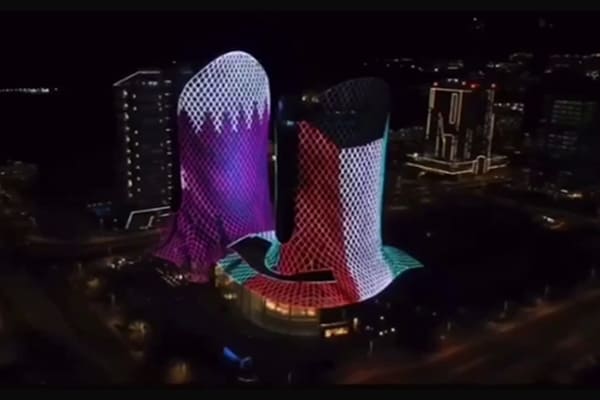
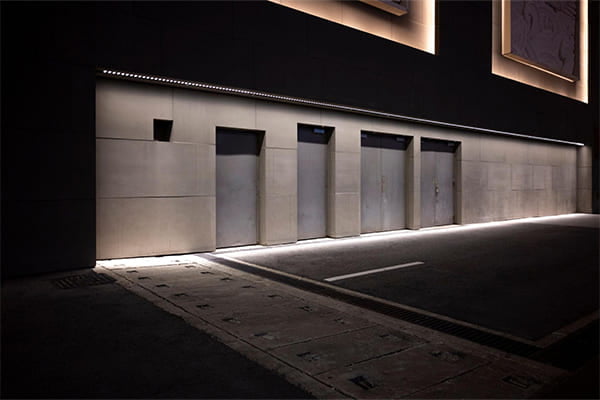
Choosing the wrong linear lights can completely ruin a building's beautiful facade. It often leads to uneven lighting, ugly color shifts, and constant expensive maintenance. Understanding the key specifications is essential.
The best facade linear lights are a balance of excellent optical performance, strong structural reliability, and long-term stability. The goal is to choose lights that offer superior lighting effects, can withstand the environment, integrate seamlessly with controls, and are built to last.
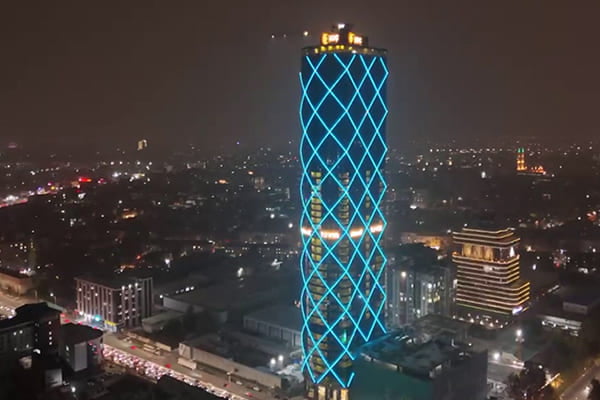
I've been in this industry for over a decade, and I've seen countless projects. The successful ones always get the technical details right from the start. It’s not just about buying a light; it's about investing in the right technology to re-sculpt the architecture at night. Many people get tempted by low prices, but those initial savings are quickly eaten up by maintenance costs down the road. Let’s dive into what truly matters, so you can make an informed choice that pays off for years.
How Do You Choose the Right Optical Performance for Your Facade?
Your building facade looks patchy and dull at night. This happens when the lights have the wrong optical properties, failing to highlight the architecture correctly and making it look flat.
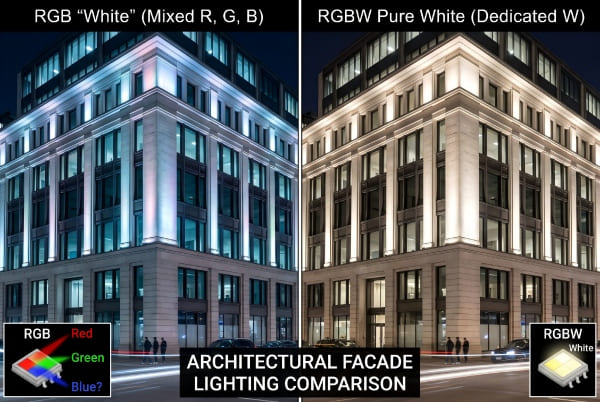
Focus on the beam angle to match the building's height, a high CRI (≥80) for true color rendering, and tight color consistency (≤5 SDCM). Also, choose an appropriate color temperature or an RGBW source for greater flexibility.
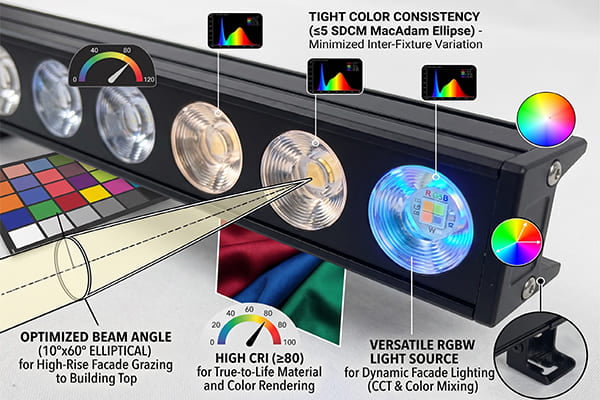
When we talk about the "look" of the light, we are talking about optics. This is where a project can either shine or fail spectacularly. It’s about more than just being bright; it’s about precision. In my experience, getting the optics right is the first step to a breathtaking result. It's how you use light to tell a story on the building's surface. Let's break down the most critical optical factors you need to consider.
Beam Angle Design is Everything
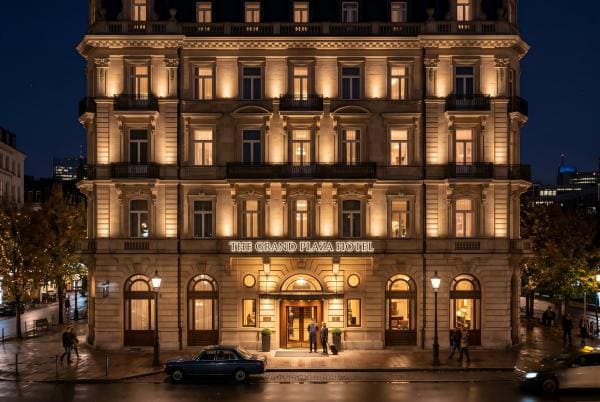
The beam angle determines how light spreads from the fixture.1 It's not a one-size-fits-all specification. The right choice depends entirely on your application. For tall buildings, you need to project light over long distances. In these cases, a very narrow beam angle, something between 3° and 10°, is perfect2. It acts like a spotlight, pushing the light up the facade to reach the top floors. For wall-washing effects where you want a smooth, even gradient of light from bottom to top, an asymmetric beam is the best tool. It directs more light towards the top of the wall and less at the bottom, creating a uniform appearance. For general, soft illumination, a wide beam angle around 110° using a PC or acrylic cover works well.
| Beam Angle Type | Best Use Case | Desired Effect |
|---|---|---|
| Ultra-Narrow (3°-10°) | High-rise buildings, columns | Long-distance projection, accenting |
| Asymmetric | Wall washing from the base | Even, smooth vertical illumination |
| Wide (110°+) | Low-level walls, general areas | Soft, uniform, and gentle light |
Color Quality Makes or Breaks the Look
Color is just as important as the beam. First, consider the Color Rendering Index (CRI). A CRI of 80 or higher ensures that the light accurately shows the true colors of the building materials.3 A low CRI can make beautiful stone or metal look dull and lifeless. Next is color consistency, measured in SDCM (Standard Deviation of Color Matching). To avoid visible color differences when you line up multiple fixtures, you need a tight tolerance, ideally within 3 to 5 SDCM4. For color temperature (CCT), a range from 1800K (very warm) to 6500K (cool daylight) gives you options. I strongly recommend RGBW fixtures. The dedicated white channel provides a much purer and higher-quality white light for architectural lighting than mixing red, green, and blue. Lastly, most professional systems run on DC24V, which is safer and more efficient for long runs.
What Makes a Linear Light Truly Durable for Outdoor Use?
Your beautiful new lighting fixtures are failing after just one season. Water damage and material degradation from sun and heat are common issues that can cost a fortune to fix.
Look for a high IP rating, at least IP67 for rainy or coastal areas, and robust materials. This includes 6063-T5 aluminum for heat dissipation and UV-stabilized covers to prevent yellowing or cracking.
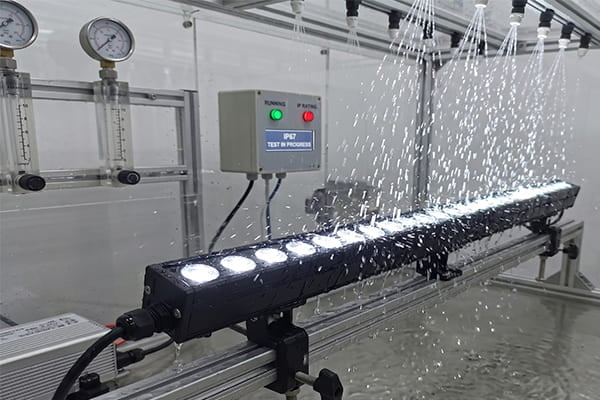
I've seen projects where cheap lights, not built for the outdoors, were installed on a magnificent skyscraper. Within a year, over half of them had failed from water getting inside. The cost to replace them with proper IP67-rated fixtures, including labor and equipment rental, was ten times the initial savings. An outdoor fixture is constantly at war with the elements: rain, dust, sun, and temperature swings. Its durability is non-negotiable.
Decoding IP Ratings
The IP (Ingress Protection) rating tells you how well a fixture is sealed against dust and water.5 It's a simple two-digit number, but it's critically important. The first digit is for solid protection (dust), and the second is for liquid protection (water). For a standard building facade, IP65 is the absolute minimum6. It protects against jets of water from any direction. However, if your project is in a region with heavy rainfall or in a coastal area with salt spray, you must use IP677. An IP67-rated fixture can be temporarily submerged in water.8 For areas where water might pool, like in-ground installations, you must use IP68 fixtures with IP68-rated waterproof connectors. There is no shortcut here.
| IP Rating | Protection Against Water | Recommended Environment |
|---|---|---|
| IP65 | Water jets from any angle | General outdoor walls, sheltered areas |
| IP67 | Temporary immersion in water | Rainy regions, coastal areas, exposed facades |
| IP68 | Continuous immersion in water | In-ground, underwater, or flood-prone areas |
Materials Matter for Longevity
The body of the light fixture does two jobs: it protects the internal components and it gets rid of heat. For heat dissipation, a thick-walled 6063-T5 aviation-grade aluminum profile is the industry standard. This material is excellent at drawing heat away from the LEDs, which is key to a long lifespan.9 The aluminum should also have a finish like anodization to protect it from corrosion. In highly corrosive environments, like near the sea, I recommend using stainless steel bodies instead. The front cover or lens also needs to be tough. Tempered glass is great for impact resistance. If a PC or acrylic cover is used, make sure it has been treated for UV stability. Without this treatment, the plastic will turn yellow and become brittle in the sun within a couple of years10, ruining the light output and appearance.
How Do You Select the Correct Control System for Your Project?
You have a great lighting design concept, but you can't control the lights properly. The lights flicker, they don't sync up, or they are simply unable to produce the dynamic effects you planned.
For standard dynamic architectural outlines, DMX512 is the industry-standard protocol. For high-density media facade effects, SPI is better. The pixel density you need depends entirely on the complexity of your desired animation.
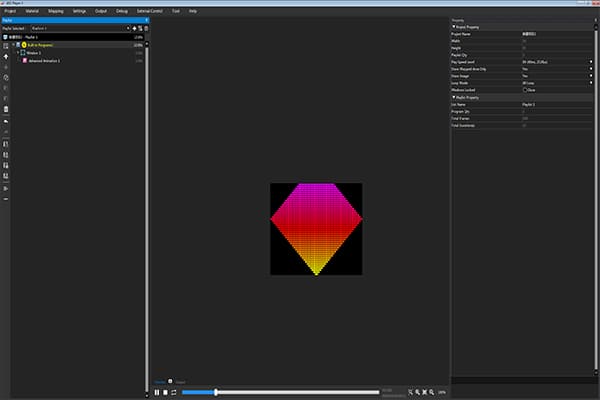
A great lighting system is not just about the fixtures; it's also about the brain that controls them. Choosing the wrong control protocol is like having a high-performance car with the wrong engine. It just won't work the way you want it to. I remember a client who wanted a smooth, flowing color animation across their building but chose a system that could only handle basic color changes. They were deeply disappointed with the final result. Matching the control system to the project's creative goals is absolutely essential.
DMX512 vs. SPI: Which Protocol Fits?
DMX512 is the workhorse of the architectural lighting world.%%%FOOTNOTE_REF11%%% It's a robust and reliable standard that allows you to control each fixture or segment of a fixture individually. It's perfect for creating color-changing scenes, chases, and outlining a building's structure. Modern DMX512 systems also support [RDM (Remote Device Management), which allows for two-way communication.](https://en.wikipedia.org/wiki/RDM(lighting))12 This means you can monitor the status of the fixtures and get feedback, which is incredibly useful for maintenance. SPI (Serial Peripheral Interface) is a different type of protocol. It's typically used for controlling a very large number of individual pixels, like in a media screen. SPI is faster and can handle the high data rates needed for playing video or complex animations on a facade.
| Protocol | Best For | Key Feature | Complexity |
|---|---|---|---|
| DMX512 | Architectural outlines, color changing | Industry standard, reliable, RDM support | Moderate |
| SPI | Media facades, high-density pixel effects | High speed, large pixel counts | Higher |
Pixel Density: From Simple to Complex
Pixel density refers to how many individually controllable segments there are in one meter of a linear light. The density you need is directly related to the effect you want to achieve. For basic color changes or simple flowing effects, a low pixel density of 1 to 3 segments per meter is usually enough. This is cost-effective and easy to program. However, if you want to display detailed animations, text, or video-like content, you will need a much higher pixel density. In these cases, 8, 12, or even 16 segments per meter are common. A higher pixel density gives you a smoother and more detailed look, but it also increases the cost and complexity of the control system. It's a trade-off between your creative vision and your budget.
Why is the Mechanical Design of a Linear Light So Important?
Your newly installed linear lights are clearly visible during the day and create ugly dark spots at night. This ruins the clean lines of the architecture and gives the project a cheap, unprofessional look.
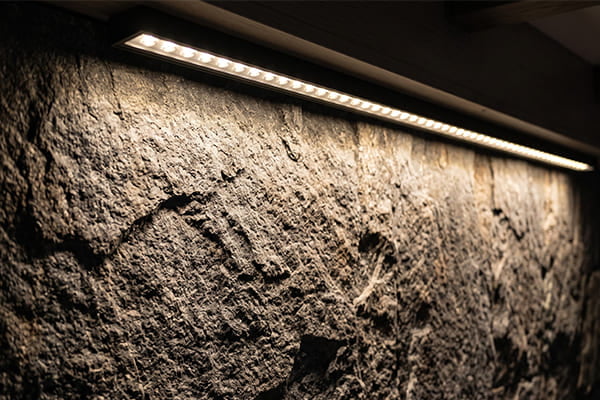
A good mechanical design aims to "see the light, not the fixture." Choose compact fixtures that can be hidden. Also, look for seamless connection designs that eliminate dark spots between lights for a continuous line of light.
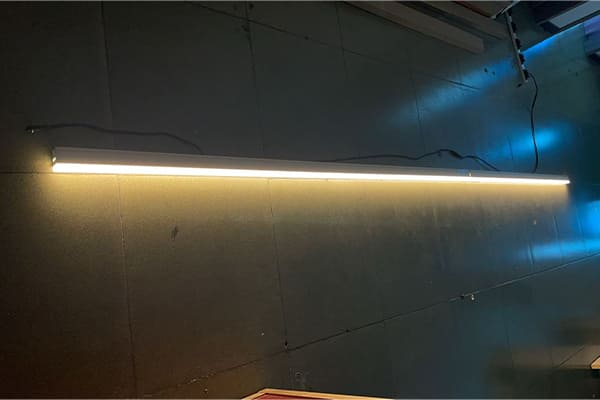
I believe that facade lighting should feel like it is part of the building itself, not something that was just attached to it. The best projects I've worked on are the ones where you can't even see the light fixtures during the day. The mechanical design and form factor of the light are what make this possible. It's about clever integration and attention to detail. A clunky, poorly designed fixture can make even the most beautiful building look cluttered.
The "Invisible" Fixture
The idea of "see the light, not the fixture" is a core principle of good lighting design. To achieve this, you need fixtures with an extremely compact and slim profile. This allows them to be hidden away inside architectural details like curtain wall mullions, stone joints, or window reveals. The fixture becomes an invisible source of light. When selecting a product, always consider its physical dimensions and how it will be mounted. Also, think about glare. A well-designed fixture should be paired with accessories like honeycomb louvers or shading boards. These accessories help direct the light exactly where it's needed and prevent it from spilling into windows or causing discomfort for people below.
Achieving a Seamless Line of Light
When you connect multiple linear lights to create a long, continuous line, the last thing you want is a dark spot at every joint. This visual interruption completely breaks the effect. To solve this, look for fixtures with a "no dark spot" or seamless connection design. This is often achieved with special lenses that extend to the very end of the fixture or with clever cable entry designs. For example, fixtures with cables that exit from the back instead of the ends allow them to be placed tightly together. Standard lengths are usually 1 meter, 0.7m, 0.5m, and 0.3m. If you need custom lengths, you must confirm with the manufacturer early on, especially if you are using the DMX512 protocol, as segment lengths can be tied to the DMX addressing.
Conclusion
Choosing the right facade linear light is a careful balance of optics, durability, controls, and design. A successful project depends on getting these details right to ensure a stunning, long-lasting result.
"[PDF] CALiPER Application Summary Report 20: LED PAR38 Lamps", https://www1.eere.energy.gov/buildings/publications/pdfs/ssl/caliper_20_summary.pdf. A lighting-engineering reference or educational source can define beam angle as the angular spread of luminous intensity from a luminaire, supporting the explanation that beam angle governs distribution rather than total output. Evidence role: definition; source type: education. Supports: Beam angle determines how light spreads from a facade linear light.. ↩
"Beam Angles in Lighting: What Are They and Why You Should Care?", https://www.ledlightexpert.com/beam-angles-in-lighting?srsltid=AfmBOorf2JbshAINw9TJBVa3rAIHWP2H8-CWB0PIOUqqRmlCKgAgrriO. A lighting-design handbook or technical paper on facade illumination can support that narrow beam distributions are used for long-throw accent or grazing applications, although the specific 3°–10° range may vary by fixture photometry and mounting distance. Evidence role: expert_consensus; source type: education. Supports: Very narrow beam angles around 3°–10° are appropriate for projecting light over long facade distances.. Scope note: Contextual support only; final beam angle selection depends on photometric calculations and site geometry. ↩
"LED Basics - Department of Energy", https://www.energy.gov/cmei/ssl/led-basics. Standards-based sources on the Color Rendering Index explain that CRI measures how faithfully a light source renders object colors compared with a reference illuminant; a threshold such as Ra 80 is commonly used for good color-rendering performance, though CRI does not fully predict all aspects of color perception. Evidence role: definition; source type: institution. Supports: CRI ≥80 is used as an indicator of acceptable or good color rendering for architectural materials.. Scope note: CRI is an imperfect metric and does not alone guarantee perceived material appearance in every application. ↩
"[PDF] Color Stability of LEDs: Understanding the Basics", https://www1.eere.energy.gov/buildings/publications/pdfs/ssl/royer_stability_lightfair2014.pdf. Lighting-standard materials on MacAdam ellipses and SDCM describe lower SDCM values as tighter chromaticity tolerances and less perceptible color variation among luminaires, supporting the use of 3–5 SDCM as a common specification for visible consistency. Evidence role: definition; source type: institution. Supports: A 3–5 SDCM tolerance helps reduce visible color differences between adjacent facade fixtures.. Scope note: The visibility of color differences also depends on viewing conditions, surface reflectance, and observer sensitivity. ↩
"IP code - Wikipedia", https://en.wikipedia.org/wiki/IP_code. IEC 60529 and derivative technical summaries define the IP Code as a classification of enclosure protection against access, solid foreign objects, dust, and water ingress, directly supporting the article’s explanation of IP ratings. Evidence role: definition; source type: institution. Supports: Ingress Protection ratings classify how well a fixture enclosure resists dust and water intrusion.. ↩
"[PDF] Outdoor Lighting Design Guide - California State University", https://www.calstate.edu/csu-system/doing-business-with-the-csu/capital-planning-design-construction/operations-center/Documents/guidelines/Outdoor-Lighting-Design-Guide-R3-2018-12-10.pdf. Outdoor luminaire guidance and IP-code references can support that IP65 enclosures are dust-tight and protected against water jets, making the rating a common minimum for exposed outdoor fixtures, although local exposure and maintenance conditions may require higher ratings. Evidence role: expert_consensus; source type: institution. Supports: IP65 is commonly treated as a minimum ingress-protection level for standard outdoor facade lighting.. Scope note: The source may support IP65 suitability for outdoor exposure but not prove it is an absolute minimum for every facade project. ↩
"[PDF] Corrosion Protection for Metal Connectors and Fasteners in Coastal ...", https://www.fema.gov/sites/default/files/2020-07/tb8-corrosion_protection_metal_connectors_coastal_areas.pdf. IP-code references define IP67 as dust-tight and protected against temporary immersion, and coastal-engineering or corrosion guidance documents note that marine environments expose equipment to salt-laden moisture; together these sources provide contextual support for specifying higher ingress protection in wet or coastal conditions. Evidence role: general_support; source type: institution. Supports: IP67 is more appropriate than lower IP ratings for facade fixtures exposed to heavy rain or possible water accumulation, with coastal conditions also requiring corrosion-resistant construction.. Scope note: IP67 addresses water ingress but does not by itself certify resistance to salt corrosion; materials and coatings must also be evaluated. ↩
"IP code - Wikipedia", https://en.wikipedia.org/wiki/IP_code. IEC 60529 summaries describe the second digit 7 in the IP Code as protection against the effects of temporary immersion in water under specified test conditions, directly supporting the statement about IP67. Evidence role: definition; source type: institution. Supports: IP67 indicates protection against temporary water immersion.. Scope note: The exact immersion depth and duration are defined by the standard or manufacturer test conditions, not by the IP67 label alone in ordinary language. ↩
"[PDF] Solid-State Lighting Lifetime and Reliability - Department of Energy", https://www.energy.gov/sites/prod/files/2019/02/f59/davis_poster_ssl-rd2019.pdf. LED reliability literature shows that junction temperature and thermal management strongly affect lumen maintenance and lifetime, while aluminum alloys are commonly used as heat-dissipating luminaire materials because of their thermal conductivity. Evidence role: mechanism; source type: paper. Supports: Aluminum fixture bodies can help dissipate LED heat, and effective heat dissipation supports longer LED service life.. Scope note: The evidence supports the thermal-management mechanism generally; it may not specifically validate every 6063-T5 fixture design without heat-sink testing. ↩
"Photodegradation and photostabilization of polymers, especially ...", https://pmc.ncbi.nlm.nih.gov/articles/PMC4320144/. Materials-science sources on polymer weathering document that ultraviolet exposure can cause photodegradation, yellowing, embrittlement, and loss of mechanical properties in plastics such as polycarbonate or acrylic, supporting the mechanism behind UV-stabilized covers. Evidence role: mechanism; source type: paper. Supports: Unstabilized plastic covers can yellow and become brittle under outdoor UV exposure.. Scope note: The exact time to visible yellowing or brittleness varies with polymer formulation, UV stabilizers, climate, and exposure intensity. ↩
"RDM (lighting) - Wikipedia", https://en.wikipedia.org/wiki/RDM_(lighting). Entertainment and architectural-control standards sources describe DMX512 as a widely used digital communication protocol for controlling lighting equipment, supporting its characterization as a standard control method for dynamic lighting systems. Evidence role: historical_context; source type: institution. Supports: DMX512 is a widely used standard protocol for lighting control, including architectural color-changing systems.. Scope note: The phrase “workhorse” is interpretive; evidence can substantiate widespread use and standardization rather than quantify dominance in all architectural projects. ↩
"RDM (lighting)", https://en.wikipedia.org/wiki/RDM_(lighting). The ANSI E1.20 RDM standard defines Remote Device Management as an extension of DMX512 that enables bidirectional communication for configuration, monitoring, and status reporting over DMX networks. Evidence role: definition; source type: institution. Supports: RDM adds two-way communication and device management capabilities to DMX512-based lighting systems.. ↩