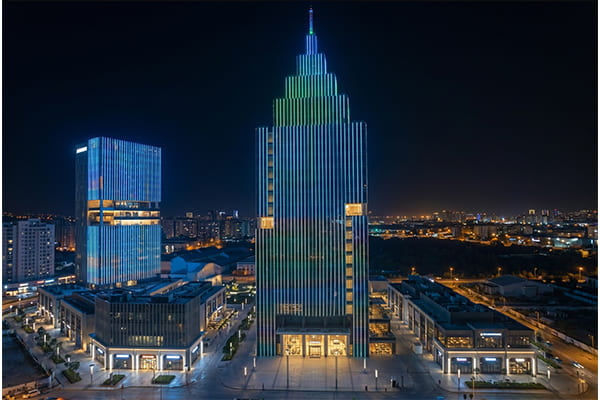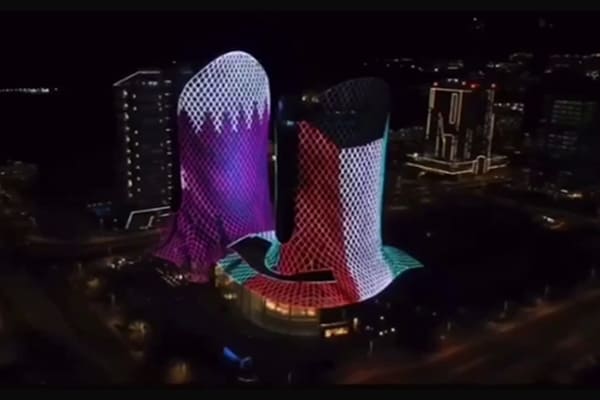
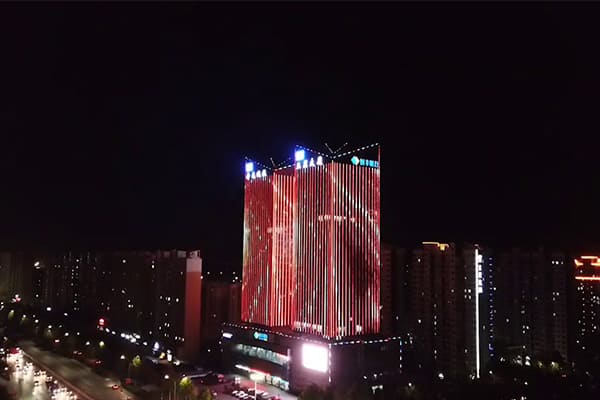
Struggling to make your building stand out? Old static lighting feels dull and lifeless. A dynamic media facade can transform your project into an unforgettable landmark.
Pixel lighting turns a building's exterior into a giant digital screen. By individually controlling thousands of LED lights (pixels), you can play videos, display branding, and create stunning visual art1, making your building a true icon. This involves specific hardware, control systems, and careful installation.
This sounds great in theory, but how do you actually make it happen? The key is understanding the different parts that make up the whole system. Let's break it down, starting with the lights themselves. It’s important to choose the right tools for the job, because the fixture you choose is the foundation for the entire effect.
What Are the Core Hardware Options for a Media Facade?
Choosing the wrong fixture can ruin your design. You need lights that fit the building's architecture and your visual goals. How do you pick the right one for your project?
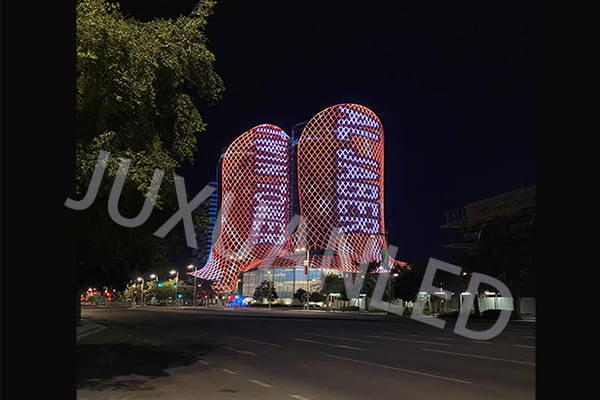
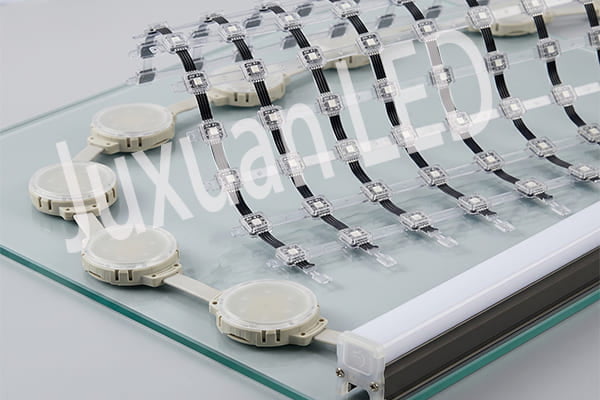
The main hardware choices are LED pixel dots for flexible layouts on glass, linear lights for outlining contours, and mesh screens for high-transparency video displays.2 Each serves a different purpose, and the best choice depends on your building's surface and the desired visual effect.
Choosing the right fixture is the first major decision in any media facade project. You have to balance the architectural look of the building during the day with the lighting effect you want at night. I remember a project in Southeast Asia where we used a combination of linear lights and mesh screens. The linear lights defined the sharp edges of the skyscraper, while the mesh screen across the main glass face played high-resolution content without making the offices inside feel like they were behind a wall. The client was thrilled with the balance between daytime aesthetics and nighttime impact. Here’s a breakdown of the most common options.
LED Pixel Dots
These are small, individual light sources. You can place them almost anywhere. This makes them perfect for irregular surfaces or for creating large, low-resolution video effects across a glass curtain wall3. We often install them at the nodes of the curtain wall structure, so they are nearly invisible during the day.
LED Linear Lights
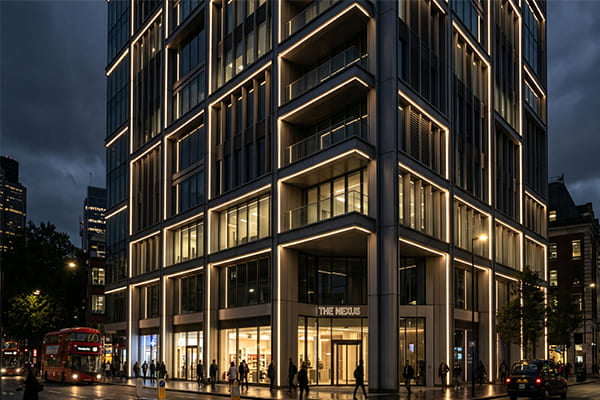
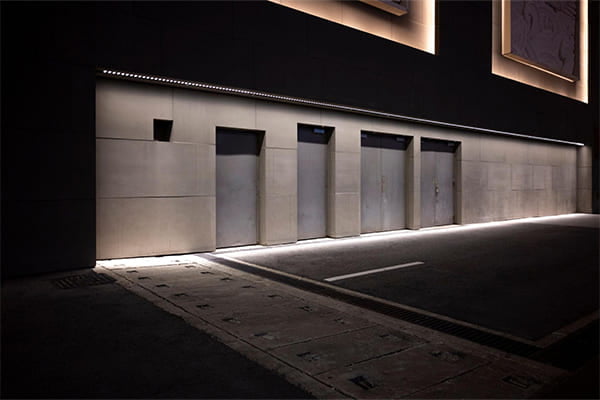
These are long, slim fixtures that are great for outlining the architectural lines of a building. You can install them in the gaps between stone panels or along the edges of sunshades. They create clean, powerful lines of light and can also be pixel-controlled to play dynamic content along the building's contours.
LED Mesh Screens
This is a screen made of interconnected LED pixels that has a very high transparency rate. It’s the best choice when you want to cover a large glass area and show high-definition video. Because it's a mesh, it doesn't block the view from inside the building or stop daylight from coming in4.
| Fixture Type | Best For | Key Advantage |
|---|---|---|
| LED Pixel Dot | Irregular surfaces, glass curtain walls | Maximum flexibility in layout |
| LED Linear Light | Outlining architectural contours, joints | Creates clean lines, integrates well |
| LED Mesh Screen | Large glass facades, high-res video | High transparency, maintains daylight |
What's the Technical Setup for a Pixel Lighting System?
A great design is useless if the technology fails. Unstable signals and poor display quality can turn your masterpiece into a glitchy mess. You need a reliable system to back it up.
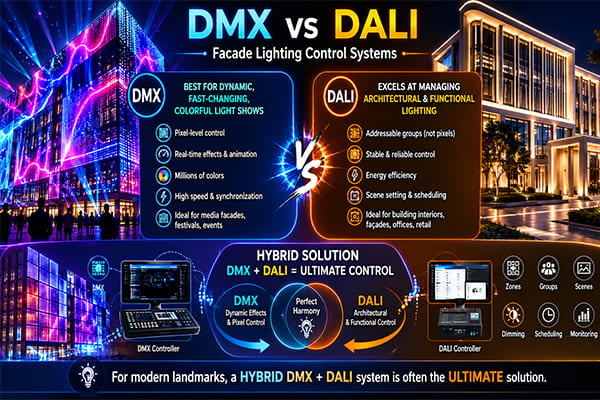
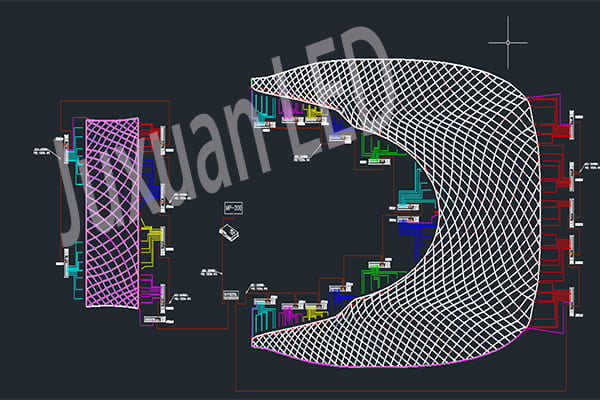
A stable system uses DMX512 or Art-Net protocols5. It consists of a media server for content, controllers to translate the signal, and decoders for the lights. For a high-quality display, you need high grayscale (12-16 bit) and a high refresh rate (>2000Hz) to prevent flickering.
The technology behind the scenes is just as important as the lights you see. I remember a project near the coast where the initial fixtures specified by another firm weren't salt-spray resistant. Within a year, they were corroding. We had to go in and replace them with our IP68, anti-salt-spray models. It’s a lesson you only want to learn once: always match your technical specs to the environment. A solid technical framework ensures your project not only looks good on day one but for years to come.
System Architecture
The signal flow is simple but crucial. It starts at a media server, which stores and plays the video content. This server sends the data via a network to an Art-Net controller. The controller converts this network data into a DMX signal. For very large projects, you need many DMX "universes." Think of a universe as a single channel that can control about 170 RGB pixels6. A project with 5,000 RGBW pixels might need almost 39 universes. The DMX signal then goes to decoders which tell the individual pixel fixtures what color and brightness to be.
Key Quality Requirements
Beyond the basic structure, a few technical specs make all the difference.
| Requirement | Why It's Important | Our Standard |
|---|---|---|
| Concealment | Fixtures shouldn't spoil the building's daytime look. | We match fixture housing color to the facade. |
| Protection Rating | Outdoor lights must survive rain, dust, and sun. | IP65 minimum, IP68 for harsh or underwater areas.7 |
| Display Quality | Prevents flickering and ensures smooth color gradients. | 12-16 bit grayscale and >2000Hz refresh rate8. |
| Power Design | Prevents lights from dimming at the end of a long run. | Distributed power supplies to avoid voltage drop. |
Getting these details right from the start is what separates a professional, lasting installation from one that causes headaches down the road.
What Are the Key Steps for a Successful Installation?
Your project is designed and the hardware is chosen. But a poor installation can derail everything, causing safety hazards and system failures. How do you ensure a smooth process from start to finish?
Key installation steps include ensuring safety with power-off lock procedures, using shielded cables with DMX runs under 100 meters, and carefully mapping each pixel to its correct digital address. Proper power injection is also critical to prevent voltage drop and ensure consistent brightness.
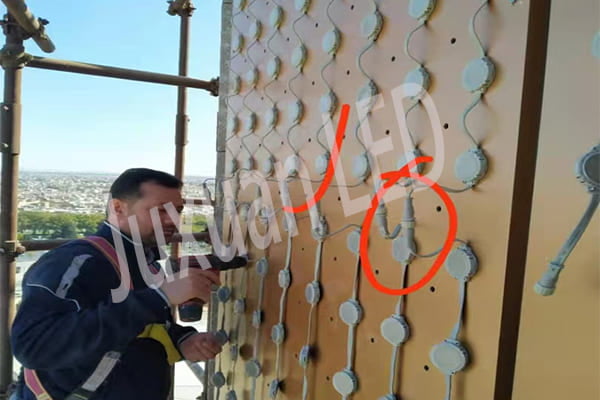
We once had a contractor who tried to save money by using unshielded cables on a project. During commissioning, the lights flickered randomly. We spent a whole day tracing the problem back to signal interference from nearby power lines. We had to replace all the signal cables, which cost the client more time and money than just using the right ones from the start. A successful project depends on a disciplined installation process. Every step matters.
Pre-Installation Safety
Safety is always first. All installation work must be done with the power completely off and locked out9. This prevents accidents and protects the sensitive electronic components from damage. It’s a simple step that is non-negotiable on our projects.
Cabling and Signal Integrity
The signal is the lifeblood of the system. We always use high-quality shielded cables for DMX signals to prevent interference10. It’s also a rule that a single DMX bus line should not be longer than 100 meters11. For longer distances, you need to add a signal amplifier to keep the signal strong and clear.
Pixel Mapping and Commissioning
This is a critical digital step. After the lights are physically installed, you have to "map" them. This means telling the control system the exact coordinate of every single pixel. It's like giving every seat in a stadium a specific ticket number. The media server needs to know the location of every light to send the right color at the right time. Without accurate mapping, your video will look like a scrambled mess.
Power Management
LEDs need stable, low-voltage DC power. Over long distances, voltage can drop, causing lights at the end of a chain to be dimmer12 than those at the start. To prevent this, we use a distributed power supply design. This often involves "power injection," which means running parallel power lines and connecting them at various points along a string of lights. This ensures every pixel gets the full voltage it needs to be perfectly bright.
Conclusion
Media facades are the top choice for modern landmarks. With the right hardware, a solid technical plan, and a careful installation, you can create a truly iconic building.
"LED display - Wikipedia", https://en.wikipedia.org/wiki/LED_display. A media-facade or urban-screen reference can support that addressable LED elements on building envelopes are used to display image, video, text, and artistic content. Evidence role: definition; source type: encyclopedia. Supports: Pixel lighting can turn a building facade into an addressable display capable of showing video, branding, and visual art.. Scope note: Such sources support the general function of media facades but do not prove that every installation will be visually successful or iconic. ↩
"Odenplan: a media façade design process - Academia.edu", https://www.academia.edu/2428316/Odenplan_a_media_fa%C3%A7ade_design_process. Architectural lighting or media-facade literature can document the use of point-source pixels, linear luminaires, and transparent mesh displays as common hardware approaches for illuminated building envelopes. Evidence role: general_support; source type: education. Supports: Common media-facade hardware includes pixel dots, linear LED lights, and transparent mesh-type LED screens, each suited to different facade conditions.. Scope note: The source may describe these categories in broader terminology rather than using the article’s exact product names. ↩
"Pixel pitch and viewing distance for LED walls - Barco", https://www.barco.com/en/residential/creating-the-experience/the-architectural-digital-canvas/technology-ingredients/pixel-pitch-and-viewing-distance. Research on media facades can support that widely spaced LED point sources on building envelopes can create large-scale, lower-resolution visual or video effects when viewed from a distance. Evidence role: mechanism; source type: paper. Supports: LED pixel dots can be used to create large, low-resolution video effects across glass curtain walls or similar facade surfaces.. Scope note: This supports the optical and spatial principle, not the suitability of any specific pixel pitch or glass-wall installation. ↩
"The Difference Between LED Transparent Screens - CEOLED Display", https://ceoled-display.com/led/led-transparent-screens/. Studies or technical descriptions of transparent LED/media facades can support that mesh or perforated display structures preserve partial outward visibility and daylight transmission compared with opaque displays. Evidence role: mechanism; source type: paper. Supports: LED mesh screens can maintain some interior view and daylight access because their open structure is partially transparent.. Scope note: The degree of preserved view and daylight depends on mesh density, brightness, mounting position, and facade design. ↩
"Art-Net - Wikipedia", https://en.wikipedia.org/wiki/Art-Net. Protocol references can establish that DMX512 is a digital lighting-control standard and that Art-Net transports lighting-control data over Ethernet networks for applications including DMX-based lighting systems. Evidence role: definition; source type: institution. Supports: Media-facade control systems commonly rely on lighting-control protocols such as DMX512 and Art-Net.. Scope note: Protocol definitions support compatibility and signal architecture, but not by themselves the stability of a specific installation. ↩
"DMX512 - Wikipedia", https://en.wikipedia.org/wiki/DMX512. DMX512 documentation can support that a DMX universe contains 512 control slots, which allows approximately 170 RGB pixels when each pixel uses three channels. Evidence role: mechanism; source type: institution. Supports: One DMX universe can control about 170 RGB pixels because DMX512 provides 512 control channels and RGB pixels typically use three channels each.. Scope note: The calculation applies to simple RGB fixtures; RGBW fixtures or fixtures with additional control channels reduce the number of pixels per universe. ↩
"IP code - Wikipedia", https://en.wikipedia.org/wiki/IP_code. The IEC ingress-protection code defines IP65 as dust-tight and protected against water jets, and IP68 as dust-tight and suitable for continuous immersion under specified conditions. Evidence role: definition; source type: institution. Supports: IP65 and IP68 ratings indicate different levels of dust and water protection relevant to outdoor or harsh lighting installations.. Scope note: Ingress-protection ratings describe standardized dust and water resistance; they do not address ultraviolet exposure, corrosion, thermal management, or installation quality. ↩
"[PDF] Flicker: Understanding the New IEEE Recommended Practice", https://www.energy.gov/sites/default/files/2022-11/ssl-miller-lehman_flicker_lightfair2015.pdf. LED display engineering sources can support that higher grayscale bit depth improves tonal gradation and that higher refresh or PWM frequencies reduce visible flicker and camera artifacts. Evidence role: mechanism; source type: paper. Supports: High grayscale depth and high refresh rate contribute to smoother gradients and reduced flicker in LED display systems.. Scope note: The cited source may support the relationship between bit depth, refresh rate, and display quality without establishing 12–16 bit or >2000 Hz as universal thresholds for all facade projects. ↩
"Control of Hazardous Energy (Lockout/Tagout) - Overview - OSHA", http://www.osha.gov/control-hazardous-energy. Occupational-safety guidance on lockout/tagout supports that de-energizing and locking out equipment is used to prevent unexpected energization during servicing or installation work. Evidence role: expert_consensus; source type: government. Supports: Installation work should be performed with power de-energized and locked out to reduce electrical and unexpected-energization hazards.. Scope note: General lockout/tagout rules support the safety principle but do not replace project-specific electrical codes or qualified-worker requirements. ↩
"DMX512 - Wikipedia", https://en.wikipedia.org/wiki/DMX512. DMX512 cabling guidance can support that data-grade shielded twisted-pair cable is specified or recommended for DMX transmission to reduce susceptibility to electromagnetic interference and signal errors. Evidence role: mechanism; source type: institution. Supports: Shielded cables are used for DMX signal lines to help protect lighting-control data from interference.. Scope note: Proper grounding, termination, topology, and cable length also affect DMX reliability, so shielding alone does not guarantee interference-free operation. ↩
"DMX512 - Wikipedia", https://en.wikipedia.org/wiki/DMX512. DMX512 installation guidance can support that DMX links have practical maximum segment lengths and may require repeaters or opto-splitters for long runs. Evidence role: general_support; source type: institution. Supports: DMX bus length should be limited, and long cable runs may require signal amplification or splitting to maintain reliable control data.. Scope note: Many DMX references state maximum distances different from 100 meters, so the citation would support limiting run length and using repeaters rather than proving 100 meters as a universal standard. ↩
"How to Prevent Voltage Drop in LED Strip Lights - Flexfire LEDs", https://www.flexfireleds.com/led-strip-light-voltage-drop-what-is-voltage-drop/?srsltid=AfmBOooFEhwSWqDgy7xSq5qxrg0vfSn25h-PfJweTxgZKppz9D1101YI. Electrical-engineering references on voltage drop can support that resistance in long conductors causes voltage loss under load, which can reduce the power delivered to low-voltage lighting at the far end of a run. Evidence role: mechanism; source type: education. Supports: Long low-voltage LED runs can experience voltage drop, leading to reduced brightness toward the end of a chain.. Scope note: The severity depends on conductor size, current, supply voltage, run length, and fixture driver design. ↩