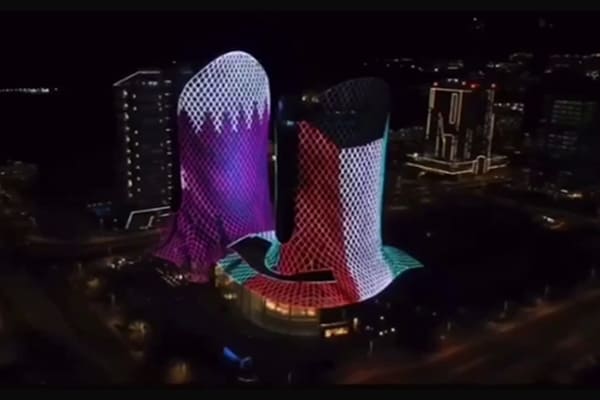
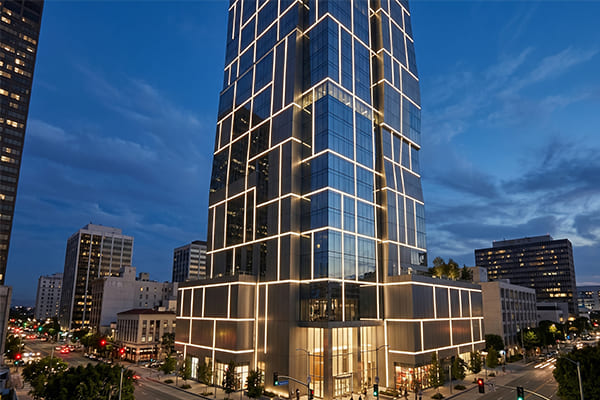
Lighting a skyscraper is a huge challenge. One mistake can ruin the skyline and bother residents. The right design and fixtures make all the difference for a stunning, efficient result.
Successful high-rise lighting involves choosing reliable fixtures like LED wall washers and linear lights, controlled by a DMX512 system1. The core principle is "see the light, not the lamp," using anti-glare features to create a beautiful effect without polluting the sky or disturbing residents inside2.
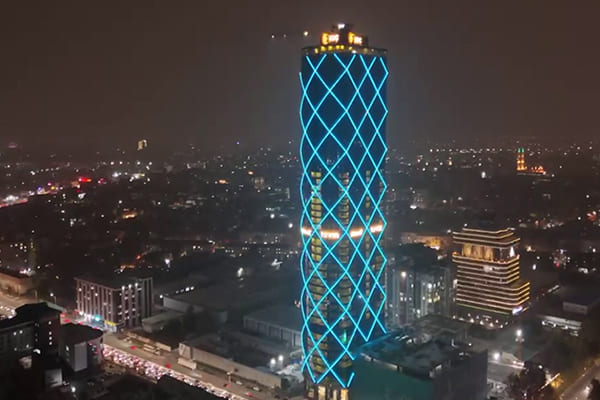
Getting this right turns a building into a landmark. But it's not just about picking bright lights. There's a strategy behind it, a way to make the building come alive at night without causing problems. As a specialist in this field for over a decade, I've seen how the right approach can transform a city's skyline. Let's break down how we, at JUXUANLED, approach these massive projects to achieve breathtaking results that are both beautiful and practical.
How can you achieve the "see the light, not the lamp" effect?
You want your building to glow, not show off its light bulbs. Hiding fixtures seems tricky. But this single principle separates professional lighting design from a simple, glaring mess.
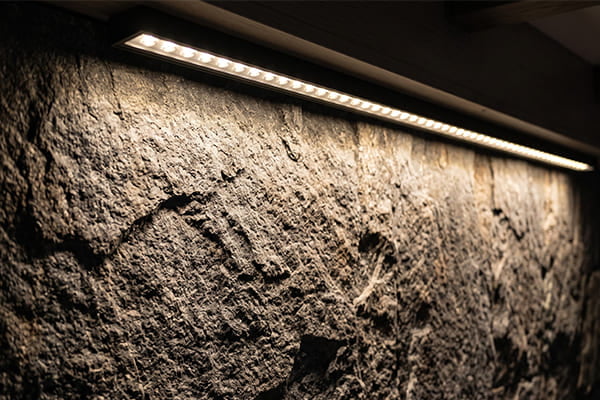
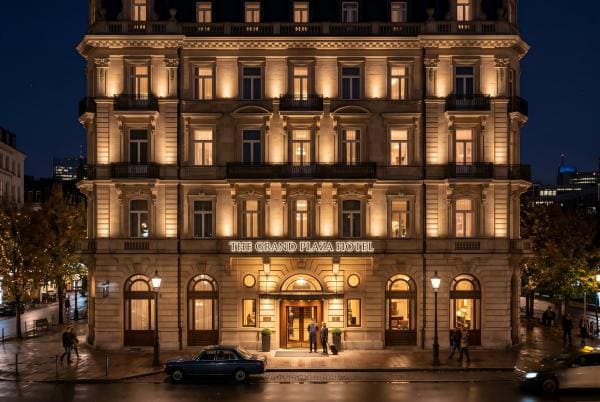
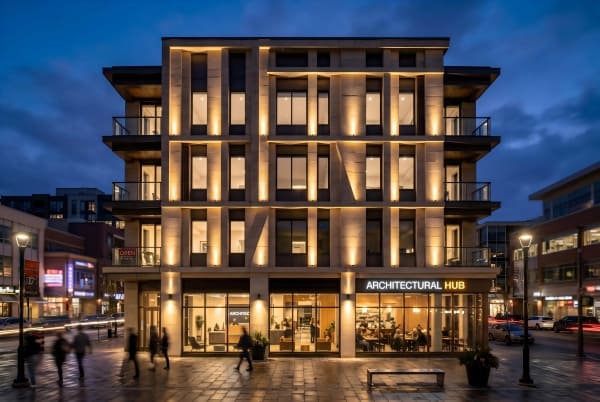
The key is integrating fixtures into the architecture. Use lights with anti-glare shields or built-in honeycomb grilles. This focuses light precisely on the facade, preventing spill into windows or the night sky. The goal is a clean, magical glow where the source remains invisible.
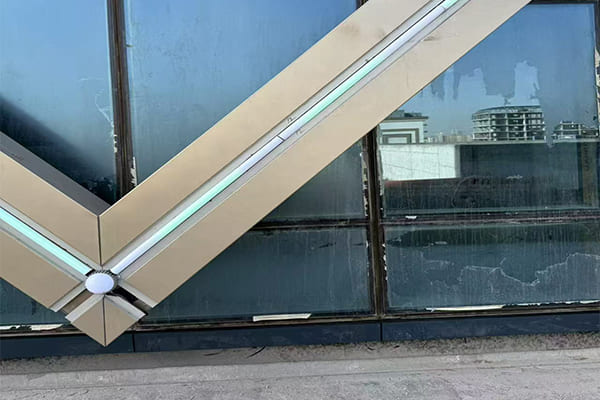
This principle, "see the light, not the lamp," is the foundation of all great architectural lighting. It's about respecting the architect's vision and using light to enhance the building's form, not to just blast it with brightness. When you see a building and wonder where the beautiful light is coming from, that’s when we know we've done our job right. The biggest mistake is creating glare. Glare is wasted light that spills into apartment windows, annoys pedestrians, and contributes to sky glow3, which washes out the stars. I remember a project in Dubai where the client was rightly concerned about residents in the neighboring towers complaining. We had to be extra careful. We achieved this by using fixtures with deep-set LEDs and special honeycomb louvers4. These accessories act like blinders, directing the light beam exactly where it needs to go and nowhere else. It's all about precision.
Here’s how we break down the methods to achieve this effect:
| Method | Description | Best For |
|---|---|---|
| Concealed Mounting | Hiding fixtures in architectural coves, ledges, or reveals. | Creating seamless lines of light and grazing effects up a wall. |
| Anti-Glare Accessories | Using shields, louvers, or hoods on fixtures to block stray light. | Reducing direct glare from visible fixtures like floodlights. |
| Asymmetric Optics5 | Lenses that direct light forward and down, away from windows. | Wall washing from the base or top of a surface cleanly. |
Ultimately, this approach creates a more sophisticated and comfortable visual experience. The building itself becomes the source of light, making it a truly integrated and elegant part of the nocturnal environment.
What are the best luminaires for different parts of a high-rise facade?
A skyscraper has many surfaces: vast walls, structural columns, windows, and a crown. Using one type of light won't work. How do you choose the right tool for each specific job?
Use a mix of fixtures. LED Wall Washers6 (18-72W/m) create smooth, even light on large surfaces. LED Linear Lights7 (10-12W/m) are perfect for outlining the building's shape. Narrow Beam Floodlights (100-200W) can highlight features from a distance, creating dramatic accents.
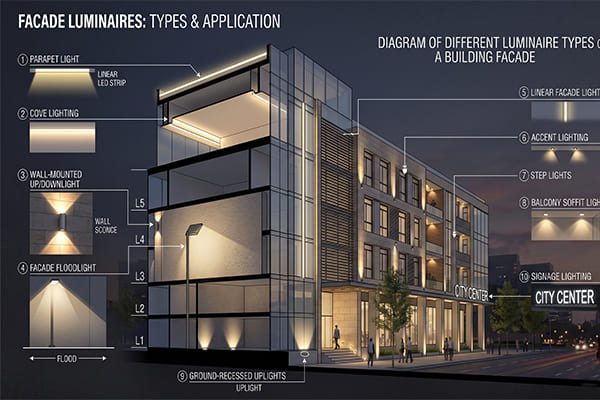
I like to think of a building as a canvas and our luminaires as different paintbrushes. You wouldn't use a giant roller to paint a tiny detail, and the same logic applies here. Each part of the building has a different purpose and needs a specific type of light to bring it to life. We once used linear lights on a project in Southeast Asia to mimic the flow of a river up the side of the building. The client loved how it told a story, something a simple floodlight could never do. The key is to create a visual hierarchy. What do you want people to see first? The strong base? The soaring lines? The sparkling crown? A thoughtful selection of fixtures makes this possible. We typically break a building down into key zones and select lights accordingly to build a complete and cohesive lighting scheme.
Here is a simple guide we use when planning a project:
| Building Area | Primary Function | Recommended Luminaire | Typical Power |
|---|---|---|---|
| The Base | Ground-level illumination, welcoming entrance | In-Ground Uplights, Double-Head Wall Lights | 15-50W |
| The Main Body | Washing large surfaces, outlining structure | LED Wall Washers, LED Linear Lights | 18-72W/m, 10-12W/m |
| Media Facade | Dynamic video and color effects | Pixel Lights (Dot Lights), LED Media Mesh | Custom |
| The Crown | Making the building a skyline icon | Narrow Beam Floodlights, Large Pixel Lights | 100-200W |
| Windows/Details | Accenting architectural features | Window Sill Lights, Star Lights | 5-15W |
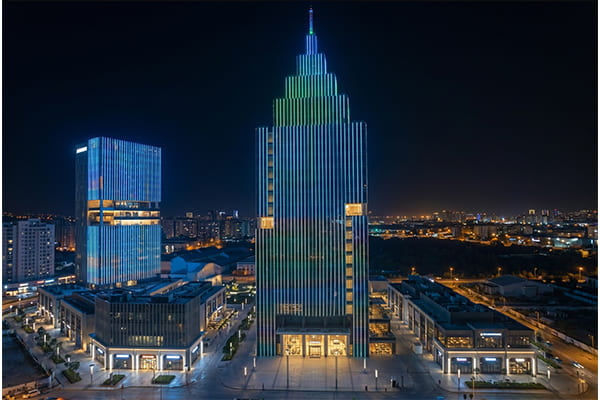
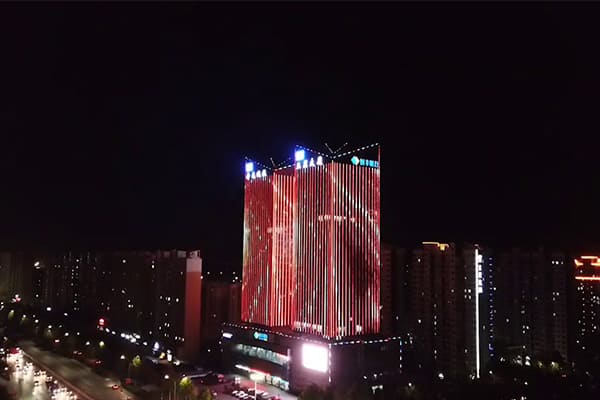
By using a "toolbox" of different lights, we can paint a rich, dynamic picture. We can wash wide walls with soft, even light, trace sharp architectural lines with precision, and make the top of the building a beacon visible from miles away.
What technical specifications and control systems are essential for high-rise lighting?
Looks are important, but what about durability and control? Bad specs mean frequent, costly repairs. You need a system that is both powerful, reliable, and easy to manage long-term.
Always choose fixtures with at least an IP65 rating for weather protection8. For high-altitude safety, use DC24V low-voltage power. A DMX512/RDM control system is crucial for programming dynamic scenes, remote monitoring, and easy maintenance, giving you full command over the lighting.
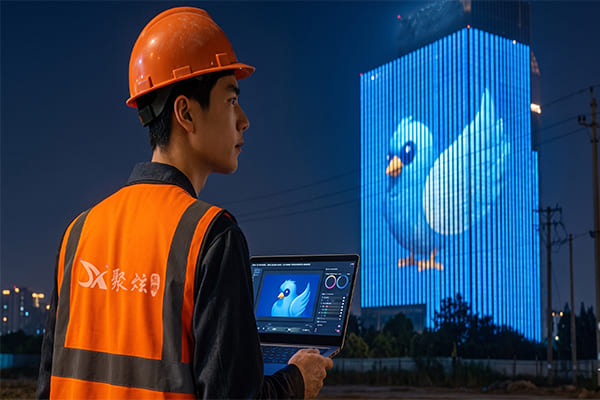
This is the part of the job that isn't glamorous, but it is absolutely critical. A high-rise building is an extreme environment9. The fixtures are exposed to heavy rain, strong winds, intense sun, and huge temperature shifts. On top of that, maintenance is incredibly difficult and expensive. You can't just send someone up on a ladder to change a light on the 80th floor. Because of this, everything we install must be tough, reliable, and easy to manage from the ground. For projects in coastal cities like those in the Middle East or Southeast Asia, we insist on fixtures with special anti-corrosion coatings. Salt in the air can eat through standard aluminum in just a few years10. For power, we almost always use DC24V systems for high-altitude work11. It's much safer for installers and reduces risks. Then there’s the brain of the operation: the control system. We use DMX512 because it's the global standard for professional, dynamic lighting. But the real game-changer is RDM (Remote Device Management). It lets us "talk" to the lights. From a laptop in the control room, we can see if a fixture has a fault, check its temperature, and even change its address. This saves our clients a fortune in maintenance costs.
How can you balance stunning visuals with energy efficiency and sustainability?
A brilliantly lit landmark is amazing, but what about the energy bill and environmental impact? Running lights at full power all night isn't smart. There must be a better, more responsible way.
The future is "facade lighting integration," where lights are part of the building's design. Use an intelligent control system to create multiple modes: a vibrant "Festival Mode," a subtle "Weekday Mode," and a minimal "Late Night Mode" to drastically reduce energy consumption while maintaining presence.
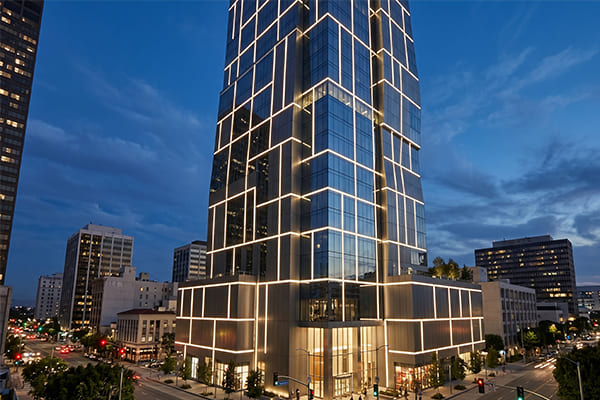
I believe modern landmark lighting must be both beautiful and responsible. The days of simply flooding a building with light all night long are over. Today, it's about being smart. One of the most exciting trends is facade lighting integration. This is where we collaborate with architects at the very beginning of the design process. Instead of attaching lights to the building later, we design special channels and slots directly into the curtain wall or metal panels. This hides the fixtures perfectly and makes the light seem as if it’s coming from the building material itself. It's the ultimate expression of "see the light, not the lamp." The other key to sustainability is intelligent control. We never run a building's lighting at 100% all the time. We program different scenes for different times. For a national holiday, we might run a full-power, dynamic "Festival Mode." But on a typical Tuesday, we'll use a more elegant and subdued "Weekday Mode" that uses half the energy. And after midnight, we switch to a "Late Night Mode," which might only light the crown of the building at 10% brightness. This simple strategy can cut energy consumption by over 70% without compromising the building's iconic status.
Here’s a look at how these modes work:
| Mode Name | Time of Operation | Lighting Effect | Energy Consumption |
|---|---|---|---|
| Festival Mode | Special Occasions | Full color, dynamic, 100% brightness | High |
| Weekday Mode | 7 PM - 10 PM | Elegant, static or slow effects, 50-70% brightness | Medium |
| Late Night Mode | After 11 PM | Minimal accenting, crown only, 10% brightness | Low |
This approach provides the best of all worlds: a stunning visual impact when it matters most, and responsible energy use for the rest of the time. It proves that great design can also be green design.
Conclusion
Lighting a landmark is about smart design, choosing the right fixtures, and using intelligent controls. This creates a stunning, efficient, and sustainable icon on the skyline for years to come.
"DMX512 - Wikipedia", https://en.wikipedia.org/wiki/DMX512. A technical standards or industry-reference source should document that DMX512 is a standardized digital control protocol widely used for entertainment and architectural lighting control. Evidence role: definition; source type: institution. Supports: Successful high-rise lighting can be controlled by a DMX512 system.. Scope note: This supports DMX512 as an established control protocol, not that it is always the best system for every high-rise project. ↩
"Protecting the Night Sky at Your Home and Community", https://www.nps.gov/subjects/nightskies/athome.htm. A dark-sky or environmental-lighting source can support that poorly shielded exterior lighting contributes to sky glow and light trespass, including unwanted illumination into residences. Evidence role: mechanism; source type: institution. Supports: Anti-glare facade lighting can reduce sky pollution and disturbance to building residents.. Scope note: Such sources generally support the mechanism of light pollution and light trespass; they may not evaluate the specific fixtures described in the article. ↩
"Light pollution - Wikipedia", https://en.wikipedia.org/wiki/Light_pollution. A lighting-engineering or dark-sky source should explain that glare and uncontrolled spill light can reduce visual comfort, cause light trespass, and contribute to sky glow. Evidence role: mechanism; source type: institution. Supports: Glare and uncontrolled spill light can affect pedestrians, enter residences, and contribute to sky glow.. Scope note: The source may discuss outdoor lighting generally rather than high-rise facade lighting specifically. ↩
"Versatility in Glare Control | VERS-NANO-LOUVER (11) - QTL Lighting", https://www.qtl.lighting/blog/versatility-in-glare-control/. A lighting optics or luminaire-design source can support that louvers, baffles, and similar shielding devices restrict emitted light angles and reduce direct glare. Evidence role: mechanism; source type: education. Supports: Honeycomb louvers help direct the beam and reduce stray light or glare.. Scope note: This supports the general optical function of louvers; performance depends on fixture design, beam angle, mounting position, and installation quality. ↩
"Wall washer - Asymmetric | BEGA", https://www.bega-us.com/categories/exterior/ceiling/120007. A lighting-design source should define asymmetric light distribution and explain that it can direct more light toward a target plane while limiting light in unwanted directions. Evidence role: definition; source type: education. Supports: Asymmetric optics can direct light toward a facade and away from unwanted areas such as windows.. Scope note: The source would support the optical principle, not guarantee that every asymmetric optic avoids window spill in a given installation. ↩
"[PDF] Exterior Lighting for Energy Savings, Security, and Safety", https://betterbuildingssolutioncenter.energy.gov/sites/default/files/attachments/exterior_lighting_savings.pdf. An architectural-lighting or lighting-design reference can support that wall washing is a technique intended to illuminate broad vertical surfaces evenly. Evidence role: definition; source type: education. Supports: LED wall washers are used to create smooth, even light on large facade surfaces.. Scope note: This supports the general use of wall washing for large surfaces, not the article’s specific wattage range or product selection. ↩
"(PDF) Linear Lighting in Architectural Interior and Exterior Design", https://www.academia.edu/86673797/Linear_Lighting_in_Architectural_Interior_and_Exterior_Design_Current_Trend_or_a_Future. A lighting-design source can support that linear luminaires are commonly used to emphasize architectural lines, edges, and contours. Evidence role: general_support; source type: education. Supports: LED linear lights are suitable for outlining a building’s shape.. Scope note: This supports the typical design application of linear lights, not the specific wattage range stated in the article. ↩
"IP code - Wikipedia", https://en.wikipedia.org/wiki/IP_code. An IEC or standards-based source should explain that the IP Code classifies degrees of protection against dust and water ingress, with IP65 indicating dust-tight protection and protection against water jets. Evidence role: definition; source type: institution. Supports: IP65-rated fixtures provide a defined level of dust and water ingress protection appropriate for outdoor exposure.. Scope note: IP65 indicates a standardized ingress-protection level; it does not by itself prove long-term durability in all high-rise weather conditions. ↩
"[PDF] WIND-DRIVEN RAIN ON HIGH-RISE BUILDINGS", https://web.ornl.gov/sci/buildings/conf-archive/1995%20B6%20papers/044_Karagiozis.pdf. A building-science or wind-engineering source can support that tall buildings experience significant wind loads, weather exposure, and environmental stresses that must be considered in exterior systems. Evidence role: general_support; source type: education. Supports: High-rise facades create demanding environmental conditions for exterior lighting equipment.. Scope note: This would provide contextual support for environmental exposure at height, not a direct assessment of lighting fixtures. ↩
"Influence of Temperature on Corrosion Behavior of 2A02 Al Alloy in ...", https://pmc.ncbi.nlm.nih.gov/articles/PMC5848932/. A corrosion-science source can support that chloride-rich marine atmospheres accelerate corrosion of aluminum alloys and other metals, especially when protective coatings are inadequate or damaged. Evidence role: mechanism; source type: paper. Supports: Marine salt exposure can accelerate corrosion of aluminum lighting housings, making anti-corrosion protection important in coastal projects.. Scope note: The phrase “in just a few years” depends on alloy, coating, exposure severity, and maintenance; a source may support accelerated corrosion without confirming that exact timeframe. ↩
"Extra-low voltage - Wikipedia", https://en.wikipedia.org/wiki/Extra-low_voltage. An electrical-safety standard or occupational-safety source can support that extra-low-voltage systems reduce electric-shock risk compared with higher-voltage circuits under many installation conditions. Evidence role: expert_consensus; source type: government. Supports: Using 24 V DC power can reduce electrical shock risk for installers and maintenance personnel.. Scope note: Low voltage reduces shock hazard but does not remove all electrical, fire, or installation risks; safety also depends on current capacity, insulation, power supplies, and code compliance. ↩