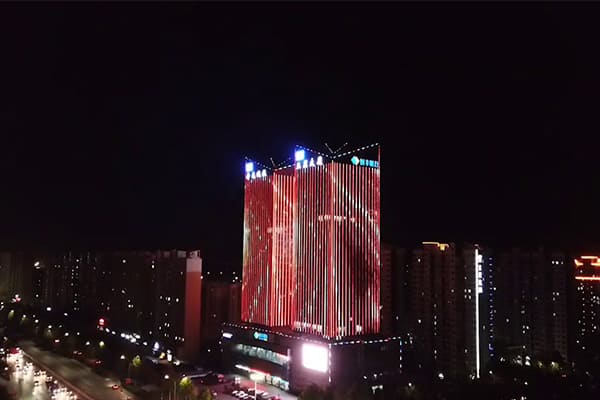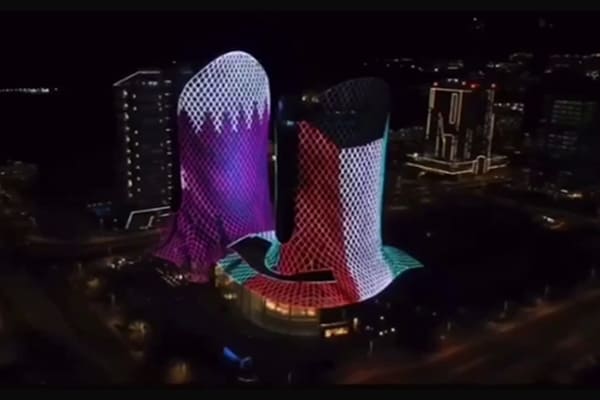
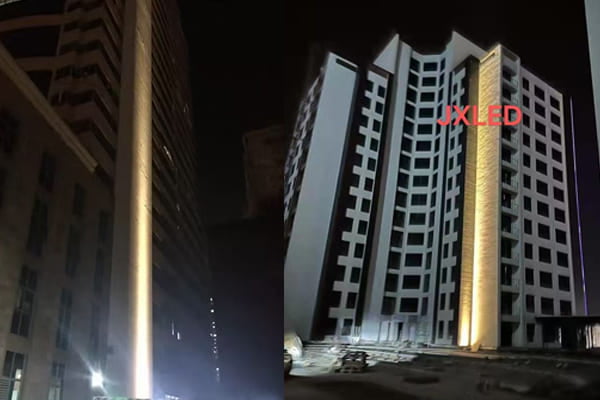
Have you ever specified a premium wall washer, only to see it create ugly hot spots or leave the top of the building in darkness? It’s a common problem.
The key is matching the beam angle to the building’s height1. For tall structures, use a narrow beam (3°-25°) to project light effectively. For lower facades, a wide beam (60°-120°) provides a smooth, even wash. This simple choice makes all the difference.
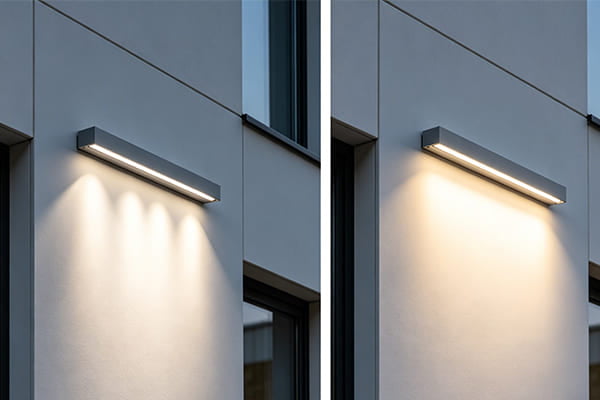
As an expert in outdoor lighting for many years, I always tell my team, "The beam angle is the soul of architectural lighting. If you choose the wrong angle, even the best fixture is just wasting electricity." This simple rule is just the start. But understanding it fully is the key to transforming a building from a dark silhouette into a nighttime landmark. Let's break down exactly how to select the perfect beam for any project, ensuring your vision comes to life flawlessly after dark.
How does building height dictate beam angle selection?
Ever wondered why the same light fixture looks incredible on one building but completely wrong on another? It’s a frustrating situation when your design doesn't translate to reality.
Building height is the single most important factor because it determines how far the light must travel. Tall buildings need a concentrated, narrow beam to fight distance decay and reach the top2. Short buildings need a wide beam to spread light evenly without creating harsh glare3.
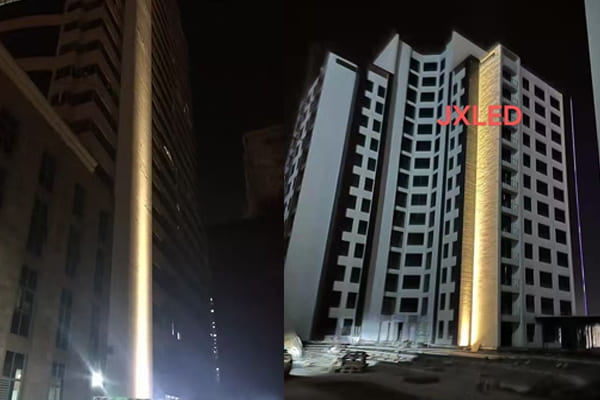
The physics of light is not on our side here. Light intensity follows what is known as the Inverse Square Law4. In simple terms, the farther light travels, the weaker it gets, and it weakens very quickly5. Think of it like the nozzle on a water hose. If you want to spray water to the far end of the garden, you twist the nozzle to create a narrow, powerful jet. If you want to water the flowers right at your feet, you use a wide, gentle spray. Architectural lighting works exactly the same way. For a towering skyscraper, we must use a narrow beam, a focused "jet" of light, to ensure enough photons actually reach the top floors. A wide "spray" of light would simply dissipate into the air, leaving the top half of the building dark. Conversely, using that powerful, narrow jet on a low wall would create a blindingly bright spot, an ugly "flashlight effect" that ruins the look of the facade. This is why we have a core principle: High-Narrow, Low-Wide.
How do you select the right beam angle for different building heights?
Knowing the theory is great, but you need a practical guide for specifying your next project. Guesswork leads to costly mistakes and ordering the wrong fixtures, which is a disaster for project timelines.
For tall buildings over 15 meters, choose a narrow beam (3°-25°)6. For mid-rise structures (8-15m), a medium beam (30°-45°) works best7. For low-rise buildings and pedestals under 8 meters, always use a wide beam (60°-120°)8 for a smooth, even wash.
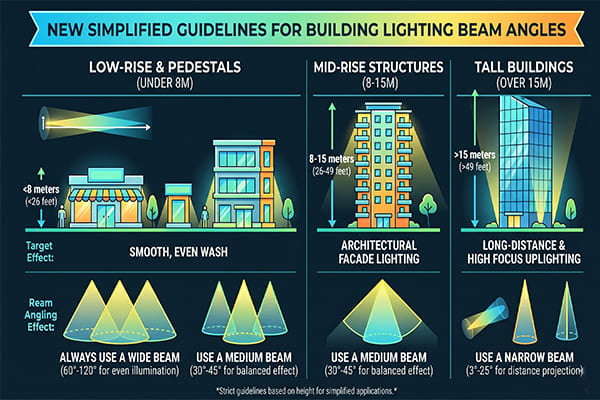
To make this crystal clear, I've developed a simple chart that my team and our clients use on every project. It removes all the guesswork and provides a solid starting point for any lighting design.
| Building Type / Height | Recommended Beam Angle | Rationale and Desired Effect |
|---|---|---|
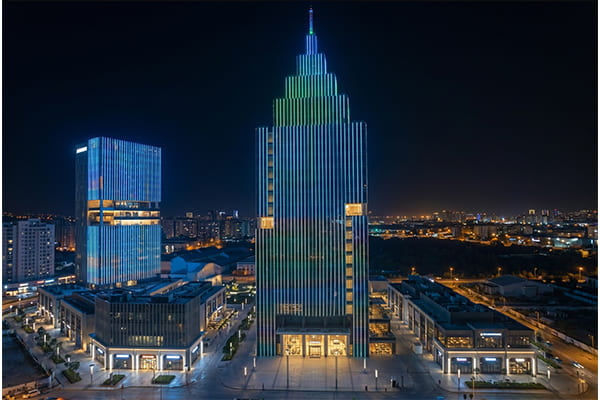
| Tall / Skyscraper (15m - 80m+) | 3° – 25° (Narrow) | The primary goal is impact. A narrow beam concentrates all the light's energy to project it upward, creating a powerful vertical line that makes the building look majestic and tall. This is essential to overcome ambient city light9 and ensure the top is brightly lit. |
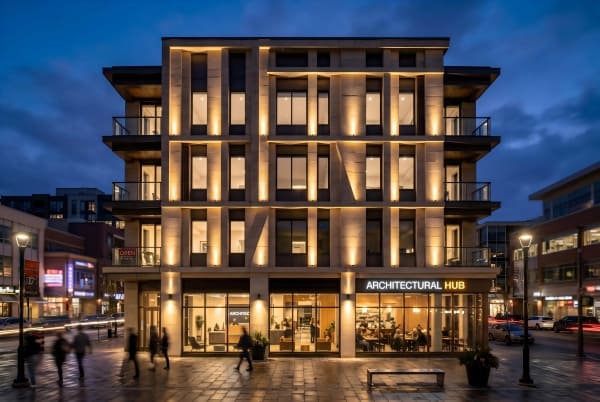
| Mid-Rise (8m - 15m) | 30° – 45° (Medium) | This is the "golden mean" for balance. It offers enough punch to reach the upper floors of a 5-8 story building while providing good horizontal coverage. This angle creates a consistent, uniform look perfect for hotels, offices, and residential blocks. |
| Low-Rise / Base (<8m) | 60° – 120° (Wide) | Here, the goal is all about quality and subtlety. A wide beam spreads light quickly and gently across a surface. This avoids harsh hot spots and is critical for areas viewed up close by pedestrians, such as retail storefronts, building entrances, and podiums. |
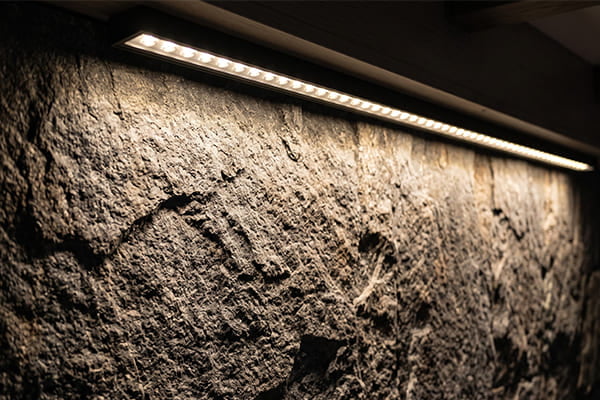
In practice, for a high-rise project, we are trying to create a sense of "power." The narrow beams draw the eye upward, emphasizing the structure's height and ambition. For mid-rise buildings, we aim for "cohesion," making the entire facade feel like a single, well-lit canvas. And for low-rise applications, we focus on "texture," using soft, wide light to gently reveal the material details and create a welcoming atmosphere.
What role do installation distance and overlap play?
You’ve chosen the perfect beam angle based on the building's height, but the final effect is still off. You see distracting vertical shadows between fixtures, ruining the seamless look you wanted.
Perfecting the installation details is the final step. The distance of the fixture from the wall, the spacing between fixtures, and the amount of beam overlap are just as critical as the beam angle itself. Getting these wrong will ruin an otherwise perfect specification.
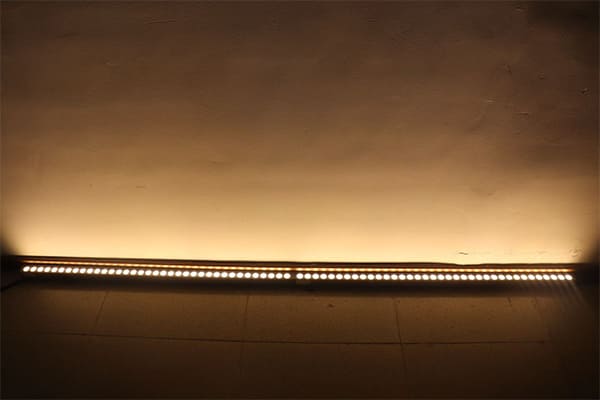
Getting the final details right is what separates a professional installation from an amateur one. It’s a topic I spend a lot of time on with our technical support teams. You have to consider three final elements to achieve that flawless, continuous wash of light that looks like it's coming from a single, hidden source.
Distance from the Wall
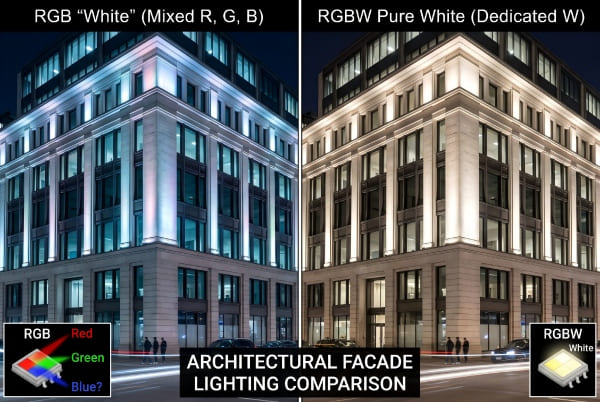
This is a common mistake. The closer you mount a fixture to the wall, the wider the beam angle needs to be. If you place a narrow-beam fixture just inches from the facade, you will get a severe hot spot at the bottom. This is especially problematic for RGBW fixtures, as the colors won't have enough space to mix properly, resulting in ugly fringes of red, green, and blue light10 at the base of the wall.
Spacing Between Fixtures
The beam angle also dictates how far apart you can place your lights. Narrow-beam fixtures must be installed closer together to prevent dark vertical gaps from appearing11. If you space them too far apart, you create an ugly "jail bar" effect that breaks the architectural lines. Wider beam angles allow for greater spacing between fixtures, which can help reduce the total number of lights needed and lower project costs. For specific architectural elements like columns, the rule is simpler: you typically use one floodlight per column.
The 20% Overlap Secret
Here’s an industry secret for a perfect finish: ensure the light beams from adjacent fixtures overlap by about 20% at the very top of the illuminated area. This small overlap is the key to eliminating the "scalloping" effect, those fan-shaped shadows that appear between fixtures. It blends the light from each source together, creating a completely uniform and continuous sheet of light. For our linear wall washers, we make this even easier by providing seamless connectors that link the fixtures end-to-end into a single, unbroken line of light.
Conclusion
Choosing the right beam angle isn't complex. For tall buildings, use narrow beams to create impact. For shorter walls, use wide beams to ensure quality. Always perform a simulation first.
"[PDF] Lighting Design Manual", https://www.cfm.va.gov/til/dManual/dmLighting.pdf. A neutral architectural-lighting or illumination-engineering source can support the principle that beam spread should be selected in relation to throw distance and illuminated surface height; this supports the design rationale but does not validate the article’s exact angle ranges for every façade. Evidence role: general_support; source type: institution. Supports: The key to avoiding hot spots or dark upper areas is matching beam angle to building height.. Scope note: Contextual support only; project geometry, mounting position, lumen output, surface reflectance, and ambient light can alter the appropriate beam angle. ↩
"How to calculate wattage and throw for narrow beam flood lights?", https://www.upluslighting.com/guides/led-narrow-beam-flood-lights-guide/. Illumination-engineering references on floodlighting and beam spread explain that narrower beams concentrate luminous intensity over longer throw distances, which supports the use of narrow distributions for tall façades; the source would not by itself prove that all tall buildings require the same beam range. Evidence role: mechanism; source type: institution. Supports: Tall buildings need a concentrated, narrow beam to maintain useful illuminance at the top.. Scope note: The support is based on general beam-distribution physics and may not account for fixture output, aiming angle, or surface material. ↩
"7 tips for your perfect wallwashing - Photometrics & practice | ERCO", https://www.erco.com/en_us/projects/focus/photometrics-practice/7-tips-for-your-perfect-wallwashing-7171/. Lighting design guidance on wall washing describes how wider beam distributions and appropriate setbacks can improve uniformity over short surfaces; this supports the general claim but does not eliminate the need for glare calculations in a specific installation. Evidence role: general_support; source type: institution. Supports: Short buildings generally use wider beams to distribute light more evenly and reduce harsh localized brightness.. Scope note: Uniformity and glare depend on luminaire shielding, mounting height, viewing angles, and surface reflectance, not beam angle alone. ↩
"Inverse Square Law for Light - HyperPhysics", http://hyperphysics.phy-astr.gsu.edu/hbase/vision/isql.html. Physics and illumination texts define the inverse-square relationship for irradiance or illuminance from a point source, supporting the statement that light level decreases rapidly with distance; the principle is an approximation for real luminaires with finite beam distributions. Evidence role: definition; source type: education. Supports: Light intensity follows the inverse square law as distance from the source increases.. Scope note: The inverse-square law applies most directly to point-like sources in unobstructed space and must be adapted for directional luminaires and near-field conditions. ↩
"[PDF] The Inverse Square Law of Light | NASA", https://www.nasa.gov/wp-content/uploads/2021/07/583137main_inverse_square_law_of_light.pdf. A physics or illumination-engineering source can document that illuminance from a point source decreases in proportion to the square of distance, which supports the claim that received light falls rapidly with throw distance. Evidence role: mechanism; source type: education. Supports: Light becomes weaker with increasing travel distance, with a rapid distance-related falloff.. Scope note: The exact falloff in a façade application also depends on beam optics, aiming, atmospheric conditions, and surface orientation. ↩
"How to calculate wattage and throw for narrow beam flood lights?", https://www.upluslighting.com/guides/led-narrow-beam-flood-lights-guide/. Application guidance for exterior floodlighting can substantiate that narrow beam spreads are commonly used for long-throw façade illumination; however, the 15-meter threshold and 3°–25° range should be treated as a design rule of thumb rather than a universal standard unless directly stated by the source. Evidence role: expert_consensus; source type: institution. Supports: Tall buildings over 15 meters are advised to use narrow beam angles in the 3°–25° range.. Scope note: The source may support the general narrow-beam approach but not the precise height cutoff or angle range. ↩
"What Is Beam Angle? Guide to Light Distribution for Buyers", https://www.commercial-lighting.net/what-is-beam-angle-guide-to-light-distrubtion/. A façade-lighting design reference that relates beam spread to mounting distance and surface height can provide contextual support for using medium distributions on intermediate-height façades; it would not necessarily prove that 30°–45° is optimal in all 8–15 m cases. Evidence role: expert_consensus; source type: institution. Supports: Mid-rise structures of about 8–15 meters are suited to medium beam angles of roughly 30°–45°.. Scope note: The stated range is likely a practical heuristic and should be verified by photometric calculation for each project. ↩
"New Upgraded Wall Washer LED Lights with 10x60° Wide Angle ...", https://www.amazon.com/Upgraded-YRXC-Daylight-Waterproof-Lighting/dp/B0876TLYLD. Lighting application guidance on wall washing can support the use of wide beam distributions for short-throw, close-viewed surfaces; the wording 'always' is stronger than typical design literature and should be limited by project-specific photometric requirements. Evidence role: expert_consensus; source type: institution. Supports: Low-rise buildings and pedestals under 8 meters should use wide beams of about 60°–120° for a smooth wash.. Scope note: The evidence would support a common approach, not an absolute rule for every low-rise façade or pedestal. ↩
"Mastering Ambient, Task & Accent Lighting in Design - Sculptform", https://sculptform.com/en-us/blogs/mastering-ambient-task-and-accent-lighting-in-architectural-design/. Urban-lighting or exterior-illumination references can explain that higher target luminance or illuminance may be needed where ambient brightness is high, supporting the contextual claim that façade lighting must compete with surrounding city light. Evidence role: general_support; source type: institution. Supports: Narrow beams on tall buildings help create enough visual impact to overcome ambient city light.. Scope note: The source may support the ambient-contrast principle but not a specific beam angle or brightness level for a particular cityscape. ↩
"Development of the RGB LEDs color mixing mechanism for stability ...", https://pubmed.ncbi.nlm.nih.gov/26444810/. Technical literature on multi-chip RGB or RGBW LED optics explains that color mixing depends on optical design and mixing distance, supporting the claim that insufficient distance can produce visible color separation; the severity depends on the specific luminaire optics. Evidence role: mechanism; source type: research. Supports: RGBW fixtures mounted too close to a surface may show poor color mixing and visible color fringes.. Scope note: Direct applicability depends on the RGBW fixture design, diffuser, lens system, and mounting geometry. ↩
"7 tips for your perfect wallwashing - Photometrics & practice | ERCO", https://www.erco.com/en_us/projects/focus/photometrics-practice/7-tips-for-your-perfect-wallwashing-7171/. Photometric design guidance for wall washing can support the relationship between beam spread, fixture spacing, and uniformity, showing that narrower distributions generally require closer spacing to avoid gaps. Evidence role: mechanism; source type: institution. Supports: Narrow-beam fixtures generally need closer spacing to avoid dark gaps between beams.. Scope note: Exact spacing must be calculated from the luminaire’s photometric file, mounting distance, aiming, and target uniformity ratio. ↩