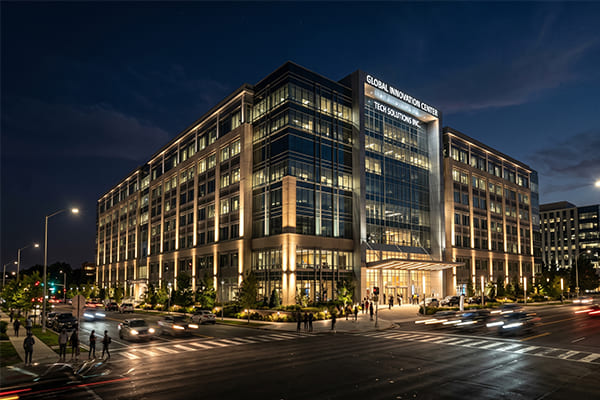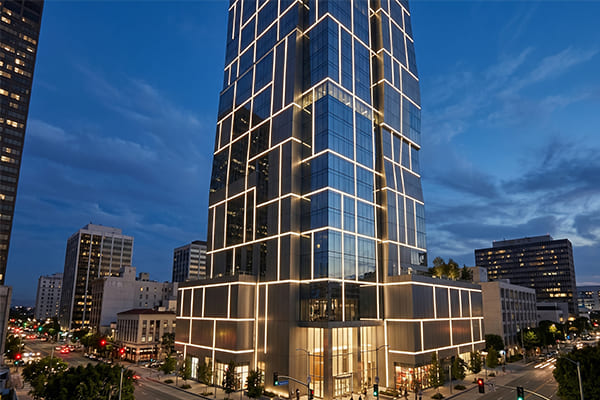
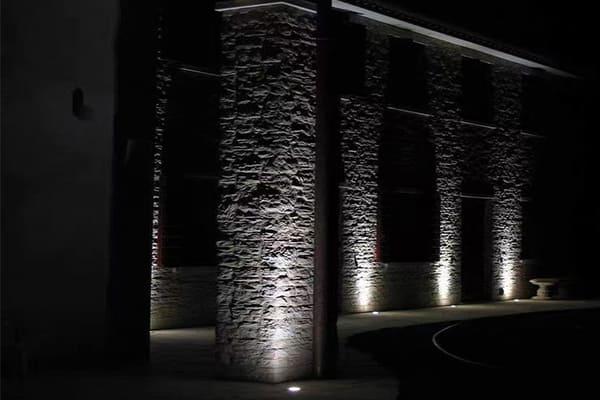
Your beautiful building looks great at night, but it's causing glare and annoying the neighbors. This light pollution can ruin a project's reputation and lead to expensive fixes.1
To control glare and light pollution, you must combine precise optics, physical anti-glare fixtures, scientific parameters, and smart controls. This integrated approach ensures light only hits the target facade, preventing spill and respecting the surrounding environment.
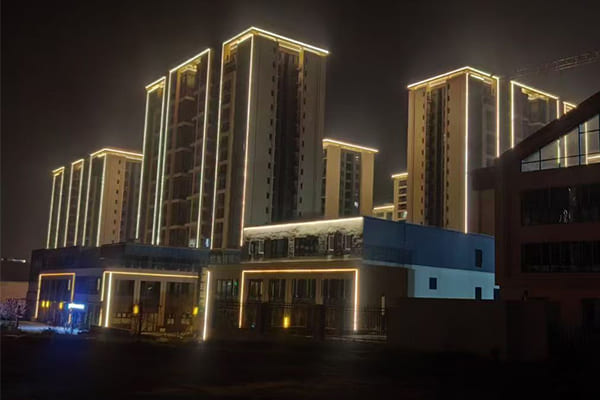
I’ve been in this business for over a decade, and I've seen it all. From projects that dazzle in the best way to those that become a local headache because of excessive glare. The difference always comes down to planning. You can't just throw light at a building and hope for the best. You need a strategy. A great lighting project respects the architecture and the environment around it. It's a balance of art and science. In this post, I'll walk you through the exact methods we use at JUXUANLED to achieve stunning results without creating light pollution. Let’s get started.
How Can Precise Optics Tame Unwanted Light?
Your stunning facade lighting is causing complaints. The light spills everywhere, creating glare and annoying neighbors. This can harm your project's reputation and lead to costly changes.
Use narrow-angle lenses (5°-15°) and asymmetric wall-washing optics2 to keep light focused squarely on the building. By limiting upward light (ULOR ≤ 5%), you prevent skyglow3 and direct light exactly where it's needed, not where it's a nuisance.
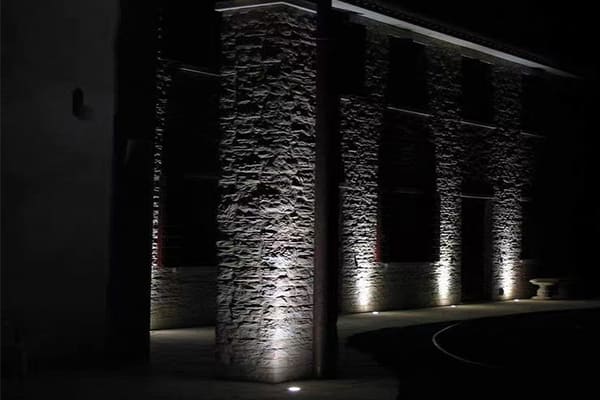
Choosing the right optics is the first and most critical step. It’s like using a fine-tipped pen instead of a spray can. The goal is to "paint" the building with light. We achieve this by focusing on two key things: beam angle and light distribution.
I remember a project in Southeast Asia where the client wanted to highlight a skyscraper's spire. The initial plan used standard wide-beam floodlights. It looked bright, but it also lit up half the sky and the penthouse apartments across the street. We switched to our ultra-narrow 8-degree linear lights. The difference was incredible. All the light stayed on the spire, making it pop against the dark sky, and the complaints stopped overnight. It's about precision.
Here’s a simple breakdown of how we select optics:
Key Optical Strategies
- Narrow Beam Angles: For tall structures or highlighting specific features like columns, we use very narrow beams, typically between 5° and 15°. This concentrates the light in a tight column, minimizing spill.
- Asymmetric Optics: For washing large, flat surfaces, we use wall washer lights with asymmetric lenses. These lenses are designed to throw light forward and upward onto the wall from a close mounting position, keeping the light off the ground and out of the sky.
- Upward Light Output Ratio (ULOR)4: This is a technical term for how much light escapes upward. We always aim for a ULOR of 5% or less. In many cases, we design for 0% by ensuring no fixtures are aimed directly at the sky.
| Optic Type | Best Use Case | Glare Control Benefit |
|---|---|---|
| Narrow Spot (5°-15°) | Highlighting columns, spires, architectural details | Extremely high precision, minimal light spill |
| Asymmetric Wall Washer | Evenly lighting large, flat facades | Keeps light on the vertical surface, away from windows and sky |
| Flood (25°+) | Used sparingly for lower, wider areas with no neighbors | Can cover broad areas, but requires careful aiming and shielding |
By mastering these optical controls, we ensure the light serves its purpose—to beautifully reveal the architecture—without becoming a nuisance.
What Physical Designs Stop Glare at the Source?
Even with perfect optics, a visible light source can be harsh and uncomfortable to look at. This direct glare can ruin the experience and create visual discomfort for passersby.
Use full cut-off fixtures and add anti-glare accessories like honeycomb louvers or shields. This "see the light, not the lamp" approach, combined with strategic fixture placement and tilting, eliminates direct glare and prevents light from trespassing into windows.
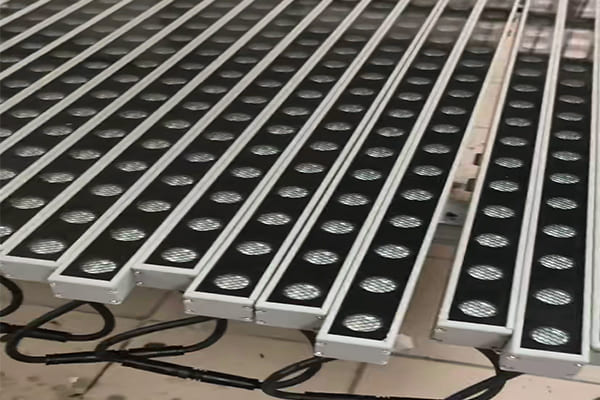
After we've chosen the right optics, our next job is to hide the light source itself. The magic of good facade lighting is when you experience the beautiful effect without being distracted by bright, glaring bulbs. This is a core principle for us.
A few years ago, we worked on a hotel project located right next to a residential complex. The architect's vision was a warm, welcoming glow. Our challenge was to achieve this without a single beam of light hitting the apartment windows next door. Our solution was a combination of fixture design and clever placement. We used our linear wall washers with built-in shields and mounted them so they were tilted down by about 20 degrees. We also used the building's own ledges and overhangs to hide the fixtures from view. The result was perfect. The hotel facade was beautifully illuminated, and the residents next door didn't even notice the new lights were on.
Here are the physical strategies we use to make fixtures disappear:
Core Anti-Glare Techniques
- Full Cut-off Fixtures: We design and select luminaires where the lamp is recessed and no light is emitted above the horizontal plane5. This is a fundamental step in preventing skyglow.
- Anti-Glare Accessories: These are our secret weapons for tricky situations.
- Honeycomb Louvers6: These grids sit over the lens and dramatically reduce the viewing angle from which you can see the bright LED source, cutting glare without affecting the main beam.
- Shields & Snoots: These are hoods or baffles that physically block light from spilling in unwanted directions, perfect for fixtures near windows or property lines.
- Strategic Mounting and Aiming:
- Downward Tilt: We often install fixtures with a downward tilt of 15° to 30°.7 This uses gravity to our advantage, keeping light aimed at the ground or lower part of the facade.
- Structural Shielding: We work with architects to place lights behind parapets, ledges, or other architectural features. This is the most effective way to hide a fixture completely.
By physically managing the light at the source, we ensure that people enjoy the illuminated architecture, not the glaring hardware.
Why Do Lighting Parameters Like Brightness and Color Matter So Much?
You've got the right lights and they're aimed perfectly, but the building still looks harsh and out of place. The light is too bright, the color feels cold, or some spots are way brighter than others.
Control the brightness (luminance ≤ 10 cd/m²8), use warm white light (2700K-3000K) to reduce blue light pollution, and ensure evenness (uniformity ratio within 10:1). These scientific settings create a visually comfortable and environmentally friendly result.
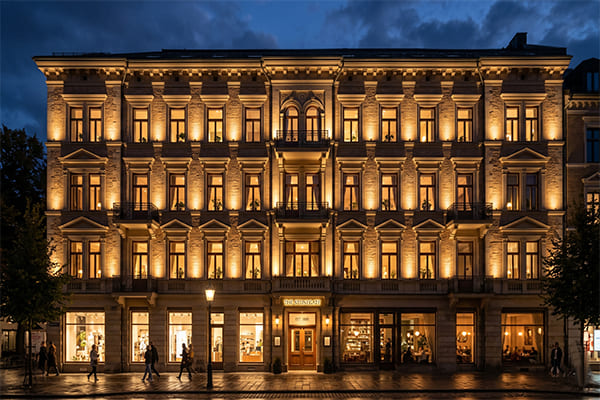
Getting the technical parameters right is like seasoning a dish correctly. Too much or too little of anything can spoil the final result. We don't just focus on making things bright; we focus on making them right. The human eye, and the natural environment, are very sensitive to the quality of light.
I once took over a project where the previous supplier had used 6000K cool white floodlights. The building looked like a prison—stark, cold, and glaringly bright. The client was unhappy, and the city was getting complaints about the harsh "blue" light. We replaced everything with our 3000K warm white wall washers and carefully calculated the illuminance levels. The transformation was immediate. The building became inviting and elegant, blending beautifully with the urban nightscape. It's not just about what you light, but how you light it.
We follow strict guidelines, many based on international standards like CIE 1509, to define these parameters for every project.
Key Lighting Parameters
- Luminance & Illuminance: We don't just blast a wall with light. We control the perceived brightness (luminance) of the facade to be around 10 cd/m². Crucially, we ensure the vertical illuminance on any nearby residential window is below 2 lux10—that's about the brightness of a full moon. This simple rule is key to being a good neighbor.
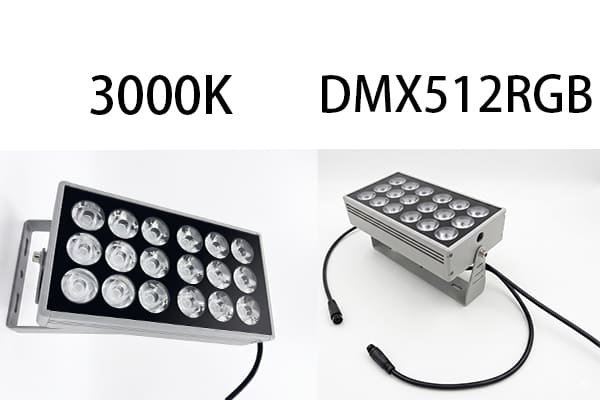
- Color Temperature (CCT): We almost always recommend warm white light, specifically between 2700K and 3000K. This range has less blue light content, which is scientifically proven to be more disruptive to human sleep cycles and nocturnal wildlife11. It also gives architecture a more classic, premium feel.
- Uniformity: We avoid creating "hot spots." The ratio between the brightest and darkest parts of the illuminated surface should ideally be no more than 10:1. A smooth, even wash of light is more sophisticated and easier on the eyes.
| Parameter | Our Standard | Why It Matters |
|---|---|---|
| Facade Luminance | ≤ 10 cd/m² | Avoids excessive brightness that creates urban "sky glow". |
| Light Trespass | ≤ 2 lux at windows | Prevents disturbing residents and meets "dark sky" principles. |
| Color Temperature | 2700K - 3000K | Minimizes ecological impact and creates a warm, pleasant aesthetic. |
| Uniformity Ratio | Within 10:1 | Ensures a smooth, high-end look without distracting hot spots. |
By dialing in these parameters, we deliver a lighting solution that is not only beautiful but also responsible and sustainable.
How Can Smart Controls Make Your Lighting Eco-Friendly?
The facade looks amazing, but running the lights at full power all night is a waste of energy and money. It's also unnecessary, as fewer people are around to see it in the early hours.
Implement a smart control system like DMX512 to automatically dim the lights or turn off certain sections. For example, you can reduce brightness by 30-50% after 10 PM. This saves energy, extends the life of the fixtures, and reduces late-night light pollution.12
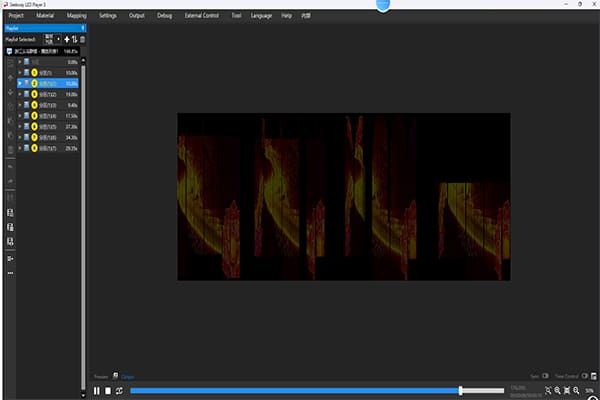
Static lighting is a thing of the past. Today, intelligent control is a non-negotiable part of any large-scale project we undertake. It's the brain behind the beauty. Smart controls give us the power to adapt the lighting to different times and needs, making the entire system more efficient and considerate.
For a large government building we supplied in a Belt and Road country, the requirement was for a grand, impressive display. But they were also very conscious of their energy commitments. We designed a DMX512 control system with a built-in astronomical clock. From dusk until 10 PM, the building was lit to 100% brightness for maximum impact. At 10 PM, the system automatically dimmed all the main facade lights to 50% brightness. Then, at midnight, it turned off the purely decorative accent lights, leaving only the essential architectural lines illuminated at 30% until dawn. This tiered approach delivered huge energy savings without compromising the building's prestige.
This dynamic approach is what we call "time-of-night" lighting, and it's simple to implement with the right technology.
Smart Control Strategies
- Scheduled Dimming: This is the most common and effective strategy. Using a DMX512 controller, we program a schedule that lowers the brightness during late-night hours. A typical schedule might be:
- Dusk - 10:00 PM: 100% brightness (Peak hours)
- 10:00 PM - Midnight: 50% brightness (Lower traffic)
- Midnight - Dawn: 30% brightness or off (Minimal activity)
- Zoning: We don't treat the building as one giant block. We divide the lighting into zones. For example, the main facade, decorative highlights, and landscape lighting can all be on different channels. This allows the client to turn off the less important "decorative" zones late at night while keeping the core architectural lighting on at a lower level.
- Remote Monitoring & Control: All our advanced systems can be connected to the internet. This allows facility managers to monitor the system, override schedules for special events, and receive alerts if a fixture fails—all from a laptop or smartphone. This is part of the value we provide as a project partner, not just a supplier.
Smart controls turn a static installation into a living, breathing system that is both beautiful and intelligent.
What Is the Role of Compliance and Maintenance in Long-Term Success?
Your lighting project was installed perfectly, but over time, fixtures get dirty, shift out of alignment, and performance degrades. Without upkeep, even the best design can eventually cause glare and pollution.
Strictly follow standards like CIE 150 and local regulations from day one. Then, implement a regular maintenance schedule for cleaning fixtures and recalibrating angles. Using an IoT platform for remote monitoring helps you catch and fix issues early, ensuring long-term compliance.
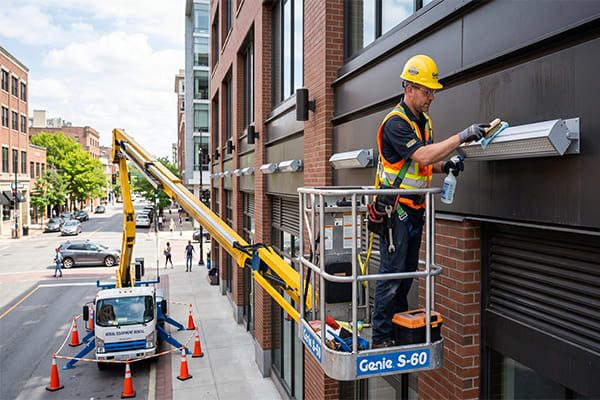
Launching a project is just the beginning. The real mark of a successful lighting installation is how it performs year after year. As a company that partners on large-scale infrastructure projects, we know that durability and long-term performance are everything. This is where following rules and regular check-ups become vital.
We recently established a subsidiary and warehouse in Vietnam to better serve our clients in the region. One of the first things we did was create maintenance checklists based on both international CIE standards and local municipal codes. For one of our hotel clients there, we perform bi-annual "health checks." Our team goes on-site to clean every lens, check every fixture's angle with a digital protractor, and run diagnostics on the control system. This proactive approach prevents problems. A dirty lens can scatter light and create glare, and a fixture knocked out of alignment by just a few degrees can send light into a neighboring window.
Ensuring long-term success requires a two-pronged approach: starting right and staying right.
A System for Lasting Quality
- Compliance from the Start: We don't treat regulations as an aftertho
"[PDF] Light Pollution - Town of Southampton", https://www.southamptontownny.gov/DocumentCenter/View/1158. Municipal lighting ordinances and nuisance-light guidance document that exterior lighting can generate complaints, enforcement actions, and required retrofits, supporting the claim that unmanaged glare and spill light can create reputational and cost risks. Evidence role: general_support; source type: government. Supports: Light pollution from a building facade can lead to complaints, reputational harm, and costly corrective work.. Scope note: Such sources support the regulatory and complaint risk generally, not the specific financial impact of any individual facade project. ↩
"[PDF] Wall Washers at the University of Maryland", https://www.energy.gov/documents/univ-marylandbriefpdf-2. Lighting design references describe asymmetric optical distributions as directing light preferentially toward a target surface rather than symmetrically around the luminaire, supporting their use for wall washing and spill-light control. Evidence role: mechanism; source type: education. Supports: Asymmetric wall-washing optics can focus facade illumination onto vertical surfaces and reduce unwanted spill.. Scope note: The source would explain the optical mechanism generally; actual spill reduction depends on fixture placement, aiming, and the specific photometric distribution. ↩
"Text-Alternative Version: What Is Sky Glow? | Department of Energy", https://www.energy.gov/cmei/ssl/text-alternative-version-what-sky-glow. CIE guidance on obtrusive light identifies upward light from outdoor luminaires as a contributor to sky glow and provides environmental-zone limits for upward light output, supporting the use of ULOR as a control parameter. Evidence role: expert_consensus; source type: institution. Supports: Limiting upward light output helps reduce skyglow in exterior facade lighting.. Scope note: The exact 5% threshold depends on the lighting zone and applicable local standard; the source supports the principle and may provide different limits by context. ↩
"Upward light ratio(ULR) or upward lighting | ZGSM", https://www.zgsm-china.com/blog/upward-light-ratio-ulr-or-upward-lighting-in-outdoor-lighting.html. Lighting standards define upward light output ratio as the proportion of luminaire light output emitted above the horizontal plane, supporting the article’s use of ULOR as a metric for upward spill light. Evidence role: definition; source type: institution. Supports: ULOR is a standard lighting metric for the fraction of light emitted upward.. ↩
"[PDF] International Dark-Sky Association - Full-cutoff fixtures shield the ...", http://www.roanestate.edu/pages/obs/DarkNightSkies_files/GreenTeacher02-Summer2003.pdf. Dark-sky and roadway-lighting guidance define full-cutoff or fully shielded luminaires by the absence of light emitted above the horizontal, supporting the article’s description of this fixture type. Evidence role: definition; source type: institution. Supports: A full cut-off or fully shielded fixture emits no light above the horizontal plane.. Scope note: Terminology varies across standards, with some using 'full cutoff' and others 'fully shielded'; the underlying photometric concept is the same. ↩
"LED Area Lighting to Reduce Glare for Roof Bolter Operators - PMC", https://pmc.ncbi.nlm.nih.gov/articles/PMC7367674/. Lighting research and luminaire-design references describe louvers as optical accessories that restrict viewing angles and shield the bright source, supporting their role in reducing direct glare. Evidence role: mechanism; source type: research. Supports: Honeycomb louvers reduce direct glare by limiting the angles from which the LED source is visible.. Scope note: The degree of glare reduction depends on louver geometry, luminaire brightness, observer position, and installation conditions. ↩
"5 Considerations Concerning Lighting Systems | FHWA", https://highways.dot.gov/safety/other/visibility/fhwa-lighting-handbook-august-2012/5-considerations-concerning-lighting. Outdoor-lighting guidance states that aiming luminaires downward and controlling high-angle light reduces glare and light trespass, providing contextual support for downward fixture tilt as an anti-spill strategy. Evidence role: general_support; source type: institution. Supports: Downward aiming of exterior luminaires can reduce glare, uplight, and light trespass.. Scope note: The specific 15°–30° range is a design practice that would require project photometry or a manufacturer-independent design guide for direct validation. ↩
"[PDF] PP22 MEASUREMENT OF OBTRUSIVE LIGHTING OF OUTDOOR ...", https://files.cie.co.at/x046_2019/x046-PP22.pdf. Obtrusive-light standards and lighting guidance use facade luminance limits, expressed in candela per square metre, to manage excessive brightness and environmental impact, supporting the use of luminance thresholds in facade lighting design. Evidence role: expert_consensus; source type: institution. Supports: Facade luminance limits such as 10 cd/m² are used in lighting standards to control excessive brightness.. Scope note: A 10 cd/m² value may apply only to certain environmental zones, building types, or curfew periods; the source should be checked for the matching context. ↩
"Obtrusive Light: the CIE-150 Document - NASA ADS", http://ui.adsabs.harvard.edu/abs/2004AAS...204.8905C/abstract. CIE 150, Guide on the Limitation of the Effects of Obtrusive Light from Outdoor Lighting Installations, is an international lighting guidance document addressing spill light, sky glow, glare, and environmental-zone limits. Evidence role: historical_context; source type: institution. Supports: CIE 150 is a relevant international standard for controlling obtrusive light from outdoor installations.. Scope note: CIE guidance is not automatically legally binding unless adopted by local regulation or contract specifications. ↩
"[PDF] Santa Monica Place Santa Monica, California LIGHTING STUDY", https://www.santamonica.gov/media/Document%20Library/Topic%20Explainers/Santa%20Monica's%20Housing%20Progress/SMP%20Digital%20Signage%20Lighting%20Study%20Reduced.pdf. Obtrusive-light guidance commonly sets limits for vertical illuminance at windows to reduce light trespass into residences, supporting the article’s use of a lux threshold at neighboring windows. Evidence role: expert_consensus; source type: institution. Supports: Keeping vertical illuminance at residential windows below a low lux threshold is a recognized method for limiting light trespass.. Scope note: The exact 2 lux limit depends on environmental zone and curfew timing, and should not be generalized to every site without local code review. ↩
"Artificial light at night alters behavior in laboratory and wild animals", https://pmc.ncbi.nlm.nih.gov/articles/PMC6205897/. Peer-reviewed studies on artificial light at night report that short-wavelength blue-rich light has stronger effects on melatonin suppression and can alter nocturnal animal behavior, supporting concern about cool-white lighting in nighttime environments. Evidence role: expert_consensus; source type: paper. Supports: Blue-rich nighttime lighting is more disruptive to human circadian physiology and nocturnal wildlife than warmer spectra under comparable conditions.. Scope note: Biological effects vary by species, spectrum, intensity, exposure duration, and timing; correlated color temperature alone is an imperfect proxy for spectral impact. ↩
"LED Basics", https://www.energy.gov/cmei/ssl/led-basics. Energy and lighting-control studies show that dimming LED systems reduces electrical power use and nighttime light output, and LED lifetime is influenced by operating current and thermal conditions, supporting the stated benefits of scheduled dimming. Evidence role: mechanism; source type: government. Supports: Scheduled dimming of LED facade lighting can reduce energy use, reduce light output at night, and potentially improve fixture longevity.. Scope note: Actual energy savings and lifetime extension depend on driver design, dimming level, thermal management, and operating schedule. ↩