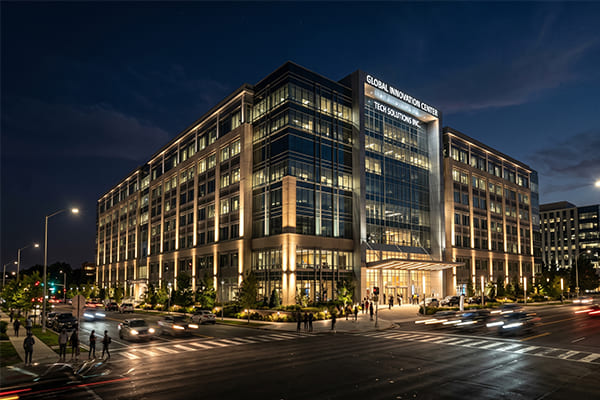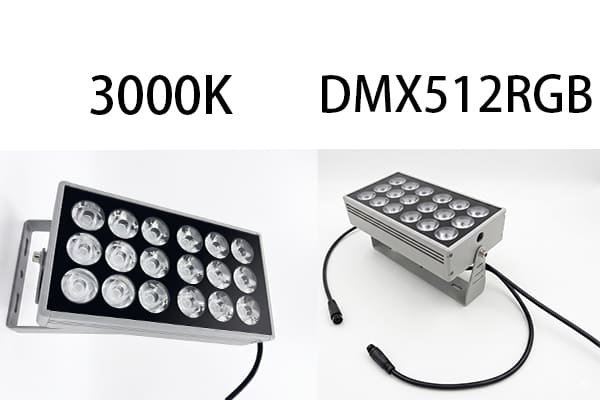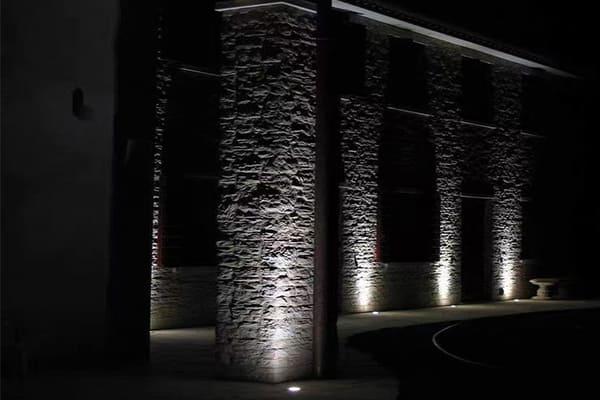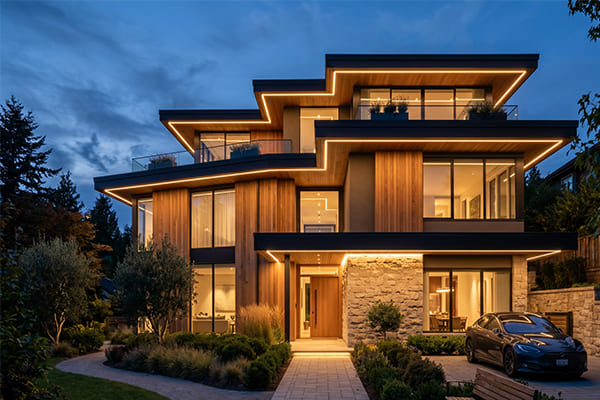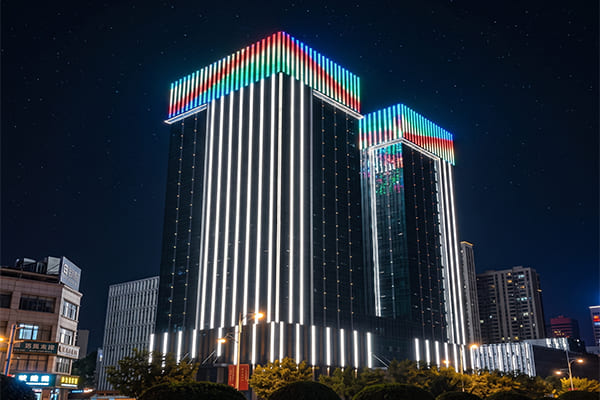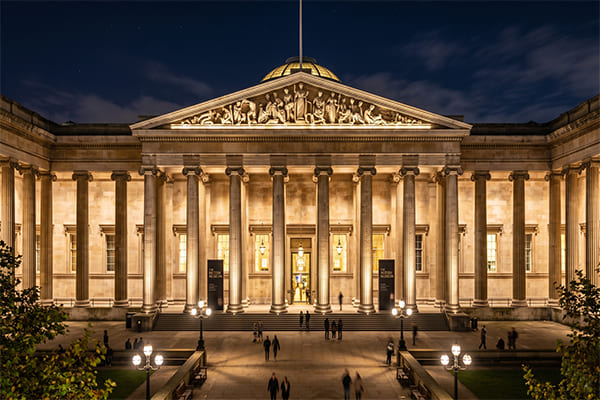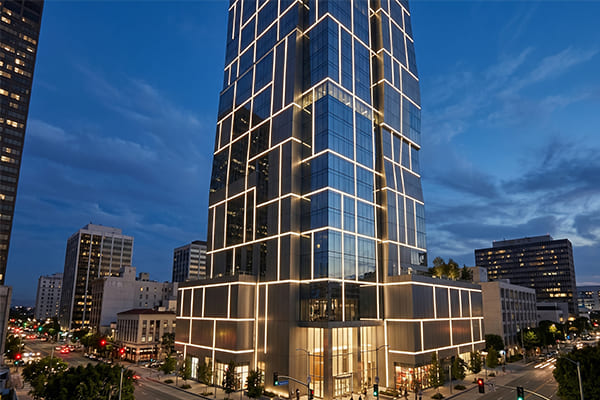
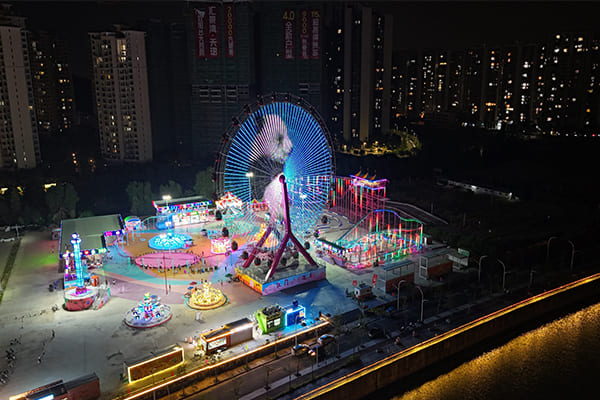
Your building facade looks plain and forgotten at night. This leaves it unnoticed, while competitors use vibrant, dynamic lighting to become landmarks. DMX512 can transform your facade into a living canvas.
DMX512 is a digital control protocol1 that acts like a "digital paintbrush" for buildings. It allows for the precise, dynamic control of millions of colors across thousands of individual lights2. This technology transforms a static facade into an engaging media display capable of telling stories and capturing attention.
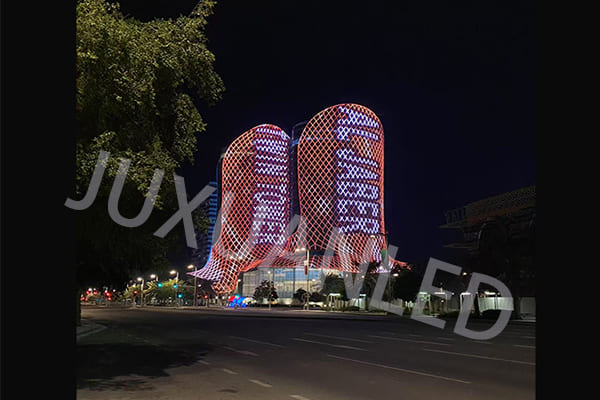
But turning a building into a dynamic spectacle isn't as simple as just plugging in some lights. It requires a well-planned system to make the magic happen. The real power lies in understanding the architecture behind the technology and how each component works together. Let's break down how we bring these massive projects to life, starting with the core framework.
How Does The DMX512 System Architecture Actually Work For A Large Building?
Planning a huge lighting project seems incredibly complex. One wrong move can lead to flickering lights, signal loss, and a project that fails to impress. But the system is simple when you understand its three-tier architecture.
A DMX512 system consists of a master controller (the brain), sub-controllers (the signal distributors), and the LED fixtures3. For large projects, we use Art-Net to send signals over a network, or GPS controllers to perfectly sync multiple buildings without complex wiring4, ensuring total stability.
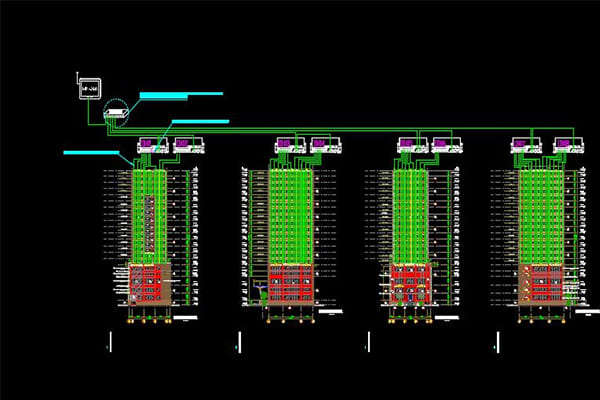
Let's dive deeper into how these parts connect. At the top, you have the master controller. This is where we program all the lighting effects, from simple color changes to complex video animations. It’s the creative heart of the entire project. The master controller then sends these instructions out. For large-scale projects, we don’t send DMX signals directly over long distances. Instead, we often use an Art-Net to DMX architecture. This means the lighting program is sent over a standard computer network using fiber optic or CAT6 cables to small control boxes near the lights. These boxes, or sub-controllers, convert the network data back into a standard DMX signal for the fixtures. This method solves the problem of signal decay over long runs5. For voltage, we almost always stick with DC24V. It's a safe low voltage but powerful enough to minimize voltage drop over reasonable distances.6
Here's a simple breakdown of the signal transmission options:
| Transmission Method | Best Use Case | Key Advantage |
|---|---|---|
| Standard DMX | Small projects, short cable runs (<100m) | Simple and cost-effective for basic setups. |
| Art-Net to DMX | Large single buildings, complex media facades | Allows long-distance signal over reliable networks. |
| GPS Controller | Multiple separate buildings, difficult wiring paths | Wireless synchronization for perfect timing. |
What Are The Most Impactful Applications Of DMX512 On A Facade?
You have the technology, but you are not sure how to use it. Just installing colored lights is not enough. Without a clear creative strategy, your investment will not deliver that "wow" factor you are looking for.
The most powerful applications are creating media facades for video playback, enhancing the building's structure with dynamic effects like "flowing" light, and using smart management to automate scenes for holidays or daily schedules, which balances beauty with energy savings.
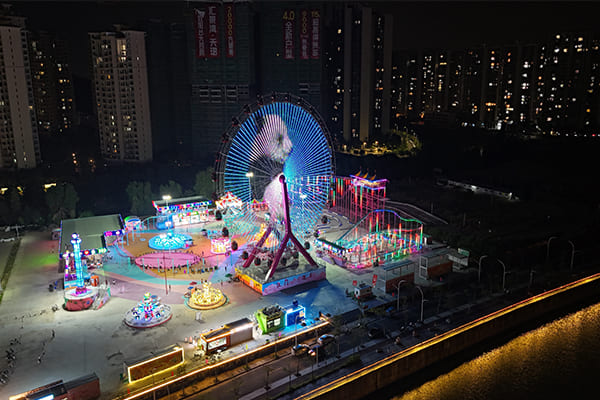
Let's explore these applications. First, the media facade. This is where we use high densities of pixel lights to essentially turn the building's surface into a low-resolution screen7. I remember a project where we mapped over 50,000 pixels onto a skyscraper. For the New Year's countdown, we played a full 3D animation that made it look like the building was twisting and reforming. The crowd reaction was incredible. This approach is perfect for brand messaging, advertisements, or public art.
Second, structure enhancement. This is a more subtle but equally powerful technique. Instead of covering the facade in pixels, we use linear lights or wall washers to trace the building's architectural lines. We can program "breathing" or "flowing" effects that make the building feel alive. This method highlights the architect's original design and strengthens the building's identity as a landmark, making it recognizable from miles away. It's about using light to complement the form, not just cover it up.
Finally, smart management. This is the practical side. We can link the DMX512 system to an astronomical clock, so the lights turn on automatically at sunset and off at sunrise8. We can also pre-program different modes: a calm, elegant look for weekdays, a vibrant and festive scene for holidays, and a special sequence for national events. This allows for both stunning aesthetics and responsible energy management.
What Are The Critical Mistakes To Avoid During DMX512 Installation?
A tiny installation mistake can destroy a massive lighting project. Imagine sections of your facade flickering, or worse, going completely dark just weeks after the launch. This leads to expensive repairs and hurts your reputation.
The biggest errors are ignoring weatherproofing, using cheap components, and failing to protect the signal. You must use IP67/68 connectors, demand a refresh rate above 40Hz for smooth video, and install a signal amplifier every 80-100 meters to maintain data integrity.
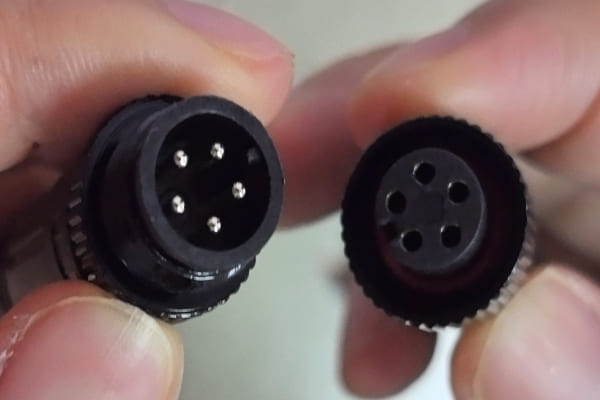
From my experience, here are the non-negotiable rules we follow to guarantee a successful project. First and foremost is protection. I can tell you that 90% of the signal faults I've been called to fix are caused by water getting into the connectors. It's the number one enemy of any outdoor lighting system. We insist on using connectors and fixtures with an IP67 or IP68 rating. This means they are fully protected against dust and water.9 Skipping this step to save a little money is the most expensive mistake you can make.
Next is quality control. We ensure the fixtures have a refresh rate of at least 40Hz. Anything lower, and the human eye will perceive flickering10, especially when recording video. It makes the whole effect look cheap and unprofessional. We also pay close attention to the light distribution by using fixtures with precise optics. This focuses the light exactly where it is needed, enhancing the effect while preventing light pollution that can bother neighbors and violate city codes11.
Finally, we build a resilient system. The DMX signal weakens over distance. Our rule is to add a DMX signal amplifier every 80 to 100 meters of cable. This boosts the signal back to full strength, ensuring the lights at the end of the line respond just as quickly as the ones at the beginning. In environments with high electromagnetic interference, like near power substations, we use shielded cables to protect the data from being corrupted.
| Priority | Action Required | Why It's Critical |
|---|---|---|
| 1. Protection | Use only IP67/68 rated connectors, cables, and fixtures. | Prevents water ingress, the #1 cause of system failure. |
| 2. Quality | Specify a refresh rate >40Hz and fixtures with precise optics. | Ensures smooth, flicker-free visuals and prevents light pollution. |
| 3. Resilience | Install signal amplifiers every 80-100m. Use shielded cable in EMI zones. | Maintains signal integrity over long distances for perfect sync. |
Conclusion
Ultimately, DMX512 gives your building the power to communicate at night. It is the essential foundation for creating intelligent, high-value landmark projects that capture the imagination of everyone who sees them.
"DMX512 - Wikipedia", https://en.wikipedia.org/wiki/DMX512. A technical standards or encyclopedia source defines DMX512/DMX512-A as a digital multiplex protocol used to control stage and architectural lighting equipment. Evidence role: definition; source type: encyclopedia. Supports: DMX512 is a digital control protocol.. ↩
"DMX512 - Wikipedia", https://en.wikipedia.org/wiki/DMX512. A technical source on DMX512 and RGB LED control explains that DMX channels can assign intensity values to individual color components, while multiple DMX universes or networked DMX systems can scale control to many fixtures; the source supports the control mechanism rather than guaranteeing any specific installation size. Evidence role: mechanism; source type: research. Supports: DMX512 allows precise, dynamic control of millions of colors across thousands of individual lights.. Scope note: Support is contextual because the number of controllable colors and fixtures depends on fixture design, channel mapping, controller capacity, and network architecture. ↩
"DMX512 - Wikipedia", https://en.wikipedia.org/wiki/DMX512. A lighting-control reference describes DMX systems as controller-to-receiver networks in which a controller transmits channel data to dimmers, decoders, or fixtures; this supports the general controller/receiver architecture, though terminology such as “sub-controller” varies by manufacturer. Evidence role: definition; source type: education. Supports: A DMX512 system consists of a master controller, signal-distribution devices, and LED fixtures.. Scope note: The source may use terms such as controller, node, decoder, receiver, or fixture rather than the article’s exact master/sub-controller wording. ↩
"DCS: Distributed Clock System for GPS time based ...", https://ui.adsabs.harvard.edu/abs/2019AGUFM.H53S2087L/abstract. Sources on GPS-disciplined time synchronization explain that GPS timing can provide a common time reference for distributed systems; this supports the feasibility of synchronizing separated lighting controllers, though it does not by itself prove perfect visual synchronization in every installation. Evidence role: mechanism; source type: research. Supports: GPS-based controllers can synchronize lighting across multiple separate buildings without requiring direct control wiring between them.. Scope note: Support is contextual because actual synchronization accuracy depends on controller design, network latency, programming, and fixture response time. ↩
"DMX512 - Wikipedia", https://en.wikipedia.org/wiki/DMX512. A DMX512 technical reference notes that DMX512 cable runs and device chains have distance and topology limits, while Ethernet-based distribution can extend control networks using standard network infrastructure; this supports the rationale for using Art-Net-to-DMX nodes near fixtures. Evidence role: mechanism; source type: institution. Supports: Using Art-Net-to-DMX distribution helps address signal degradation problems over long DMX cable runs.. Scope note: The source may describe standard distance limits rather than evaluating the specific project design in the article. ↩
"Extra-low voltage - Wikipedia", https://en.wikipedia.org/wiki/Extra-low_voltage. Electrical safety and lighting references classify 24 V DC as extra-low voltage, and basic circuit analysis shows that higher low-voltage supply levels reduce current for a given power load, which can reduce voltage drop compared with lower-voltage systems. Evidence role: mechanism; source type: government. Supports: DC 24 V is commonly treated as a safe low-voltage supply and can help reduce voltage-drop problems compared with lower-voltage LED systems.. Scope note: The claim is design-dependent because voltage drop also depends on load power, conductor size, cable length, topology, and allowable voltage tolerance. ↩
"(DOC) Media Facades: When Buildings Perform - Academia.edu", https://www.academia.edu/41515986/Media_Facades_When_Buildings_Perform. Academic and architectural sources on media façades describe building envelopes fitted with controllable light elements as large-scale, often low-resolution displays capable of showing graphics, animation, or video-like content. Evidence role: definition; source type: paper. Supports: Dense pixel lighting can turn a building façade into a low-resolution display or media façade.. Scope note: Resolution and video quality vary substantially with pixel pitch, viewing distance, and fixture density. ↩
"[PDF] Exterior Lighting Control Guidance - Better Buildings Solution Center", https://betterbuildingssolutioncenter.energy.gov/sites/default/files/attachments/exterior-lighting-control-guidance.pdf. Lighting-control guidance describes astronomical time switches as devices that calculate sunrise and sunset times by location to automate exterior lighting schedules. Evidence role: mechanism; source type: government. Supports: An astronomical clock can automate exterior lighting based on sunset and sunrise times.. Scope note: The source supports the scheduling mechanism generally, not a specific DMX512 controller implementation. ↩
"IP code", https://en.wikipedia.org/wiki/IP_code. The IEC ingress-protection rating system defines the first digit 6 as dust-tight protection and the second digits 7 and 8 as protection against temporary immersion and continuous immersion under specified conditions, respectively. Evidence role: definition; source type: institution. Supports: IP67 and IP68 ratings indicate dust-tight protection and defined levels of water-ingress protection.. Scope note: IP68 conditions are specified by the manufacturer or test agreement, so the exact immersion depth and duration can vary. ↩
"Evaluation of Critical Flicker-Fusion Frequency Measurement ... - PMC", https://pmc.ncbi.nlm.nih.gov/articles/PMC5688103/. Vision-science sources on flicker fusion explain that perceived flicker depends on frequency, luminance, contrast, retinal location, and observer conditions; this provides context for why low refresh or modulation frequencies can be visible, though it does not establish 40 Hz as a universal threshold. Evidence role: mechanism; source type: paper. Supports: Low refresh rates can produce visible flicker, and higher refresh rates are needed for smoother visual output.. Scope note: The exact flicker threshold is not fixed; 40 Hz may be inadequate or sufficient depending on brightness, waveform, motion, camera recording, and viewer sensitivity. ↩
"5 Considerations Concerning Lighting Systems | FHWA", https://highways.dot.gov/safety/other/visibility/fhwa-lighting-handbook-august-2012/5-considerations-concerning-lighting. Guidance from lighting-engineering or dark-sky organizations explains that exterior lighting design can reduce light trespass, glare, and skyglow through shielding, optical control, and appropriate aiming; this supports the general connection between precise optics and light-pollution mitigation. Evidence role: expert_consensus; source type: institution. Supports: Precise optical control in exterior lighting can help reduce light pollution, neighbor impacts, and code-compliance risks.. Scope note: Whether a project violates a city code depends on the local ordinance, measured light levels, and site context. ↩