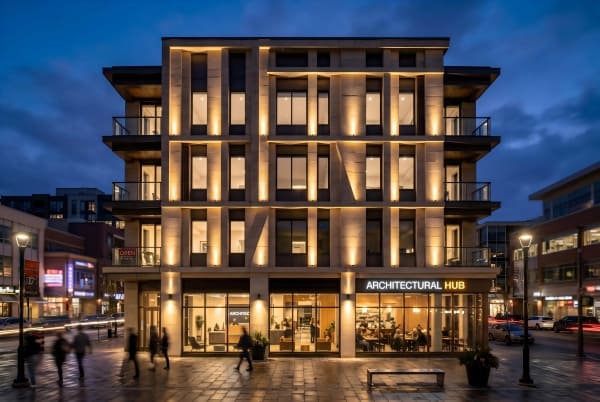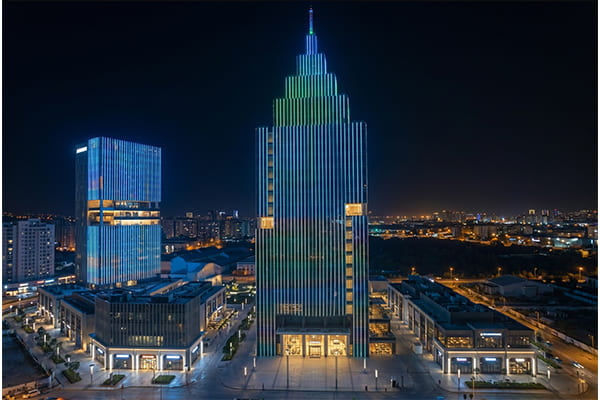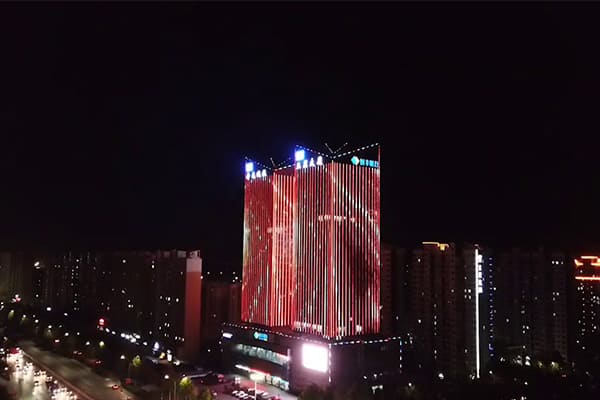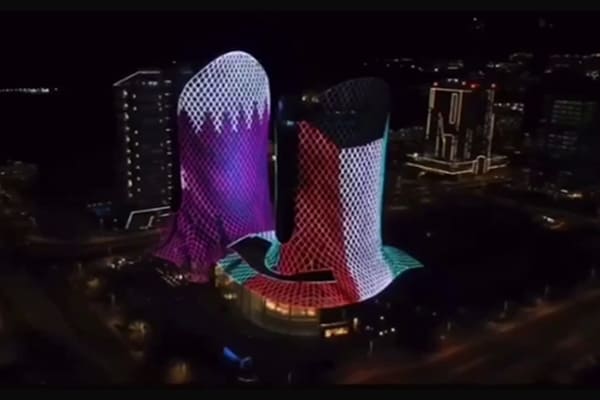
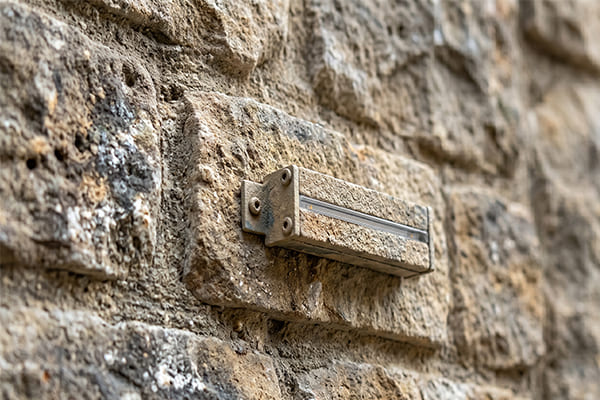
Struggling with light fixtures ruining your building's daytime look? These bulky additions can clash with the clean architectural lines. Achieve a flawless facade with daytime invisible lighting designs.
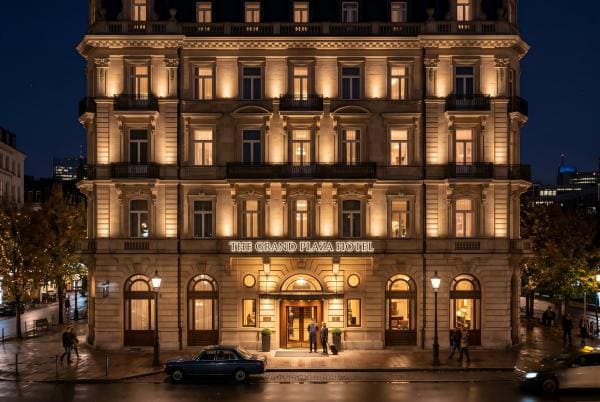
Yes, you can make facade lights invisible. This is done by physically hiding them within the building's structure, camouflaging them with matching materials, and using ultra-small fixtures. Advanced optics ensure great light effects from these hidden sources, preserving the building's daytime aesthetic completely.
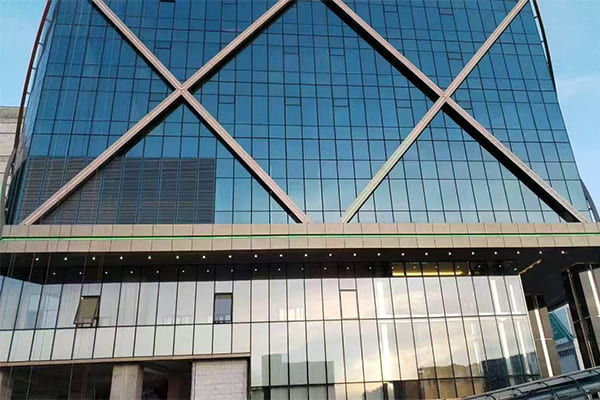
This idea of "light without seeing the lamp" is becoming the gold standard in high-end projects. It’s all about respecting the architect's original vision. But how do we actually pull this off? Let's break down the core strategies that make this magic happen. You'll see it's a mix of clever planning and advanced technology.
How does structural concealment make lights physically disappear?
You want lights hidden, but worry about complex construction. Cutting into a finished facade is a nightmare. The secret is integrating lighting plans right from the architectural design stage1.
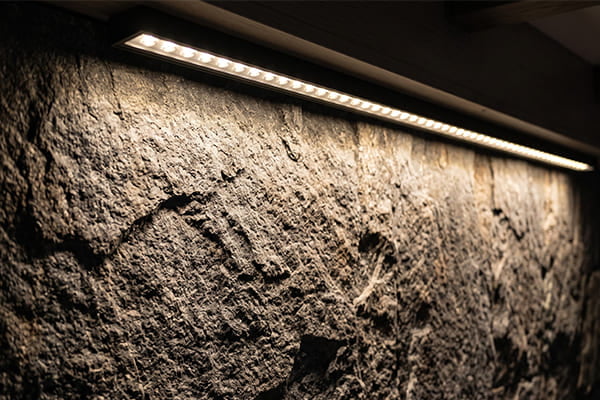
Structural concealment physically hides lights by planning ahead. We design special grooves or slots into the building's structure2, like in window frames or between panels. The fixtures fit inside these spaces, making them completely invisible from the ground. It’s the most effective method.
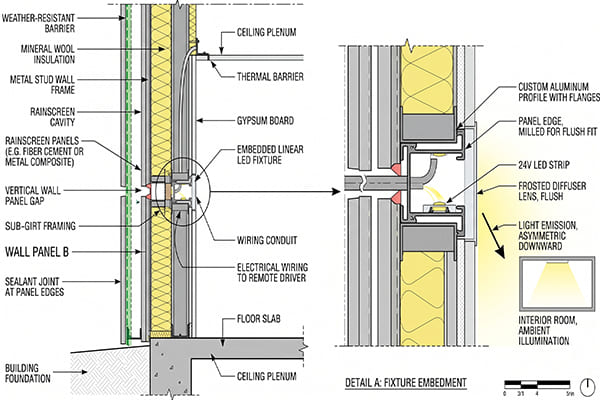
This is the most complete way to achieve invisibility. We call it "physical disappearance." It's not about tricks; it's about smart design from day one. I remember a project where we worked with the architects before they even finalized the curtain wall plans. We designed specific channels to be built right into the structure. This collaboration is key. The goal is to make the light appear to come from the building itself. From a normal viewing angle on the street, a person simply cannot see the light fixture.3 It requires deep collaboration between us, the lighting supplier, and the architectural team to get it right.
Key Structural Hiding Spots
- Embedded Grooves: We place fixtures deep inside gaps between aluminum panels or stone cladding.
- Natural Shelters: We use existing parts of the building, like eaves, grilles, or louvers, to create a natural "light trough."4
- Frame Integration: The dead corners of window frames are perfect spots to tuck away linear lights.
| Hiding Method | Location Example | Best For |
|---|---|---|
| Embedded Channels | Between facade panels | Creating clean, uninterrupted lines |
| Structural Shielding | Underneath eaves or ledges | Washing light down the facade |
| Frame Integration | Inside window or door frames | Accenting architectural openings |
Can visual tricks really make light fixtures invisible?
Sometimes, you can't build special slots for lights. Does that mean you're stuck with ugly fixtures? Not at all. Modern technology offers amazing ways to visually blend lights in.
Absolutely. Visual invisibility uses two main tricks: perfect camouflage and extreme miniaturization. We paint the fixture's housing to exactly match the facade's color and texture. We also use tiny, powerful LEDs to make the fixtures themselves incredibly small, so they simply don't draw the eye.
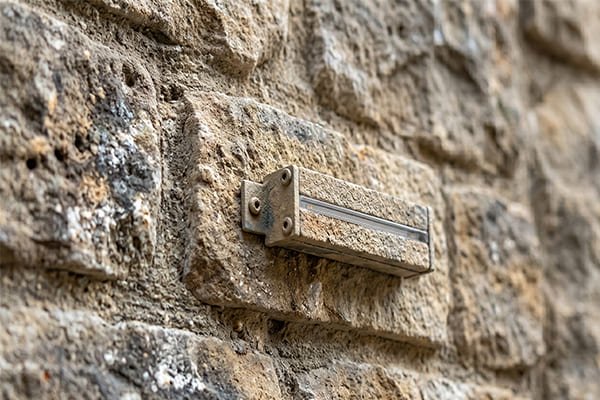
When structural hiding isn't an option, we turn to what I call "visual disappearance." This is about making the fixture blend in so well that the human eye just glides right over it. It's a two-part strategy. First, we focus on precise camouflage. We use the RAL color system to get an exact match for the paint on the fixture's housing.5 We can even apply finishes that mimic stone or wood grain. The light becomes part of the wall's texture. Second, we shrink the light source. Thanks to new CSP and micro-LED technologies6, I've seen linear lights get as thin as 20mm7. In some cases, we use transparent materials or fiber optics8, which almost makes the light feel like a property of the material itself, not a separate object attached to it. The combination of perfect color matching and a tiny profile makes the fixture practically vanish in plain sight.
Visual Invisibility Techniques
- Color Matching: Using fluorocarbon spray based on RAL codes for a perfect match.
- Texture Simulation: Applying finishes that look like stone, metal, or other facade materials.
- Extreme Miniaturization: Employing compact LED technologies like CSP to shrink fixture size.
Hiding lights is great, but what if you can't get good light out? Or worse, what if a hidden fixture breaks? These are valid concerns that we have already solved.
Performance and maintenance are key. We use precise optics, like narrow-angle or asymmetrical lenses, to direct light perfectly even from tight spaces. For maintenance, we use remote DC24V power supplies, which keeps heat away from the fixture and makes servicing much easier.
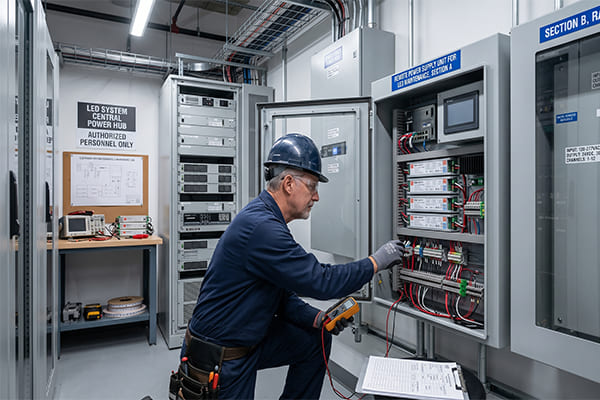
Making lights invisible is pointless if they don't perform well or are a nightmare to maintain. That's why smart integration is the final piece of the puzzle. First, we need precise light control. We can't just stuff a light in a gap and hope for the best. We use advanced optics, like very narrow 5° to 10° lenses or special polarized lenses (e.g., 10°x60°)9, to shoot the light exactly where it needs to go. To prevent seeing an ugly black line or dots during the day, we add a black honeycomb mesh10. This anti-glare feature makes the fixture opening nearly invisible. Then there's maintenance. We solve this by moving the power supply. Instead of being part of the fixture, we use a remote low-voltage DC24V power system11. This makes the light fixture smaller and cooler, and it moves the main maintenance item to an easily accessible location. Finally, everything is controlled with the DMX512 protocol12 for smooth dimming and dynamic color changes.
| Feature | Benefit | Technology Used |
|---|---|---|
| Precise Optics | Accurately illuminates the target from a hidden spot | Narrow-angle, asymmetrical, or polarized lenses |
| Anti-Glare | Hides the fixture opening during the day | Black honeycomb mesh |
| Remote Power | Simplifies maintenance, reduces fixture size & heat | Low-voltage DC24V remote power supply |
| Smart Control | Allows for dynamic scenes and precise dimming | DMX512 protocol |
Conclusion
Achieving a daytime invisible facade is a team effort. It blends smart architectural integration with advanced lighting technology to create a building that looks pure by day and magical by night.
"History Speaks - Illuminating Engineering Society", https://ies.org/lda/history-speaks/. Integrated design guidance for architectural lighting emphasizes coordinating lighting decisions with architectural and construction planning so that luminaires, wiring, controls, and maintenance access can be accommodated in the building fabric; this supports the need for early-stage integration, though it does not prove that every facade project requires it. Evidence role: expert_consensus; source type: institution. Supports: Concealed facade lighting is best achieved when lighting plans are integrated from the architectural design stage.. Scope note: Contextual support; the source would establish best practice rather than verify this specific project method. ↩
"CL Recessed Slot Linear Series", https://www.cooperlighting.com/global/brands/corelite/1060240/cl-recessed-slot-linear-series. Architectural lighting references describe recessed, cove, and concealed luminaire details as methods for hiding light sources within architectural elements; this supports the feasibility of grooves or slots for concealment, although exact details depend on facade construction and code requirements. Evidence role: mechanism; source type: education. Supports: Lights can be physically concealed by designing grooves or slots into architectural structures.. Scope note: General support; the source may discuss recessed or cove lighting broadly rather than facade-specific grooves. ↩
"[PDF] Introduction to Interior Lighting Design - OHIO Personal Websites", https://people.ohio.edu/ziff/ARTI%20288/Intro%20to%20Interior%20Lighting%20Design.pdf. Lighting-design guidance on cutoff angles, shielding, and recessed luminaire placement explains that visibility of a source depends on observer position and shielding geometry; this supports the principle that street-level viewing angles can hide fixtures, but not the absolute invisibility of a particular installation. Evidence role: mechanism; source type: education. Supports: A concealed fixture can be hidden from typical street-level viewing angles when shielding geometry is properly designed.. Scope note: Contextual support; observer distance, angle, fixture size, and facade geometry determine actual visibility. ↩
"Louver Lens Architectural LED Linear Lights | GL LED US LIGHTING", https://glledus.com/pages/linear-light-louver-lens. Architectural lighting literature identifies coves, ledges, louvers, and other architectural projections as common locations for concealed linear lighting; this supports the use of existing facade elements as light troughs, with applicability varying by detail and weather exposure. Evidence role: general_support; source type: education. Supports: Existing architectural features such as eaves, grilles, and louvers can be used to conceal facade lighting.. Scope note: General support; the source may not use the exact phrase “light trough.” ↩
"List of RAL colours - Wikipedia", https://en.wikipedia.org/wiki/List_of_RAL_colours. The RAL colour system is a standardized European colour-matching system used for paints, coatings, and plastics; this supports its relevance for specifying fixture housing colours, though an exact visual match still depends on gloss, texture, substrate, and lighting conditions. Evidence role: definition; source type: institution. Supports: RAL codes can be used to specify paint colours for matching lighting fixture housings to facade finishes.. Scope note: Supports the colour-standard aspect, not a guarantee of exact perceptual matching in all environments. ↩
"[PDF] LED Luminaire Reliability: Impact of Color Shift - Department of Energy", https://energy.gov/sites/prod/files/2017/04/f34/lsrc_colorshift_apr2017.pdf. Research on chip-scale packaged LEDs and micro-LEDs describes their small package dimensions and high brightness potential, supporting their relevance to miniaturized lighting designs; however, research on display-oriented micro-LEDs may be only indirectly applicable to architectural facade luminaires. Evidence role: mechanism; source type: paper. Supports: Compact LED technologies such as CSP LEDs and micro-LEDs can help reduce the visible size of lighting hardware.. Scope note: Contextual support; micro-LED literature often focuses on displays, while CSP LED evidence is more directly applicable to luminaires. ↩
"Development of Simple and Affordable Integrating Device for ... - PMC", https://pmc.ncbi.nlm.nih.gov/articles/PMC12431308/. Technical literature and product-independent lighting standards can document that LED packages and optical systems allow slim linear luminaire formats; this provides contextual support for thin profiles, but a specific 20 mm dimension would require manufacturer specifications or a measured example. Evidence role: general_support; source type: research. Supports: Modern LED technology enables very slim linear lighting formats, potentially around the 20 mm scale.. Scope note: A neutral source may support the feasibility of slim LED luminaires but may not verify the exact 20 mm figure without product data. ↩
"Optical fiber - Wikipedia", https://en.wikipedia.org/wiki/Optical_fiber. References on fiber-optic illumination explain that light can be transmitted from a remote source through optical fibers and emitted at selected points or surfaces; this supports the idea of separating the visible light effect from a conventional exposed lamp, although it does not make the emitting material literally luminous by itself. Evidence role: mechanism; source type: encyclopedia. Supports: Fiber optics and transparent light-guiding materials can deliver light while reducing the visibility of a conventional fixture.. Scope note: Supports the optical principle; the aesthetic claim that light appears to be a property of the material is interpretive. ↩
"Finding the perfect spot – The art and science of narrowing beam ...", https://www.ledil.com/news_all/articles-and-whitepapers/finding-the-perfect-spot-the-art-and-science-of-narrowing-beam-angles/. Optics and lighting-design sources describe beam angle as a measure of how a luminaire distributes intensity and show that narrow or asymmetric distributions can direct light more precisely; this supports the stated use of narrow and elongated beam optics, while exact 5°–10° values depend on a particular lens and photometric test. Evidence role: mechanism; source type: education. Supports: Narrow-angle and asymmetric lenses can direct light accurately from concealed positions.. Scope note: General optical support; exact beam angles require photometric data for the specific fixture or lens. ↩
"The Secret to ZERO Glare! Installing the Kiven Honeycomb Louver ...", https://www.youtube.com/shorts/nP76KdAlfN4. Lighting references describe louvers and honeycomb baffles as glare-control accessories that limit high-angle light and shield the light source from view; this supports their role in reducing visible glare, though their ability to make an opening nearly invisible depends on viewing angle, aperture size, and finish. Evidence role: mechanism; source type: education. Supports: Black honeycomb mesh can reduce glare and help obscure the visible opening of a lighting fixture.. Scope note: Supports glare reduction and source shielding, not guaranteed daytime invisibility. ↩
"High-Voltage LED Light Engine with Integrated Driver", https://www.energy.gov/cmei/buildings/articles/high-voltage-led-light-engine-integrated-driver. LED lighting guidance distinguishes LED drivers from LED modules and notes that driver placement and thermal conditions affect maintenance and reliability; this supports the rationale for remote low-voltage power supplies, though it does not prove that DC24V is optimal for every facade system. Evidence role: mechanism; source type: government. Supports: Using remote low-voltage LED power supplies can reduce heat at the luminaire and make service access easier.. Scope note: Contextual support; the best voltage and driver location depend on system design, voltage drop, safety classification, and local electrical codes. ↩
"DMX512 - Wikipedia", https://en.wikipedia.org/wiki/DMX512. The DMX512 standard is a digital communication protocol developed for controlling stage and architectural lighting equipment, including dimming and multi-channel effects; this supports its use for dynamic scenes, while control quality also depends on fixture electronics and commissioning. Evidence role: definition; source type: institution. Supports: DMX512 is a standard lighting-control protocol used for dimming and dynamic colour or scene control.. Scope note: Defines and contextualizes the protocol; it does not guarantee smooth dimming for a specific installation. ↩